From Oversized Bike to Three-Time Champion: Patrick Lange's Full Circle Retirement at 40
A boy on an uncle's hand-me-down road bike couldn't even see the buoys. Twenty-seven years later, that same boy — now a three-time long-distance triathlon world champion — returned to that exact shoreline to close the chapter.
When Patrick Lange sat by the shores of Lake Edersee in August 2026 to announce his retirement from professional triathlon, he wasn't just ending a career. He was completing one of sport's most perfectly constructed narratives: the kid who fell in love with triathlon at a small local race in rural central Germany, going on to conquer the most iconic long-distance course in the world — three times — before choosing to exit the sport on his own terms.
This is the story of how Lange made that decision, what it means for his final competitive season, and why his retirement announcement carries a warning about the future of triathlon that every athlete, organizer, and fan needs to hear.
Why 40 Is the Turning Point — And Why Lange Listened
Patrick Lange has always been a student of the sport. Before he became a record-setter on the Kona course, he studied the champions who came before him. And the data told a consistent story.
"I look at the history of athletes and the long-distance world champions before me. Forty years old is a crucial turning point for almost everybody. Why should my body be any different?" — Patrick Lange
Lange turns 40 on August 26, 2026 — a milestone he's approaching with the same analytical clarity he brings to his training blocks. His 2026 season provided supporting evidence. He withdrew from a major race following a recurrence of Epstein-Barr virus, a viral infection that hammers recovery capacity in endurance athletes, and was beaten convincingly by Sam Laidlow at another event in May. Though notably, Lange's 8:12 finish was still ten minutes faster than any other competitor had ever run on that course — a detail that tells you everything about where the sport's performance ceiling currently sits.
Then came a ninth-place finish at Challenge Roth, 20 minutes behind Laidlow, despite running a 2:32:25 marathon.
For most athletes, a run like that would be a career highlight. For Lange, it was a signal.
"Over the last two or three years I noticed I take longer to recover, and it's harder to get in the super-high-intensity training frequency needed to adapt. I wanted to be in the driver's seat and say my career is over before my body decides for me: going into retirement healthy and kind of fit." — Patrick Lange
A Proactive Decision, Not a Reactive One
Here's the nuance that matters: Lange didn't decide to retire because of his disappointing 2026 summer results. He made the decision in the winter of 2025/2026 — months before the Lanzarote loss and the Roth ninth-place finish. The announcement came five days after Challenge Roth, but the decision was already made.
This distinction is critical. Lange isn't fleeing poor performance. He's executing a planned exit strategy, one built on self-awareness, historical data, and a clear-eyed assessment of what elite triathlon demands from a 40-year-old body.
His original plan even included racing in Texas 2026 as "another full-circle moment" — the same race where he won on his long-distance debut in 2016. The Epstein-Barr recurrence took that opportunity away, but the intent was celebration, not desperation.
One More Shot at Kona — The Champion Who Knows His Numbers
Before the farewell tour begins in earnest, Lange has unfinished business on the Big Island.
"I want to go into the race in Kona thinking I still have it," he says. And despite what the summer results might suggest to outside observers, Lange's training data backs that belief completely.
"Despite not recovering as fast anymore, the training times and intensities are the same as 2024, maybe even a little bit better. I still have the course record by a couple of minutes, and it gives me confidence. I just need an exceptional day." — Patrick Lange
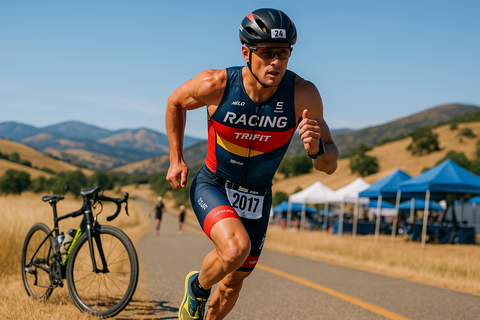
That course record — 7:35:53 — remains the benchmark for the sport. Lange uses it not as nostalgia, but as a live training reference. He can compare his current preparation metrics against the data that produced that performance and assess, with precision, where he stands.
History Favors the Pattern
There's also a pattern here that Lange knows well, and he references it with a knowing smile. Disappointing European summer races have historically preceded his greatest Kona performances:
- 6th place in Frankfurt (2017) → Won Kona 2017
- 3rd place behind Jan Frodeno (2018) → Won Kona 2018
- DNF at Roth (2024, rib injury in the swim) → Won Kona 2024
"Having a rough race in Germany in the summer and then coming back to Kona and performing well there is kind of part of the process." — Patrick Lange
His preparation follows the same formula that's worked before: altitude training in St. Moritz, followed by heat and humidity acclimatization in Texas. Everything is calibrated for one race, one more time.
The Competition He's Watching
When asked about threats in Hawaii, Lange stays characteristically focused on himself. "I don't want to sound arrogant, but for Kona, I look at myself and try to improve myself the best way possible. I have the data that led to a 7:35:53 in Kona, so I can compare myself in training."
But if pressed? The Norwegians. Specifically, Kristian Blummenfelt. "It's a cool story. They train together, and I think Blummy is desperate to win. He will be the main man to watch."
Blummenfelt's 2021 Olympic gold and long-distance world title make him a legitimate Kona threat — an athlete whose hunger for the Big Island title matches Lange's own in his prime years. For one final race, this is the kind of competition that makes Kona unmissable.
Lake Edersee, 1999: The Origin Story That Made Everything Mean Something
To understand why Lange's retirement announcement hit differently, you need to understand where he made it — and why.
Lake Edersee, in the rural Waldeck-Frankenberg region of central Germany, hosted a local sprint triathlon in 1999. Patrick Lange was a teenage mountain biker whose father Wolfgang, a marathon runner, thought his son might enjoy giving triathlon a try.
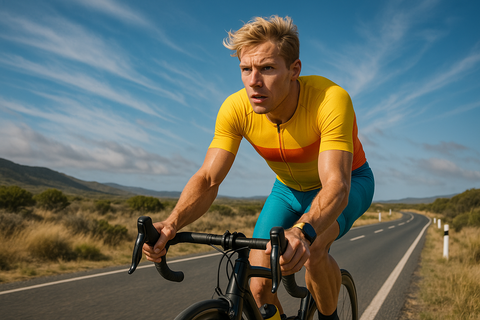
The kit was improvised. The bike was borrowed — his uncle's oversized road bike with downtube shifters, old even by late-90s standards. Lange channeled his triathlon hero, 1997 long-distance world champion Thomas Hellriegel, by rolling his top into his swimming shorts and pulling it up for the bike leg.
The swim presented an immediate problem: he dove into the water and couldn't see the buoys. That was the moment he realized he needed glasses. Despite the chaos, something clicked.
"It was the day I fell in love with this beautiful sport. How one small local race ended up opening the whole world to me." — Patrick Lange
Carmen Lange passed away from cancer in 2020. Lange has spoken about her being his inspiration for each of his three long-distance world championship titles. The photograph she took at Edersee that day is both a sporting artifact and something far more personal.
The Nervous Champion
Twenty-seven years after that first race, Lange returned to Edersee in 2026 to sign jerseys and water bottles for fans — completing the circle he'd been living his entire career.
"I am still nervous when I put a race number on," he admits. "Especially as a kid, I wanted to win. I always wanted to win. I always wanted to be the best at everything. Apart from school."
That combination — genuine competitive fire, grassroots origins, and authentic gratitude — is exactly what makes Lange's story resonate beyond the podium.
The Warning No One Is Talking About: Grassroots Triathlon Is Dying
Here's where Lange's retirement story becomes something bigger than one athlete's arc. His return to Lake Edersee wasn't purely sentimental. It was advocacy.
"I think we underestimate the importance of those kinds of races. We forget how crucial these small races are for the development of the sport, especially for kids and youth athletes." — Patrick Lange
And those races are disappearing. "Especially in Germany, local races are dying everywhere. They cannot get volunteers; they have trouble blocking the roads."
This is the structural problem at the heart of triathlon's future. The elite athletes competing on the world stage today — Lange included — found the sport through exactly these kinds of community events. The volunteer-run, road-blocked, swim-in-a-lake races that seem small on a global scale are the entry points that create champions. They're also the entry points that create lifelong participants, race organizers, coaches, and the volunteers who make professional events possible.
When a three-time world champion takes time from his final competitive season to appear at a local race, sign merchandise, and speak publicly about the volunteer crisis, that's not a photo opportunity. It's a statement.
"It was part of the reason for me to come back and support the race with the platform I have," Lange explains.
For aspiring triathletes in Latin America — where the grassroots scene is growing but fragile — this message hits close to home. The same dynamics Lange describes in Germany exist in markets where triathlon is newer: enthusiasm at the elite level, but uncertainty about whether the local infrastructure can sustain the sport's growth. Every community race that survives is a potential Patrick Lange story waiting to unfold.
Challenge Roth 2027: A Farewell, Not a Competition
Lange's final professional race will be Challenge Roth in the summer of 2027. And he's refreshingly honest about what that means — and doesn't mean.
"I still believe I can fight for a podium or better in Kona this year, whereas in Roth, I'm pretty sure I won't be fighting for victory. You don't expect Filippo Ganna to win a mountain stage at the Tour de France. It's more about the experience and embracing the fans one last time." — Patrick Lange
The Solar Hill section of Challenge Roth is one of the most electric spectator moments in long-distance triathlon — thousands of fans lining the course, creating an atmosphere unlike anything else in the sport. For Lange to experience that one final time, without the pressure of a podium finish, is a gift both to himself and to the fans who've followed his career.
The contrast between Kona 2026 (competitive pursuit) and Roth 2027 (ceremonial celebration) shows the kind of mature self-awareness that defines how Lange has approached this entire transition. He knows where he's fast. He knows where the sport owes him a moment. And he's planned accordingly.
What Patrick Lange's Retirement Means for the Sport
When an athlete of Lange's stature announces a planned, considered, data-informed retirement at 40, it sends signals worth paying attention to.
For Aging Athletes
Lange's framework offers a template: track your recovery metrics, benchmark against peak performance data, and make the decision proactively rather than reactively. The goal isn't to race until you can't; it's to finish while you still can.
For the Triathlon Community
The grassroots warning is the most urgent takeaway. Lange's three world championship titles trace directly back to a local sprint race in Germany that almost no one outside the region has heard of. The sport's pipeline from beginner to elite depends on those races surviving. Volunteer recruitment, road closure logistics, and local government cooperation aren't glamorous topics — but they're existential ones.
For the Next Generation
Whether Lange transitions to coaching, commentary, ambassadorship, or simply grassroots advocacy, his retirement creates space for him to invest in the generation of kids currently doing exactly what he did in 1999: showing up to a local race on an ill-fitting bike, nervous, not expecting much, and falling in love.
The Full Circle That Makes It All Mean Something
Patrick Lange's career bookends are 27 years apart and less than 100 kilometers from each other. A sprint triathlon at Lake Edersee in 1999. A retirement announcement at Lake Edersee in 2026.
In between: a Kona course record that still stands, three long-distance world championship titles, and a legacy that will be defined as much by what he says about grassroots racing as by what his legs produced on the Queen K Highway.
The boy who couldn't see the buoys learned to navigate every condition the Big Island could throw at him. The champion who returns to that same shoreline to say goodbye is the same person who started there — just with more data, more perspective, and an increasingly urgent message for the sport he loves.
Now it's your turn. If you found triathlon through a small local race, share your origin story — you might be more like Patrick Lange than you think. And if there's a grassroots event in your community struggling to survive, consider volunteering. The next world champion might be on the start line, wearing borrowed gear, about to fall in love with a sport that needs your help to survive.
Follow Lange's final Kona race (2026) and his Challenge Roth farewell (2027) as two of the most meaningful bookends in professional triathlon history. And if you're gearing up for your own race season — whether it's your first sprint or your tenth long-distance finish — check out our triathlon suit and swimming goggles.
Frequently Asked Questions
Why is Patrick Lange retiring from triathlon?
Patrick Lange has decided to retire from triathlon after the 2027 season, feeling that turning 40 is a crucial turning point for many athletes. He wants to retire while still healthy and fit rather than waiting for his body to decide for him.
What are Patrick Lange's future plans after retirement?
After retirement, Patrick Lange is uncertain about his plans but aims to support grassroots triathlon and local races as he emphasizes the importance of such events for the sport's future.
What are some highlights of Patrick Lange's triathlon career?
Patrick Lange is a three-time long-distance triathlon world champion, known for his remarkable performances on the Big Island of Hawaii. His career includes significant achievements like winning the long-distance world championship in 2024 and setting impressive course records.
How does Patrick Lange view the importance of grassroots triathlons?
Patrick Lange believes grassroots triathlons are crucial for the sport's development, especially for youth athletes. He expresses concern over the decline of local races and the challenges they face in gaining volunteers and support.
How is Patrick Lange preparing for his final long-distance world championship in Kona?
Patrick Lange is focused on a specific training regimen leading up to the long-distance world championship in Kona. He plans to train at altitude and utilize familiar heat and humidity to prepare for the race, aiming for a strong performance in his final appearance.
Source: Triathlete — Patrick Lange Retirement Interview
Discover unique triathlon-themed merchandise, including stylish t-shirts, stickers, phone cases, and home decor — perfect for endurance sports enthusiasts and athletes. Shop now