It’s nearly midnight at a long-distance triathlon in Arizona. Most spectators have gone home, but 15 members of Branden Scheel Racing are still at the finish line, waiting for one teammate to arrive.
That’s the kind of support the team aims to offer. “EVERYONE deserves to have someone cheering them on at the finish line,” says co-founder Alexa Scheel.
Maybe you’ve felt like the slowest person at group training, or like everyone else arrived with a fancier bike and a secret handshake. This story is for you. People leave triathlon clubs for many reasons, including bro culture, intimidating speeds, and high costs. In a recent feature, Triathlete profiled 12 club organizers who decided to make their multisport communities more welcoming.
This guide shares what those organizers are doing, what you can learn from them, and how to find—or start—a club where you feel at home. (Si hablas español: muchas de estas ideas funcionan en cualquier idioma. Más adelante verás que algunos clubes incluso tienen miembros en México.)
A note on sources: The clubs, quotes, and membership figures below come from Triathlete’s Nov. 18, 2026 feature on inclusive triathlon clubs. Organizers provided the figures; they haven’t been independently verified.
Why the Run Club Model Is Coming to Triathlon
When a club’s fitness culture feels too elitist, you have options. You can leave, train alone—like a “spandex-clad, multisport monk,” as the original article puts it—or help create a different kind of triathlon community.
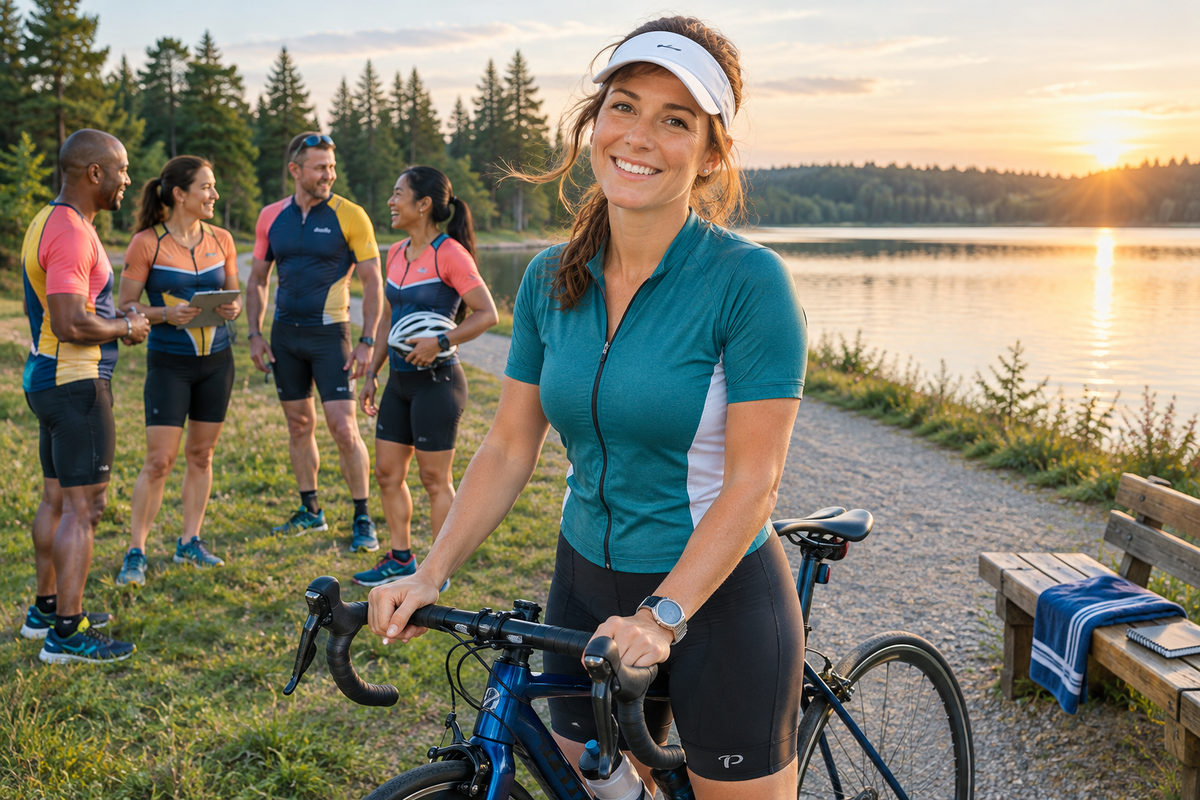
The organizers below chose the third option. Their clubs bring people together for more than swimming, cycling, and running. They also host book clubs, hikes, happy hours, and family dinners. Several founders had been dropped, sidelined, or made to feel like outsiders before starting their own groups.
Four ideas show up across these 12 profiles:
- Inclusion comes from everyday leadership decisions, not just slogans.
- Social connection can help athletes stay part of a community through injury, aging, and burnout.
- Cost, pace, and unsolicited advice can keep people out—but clubs can work to remove those barriers.
- Fitness is one part of belonging, not a test you have to pass.
Section 1: Making Room for Every Body and Identity
Representation can change who feels welcome in endurance sports. These clubs show how inclusion can look in practice.
Body Inclusivity: Team Go Big!
Kyla Lupo looked around triathlon and saw “a LOT of skinny white men.” She didn’t see enough women, and she didn’t see people with larger bodies. So she became a certified coach, learned as much as she could, and started Team Go Big! with one athlete and “a bunch of friends pretending to be my team.”
The team now has 22 athletes. Members across the country connect through weekly team meetings and a Tuesday morning virtual trainer ride.
“Anyone can tri in the body they have right now.” – Kyla Lupo
Because Go Big! is virtual, location doesn’t have to be a barrier. That can matter if you live somewhere with few local triathlon clubs, whether it’s a small U.S. town or a city in Latin America.
Gender and Identity: Three Different Approaches
Some athletes may feel safer in a dedicated space. Other clubs create inclusion by changing policies and making room for new voices.
Mutants & Masochists was founded by Ruth Carter, a lawyer and non-binary triathlete. Carter couldn’t find a club that promoted equal participation and respect, so they created one. They describe a concern that many non-binary and trans athletes may face:
“The fear of discrimination, or being attacked verbally or worse, can be the most intimidating thing for non-binary and trans triathletes about tri clubs.” – Ruth Carter
Carter emphasizes that they can speak only for themselves. They hope the club becomes “a place where trans people can connect, both online and in real life.”
TriBabes WI is a women-only, USA Triathlon-certified team that relaunched in 2019. It supports women of all ages and abilities, with an emphasis on supporting one another “without all the egos.”
Altitude Multisport Club in Denver took an organization-wide approach. When Erin Trail became president in 2016, she worked to make the club more welcoming to beginners and women. She also addressed sales and conflicts of interest, improved communication, and later introduced a family membership that lets households—including kids—join at a group rate.
“We made it clear that the environment is welcoming, organized, and a safe space to learn for everyone.” – Erin Trail
Making change can be difficult. “I lost a LOT of club friends because I wanted to make things different,” Trail says. Half of her board quit. But, according to Trail, membership grew from 50 to 150 during her first year.
The takeaway: A welcoming club might be a purpose-built community, an existing club that makes changes, or a virtual team. What matters is the deliberate effort to help people belong.
Section 2: Social Connection Beyond Swimming, Cycling, and Running
Training plans can get interrupted by injury, illness, work, or family responsibilities. Clubs that build social connection around more than workouts can help people stay connected when they can’t train.
Lifestyle Clubs: WeREndurance and NASTY
WeREndurance in Long Beach, New York, began as a strictly triathlon-focused group. As members got older and more likely to experience injuries, membership declined. Founder Hilary Topper suggested shifting the club toward a broader lifestyle community.
Now, local members get together for monthly hikes, quarterly races, pool parties, diner breakfasts, and even a psychic night. Members who live elsewhere connect through monthly meditation sessions, a book club, and educational webinars.
“As you get older, you realize that sport is not only about being on the podium.” – Hilary Topper
NASTY—Chicago’s North Avenue Swim and Triathlon Yo—began from a hospital bed. In 2023, Hannah Bradbury was training for an open-water swim record when she needed emergency gallbladder surgery. She had already lost half her thyroid to cancer in 2017. While sidelined, she started an Instagram account, then organized book clubs and happy hours.
When Bradbury faced another cancer scare, friends rode 100 miles with her on a glitter-covered ride they called “Centuslay.” The biopsy came back negative, and the women’s century ride became an annual NASTY tradition.
Bradbury says NASTY has grown to more than 340 members.
“Sport has become an accessory to our friendships, not the glue.” – Hannah Bradbury
Bradbury also describes the gap these clubs can fill: “Tri and swim clubs are great at training people. They're not always great at holding onto people when they're injured, sick, slow, starting over, or just burned out.”
Social Events That Build Belonging: T2 and Team Rocket
T2 Triathlon & Cycling, a triathlon-focused bike shop in Long Beach, California, hosts family dinners, post-race beach days, and a movie club. Founder Bryan Mewes says members can join in the ways that suit them:
“Some people only do our social events, while others only join our rides... Training is just the anchor.” – Bryan Mewes
Team Rocket Tri Club pairs a themed social event with its monthly brick workout. The club also has a well-traveled bike box that members can borrow and add a sticker to, so the whole team travels with each athlete in a small way. The club reports having more than 300 members.
A brick workout combines back-to-back bike and run sessions. It can be an easy social anchor: everyone finishes in the same place, tired and ready for snacks.
Section 3: Removing Barriers of Cost, Experience, and Pace
Money and speed can be just as exclusionary as an unwelcoming attitude. These clubs are working to make both less of a hurdle.
Financial Access: 3P TRI and Landshark Endurance
Long-distance race entries can cost between $900 and $1,200, according to the Triathlete feature. 3P TRI, a nonprofit club, offers another option: clinics and free, fully supported 140.6-mile events.
3P TRI began in 2017 when nine friends formed a “silly” club. After about 20 people asked how to join, they opened it to the public. Co-founder Brian Masayon says the group had more than 120 members by the end of the year. Its welcoming culture also attracted members from Canada, Australia, the Philippines, and Mexico—a reminder that athlete fellowship can cross borders.
“There is no timing chip, so members are not pressured to prove how fast or slow they are.” – Brian Masayon
Landshark Endurance on Long Island began because founder Jaclyn Fahey saw a need for a more affordable local team. It started as “a pizza-and-beer team with a triathlon problem” and grew into an open-level, co-ed group offering clinics, workshops, and post-workout hangouts.
“You don't have to be the fastest or the strongest. You just have to show up for yourself.” – Jaclyn Fahey
Helping Beginners Feel Ready
Bryan Mewes says beginners are often overwhelmed by gear and open-water swimming. At T2, the shop gives people a place to ask questions without feeling judged.
Mewes also points out that saying “everyone is welcome” is easy. Making sure a new athlete has a partner at a comfortable pace—or that nobody gets left behind—takes real effort.
TriBabes WI helps make triathlon more approachable with clinics on hill climbing, tire changes, nutrition, and race planning. At its annual team triathlon, athletes can ride with a buddy for the bike leg.
New to gear? Browse our race season essentials to help you prepare for your first triathlon.
Pace Groups and No-Drop Rides
A no-drop ride is a group ride where the leader waits for everyone or regroups along the way. A pace group brings together riders or runners training at similar speeds.
Team Rocket’s summer Tuesday night bricks offer multiple pace groups, so riders have buddies and nobody is left behind. Erin Trail’s experience shows why clear policies matter. She says club leaders dropped her on a ride described as no-drop, even though she had completed three full-distance triathlons and knew the route:
“I thought: 'What if I was a new person? What kind of experience would this be?'”
That moment helped inspire her to reshape her club.
Section 4: Showing Up Without Judgment
A club’s culture grows through small actions repeated over time. These groups make some of their expectations clear.
- No unsolicited advice. Team Thunderclap began when New Jersey moms tried a mud run. Members are happy to help when asked, but if you show up on a mountain bike, nobody lectures you about upgrading. Founder Elizabeth Marie says one of the most encouraging things a club can do is “simply making them feel like they belong.”
- No comparison game. At 3P TRI, “Nobody talks about speed and ability,” says Brian Masayon. “We don't play the comparison game.”
- Everyone gets a cheer squad. Branden Scheel Racing members stay until the last athlete finishes. The team keeps membership between 100 and 150, and the founders make a point of knowing something about every athlete.
Elizabeth Marie describes why triathlon can feel intimidating to beginners: “Sometimes it feels like there are no actual beginners, just really accomplished athletes with super fancy bikes.” Her club aims to be the opposite:
“We're ordinary people doing extraordinary things in our spare time.”
How to Tell If a Club Is Welcoming Before You Join
You don’t have to guess whether a club might fit you. Use this checklist to start a conversation.
| Red flags | Green flags |
|---|---|
| “Everyone's welcome” with no details | Clear policies, such as no-drop rides, pace groups, or buddy systems |
| Events focus only on racing and results | Social events, clinics, and ways to participate without racing |
| Sales pitches at club meetings | Transparent costs and leadership |
| Photos show only one body type, age, or pace | Photos and posts show a range of people |
| Beginners and injured members rarely come up | Visible plans for beginners, returning athletes, and sidelined members |
Before you commit, try these steps:
- Ask about pace and drops. Is there a no-drop policy? Are pace groups available?
- Ask about cost. What does membership include? Are family or reduced-cost options available?
- Ask who can participate. Are non-racers and injured members welcome?
- Read the club’s social media. How does it talk about beginners and slower athletes?
- Try a social event first. You can learn a lot about a club’s culture over pizza.
¿Hablas español o eres bilingüe? Pregunta si hay miembros que hablen español o si el club organiza eventos virtuales. También puedes explorar nuestros artículos esenciales para la temporada de carreras.
How to Start Your Own Club
Every organizer in this story began with a small group:
- Go Big! started with one athlete and a few friends.
- 3P TRI began with nine friends and grew after about 20 people asked to join.
- NASTY started with an Instagram account while its founder couldn’t swim.
- Branden Scheel Racing took shape after its founders earned coaching credentials and decided what kind of team they wanted to join.
Several founders pursued USA Triathlon certification before launching their clubs. Consider certification if you plan to coach or lead a group. You don’t need hundreds of members to get started: a few people, a regular meeting time, and a clear culture can be enough.
Decide up front what your club won’t tolerate, such as unsolicited criticism, and what it will always do, such as waiting for the last finisher. You might also set expectations around social events, beginner support, group training, or power training. For example, if workouts use power meters and watts to guide cycling effort, explain that they’re tools—not a measure of who belongs.
Common Questions
- Do I need to be fast to join a triathlon club?
- No. These clubs support athletes at different paces. Some, like 3P TRI, don’t use timing chips at all.
- Are tri clubs expensive?
- They can be, but not always. 3P TRI is a nonprofit offering free clinics and races, while Landshark Endurance was created as a more affordable option. Ask what’s included before joining.
- What if I’m injured, returning from illness, or starting over?
- Look for lifestyle clubs like WeREndurance and NASTY, which aim to keep members connected when they’re sidelined.
- How can I tell if a club is welcoming?
- Use the green-flag checklist above, and consider attending a social event before you commit.
The Bottom Line
The 15 people waiting at that midnight finish line weren’t there for a podium. They were there because a teammate deserved to be cheered in. That’s what these 12 triathlon clubs have in common: they treat belonging as the point, and fitness as one way to get there.
Your next steps:
- Find a club. Ask about no-drop rides, pace groups, costs, and whether non-racers are welcome.
- Check the culture. Read the club’s social media and notice who appears in its photos.
- Start small. Nine friends—or even one athlete—can be enough to begin.
- Get ready. Browse our race season essentials and triathlon lifestyle apparel so you can show up feeling prepared.
Have you found a club that feels like home? Share it in the comments. Thinking about starting your own? Tag a friend who should be on your first team.
#InclusiveTriathlon #CommunityFitness
Discover unique triathlon-themed merchandise, including stylish t-shirts, stickers, phone cases, and home decor - perfect for endurance sports enthusiasts and athletes. Shop now
How are some triathlon clubs working to make the sport more inclusive?
The clubs featured in the article prioritize welcoming environments, beginner-friendly training, pace groups, social connection, and support for athletes of different body sizes, genders, abilities, and experience levels. Some also address cost barriers or create ways for injured and sidelined athletes to stay connected.
Do you need to be fast or experienced to join an inclusive triathlon club?
No. Many clubs welcome beginners and athletes of all paces and experience levels. Some organize pace groups, no-drop rides, clinics, or buddy systems so members can participate and learn without being left behind.
What kinds of activities do inclusive triathlon clubs offer besides training?
Activities vary by club and can include social dinners, book clubs, hikes, movie nights, meditation sessions, educational webinars, family events, and post-race gatherings. These activities help members build friendships beyond swimming, biking, and running.
Are there triathlon clubs specifically supporting women, trans, or non-binary athletes?
Yes. The article highlights TriBabes WI, a women’s-only club, and Mutants & Masochists, which advocates for equal participation, recognition, and respect for trans and non-binary triathletes. These examples reflect different approaches to creating supportive communities.
Can triathlon club members stay involved if they are injured or take a break from racing?
Many of the clubs described make room for people who are injured, sick, burned out, or rebuilding their fitness. Social events and online activities can help members remain part of the community while they are away from training or competition.
Are there affordable ways to participate in triathlon through a club?
Some clubs aim to reduce costs through affordable membership options, clinics, shared equipment, or free events. For example, the article describes 3P TRI, a nonprofit club that offers clinics and supported 140.6-mile events without an entry fee.
How can a triathlon club help beginners feel more comfortable?
Beginner-friendly clubs can offer welcoming places to ask questions, introductory clinics, group activities matched to different paces, and encouragement without pressure to buy expensive gear or compete. The article also emphasizes listening to beginners and avoiding unsolicited advice unless someone asks for help.
 Nov 29, 2026Challenge Florianópolis
 Dec 5, 2026IRONMAN 70.3 Oman
 Dec 6, 2026IRONMAN 70.3 La Quinta
 Dec 6, 2026IRONMAN 70.3 Veracruz
 Dec 6, 2026IRONMAN 70.3 Western Australia
 Dec 11, 2026IRONMAN 70.3 Bahrain