
Can I Train for a Triathlon Indoors?
A rainy week, a busy work schedule, or limited access to safe roads does not have to stall your race preparation. So, can I train triathlon indoors? Absolutely. You can build meaningful bike power, run durability, strength, and much of the fitness needed for swimming without leaving home. The key is knowing which sessions transfer directly to race day and which skills still require time in a pool or open water.
Indoor training is not a lesser version of triathlon training. For many first-time athletes, it is the most consistent way to establish a routine. Consistency beats the occasional perfect outdoor session, especially when you are balancing training with work, family, and real life.
Can I Train Triathlon Indoors and Still Race Well?
Yes, particularly for a sprint or Olympic-distance triathlon. An indoor bike trainer and treadmill can cover the largest share of your weekly training load with impressive precision. You control the terrain, eliminate traffic and weather variables, and can repeat a workout exactly to measure progress.
For longer events, indoor work remains valuable, but the need for race-specific practice increases. A half-distance or IRONMAN athlete still benefits from controlled trainer rides and treadmill runs, yet should gradually add outdoor riding, fueling practice, and open-water swimming before race day. Holding position on a triathlon bike in your living room is useful. Managing wind, road surfaces, aid stations, and six hours of pacing is a different challenge.
Think of indoor training as your fitness engine. Outdoor sessions teach you how to use that engine in the conditions your event will present.
What You Can Build Indoors
Bike fitness: arguably better indoors
The bike is the easiest discipline to train indoors well. A smart trainer, basic trainer, stationary bike, or spin bike can all improve aerobic endurance and leg strength. What matters most is a stable setup and a workout matched to your current ability.
Indoor cycling is especially effective for interval work. Instead of searching for a traffic-free road or hoping a hill is the right length, you can ride a precise sequence of efforts. For example, a beginner building toward a sprint race might complete six rounds of two minutes at a controlled hard effort followed by two minutes easy. As fitness improves, those intervals can become longer and more race-specific.
Long indoor rides require more mental preparation. Break them into blocks, change your cadence intentionally, and rehearse nutrition. If your race plan includes drinking every 10 to 15 minutes and taking carbohydrates regularly, practice that routine on the trainer. Your stomach needs training too.
You do not need expensive technology to begin. A reliable indoor bike, fan, towel, water bottles, and a way to track time are enough. A heart-rate monitor or power meter adds useful data, but it is not a requirement for progress.
Run durability with less friction
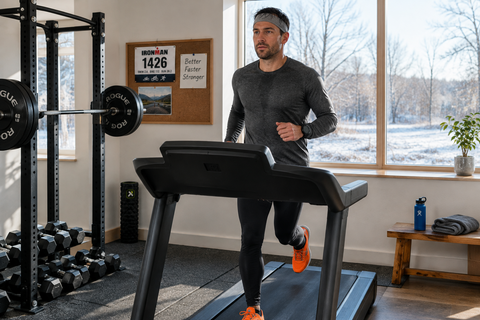
Treadmill running is one of the most practical tools available to a new triathlete. It removes darkness, heat, unsafe routes, and the temptation to skip a session because conditions are inconvenient. It also helps you learn pacing, which is one of the biggest confidence builders for race day.
Set the treadmill to a 1% incline for most steady runs if you want to approximate outdoor resistance. Do not become overly attached to that number, though. Your perceived effort, breathing, and ability to recover matter more than trying to make every kilometer identical to the road.
Use the treadmill for easy runs, tempo work, and brick sessions. A brick is a short run immediately after cycling, and it teaches your legs to make the bike-to-run transition. Even 10 to 20 minutes of easy running after an indoor ride can make your first triathlon feel far less unfamiliar.
The trade-off is that treadmills do not prepare your feet and stabilizing muscles for uneven paths, corners, or changing terrain. If possible, include an outdoor run occasionally as your event approaches. If not, vary incline and avoid making every run fast just because the belt makes pace easy to monitor.
Swim strength and movement patterns
Swimming is the discipline with the clearest indoor limitation: triathlon swimming requires water. You cannot fully replace pool time with dryland exercises, because breathing rhythm, body position, catch mechanics, and comfort in the water are specific skills.
Still, you can make non-pool days productive. Resistance bands can strengthen the pulling pattern, while mobility work for the shoulders and upper back supports a cleaner stroke. Core exercises such as dead bugs, side planks, and controlled hollow holds help you maintain a long, stable body line in the water.
If pool access is limited, protect the swim sessions you do have. Focus on quality rather than trying to cram in endless laps. A beginner may gain more from short repeats with rest, attention to technique, and a few minutes of relaxed continuous swimming than from one exhausting session spent reinforcing poor form.
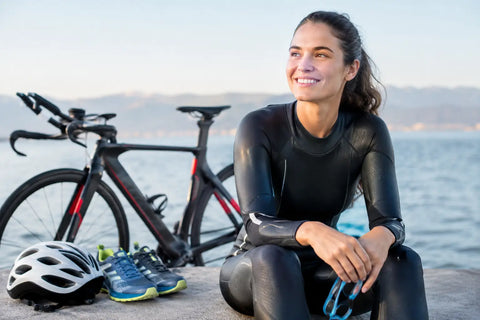
For an open-water event, pool fitness alone is not enough. Schedule at least a few open-water practices when it is safe and permitted. You need to experience sighting, wetsuit fit if you will wear one, starting near other swimmers, and the mental response to murky or moving water.
Build an Indoor Week That Fits Your Race Goal
Your best indoor plan is not the one with the most sessions. It is the one you can repeat for months while recovering well. Beginners often make fast progress with two bike sessions, two to three runs, one to two swims when available, and two short strength sessions each week.
A practical week could include a controlled bike interval session, an easy endurance ride, an easy run, a treadmill session with short faster efforts, and a brief brick after one ride. Add pool sessions around the days that work with your schedule. Keep at least one genuinely easy day, especially when your legs feel heavy or sleep has been poor.
For sprint-distance preparation, most sessions can be 30 to 60 minutes. That makes indoor training a strong option for professionals with limited time. For Olympic distance and beyond, build your weekly volume gradually, extending one bike and one run session over time while keeping most of the work easy.
Use simple markers to track progress: average heart rate at an easy pace, repeatable bike power or resistance, pace at a comfortable effort, and how quickly you recover after a brick. These numbers are more useful than comparing one workout to another athlete's highlight reel.
Make the Setup Comfortable Enough to Repeat
Heat is the indoor athlete's hidden opponent. Without airflow, your heart rate climbs, effort feels harder, and a session that should be manageable can become a struggle. Use a strong fan aimed at your torso, drink regularly, and expect to sweat more than you would outside. Protect your bike and floor from sweat, too.
Your setup does not need to look like a performance lab. It needs to remove excuses. Place your shoes, towel, bottles, and charger in the same spot. Set up the bike so mounting it takes seconds. If you use a treadmill, keep a small towel within reach and choose music, a workout, or entertainment before you start.
Indoor sessions can feel mentally demanding because the scenery never changes. Give each workout a purpose. Easy rides are for aerobic development. Intervals are for controlled discomfort. Brick runs are for transition confidence. When every session has a job, boredom has less room to take over.
Avoid the Indoor-Only Mistakes
Do not train hard every day simply because indoor metrics are visible. Numbers are useful, but they can make athletes chase personal bests when an easy day would create more progress. Most endurance training should feel controlled enough that you could continue a conversation in short sentences.
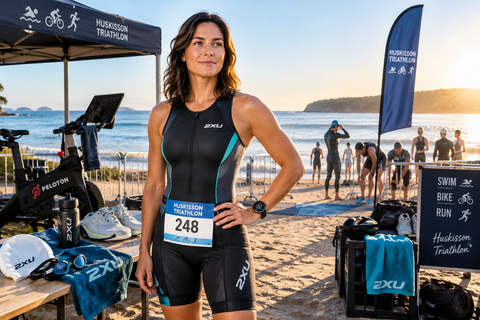
Do not ignore handling and race logistics. Before an event, practice mounting and dismounting your bike safely, riding outdoors if your race includes open roads, and setting up a simple transition area. If your event is in Mexico and likely to be warm, rehearse hydration in conditions that reflect the expected heat whenever possible.
Finally, do not treat pool confidence as optional. A strong cyclist and runner can lose considerable time or feel overwhelmed if the swim is stressful. Build water comfort early, even if that means starting with short, frequent pool visits rather than long workouts.
Indoor training gives you control, and control creates momentum. Start with the equipment and time you have, repeat the sessions that make you stronger, and use outdoor practice strategically as race day gets closer. The goal is not to copy every race condition at home. It is to arrive at the start line fit, prepared, and confident enough to handle what you cannot control.