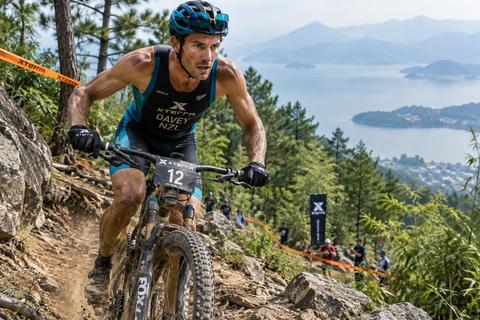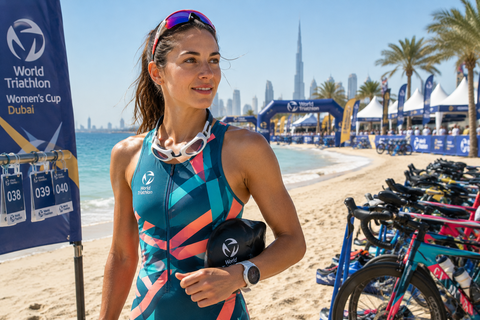

The first triathletes weren't thinking about what to wear. They were thinking about how to get through the race.
Dave Orlowski, who finished third in the first long-distance triathlon in Honolulu in 1978, raced in cut-off jean shorts over a Speedo. The reason was practical: he needed pockets for cash to buy drinks and snacks along the way.
Triathlon apparel has come a long way since then. Today, athletes and brands talk about wind-tunnel data, sleeve fabrics, and ice pockets. ROKA Multisport's new Gen.3 Elite AeroSPEC Tri Suit raises a useful question before you spend US$495: Can an aero suit designed for everyday race speeds help everyday athletes go faster?
This first look covers what's new, what ROKA claims, who the tri suit may suit best, and what still needs independent verification. The details come from ROKA's announcement, as reported by Slowtwitch. We haven't tested the suit ourselves, so we'll distinguish manufacturer claims from verified results.
From Jean Shorts to Wind Tunnels: A Quick History of Tri Kit
Early triathlon race kit was improvised. Even a decade after that first Honolulu race, the sport's best-known athletes were still choosing practical combinations of clothing. During their famous 1989 Kona showdown, Mark Allen and Dave Scott both changed into running shorts and singlets for the marathon.
Dedicated tri suits became more common in the 1990s and 2000s. They were usually sleeveless one-pieces or snug two-piece sets designed for swim-bike-run events.
Over time, the focus shifted toward speed and all-day performance:
- Sleeves arrived. Brands had long avoided them because sleeves were thought to add heat and drag. Wind-tunnel testing helped change that, as brands developed textured fabrics intended to shape airflow around the arms.
- Hydrodynamic coatings appeared to help athletes move through the water.
- Cooling fabrics were added to support comfort on the run.
- Pockets became essential for carrying nutrition and, on hot days, ice.
Modern multisport clothing has to balance speed and comfort across three disciplines. That means ventilation where heat builds, compression for tired muscles, and storage that's easy to reach while racing.
The Problem With Pro-Speed Aero Gear
There's a key question behind this product launch: many aero suits are designed around the speeds professional athletes regularly reach.
ROKA's press materials put it this way:
Many of the fastest aero suits are designed to perform best at speeds most athletes never touch, adding cost and sacrificing comfort to do it.
The company also says that what works best for a pro averaging 24+ mph may not be as fast for an athlete averaging below 24 mph—a speed even very fast podium-level age-groupers rarely exceed over distance.
Think of it like running shoes. A racing flat designed for a 2:05 marathoner won't automatically be the best choice for someone running a 4:30 marathon. Aerodynamic performance changes with speed, and fabric that manages airflow well at one speed may behave differently at another.
That's why the fastest option on a spec sheet isn't necessarily the fastest option for you.
Why this matters: If you ride well under 24 mph—which is true for many athletes—a suit optimized for pro speeds could cost more and feel less comfortable without delivering the gains you expect. It's a reasonable argument, but ROKA is the one making it. Independent data on typical age-group speeds would help support the company's framing of the average athlete.
What's New in the Gen.3 Suit
The AeroSPEC Textile and Sleeves
The headline feature is AeroSPEC, ROKA's proprietary fabric for the sleeves. The company says it's designed to balance speed and comfort across the swim, bike, and run.
ROKA's main performance claim: up to 6 watts saved at riding speeds between 16 and 24 mph compared with the Gen II suit.
A couple of quick definitions:
- Watts saved means using less power to hold a given speed. Less drag may mean less effort at the same pace, or more speed for the same effort.
- Wind-tunnel testing measures drag on an athlete in a race position under controlled airflow. Brands commonly use this type of testing to quantify aero claims.
What 6 Watts Might Mean: A Hypothetical
Six watts may not sound like much, so here's a rough estimate to put it in context. This is a hypothetical calculation, not a ROKA test result.
Imagine riding 90 km at around 20 mph, or roughly 32 km/h, while holding about 190 watts. Saving 6 watts is around 3% of that power. Because aerodynamic drag is a major factor at these speeds, that could translate to roughly a 1% increase in speed.
Over a bike leg lasting a little under three hours, that would mean about 1.5 to 2 minutes. It isn't magic, but it could be free speed from the race kit you're already wearing—if the up-to claim applies at your speed.
Storage and Comfort Upgrades
The Gen.3 aero suit isn't only about speed. ROKA has also updated its comfort and storage features:
- Redesigned pockets: Larger pockets for nutrition and ice, including an ice pocket at the back of the neck.
- Lighter mesh back panel for improved breathability.
- Updated low-profile chamois with flat edges. The chamois is the padded insert in the shorts section that cushions you on the bike. ROKA designed this one for comfort across all three disciplines.
- Super-flex leg fabric designed to hold its shape and feel silky, like a second skin.
- Superfine printed silicone leg grippers: The grippy bands at the leg hems are designed to keep the fabric in place. ROKA says they won't ride up or squeeze.
If you race in hot, humid conditions—as many athletes do at events in Mexico and Latin America—the ice pocket and breathable back panel may be especially appealing. However, we don't yet have independent testing on how well the suit manages heat.
What Carries Over From Gen II
The Gen.3 builds on features from the previous suit rather than starting over:
- Patented ArmsUp technology: ROKA's design feature intended to improve shoulder freedom and comfort in the swim.
- Premium YKK breakaway front zipper.
- UPF 30+: Ultraviolet Protection Factor. The fabric is said to block roughly 97% of UV radiation.
- Textile cooling treatment to support temperature regulation.
If you liked the Gen II, the basic design will feel familiar.
Sizing: Two New Options
ROKA has added two sizes for both men and women: Medium-Large and XXL. The company says the sizing follows its wetsuit range, which may feel familiar to existing customers.
Gaps in sizing can make it harder to find a triathlon suit that fits well. If the suit is too loose, it may flap or bunch. If it's too tight, it can squeeze and make a long race less comfortable. More size options are welcome, although we haven't yet seen fit feedback from athletes with a range of body types.
Tip: Check ROKA's size chart carefully before ordering, especially if you fall between sizes. If you're ordering outside the US, consider shipping times and the process for returns, too.
Who This Suit Is For (and Who Should Wait)
| Your situation | Is Gen.3 a good match? |
|---|---|
| Averaging roughly 16–24 mph on the bike and racing 70.3-distance or longer | Strong fit. This is the speed range ROKA targets. |
| Averaging 24+ mph | Compare options. Pro-focused suits may be better suited to your speeds. |
| Racing your first sprint or Olympic-distance event | Probably not necessary. A simpler, less expensive race kit can do the job. |
| Racing in very hot conditions | Promising features such as the ice pocket and mesh back, but unproven. Test before race day. |
| Budget-sensitive | Think carefully. At US$495, this is a premium purchase. |
If you're new to triathlon, you don't need a sleeved aero suit right away. Start with a comfortable, well-fitting basic kit. Our triathlon apparel collection is a place to explore options.
Verifying the Claims: What We Still Don't Know
If you prefer to make gear decisions based on evidence, this section matters.
The 6-watt figure comes from ROKA's own testing. In the forum thread on the original article, one reader asked useful questions:
- What fabric is used on each panel, and where did it come from?
- What are the main characteristics of the AeroSPEC sleeve fabric?
- Which wind tunnel was used, and at what speeds?
- How many watts does the suit save at a speed such as 20 mph compared with Gen II?
At the time of the source article, those answers hadn't been published. Here's what's still missing:
- Wind-tunnel facility, test speeds, and yaw angles
- AeroSPEC fabric composition and sourcing
- The Gen II baseline data behind the up-to-6-watts comparison
- Independent testing or results from athletes
The words up to matter. A maximum saving at one speed doesn't mean the suit saves 6 watts across the entire 16–24 mph range. Until ROKA shares its testing method, treat the figure as a promising claim, not a guarantee.
Common Questions
- Will this suit make me faster if I'm not a pro?
- That's ROKA's claim. The company says it designed the suit for the 16–24 mph range where many athletes ride. Independent confirmation is still pending.
- How much time might I save?
- Our hypothetical estimate is around a minute or two over a 90 km ride. That isn't a ROKA result, and it depends on the performance claim holding up.
- Are sleeves hotter to wear?
- Sleeves were historically thought to add heat. ROKA says the suit includes a cooling treatment and lighter mesh back panel, but we don't have independent heat-management data.
- How does it compare with Gen II?
- ROKA says Gen.3 saves up to 6 watts at 16–24 mph compared with Gen II. It also adds redesigned pockets, a new chamois, new leg grippers, and two new sizes.
- Will it fit taller or larger athletes?
- The new Medium-Large and XXL sizes are intended to help. Check the size chart and look for real-world fit feedback.
- Is US$495 worth it?
- That depends on your goals, race distance, and how much you value a small potential aero gain. It's a premium price. For many athletes, a lower-cost traje de triatlón aero and a proper bike fit may offer more speed for the money.
Key Takeaways
Dave Orlowski's jean shorts remind us how much triathlon race kit has changed. Here's where the Gen.3 fits into that story:
- Many aero suits are designed for pro speeds. ROKA designed the Gen.3 for the 16–24 mph range.
- The headline claim is up to 6 watts saved compared with Gen II. That's a manufacturer claim that still needs independent verification.
- The comfort updates include larger pockets, an ice pocket, a lighter mesh back, a new chamois, and updated leg grippers.
- Two new sizes—Medium-Large and XXL—may help more athletes find a suitable fit.
- At US$495, it's a premium purchase. It may be worth considering for long-course athletes who value marginal gains, but it's probably more than a beginner needs.
Your Next Steps
- Check your real average bike speed using recent races or training rides.
- Decide what matters most: aerodynamics, cooling, comfort, or budget.
- Review the size chart carefully, especially if you're between sizes.
- Test new triathlon apparel on a long training ride before race day. Don't debut unfamiliar kit at the start line.
- Wait for independent data if performance claims will guide your decision.
If you're putting together your race-day setup, browse our race season essentials and race-day travel gear so you're ready for the trip to the start line.
Have you tried the Gen.3 suit? Tell us how it fit and felt in the comments. If you race in hot, humid conditions, we'd especially like to hear how it handled the heat.
Quick Answers
What is the ROKA Gen.3 Elite AeroSPEC Tri Suit?
It is a short-sleeve triathlon suit designed for aerodynamic performance and comfort across the swim, bike, and run.
How much aerodynamic benefit does the Gen.3 suit offer?
ROKA says its AeroSPEC textile can save up to 6 watts compared with the Gen. II suit at cycling speeds between 16 and 24 mph.
Who is the Gen.3 Elite AeroSPEC Tri Suit designed for?
It is designed to deliver speed and comfort across a range of cycling speeds, including the 16–24 mph range common among many age-group athletes, rather than focusing only on professional-level speeds.
What are the new features of the Gen.3 tri suit?
New features include AeroSPEC sleeve fabric, a lighter mesh back panel, larger nutrition and ice pockets—including a pocket at the back of the neck—super-flex leg fabric, silicone leg grippers, and an updated low-profile chamois with flat edges.
Which features carry over from the Gen. II suit?
The Gen.3 retains ROKA’s ArmsUp shoulder technology, a YKK breakaway front zipper, UPF 30+ protection, and a textile cooling treatment for temperature regulation.
What sizes are available for the Gen.3 suit?
ROKA has added Medium-Large and XXL sizes for men and women. The article says the expanded sizing is similar to the brand’s wetsuit sizing.
How much does the ROKA Gen.3 Elite AeroSPEC Tri Suit cost, and where can it be purchased?
The suit retails for US$495 and is available through rokamultisport.com.
#Triathlon #TriSuit
Source:
https://www.slowtwitch.com/triathlon/roka-drops-gen-3-elite-aerospec-tri-suit/
Discover unique triathlon-themed merchandise, including stylish t-shirts, stickers, phone cases, and home decor - perfect for endurance sports enthusiasts and athletes. Shop now