Yellow Weather Alert: Your Complete Guide to Sunday's Severe Rainfall & Safety Precautions
Imagine training for months — logging thousands of kilometers in the pool, on the bike, and on the pavement — only to wake up on race morning to the sound of heavy rain hammering the windows. That's exactly the reality facing hundreds of athletes competing in this weekend's long-distance triathlon in Ottawa, as Environment Canada issues a yellow-level rainfall warning covering a massive swath of Eastern Ontario and Western Quebec simultaneously.
With up to 100 millimeters of rain expected to fall on Sunday — and the heaviest rainfall concentrated in the evening hours — this isn't just a race-day inconvenience. It's a regional weather event affecting millions of people across two provinces, from Belleville to Gatineau and beyond. Whether you're toeing the start line, cheering from the sidelines, or simply trying to protect your home, here's everything you need to know.
What Does a Yellow-Level Rainfall Warning Actually Mean?
Weather alerts can feel abstract until you understand what they're measuring. A yellow-level warning from Environment Canada sits in the middle tier of their alert system — serious enough to signal potential property damage and hazardous travel conditions, but below the red-level threshold reserved for truly extreme or life-threatening events.
For this Sunday, the specific numbers are what make this warning stand out:
- 50–80mm of rain as the baseline forecast for the region
- Up to 100mm in localized areas — roughly the equivalent of four inches of rain in a single day
- Heaviest rainfall concentrated in the evening, meaning conditions could worsen as the day progresses
- Rainwater pooling on roads and in low-lying areas, increasing the risk of property damage and dangerous driving conditions
To put this in perspective: Ottawa just came off its rainiest July on record, according to CBC News. Saturated ground has significantly reduced the soil's capacity to absorb additional rainfall, which means even moderate rain events carry higher runoff and flooding risk than they normally would in August.
Where Is the Warning in Effect?
The warning, issued at 9:30 a.m. EDT on Sunday, covers an unusually broad geographic area across two provinces:
Eastern Ontario
- Ottawa
- Pembroke
- Cornwall
- Kingston
- Belleville
Western Quebec
- Gatineau
- Val-des-Monts
- La Pêche
- Communities to the north
That's a corridor stretching hundreds of kilometers, encompassing the National Capital Region at its core. If you have family, friends, or travel plans anywhere along this corridor this weekend, the warning applies.
How Does Extreme Rain Affect a Long-Distance Triathlon?
Here's the layered challenge that makes this weekend uniquely demanding for competitors: a long-distance triathlon already pushes the human body to its absolute limit across three consecutive disciplines. Add 100mm of rain to the equation, and every segment of the race presents its own set of complications.
The Swim Segment
Counterintuitively, the swim is the least affected by rain itself. Athletes are already submerged, and additional precipitation doesn't dramatically change water conditions. However, reduced visibility for safety kayakers and support boats becomes a concern, particularly as skies darken in the evening. This is why understanding swim safety protocols is critical for all competitors.
The Cycling Segment
This is where wet weather becomes genuinely dangerous. Wet roads dramatically reduce tire traction, increasing the risk of crashes on descents, sharp corners, and painted road markings. Reduced visibility affects both athletes and any vehicle traffic sharing road space. Smart athletes will:
- Drop their average speed and increase following distance from competitors ahead
- Brake earlier and more gradually entering turns
- Check that lights and reflective gear are functioning before the start
- Mentally prepare for a slower bike split — and accept it
The Running Segment
A rain-soaked run course means slippery surfaces, waterlogged shoes, and potential course modifications if certain sections become unsafe. Managing internal body temperature also gets tricky — athletes can feel cold despite exertion, especially if the rain continues into evening. Staying fueled and monitoring pace carefully matters even more than usual. Consider investing in running shoes with superior grip for wet conditions.
Racing in Bad Weather: A Mindset Shift
Elite and experienced long-distance triathletes often say something that surprises newcomers: bad weather on race day is an equalizer. The athlete who panics, speeds recklessly on a wet descent, or catastrophizes the conditions is far more likely to DNF (Did Not Finish) than the one who adapts, stays patient, and races smart.
The rain falls on everyone equally. Your competition is navigating the same puddles, the same reduced visibility, the same heavy legs. The athletes who perform best in these conditions are those who trained for adversity.
If you're racing this weekend, treat the conditions as part of the challenge. It won't be the race you planned. It might be one you remember for the rest of your life. Mastering performance drills under various conditions prepares you for exactly this moment.
What About Flooding? A Closer Look at the Conservation Authorities
For residents in the affected regions, the critical question isn't just "will it rain?" — it's "will there be flooding?" Here, the assessments from regional conservation authorities offer some measured reassurance.
The Cataraqui Region Conservation Authority, which monitors the watershed between Greater Napanee and Brockville, issued a water safety statement — importantly, not a flood warning. Their assessment: widespread flooding in the area is not expected, though the public should exercise caution along watercourses.
The Mississippi Valley Conservation Authority echoed that conclusion, noting that water levels and flows throughout the valley remain near seasonal norms. That's meaningful context: even after Ottawa's record-wet July, waterways haven't been pushed to dangerous levels heading into this rainfall event.
The key distinction here is between localized flooding (possible, particularly in low-lying neighborhoods and near storm drains) and regional flooding (not anticipated at this stage). Conservation authorities are actively monitoring conditions and assessments can change as rainfall accumulates.
Practical Safety Steps: What to Do Before the Rain Hits
Whether you're a resident, a spectator traveling to Ottawa, or an athlete focused entirely on your race plan, here's a prioritized action list for Sunday.
For Residents
- Clear storm drains and gutters before rain begins — blocked drainage is the fastest route to basement flooding
- Secure outdoor furniture, planters, and any loose items that could be displaced or cause damage
- Avoid driving through visibly flooded areas — it takes less than 30cm of moving water to float a vehicle
- Enable push notifications from Environment Canada's weather app for real-time alert updates
- Document property with photos now, so you have a baseline if you need to file an insurance claim later
For Spectators
- Bring full rain gear: waterproof jacket, waterproof bag for your phone and valuables, and waterproof footwear — not just a light hood
- Budget extra travel time: rain, road closures from the race route, and holiday weekend traffic will compound each other
- Stay on designated spectator areas and well away from watercourses
- Check road closure updates from the city before you leave — the long weekend plus race-related closures means conditions on the roads will be unusually complex
- Have a warm indoor backup plan in case the evening rain intensifies
For Athletes
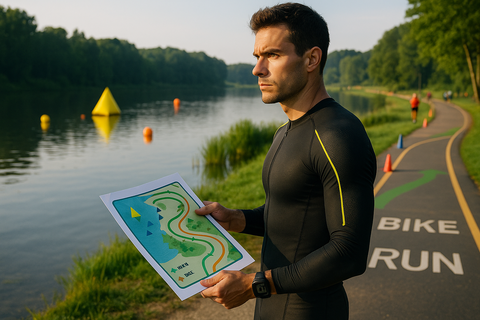
- Review your course map with wet-weather eyes: where are the technical descents? Where might puddles pool?
- Adjust pacing targets, especially on the bike — a slower split that gets you to the run healthy beats a fast split followed by a crash or mechanical issue
- Confirm your lighting and visibility gear is charged and attached
- Hydrate actively: counterintuitively, athletes often under-drink in cold, rainy conditions because they don't feel as thirsty
- Follow race officials' instructions immediately if course modifications are announced
The Bigger Picture: Ottawa's Wet Summer Pattern
This rainfall warning doesn't exist in isolation. According to CBC News reporting, July 2026 was Ottawa's rainiest month on record — a fact that changes how meteorologists and conservation authorities interpret this latest forecast.
When the ground is already saturated from weeks of above-average rainfall, the math on water absorption changes. Normally, soil absorbs a meaningful portion of incoming rain. After a record-wet July, that buffer is reduced, which means more rainwater moves directly into storm drains, streams, and low-lying areas rather than soaking in. It's why conservation authorities are issuing precautionary statements even though flood warnings aren't currently in effect.
This broader pattern raises important questions about infrastructure capacity. Ottawa's storm drainage systems were designed around historical rainfall averages — averages that appear to be shifting. Communities across Eastern Ontario and Western Quebec will likely need to evaluate whether those systems are still adequate for the kind of precipitation events that may become more common.
Economic Stakes: The Ottawa Tourism Paradox
There's a significant financial dimension to this weekend that rarely makes weather coverage. Ottawa's tourism sector was anticipating a major economic boost from the long-distance triathlon event, according to CBC News reporting. Hundreds of athletes travel from across Canada and internationally to compete, bringing hotel bookings, restaurant revenue, and retail spending with them.
Heavy rain introduces a genuine tension: the event itself is not cancelled, but spectator attendance typically drops sharply in wet conditions, which reduces the foot traffic that local businesses count on. Hotels and accommodations are largely pre-booked, so those operators are protected. But restaurants, cafes, and vendor stalls along the course depend heavily on the crowds that show up spontaneously on race day — and those crowds shrink when 100mm of rain is in the forecast.
It's a reminder that major endurance events are economic infrastructure for host cities, and weather risk is a real variable in that equation.
Monitoring the Situation as It Develops
The rainfall warning issued Sunday morning at 9:30 a.m. is Environment Canada's best current assessment — but forecasts for significant weather events are updated continuously. The agency continues to monitor conditions, and there is always the possibility of an alert escalating from yellow to orange or red if rainfall amounts or intensity exceed current projections.
Key sources to monitor throughout Sunday:
- Environment Canada Weather: weather.gc.ca — official forecasts and alert updates
- Cataraqui Region Conservation Authority — watershed and flood risk statements
- Mississippi Valley Conservation Authority — water level monitoring for the valley region
- City of Ottawa emergency alerts — municipal response to road flooding or closures
If you have the Environment Canada app on your phone, Sunday morning is a good time to make sure push notifications are enabled for your location.
Key Takeaways
This is a meaningful weather event, not a minor inconvenience — but it's also a manageable one. Here's the essential summary:
- 50–100mm of rain is expected Sunday, with the heaviest rainfall arriving in the evening, covering Eastern Ontario and Western Quebec
- The long-distance triathlon in Ottawa is proceeding — athletes should prepare for challenging conditions rather than waiting for a cancellation that likely won't come
- Conservation authorities do not anticipate widespread flooding, but caution near watercourses and in low-lying areas is warranted
- August rain follows Ottawa's record-wet July, meaning runoff risk is elevated even without alarming water levels in the watershed
- Multi-agency monitoring is active: Environment Canada, two conservation authorities, and municipal services are tracking conditions and can escalate their response if needed
For athletes competing in long-distance triathlons, extreme weather isn't the enemy — it's just another variable to manage. The preparation you've already done got you to the start line. Smart decision-making on race day will get you to the finish.
Enable your weather alerts now — before the rain starts — so you receive real-time updates without having to actively check. If you're racing: embrace the conditions, race smart, and trust your training. If you're a resident: take 30 minutes before the rain arrives to clear your drains and secure your outdoor space.
Good luck to every athlete racing in Ottawa this Sunday. May your transitions be quick and your descents be safe. 🌧️
Source: CBC News — Ottawa rainfall warning and race forecast
Frequently Asked Questions
What is the expected rainfall during the long-distance triathlon in Ottawa?
Environment Canada forecasts that between 50 to 100 millimeters of rain could fall during the long-distance triathlon in Ottawa.
When are the rainstorms expected to start?
The rainstorms are set to begin on Sunday morning, with the heaviest rain expected in the evening.
Which areas will be affected by the rainfall warnings?
The rainfall warnings include all of eastern Ontario, such as Ottawa, Pembroke, Cornwall, Kingston, and Belleville, as well as western Quebec, including Gatineau, Val-des-Monts, and La Pêche.
What precautions are being advised due to heavy rains?
The Cataraqui Region Conservation Authority has issued a water safety statement advising the public to be cautious along watercourses, although widespread flooding in the area is not expected.
What potential impacts could the rainfall have on the race?
The rainwater could pool on roads and in low-lying areas, potentially causing property damage and challenging conditions for athletes during the race.