
2026 Melmerby Triathlon Results: Conquering Weather Delays and Low Tide Challenges
Sunday morning at Melmerby Beach was anything but welcoming. Dark clouds, early rain, and the threat of thunderstorms greeted nearly 200 athletes who had trained hard for one of Nova Scotia's most cherished regional triathlons — yet what could have been a cancellation became one of the day's best stories.
Race officials had contingency plans at the ready, and cancellation was a real possibility. Then the rain stopped. The water calmed. And the 2026 Melmerby Triathlon got its green light — albeit 30 minutes late.
By the time the last finisher crossed the line, athletes from Olympic veterans to first-time triathletes had navigated everything Mother Nature threw at them: wet roads, gusty winds, and a low tide so dramatic that swimmers had to walk and run along the sandy bottom before they could actually swim. What could have been a story about cancellation became a story about resilience, smart planning, and the kind of community spirit that makes local racing worth showing up for.
The Weather Challenge: A Close Call That Didn't Break the Event
Weather is every race director's silent co-organizer — sometimes cooperative, often not. Going into race weekend, forecasts flagged the possibility of thunderstorms, which would have triggered mandatory safety protocols and potentially shut down the event entirely.
Race Director Marla Sim and her team didn't gamble on optimism. They built a multi-scenario contingency plan that included:
- Cancelling the swim portion entirely if lightning threatened
- Reducing cycling distances to limit exposure time on open roads
- Delaying the start to allow conditions to evolve
That third option turned out to be the right call. A 30-minute delay gave the early morning rain enough time to dissipate. The forecasted thunderstorms never arrived. Water conditions settled into a manageable calm despite lingering gusty winds.
The biggest remaining concern was the roads. Wet pavement from the morning rain created genuinely slick cycling conditions, and organizers made sure every competitor received a specific safety briefing about wet road hazards. Volunteer Dan Caulier was positioned at the cycling transition zone, monitoring the flow of athletes as they shifted from bike to run. Despite those conditions, no apparent accidents or mishaps were reported across any division.
"It all came out well. Our biggest concern was the biking, but it all worked out." — Race Director Marla Sim
That quiet confidence captures something important: good event management isn't about eliminating uncertainty. It's about having the tools — and the calm — to respond when uncertainty shows up.
The Low Tide Challenge: An Obstacle Nobody Could Schedule Around
Even after the weather threat faded, athletes faced a second, entirely different kind of challenge: the ocean itself wasn't ready for them. Low tide conditions at Melmerby Beach left the starting area dramatically shallow. Every swimmer — across every race category — found themselves wading and jogging through ankle-to-knee-deep water before reaching depths where actual swimming was possible.
It wasn't dangerous, but it was awkward, time-consuming, and affected race times for all competitors. This is a quirk specific to coastal triathlon venues, and it's one that experienced athletes quickly learn to accept. Unlike weather, tidal patterns follow lunar and geographic rhythms that don't negotiate with race schedules.
"It was great. I love this race. They can't predict the tides." — Ryan MacDonald, New Glasgow
That's the mindset of an experienced multisport athlete: acknowledge the condition, adapt in real time, and keep moving. MacDonald did exactly that — wading through shallow water before settling into his swim rhythm, then handing off seamlessly to cycling partner Jamie Overmars of Antigonish. For athletes considering Melmerby for the first time, this is worth researching before race day. Knowing that low tide can shorten your actual swimming time — but lengthen your overall start — helps you plan your pacing and mental approach accordingly.
Race Results: Champions Across Five Divisions
Olympic Triathlon — 44 Finishers
The headline result of the day belonged to Stuart Tabor of Antigonish, who crossed the line in 2:15:09 — dominant from start to finish across all three disciplines. It was a significant improvement from his 2025 result of 2:20:07, when he placed seventh. His simple summary said everything: "I love this race."
| Place | Athlete | Hometown | Time |
|---|---|---|---|
| 1st | Stuart Tabor | Antigonish | 2:15:09 |
| 2nd | Justin Blaauwendraat | Truro | 2:21:44 |
| 3rd | Jander Talen | Cochrane, AB | 2:24:22 |
| 3rd Female / 14th Overall | Krista Dunn | New Glasgow | 2:38:36 |
Krista Dunn's result was a strong showing for the New Glasgow contingent, finishing as the third woman and landing 14th among all 44 Olympic finishers.
Olympic Relay — 11 Teams
The Patriots — Ryan MacDonald (swim & run) and Jamie Overmars (cycle) — took top honors with a winning time of 2:10:19, besting the individual Olympic winner's time by more than five minutes through team specialization.
| Place | Team | Members |
|---|---|---|
| 1st | The Patriots | Ryan MacDonald, Jamie Overmars |
| 2nd | Antigonish Ladies | Terese Chisholm (swim/cycle), Gina MacInnis (run) |
| 3rd | MAC Attack | Mark Wilson, Adam Hayden, Corey Dougay |
Sprint Triathlon — 100 Finishers
The sprint division drew the largest field of the day with 100 finishers, topped by Mathew Lawton of Bedford.
| Place | Athlete | Hometown |
|---|---|---|
| 1st | Mathew Lawton | Bedford |
| 2nd | Zack Rogers | Enfield |
| 3rd | Thomas Vickers | Bible Hill |
| Top Local (10th Overall) | Luc Saulnier | Thorburn |
Halifax resident (and former Pictou native) Sean McNeill was among the sprint finishers. He came to race with his girlfriend, Maggie Pickard — which brings us to one of the day's most heartwarming storylines.
"It was pretty good, a little struggle at the start [referring to the swim]. The bike was pretty good. I had a good time." — Sean McNeill, Halifax
Sprint Relay — 11 Teams
The J-J Wolfburn team — swimmer and runner Jeff Burns alongside cyclist James Dewolfe — claimed the sprint relay title.
Super Sprint — 27 Finishers
Sam Julien of West Porters Lake won the Super Sprint division. Among the 27 finishers was Maggie Pickard of Halifax, who completed her very first triathlon. Her reaction?
"It was my first triathlon. It was certainly a good one. It was really fun." — Maggie Pickard, Halifax
First-time triathletes often describe a mixture of relief, exhilaration, and immediate plans for the next race. Pickard's enthusiasm suggests Melmerby's welcoming atmosphere made an impression — and that the triathlon community may have just gained a new member.
Try-a-Tri — 1 Finisher
Kelly Silver of Halifax was the sole Try-a-Tri entrant to complete the distance: a 200-metre swim, 10-kilometre cycle, and 2-kilometre run. Finishing alone in a division doesn't diminish the achievement — crossing any triathlon finish line for the first time is a win worth celebrating.
Event Management: What Race Organizers Can Learn from Marla Sim's Approach
The 2026 Melmerby Triathlon offers a near-perfect case study in how to manage an outdoor endurance event when conditions go sideways. Race Director Marla Sim didn't improvise on race morning — she walked in with a decision tree already built.
Here's what made the contingency approach work:
- Pre-event scenario planning — Officials identified specific thresholds for each option (cancel swim, shorten cycling, delay start) before any rain fell
- Continuous monitoring — Real-time assessment of actual conditions versus forecast allowed for a calibrated response rather than a reactive one
- Targeted communication — Cyclists received specific safety briefings about wet road hazards, not generic warnings
- Choosing delay over cancellation — The willingness to wait 30 minutes, rather than defaulting to cancellation, preserved the event for nearly 200 athletes
The thunderstorms never came. The roads dried enough. The athletes raced. This is the kind of outcome that looks simple from the outside but represents significant preparation behind the scenes. For anyone planning their own endurance event — whether a small local 5K or a regional multisport race — the Melmerby model is worth studying.
Community & Inclusivity: Why This Race Matters Beyond the Podium
Local Pride on Full Display
The results sheet tells a geographic story: athletes came from Antigonish, Truro, Bedford, Enfield, Bible Hill, Cochrane (Alberta), Halifax, New Glasgow, and Thorburn. The Melmerby Triathlon draws regional competitors while remaining deeply rooted in Pictou County's sporting culture. New Glasgow alone contributed Ryan MacDonald (Olympic Relay winner), Krista Dunn (3rd female, Olympic), and a handful of sprint finishers — making it one of the better-represented communities in the field.
Five Formats for Five Different Athletes
One of the smartest things the Melmerby Triathlon does is offer multiple entry points into the sport. Not everyone is ready for a 1.5km swim, 40km bike, and 10km run. The event's format ladder — Try-a-Tri → Super Sprint → Sprint → Olympic → Relay — means that a first-timer like Maggie Pickard and a seasoned competitor like Stuart Tabor can race at the same event on the same day, each finding the right challenge for their level.
| Format | Swim | Bike | Run | Best For |
|---|---|---|---|---|
| Try-a-Tri | 200m | 10km | 2km | Complete beginners |
| Super Sprint | Short | Short | Short | New athletes building confidence |
| Sprint | ~750m | ~20km | ~5km | Recreational athletes |
| Olympic | 1.5km | 40km | 10km | Experienced competitors |
| Relay | Split by team | Split by team | Split by team | Teams of 2–3 specialists |
This structure doesn't just grow participation numbers — it builds a pipeline. The beginner who finishes a Try-a-Tri today is the Olympic competitor five years from now.
Key Takeaways from the 2026 Melmerby Triathlon
Whether you're a triathlete, an aspiring one, or someone who organizes sporting events, this year's Melmerby race offers a handful of genuinely useful lessons:
- Preparation beats prediction. You can't control the weather or the tides. You can control how many contingency plans you walk in with.
- A 30-minute delay is not a failure. For Race Director Marla Sim, flexibility was the strategy — and it worked.
- Local events carry real prestige. Stuart Tabor shaved five minutes off his 2025 time. Ryan MacDonald came back to defend his reputation. This race matters to the people who run it.
- First-timers thrive in welcoming environments. Maggie Pickard didn't just finish her first triathlon — she loved it. That's the result of good event culture.
- Coastal courses come with coastal variables. Low tide affected every swimmer, but athletes accepted it as part of the experience. If you're considering a beach triathlon, research tidal conditions for your race date in advance.
Thinking About Your First Triathlon?
The Melmerby Triathlon's 2026 edition is a reminder that endurance racing doesn't require perfect conditions — it requires preparation, adaptability, and a community that shows up for each other. If you're in Nova Scotia or Atlantic Canada and have been considering entering a triathlon for the first time, events like Melmerby's Try-a-Tri and Super Sprint formats are exactly where to start. The distances are manageable, the atmosphere is supportive, and as Maggie Pickard found out, even an imperfect day with low tides and rain delays can turn into a great experience.
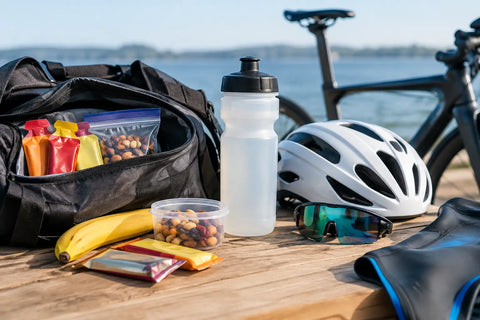
And if you're ready to gear up for your next race — or your first — make sure you're equipped with the right kit. Consider investing in quality swimming goggles, a reliable cycling helmet, and a comfortable triathlon suit to make sure you're prepared for whatever race day throws at you. Because as Race Director Marla Sim put it best: "It all worked out." It usually does — when you're prepared.
Frequently Asked Questions
What is the Melmerby Triathlon?
The Melmerby Triathlon is a multi-sport event that includes swimming, cycling, and running. It attracts athletes of various skill levels and features different race formats, including Olympic and sprint distances.
What were the weather conditions during the 2026 Melmerby Triathlon?
Conditions were challenging due to low tide, and there was initial concern about thunderstorms. However, the weather improved, allowing the race to proceed after a half-hour delay for rain to dissipate.
Who were the top finishers in the Olympic distance race?
Stuart Tabor won the Olympic triathlon with a time of 2 hours, 15 minutes, and 9 seconds, followed by Justin Blaauwendraat in 2:21:44 and Jander Talen in 2:24:22.
What challenges did triathletes face during the swim portion?
Triathletes faced a low tide which required them to walk and run much of the course before reaching water deep enough to swim.
How many athletes participated in the event?
Nearly 200 athletes finished the various events of the Melmerby Triathlon.
What safety measures were implemented during the race?
Race officials prepared contingency plans in case of severe weather, including the possibility of cancelling the swim or reducing cycling distances. Cyclists were also cautioned about slick road conditions due to rain.
Source: Pictou Advocate — It all worked out: Close call with weather at Melmerby Triathlon