
Olympic Gold vs. Long-Distance Millions: Insights from Jan Frodeno and Flora Duffy
As the Los Angeles 2028 Olympics approach, Jan Frodeno and Flora Duffy share their journeys, revealing what every athlete targeting the Olympics should consider before making pivotal choices.
With only two years left before the Los Angeles 2028 Olympics, professional triathletes find themselves at a crossroads filled with personal and financial implications. Do you aim for a medal that only three athletes will gain every four years, with no traditional prize money involved? Or do you focus on building a career in growing race circuits, where single races offer real prize money and the path doesn't hinge on federation politics?
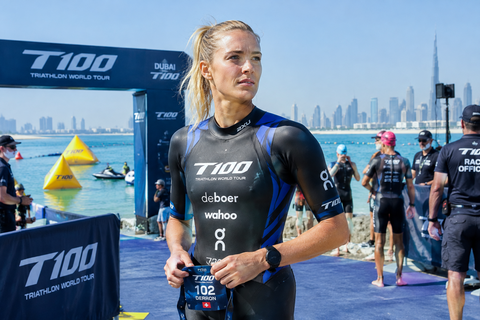
This tension was palpable at the 2026 World Championship in Kona. Taylor Knibb became the new long-distance world champion while also gathering Olympic qualifying points for a chance at a third Olympic Games. Vincent Luis, a three-time Olympian and two-time short-course world champion, won his first long-distance race at Kona after stepping away from his Olympic aspirations. Marten Van Riel also described feeling "stuck in the Olympic pipeline for a long time" before finally racing in Kona. Even Julie Derron, a silver medalist from Paris 2024 and Kona's third-place finisher, is considering a return to short-course racing for the 2028 Games.
Their experiences echo a broader discussion within the world of professional triathlon — one that Jan Frodeno and Flora Duffy are particularly equipped to address.
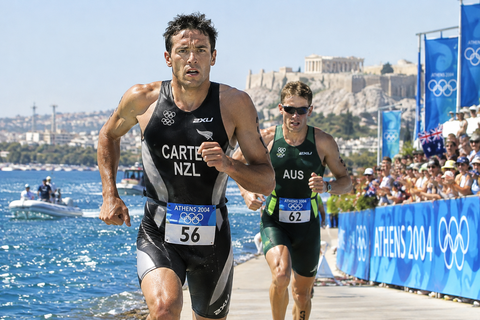
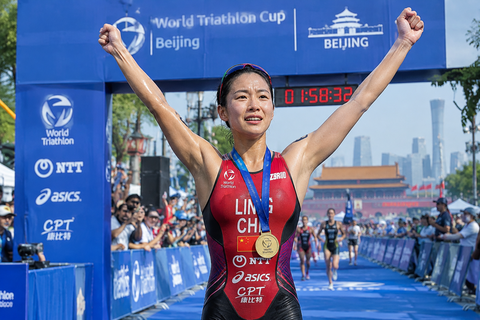
Frodeno won a gold medal at the 2008 Beijing Games in his first-ever victory and later built an impressive long-distance career, winning three world titles. Duffy competed in five Olympic Games, won gold in Tokyo, and returned home as a national icon in Bermuda, even after exploring long-distance racing later in her career. Together, they reveal the true costs and rewards associated with chasing Olympic glory and what that journey entails.
Where the Dream Begins
The Olympic Pull
Jan Frodeno didn't come from a sporting family. In fact, he describes them as "almost anti-sporting." The Olympics were the exception — those brief two and a half weeks every four years when the TV was on and athletes returned as heroes.
"The Olympics gave me meaning and hope for nearly 20 years until I actually got there," Frodeno recalls. "It felt like a parallel universe where different lives were being lived."
His spark ignited during the 1988 Games, watched at his grandparents' home, long before triathlon became an Olympic event. He felt empowered by the belief that extraordinary achievements could lie ahead, far beyond the limited scope he knew.
This inspiration deepened when Frodeno met Conrad Stoltz, a South African athlete from the Sydney 2000 Games. "He was just a regular guy who happened to excel at triathlon," Frodeno shares. "That made the Olympics feel attainable."
For Flora Duffy, the draw was similar, but different. Growing up in Bermuda, the Olympics represented the pinnacle of competition.
"Sydney was the first Olympic Games I truly remember," she reflects. "It felt magical. The event is iconic and rich in history. Maybe part of it is that it only happens every four years, which gives it additional allure."
Like Frodeno, she found a mentor in Tyler Butterfield, a fellow Bermudian triathlete who competed in Athens. "He was a few years older and did triathlon, which made me think, 'Maybe that can be me too.'" Seeing someone relatable made it all feel possible.
More Than Personal Ambition
Both athletes carried their nations' hopes into their Olympic journeys, but the weight varied significantly.
For Frodeno, representing Germany meant contributing to the national medal tally while sharing an Olympic village experience with athletes from various sports. "Triathlon is typically individual, but at the Olympics, you share those experiences with athletes from entirely different sports," he explains. He was roommates with Moritz Fürste, captain of the German hockey team, and they celebrated medals just days apart. "It was truly something."
For Duffy, the significance felt heavier and more personal. Bermuda typically sends about ten athletes to the Olympics in a good year. There were only two in Tokyo. When Duffy crossed the finish line to become Olympic champion, she didn't just win a race — she created a moment her small island had never experienced before.
"It united Bermuda and became a deeply meaningful moment that was about more than just swimming, biking, and running." — Flora Duffy
Today, she is honored with a track at the national stadium, a pool at her high school, roads named after her, and murals throughout Bermuda.
Frodeno believes this cultural impact is one of the Olympics' most underrated aspects. "The title that resonates outside the triathlon bubble," he says. "Even years later, I'm still introduced as the Olympic champion. That title shines brighter than any individual sport achievement."
Why the Olympics Carry a Different Weight
A Rare Opportunity
Every triathlete knows that winning a world championship is significant — what Frodeno describes as "the Wimbledon of our sport." However, the Olympics operate under a completely different paradigm.
World championships occur every year. The Olympics happen once every four years, with only three medals available. Finish fourth, and you leave empty-handed after investing four grueling years into pursuing that singular race.
"Most athletes might only get one or two Olympic opportunities in their careers," Frodeno notes. "Some may manage three. Flora's five is phenomenal."
This scarcity creates immense pressure but also profound significance. Duffy captures it well: "On race day, anything can happen. That's why athletes dedicate themselves to training for that one moment." The unpredictability that makes the Olympics daunting is also what makes it stunning.
"That title stays with you in a way like nothing else." — Jan Frodeno
Frodeno has been introduced as Olympic champion for 18 consecutive years. The title endures long after the podium flowers have wilted.
The New Landscape: T100, the Pro Series, and Tough Choices
More Options, More Complexity
In the world of professional triathlon in 2026, the landscape is vastly different from Frodeno's early days. The T100 series and the Pro Series now offer credible paths for athletes to build careers without seeking an Olympic bib.
For those athletes who are good enough to qualify but not quite elite enough to medal, the decisions become complicated. Pursuing the Olympic route often means traveling the globe to collect qualification points, navigating federation politics, dealing with performance-based health insurance, and ultimately competing in a race that might yield nothing.
Duffy puts it plainly: "Are you going for the Olympics because that's your dream? Or are you drawn to the T100 and Pro Series because you want to earn a living? For many athletes, making a living is the goal, and there's absolutely nothing wrong with that."
Still, she highlights that the comparison often overlooks another layer. Short-distance athletes in many nations frequently enjoy support from their federations — including funding, health insurance, and travel assistance unavailable in race-day winnings. "The decision is trickier than it seems when just comparing purses."
Frodeno speaks frankly about the allure of alternatives and the boundaries that come with them. "There were also lucrative races during my career," he reveals. "But the Olympic experience is something you cannot recreate. You can't read about it or catch it up later."
The Risks of Spreading Too Thin
Athletes are currently navigating an unprecedented challenge. Many strive to build a long-distance career while simultaneously gathering Olympic points and maintaining contracts within the T100 series.
"Athletes are trying to figure out if they should race in the shorter distances, the T100 series, or the Pro Series while still qualifying for the Olympics," Duffy states. "The risk is that they spread themselves too thin."
Taylor Knibb is a prime example of whether achieving excellence in all categories is feasible. Winning Kona in 2026 certainly suggests it's possible. Whether this can sustain through an Olympic qualification cycle remains to be seen.
Both Frodeno and Duffy agree: more choices don't always mean better options. With options exploding, many athletes face tougher decisions, especially if they haven't introspected on what truly motivates them.
What Winning Gold Actually Changed
Flora Duffy: The Immediate Benefits
For Duffy, winning in Tokyo was much more than a moment of glory — it was transformational, not due to any prize money from the Games, but because she had structured contracts anticipating her success.
"My situation was unique as my contracts were already aligned with Tokyo and my expected victory," she shares. "That day was incredibly lucrative for me. Additionally, I landed new sponsorships post-Games due to my Olympic status."
This momentum continued, as sponsors associated her with Paris and short-course racing felt reassured by her Olympic path. The narrative of being "the defending champion from a small island" carried its own commercial value — a story that arose only because of her Tokyo success.
Jan Frodeno: An Ongoing Opportunity
Frodeno's experience illustrates a different timeline. The boost following his Beijing victory was significant — moving from a "miserable little apartment" into a beautiful loft and enjoying business class flights. Yet, he reflects on something more lasting.
"A unique aspect of being an Olympic champion is that it opens doors," he notes. "That title still holds value today, 18 years later. I don't need to flaunt my medal; it's more about how people perceive you. That title remains relevant."
This distinction is crucial. Prize money fades over time. Sponsorships have expiry dates. The Olympic champion title endures, serving as a permanent professional asset — a key that opens doors across various industries and situations, unlike multiple world titles.
The Hidden Challenges: Life After Gold
Frodeno's victory in Beijing brought complications he never anticipated — after never winning before, he reached the pinnacle in one day.
"That was incredible but also the peak," he admits. "Any World Cup after couldn't possibly compare to that moment — three helicopters overhead, media frenzy, the vastness of the Olympic spectacle." What followed was seven years spent searching for significance. His 2015 long-distance title ended that drought. "I struggled to find meaning afterward… Was I just a one-hit wonder?"
The external accolades and lifestyle changes were beneficial — apartments, cars, and business-class flights — but couldn't replace his core love for triathlon and the training involved.
Duffy's post-Tokyo experience was quite the opposite. Instead of feeling she'd reached a conclusion, the gold medal reignited her passion. Paris raised a new question: could she defend her title and become a two-time champion? Now retired, she feels no regrets about her journey. "If I ask myself if I wish I'd pursued Kona or improved my preparation for Paris, my only regret is not having a better build-up to Paris. Racing in Kona doesn't trouble me."
When to Keep Pursuing — and When to Shift Focus
The Two-Phase Career
For many professional triathletes, the career trajectory often follows a familiar shape: pursue Olympic aspirations first, then transition to long-distance races. The Olympic experience — whether celebrated or disappointing — creates a foundation for a subsequent career in middle- or long-distance events.
Vincent Luis exemplifies this pattern: three Olympics, two world titles, followed by a debut victory in Kona that reshaped his legacy. Marten Van Riel also spent years in the Olympic pipeline before heading to Hawaii.
Duffy considers this a valid route for many athletes, but it's not a fit for everyone. "My path was unique as the Olympic goal continued to motivate me. The prospect of returning to Paris mattered to me more than fully stepping into long-course racing. This won't be true for every athlete, and it shouldn't have to be."
Understanding Your Motivations
When pressed for guidance, both athletes return to the same essential idea: be honest with yourself.
Frodeno reflects on his own lack of clarity. After Beijing, he aimed for London 2012 but recognizes he could have shifted focus earlier. "I didn't have the confidence to see my Olympic journey was over by 2012," he says, quoting John Mayer: "Twice as much is not twice as good."
His advice is not to forgo the Olympics but to be truthful about your reasons for pursuing them. "What worked for me was trusting my intuition," he explains. "My mother encouraged me to study for my future, but I knew I had to commit fully to my sport."
"What will drive you to train daily and endure injuries? The answer varies for everyone. For me, it was the Olympics." — Flora Duffy
This isn't a universal answer but a framework for finding your own.
Insights for LA28 Hopefuls
Set Realistic Expectations
Duffy speaks directly here, drawing from her experiences. Athletes entering the Olympics often harbor expectations that can stray from reality. The anticipation that you'll perform at your best on that specific day amidst the heightened pressure can be unrealistic.
"The intensity at the Olympics — pressure, expectations, and distractions — escalates," she relates. "There's the stress of team selection, traveling the world for points, managing injuries, and trying to arrive at the Games in peak condition."
She candidly includes herself in this critique. In her fifth Olympic experience, where a medal wouldn't have defined her career, she finished fifth and felt disappointment overshadow the joy. "Unfair expectations can rob the experience of what it means to race at such a historic venue and represent your country."
The takeaway isn't to dull your ambitions. Instead, cherish the experience alongside the outcome. Dream big, but understand the difficulties that lie ahead.
Comprehend the Financial Landscape
Before deciding based on prize purses alone, consider all elements involved. Support for Olympic pathway athletes can include:
- Travel subsidies for qualification events globally
- Health insurance related to national program membership
- Coaching and athlete support through federation programs
- Potential sponsorship boosts associated with Olympic success — like the contracts Duffy navigated
Each of these factors escapes a straightforward purse-to-purse comparison with T100 events and other competitions. The calculation is genuinely more intricate than it first seems.
Frequently Asked Questions
What are the main factors influencing professional triathletes' decisions between pursuing Olympic gold and long-distance paydays?
Professional triathletes must weigh the prestige and honor of Olympic competition against the financial rewards of long-course events. The considerable time and effort required to qualify for the Olympics, alongside limited medal opportunities and potential hardships relating to Olympic campaigns, can make the lucrative nature of long-distance events more appealing.
How do Flora Duffy and Jan Frodeno describe their experiences with the Olympics?
Flora Duffy sees the Olympics as the pinnacle of sport and a major source of national pride for Bermuda. Her gold medal was a significant achievement for her country. Jan Frodeno views Olympic success as a title that goes beyond sport, describing it as the most meaningful credential he possesses. He also highlights the unique experiences shared with fellow athletes from different sports during the Olympic Games.
What challenges do athletes face during their Olympic campaigns?
Athletes often face immense pressure and high expectations during their Olympic campaigns, compounded by the need to travel globally, chase qualification points, and manage injuries. The stress of selection and preparation for a single event, held only every four years, makes competing at the Olympics a unique challenge.
How has the growth of alternative triathlon opportunities impacted young athletes' choices?
With the emergence of the Pro Series, T100, and other available events, young triathletes now have multiple options to consider. While some may opt for the more immediate financial incentives of long-course events, others may still pursue the Olympic path, supported by federation resources. The increased opportunities make choosing a career path in triathlon more complex, as athletes must balance their ambitions and economic needs.
What advice do Duffy and Frodeno have for athletes targeting the LA28 Olympics?
Both Duffy and Frodeno advise athletes to keep realistic expectations while pursuing their Olympic dreams. While dreaming big is essential, understanding the pressure and challenges of competition is crucial to maintaining joy in the experience. Listening to personal instincts and balancing ambitions between Olympic competition and alternative racing pathways is key for athletes.