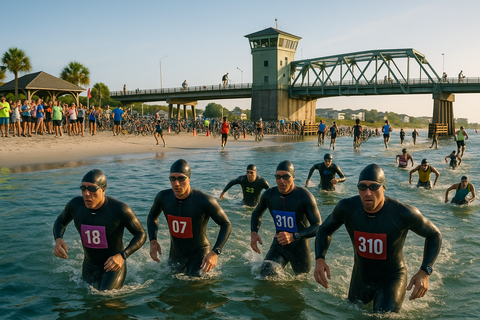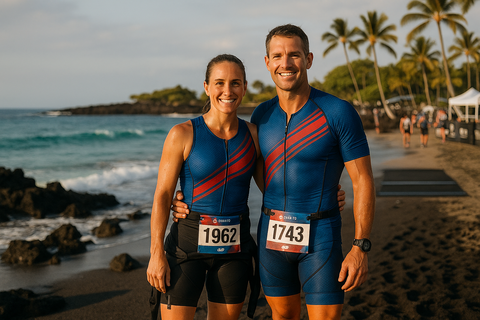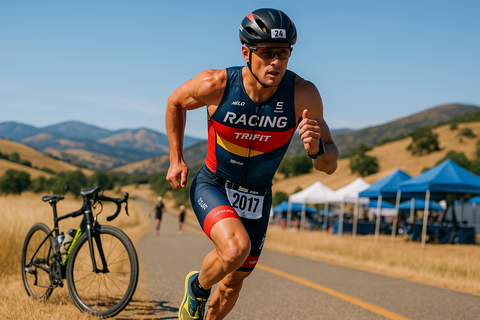

Two Greek athletes. Two gold medals. One unforgettable opening day. On Day 1 of the 2026 World Triathlon Championships in Spain, Ourania Nomikou and Panagiotis Dimopoulos delivered a historic double that sent a clear message to the global triathlon community: Mediterranean triathlon has arrived.
Greece Wins Double Gold at World Triathlon Championships 2026: Nomikou and Dimopoulos Dominate Sprint Events
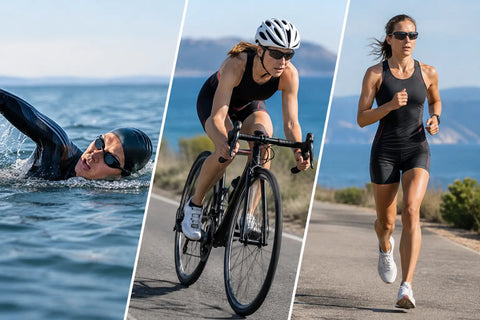
The World Triathlon Championships kicked off with an electrifying start for Greece. Competing in the same 35-39 age category across different events, Nomikou and Dimopoulos outperformed a world-class field in the sprint distance format — 750 meters swimming, 20 kilometers biking, and 5 kilometers running. By the end of the day, Greece had taken home every gold medal available in this category.
Let's break down the details of this remarkable opening day, including a poignant fourth-place finish that highlights just how deep Greek triathlon talent runs.
Two Medals, One Perfect Start
The World Triathlon Championships, held from September 23 to 27, 2026, in Spain, is the pinnacle of age-group triathlon competition worldwide. Athletes from over 100 countries qualify through their national federations — claiming gold here means you are among the best on the planet for your category.
Age-group racing is fiercely competitive. Athletes in masters categories, organized in five-year increments like 30-34 and 35-39, often dedicate 12 to 15 hours a week to training while juggling professional careers and family life. The 35-39 bracket consistently produces some of the toughest fields, where athletes have fine-tuned their race strategies and pacing over years of experience.
Greece's sweep of both gold medals in this division reflects more than individual skill — it signals a growing depth of triathlon talent within the country. Adding to this narrative is a fourth-place finish by another Greek athlete in a neighboring category, underscoring how robust this talent pool truly is.
Ourania Nomikou's Dominant Women's Victory
1:12:32 and the Art of Balanced Performance
Ourania Nomikou claimed the championship's first gold medal for Greece by finishing the women's 35-39 sprint event in 1 hour, 12 minutes, and 32 seconds. Her splits reveal an athlete who executed a perfectly planned race across every discipline.
Swim — 750m in 10:56. Nomikou opened her swim at an impressive pace of approximately 1:27 per 100 meters. This strong start positioned her well for the bike leg. In triathlon, emerging from the water in good shape allows for better movement and cleaner transitions into the next segment.
Bike — 20km in 35:20. Transitioning onto the bike is crucial for race outcomes. Nomikou maintained an average speed of around 33.8 km/h over those 20 kilometers, keeping her solidly at the front. At this level, aerodynamic efficiency and sustained power separate podium finishers from the rest of the field.
Run — 5km in 19:50. Wrapping up with a 5-kilometer run in 19:50 converts to approximately 3:58 per kilometer. Achieving sub-4:00 pace after two demanding segments showcases both speed and mental toughness — a hallmark of elite age-group athletes.
Nomikou's performance is that of a truly well-rounded champion — no weak links, no segments where she faltered, just consistent excellence from start to finish.
Panagiotis Dimopoulos's Men's Championship Victory
1:00:50 — The Men's Gold Standard
Following Nomikou's triumph, Panagiotis Dimopoulos sealed Greece's golden double by finishing the men's 35-39 sprint event in 1 hour, 0 minutes, and 50 seconds. His time firmly placed him atop a world-class international field.
Swim — 750m in 9:30. Dimopoulos made a splash with a swift opening swim of 9:30 — roughly 1:16 per 100 meters. This aggressive start allowed him to maintain a front-of-pack position, which is critical in sprint races where every second counts.
Bike — 20km in 29:38. This is where Dimopoulos truly asserted his dominance. A bike split of 29:38 translates to an average speed of approximately 40.5 km/h — an elite cycling performance by any measure. Since the bike leg carries the greatest time investment in a sprint, a commanding ride here opens a significant buffer for the run.
Run — 5km in 16:49. Finishing with a run time of 16:49, averaging around 3:22 per kilometer, Dimopoulos proved that his bike effort hadn't compromised his running strength. Such a powerful closing segment signals exceptional race preparation and enduring fitness.
Quick context for newcomers: men's winning times in these events tend to be faster than women's due to established physiological differences — not a reflection of the competitiveness or difficulty of the respective fields.
When 0.20 Seconds Separates Gold from No Medal: Elisavet Dimou's Heartbreaking Fourth Place
The Story of a Near-Miss at the Highest Level
If Greece's golds made headlines, Elisavet Dimou's performance deserves equal attention and reflection. Competing in the women's 30-34 age category, Dimou finished at 1:12:12, landing her in a tough fourth place — within touching distance of a medal.
In triathlon, finishing fourth can feel bittersweet. You've trained hard, qualified for a world championship, and executed a nearly perfect race — only to just miss the podium. Dimou's time was commendable and would be competitive across many other contexts, yet she finished just shy of hardware.
This performance also highlights the depth of talent in Greek triathlon. It wasn't just Nomikou and Dimopoulos shining — Greece fielded multiple athletes capable of competing at a world-class level across varying age categories. A fourth-place world championship finish speaks volumes about a thriving ecosystem of training and commitment.
What Greece's Victory Means for the Triathlon World
Building Momentum on the World Stage
Claiming a double gold on the opening day of the World Triathlon Championships sends a powerful message. For Greek sport, such success at a major international event is genuinely significant. Triathlon has witnessed tremendous growth across Europe and Latin America in recent years, and results like these shape how nations are perceived within the global triathlon community.
For the broader triathlon world, this is a reminder of what makes age-group racing on the world stage so compelling. These are not full-time professional athletes with dedicated coaching staffs. They are passionate individuals balancing careers and families while achieving world championship-level performances — an inspiration to anyone considering whether competitive triathlon is within their reach.
For aspiring triathletes in Spain and the broader Mediterranean region, these performances highlight real potential at the masters level. Age-group athletes have clear qualification pathways through national federations, and the sprint distance — 750m swim, 20km bike, 5km run — is an approachable and exciting target for a wide range of experience levels.
Understanding Sprint Distance Triathlon
A Quick Primer for New Fans
If you're new to the world of triathlon, here's a look at the sprint format that defined Greece's golden day:
| Segment | Distance | Nomikou's Time | Dimopoulos's Time |
|---|---|---|---|
| Swim | 750 meters | 10:56 | 9:30 |
| Bike | 20 kilometers | 35:20 | 29:38 |
| Run | 5 kilometers | 19:50 | 16:49 |
| Total | ~26km | 1:12:32 | 1:00:50 |
The sprint format is the shortest standard triathlon distance — shorter than the Olympic distance (1.5km/40km/10km) and long-distance formats. However, shorter does not mean easier. Sprint racing is fast-paced and tactical, demanding explosive effort from the opening swim. Elite age-groupers typically finish between 60 and 90 minutes, making every transition and every segment decision critical to the outcome.
Key Takeaways
Greece's opening day at the 2026 World Triathlon Championships in Spain delivered something genuinely rare: capturing every available gold medal in a single age category across both genders. Here are the highlights:
- Ourania Nomikou secured the women's 35-39 gold in 1:12:32, showcasing a balanced performance across all three segments anchored by a sub-4:00/km closing run.
- Panagiotis Dimopoulos claimed the men's 35-39 gold in 1:00:50, highlighted by a 40.5 km/h average on the bike and a 3:22/km finishing run pace.
- Elisavet Dimou demonstrated the depth of the Greek program by finishing fourth in the women's 30-34 category with a 1:12:12, missing a medal by the narrowest of margins.
- Greece's double gold reflects not just individual talent but a burgeoning culture of high-performance triathlon across the country.
The championships continue through September 27 — stay tuned for more racing. Regardless of what follows, the opening day belongs firmly to Nomikou and Dimopoulos.
Greece's outstanding performances serve as a powerful reminder that world-class triathlon is achievable. Age-group athletes — people with jobs, families, and full lives — can and do compete at the sport's highest levels. These results prove it.
Did this story inspire you? Share it with a fellow triathlete or tag a friend who's training for their next race.
Source: tovima.com — Greece Strikes Double Gold on Opening Day of Triathlon Worlds
Frequently Asked Questions
What were the recent achievements of Greek athletes at the World Triathlon Championships?
Greek athletes Ourania Nomikou and Panagiotis Dimopoulos claimed gold medals in the women's and men's 35-39 age groups, respectively, on the opening day of the World Triathlon Championships in Spain.
What is the recent incident involving an explosion in Plaka?
Two bodies have been recovered from the rubble after the explosion at a two-story building in central Athens, while four people remain missing.
What types of news does TOVIMA.COM cover?
TOVIMA.COM covers a variety of news topics including politics, world events, society, finance, culture, travel, climate, and sports.
What notable weather conditions were reported across Greece recently?
Heavy rain and storms were expected across Greece over the recent weekend.
What is the significance of Greece's recent economic indicators?
Greek household spending has increased by 5.5%, although it still trails behind the spending levels seen in 2008, indicating a gradual recovery.