
The Comeback Story Nobody Expected: Paula Findlay's Dominant Long-Distance Triathlon Victory Explained
July 19, 2026 · Lake Placid, New York
Edmonton's 37-year-old triathlete didn't just finish her first full-distance race — she won it. Paula Findlay crossed the finish line in 8 hours, 47 minutes, and 43 seconds, setting a women's bike course record and defeating Spain's Marta Sanchez by nearly four minutes on her debut at the full distance.
Imagine stepping up to the start line of one of the most grueling endurance events in the world — 226 kilometers of swimming, cycling, and running — and doing it for the very first time. Now imagine winning.
That's exactly what Paula Findlay did on July 19, 2026, at the Athletic Brewing event in Lake Placid, New York. The Edmonton-born-and-raised triathlete crossed the finish line in 8 hours, 47 minutes, and 43 seconds, defeating Spain's Marta Sanchez by nearly four minutes in her debut full-distance triathlon. Not a participation story. Not a survival story. A victory story — on the first try.
For anyone who has ever wondered whether it's too late to attempt something monumental, whether past setbacks define future outcomes, or whether age is a ceiling or just a number — Paula Findlay just answered all three questions at once.
What Exactly Is a Full-Distance Triathlon?
Before we dive into how Findlay won, it helps to understand what she won.
A full-distance triathlon covers 140.6 miles (226 km) and consists of three consecutive disciplines with no breaks in between:
- Swim: 2.4 miles (3.8 km)
- Bike: 112 miles (180 km)
- Run: 26.2 miles (42.2 km) — a full marathon
Most endurance athletes consider it one of the most difficult one-day sporting events in the world. Elite professionals train for years before attempting the full distance. Many veteran triathletes spend multiple race seasons working up to it. The idea of winning it on your first attempt is, to put it simply, extraordinary.
Who Is Paula Findlay?
From Olympic Contender to Long-Distance Pioneer
If you follow triathlon, you know the name. If you don't, here's the quick version: Paula Findlay is one of Canada's most decorated triathletes and the first Canadian to win a World Triathlon Series event.
Her story begins in Edmonton, Alberta, where she grew up and trained in the sport that would define her career. By 2012, she was considered a genuine medal contender heading into the Summer Olympics in London. Then, a nagging hip injury derailed her race, and a potential podium finish slipped away — one of the most heartbreaking "what if" stories in Canadian sports history.
Rather than letting that moment define her, Findlay pivoted. She shifted her focus from the shorter Olympic-distance triathlon format to the 70.3-distance race — also called the Half-Distance Triathlon — covering 70.3 total miles.
The results? Fourteen Half-Distance championships.
That number isn't just impressive — it's foundational to understanding how she was able to win a full-distance race on her very first attempt.
Why the Step Up to Full Distance?
At 37, most professional triathletes are either winding down or comfortably settled into their established race distances. Findlay chose to push into new territory. While direct quotes about her specific motivation aren't available in this report, the results speak a clear language: she wasn't content to rest on what she'd already mastered. She came to Lake Placid to find out what she was truly capable of.
Race Day: How She Won from Behind
The Swim — Starting 6th, 3+ Minutes Down
Long-distance triathlon races rarely unfold the way they start. Paula Findlay exited the 2.4-mile swim in sixth position, trailing the leaders by more than three minutes. For a debut full-distance racer, that kind of early deficit could trigger panic, a premature surge, or a collapse in confidence.
Findlay did none of those things. Instead, she made the smartest move available: she stayed patient, conserved energy, and pointed herself toward the part of the race where she knew she could make her move — the bike.
The Bike — Setting a New Women's Course Record
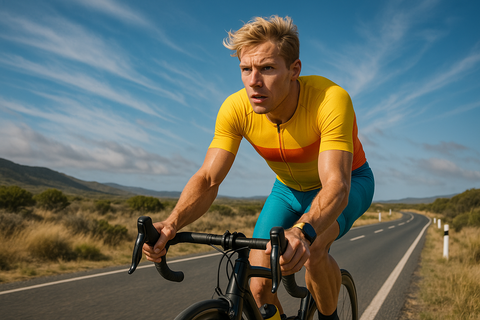
The 112-mile (180 km) bike leg at Lake Placid is renowned for its challenging climbs. As the second half of the ride turned upward, Findlay surged.
She clawed through the field, eventually locking into a head-to-head battle with Spain's Marta Sanchez. The two athletes separated themselves from the rest of the pack — the race had become a duel.
When Findlay crossed the bike-to-run transition, she had done something remarkable: she'd erased a three-minute deficit and set a new women's bike course best time with a 4:50:26 split. That's not just winning the bike leg — that's rewriting the record books on a debut. Her Half-Distance training had built a cycling engine powerful enough to deliver a historic performance when it mattered most.
The Marathon — Navigating Uncharted Territory
Here's where the story gets even more compelling. Findlay had never run a marathon beyond 30 kilometers before this race. Everything beyond that threshold was genuinely unknown.
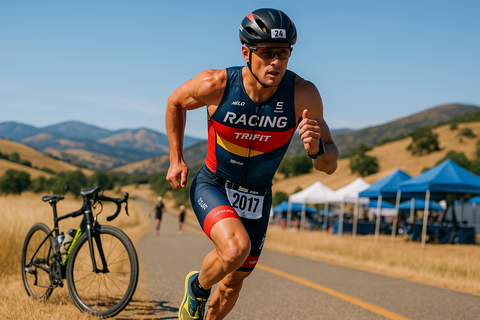
Sanchez made her move early in the run, briefly challenging Findlay and making the outcome feel uncertain. But around the five-mile mark, Findlay found another gear.
By the halfway point of the marathon, she had opened a lead of more than one minute. Then she did something that separates good athletes from champions: she kept extending it. Despite running through uncharted distance — territory her legs had never visited — she crossed the finish line in 2:55:49 for the marathon and claimed victory in 8:47:43, winning by nearly four minutes.
Experience compounds. Fitness transfers. And patience, as it turns out, is a race strategy.
The Duel with Marta Sanchez
The race evolved into a genuine two-athlete showdown between Findlay and Sanchez. The Spanish competitor was a formidable rival throughout the bike leg and into the early kilometers of the run. That Findlay's winning margin eventually stretched to nearly four minutes is a testament not just to her physical fitness, but to her ability to execute a race plan under pressure — the kind of composure that only comes from years of competing at the highest level.
The Training Foundation Behind the Victory
Why Half-Distance Mastery Matters
Winning a full-distance race on debut doesn't happen by accident. It happens when an athlete arrives with an engine already built for the demands of the sport.
Findlay's 14 Half-Distance titles provided exactly that. At the 70.3 distance, she had already:
- Mastered swim-to-bike-to-run sequencing — knowing how legs feel through each transition
- Developed elite-level bike power — the same engine that produced a course-record split at Lake Placid
- Refined race-day execution — pacing, fueling, mental focus under competitive pressure
- Built a deep aerobic base — the foundation that allows an athlete to run a 2:55 marathon after 5+ hours of racing
The primary adjustment from 70.3 to full distance involves glycogen management (how your body fuels itself over 8+ hours), pacing discipline, and the mental endurance to push through the final miles of a marathon when fatigue sets in. Findlay's Olympic background — racing under intense pressure at the highest level of the sport — meant she understood how to manage herself when it hurt.
The Age Advantage
At 37, Findlay brings something younger athletes simply don't have: body awareness earned through experience. She knows when to push, when to conserve, and when the gap she's chasing can be closed on the bike instead of in the water. That wisdom — the ability to read a race and trust the process — is arguably as valuable as any physical attribute.
The endurance world has increasingly recognized that many athletes reach their long-distance peak in their mid-to-late 30s. The aerobic engine is mature, the mental game is refined, and the patience required for an 8+ hour effort comes naturally.
What This Victory Means
Kona: The Next Challenge
Victory at Lake Placid came with an automatic qualification for the 2026 World Championship in Kona, Hawaii, scheduled for October 10, 2026. Kona is the crown jewel of long-distance triathlon — a race where the world's best gather on one of the most demanding courses on the planet.
For Findlay, it represents the ultimate test of whether her Lake Placid performance was a debut breakthrough or a sign of even more to come.
Rewriting Her Career Narrative
The 2012 Olympic hip injury is a chapter in Paula Findlay's story — but it's no longer the last one. What Lake Placid represents is a complete reframing of her athletic legacy:
- First Canadian to win a World Triathlon Series event ✓
- 14-time Half-Distance champion ✓
- Full-distance triathlon champion on debut ✓
- New women's bike course record holder at Lake Placid ✓
That's not a career defined by what didn't happen in London. That's a career defined by relentless reinvention.
A New Standard for Women's Long-Distance Racing
Findlay's performance — particularly that record-breaking bike split — raises the bar for women's full-distance triathlon. Defeating an elite international competitor like Marta Sanchez in a two-athlete showdown validates the result. This wasn't a thin field on a slow day. It was a legitimate elite performance on a challenging course.
5 Lessons Every Triathlete Can Take from Paula Findlay's Victory
1. Position at Mile 2.4 Doesn't Determine Position at Mile 140.6
Findlay was sixth out of the water, three minutes down. She won by nearly four minutes. The race unfolds over hours — your opening position is just the starting point, not the conclusion.
2. Master One Distance Before Reaching for the Next
Fourteen Half-Distance titles weren't just trophies — they were the training ground for a full-distance victory. Build deep expertise at your current distance before stepping up.
3. Play to Your Strengths
Findlay didn't try to win the swim. She trusted her bike, executed perfectly, and let her run close the deal. Know where your race will be won.
4. Experience in Pressure Situations Is Transferable
Olympic-level competition creates a mental toolkit for high-stakes racing. Whether you're an age-grouper who's done 10 sprint triathlons or a pro who's raced at the Games, every competitive experience adds to your ability to perform when it counts.
5. Trust Your Training into the Unknown
Findlay had never run past 30 kilometers. She did it anyway — and ran a 2:55 marathon. Proper preparation gives you permission to enter unfamiliar territory with confidence.
Key Race Stats at a Glance
| Metric | Detail |
|---|---|
| Race | Athletic Brewing event, Lake Placid |
| Date | July 19, 2026 |
| Athlete | Paula Findlay, age 37, Edmonton, Canada |
| Swim exit | 6th place, 3+ minutes behind leaders |
| Bike split | 4:50:26 (new women's course record) |
| Run split | 2:55:49 |
| Total time | 8:47:43 |
| Margin of victory | ~4 minutes over Marta Sanchez (Spain) |
| Career context | 14 Half-Distance titles; 2012 Olympic Games competitor |
| Next race | 2026 World Championship, Kona, Oct. 10 |
The Bottom Line
Paula Findlay showed up to Lake Placid for the first time, swam into sixth place, rode into the record books, and ran into history.
At 37 years old, with a hip injury chapter already written and closed, she proved that athletic reinvention is real — and that the foundation you build at one distance can carry you to victory at the next. Experience compounds. Fitness transfers. And patience, as it turns out, is a race strategy.
For every triathlete who has ever wondered whether to step up to a longer distance, whether it's too late to try something new, or whether one bad race defines an entire career — this is your answer.
The Kona World Championship is October 10, 2026. Paula Findlay will be on that start line. We'll be watching.
Frequently Asked Questions
Who is Paula Findlay?
Paula Findlay is an Edmonton-born triathlete who recently won her first full-distance triathlon in Lake Placid, New York.
What distance is a full long-distance triathlon?
A full long-distance triathlon consists of a 2.4-mile (3.8 km) swim, a 112-mile (180 km) bike ride, and a 26.2-mile (42.2 km) marathon run, which must be completed consecutively without a break.
What was Paula Findlay's finishing time at Lake Placid?
Paula Findlay completed the full-distance triathlon with a time of 8 hours, 47 minutes, and 43 seconds.
What achievement did Paula Findlay secure with her victory at Lake Placid?
By winning the race, Paula Findlay qualified for the long-distance triathlon World Championship in Kona, Hawaii, scheduled for October 10, 2026.
What challenges did Paula Findlay face during her race?
Paula Findlay started the race in sixth place after the swimming segment and had to work her way up through the field on the bike course before eventually taking the lead during the marathon segment.
How many Half-Distance triathlon championships has Paula Findlay won?
Paula Findlay has won 14 Half-Distance triathlon championships.