
Rising military tensions in the Middle East are forcing sports organizations across multiple disciplines to make unprecedented decisions—and the biggest question, what happens to the AFC Asian Cup in January 2027, remains unanswered.
When a triathlon federation decides to keep its elite athletes from competing internationally, many might overlook the news. However, when this decision is part of a broader trend that includes disruptions in Formula 1, cancellations in the World Rally Championship, and paused esports tournaments—it suddenly captures everyone's attention.
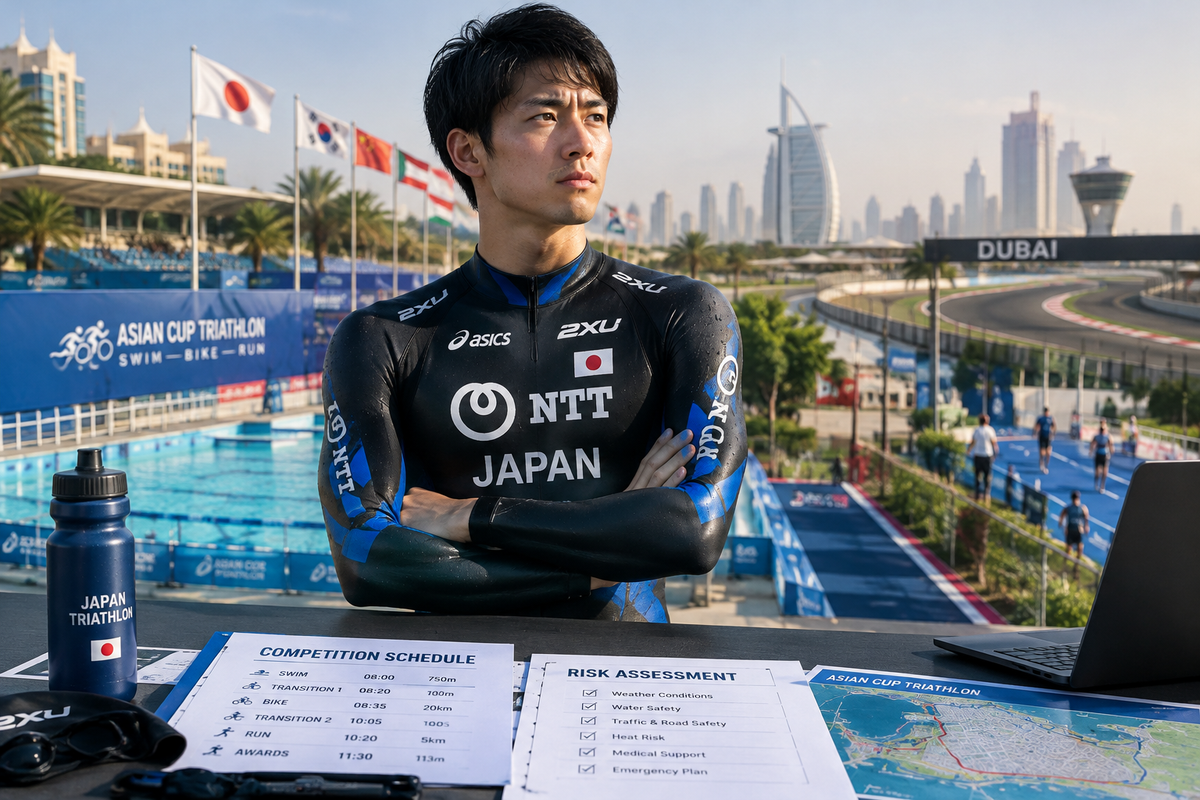
Japan's triathlon organization has formally suspended athlete participation in four major competitions set in the Middle East, citing government assessments regarding worsening security conditions. This action is beginning to affect various sports, including motorsports and potentially the AFC Asian Cup planned for January 2027, which Japan's national soccer team was gearing up to enter.
This isn't just about triathlon; it's a larger issue of how global instability forces sports organizations to make tough choices, creating a wave of consequences that are hard to predict.
The First Domino: Japan's Triathlon Suspension
A Significant Government-Driven Decision
As reported by Nikkan Sports, Triathlon Japan—the country's governing body for the sport—has taken the unusual step to suspend sending elite athletes to major events in the Middle East. This action comes after careful review of security risk information provided by Japan's Ministry of Foreign Affairs and other important factors.
"Triathlon Japan decided to suspend sending teams after reviewing the risk information announced by Japan's Ministry of Foreign Affairs and other factors," the organization disclosed, emphasizing their intent to keep a close eye on local conditions and collaborate with other relevant organizations.
The mention of Ministry of Foreign Affairs risk information is crucial here. This decision stems from high-level government intelligence rather than just reacting to headlines. It indicates that the security assessments are serious and beyond public visibility.
Four Events, Two Countries, One Clear Message
The suspension applies to four upcoming triathlon events scheduled from November to December 2026:
- World Triathlon Championship Series — Abu Dhabi, UAE (November)
- Asia Triathlon Sprint Championships — Aqaba, Jordan
- Jeddah World Triathlon Cup — Saudi Arabia
- Dubai World Triathlon Women's Cup — UAE
Japanese athletes will not compete in any major Middle Eastern triathlon events during this period. For a sport that typically goes unnoticed, this widespread regional suspension sends a powerful message—evident to other Japanese sports organizations monitoring the situation.
When multiple sports organizations, overseeing diverse disciplines, reach similar conclusions independently, it indicates a shared understanding of the risks—not isolated assessments, but a coordinated interpretation compelling triathlon, motorsports, and even esports to approach with caution.
The Domino Effect: Multiple Sports, Same Conclusion
Motorsports Feel the Impact
Triathlon isn't the only sport that must adapt to this unfolding crisis. Formula 1 has also faced disruptions within its Middle East schedule due to the escalating situation. More notably, the World Rally Championship canceled the Saudi Arabia Rally, which was set for November 12–15 and designated as the season finale.
Canceling a season finale is a big deal. The WRC calendar is intricately planned months ahead, and scrapping this event disturbs championship standings, sponsor commitments, and broadcast arrangements all at once. The fact that the organizers made this difficult choice highlights the gravity of the security circumstances.
Esports Isn't Immune Either
In a surprising turn of events, the FIFAe Final 2026, planned in Jeddah, Saudi Arabia, from October 16–25, faced a similar fate. The Japan Football Association chose not to send a team, citing local security conditions, which led to the entire tournament being put on hold.
This is especially telling. Esports events don't usually require athletes to be physically present in a potentially dangerous location. Nevertheless, even this digital competition, hosted in a real venue, was considered too risky for Japanese participation. The decision by the Japan Football Association—responsible for the national soccer team—relates directly to ongoing discussions about the January 2027 tournament.
What the Pattern Tells Us
When multiple sports organizations, overseeing diverse disciplines, reach similar conclusions independently, it indicates a shared understanding of the risks. These aren't isolated assessments; they reflect a coordinated interpretation of the regional situation—one that compels triathlon, motorsports, and even esports to approach with caution.
The Biggest Question: The AFC Asian Cup
What's at Stake
The AFC Asian Cup, Asia's leading soccer championship, is set to commence in Saudi Arabia in January 2027. Japan's national team, under manager Moriyasu Hajime, is ready to participate. This tournament represents the pinnacle of regional soccer—much more significant than the previously affected events.
As of now, there has been no official word on cancellation or postponement.
AFC Is Monitoring—But Hasn't Decided
According to Nikkan Sports, the Asian Football Confederation is actively monitoring the local situation. The options they are considering include:
- Proceeding with the tournament as scheduled
- Postponing it to 2028
- Other undisclosed contingency plans
The report states, "Neither a postponement nor any withdrawal by participating countries has been finalized," indicating real uncertainty but also leaving options available.
Why Japan's Soccer Decision Is Separate—For Now
An important point to understand: Japan's triathlon suspension does not automatically suggest a soccer withdrawal. As highlighted by Nikkan Sports, the decision to suspend dispatches in triathlon events does not allow one to predict that the soccer national team will opt out.
A triathlon delegation is a relatively small group attending a niche competition. Suspending their participation may have a significant symbolic impact, but the consequences are limited in scope. Participating—or not—in the Asian Cup involves much larger calculations, with substantial diplomatic meaning between Japan and Saudi Arabia. A high-profile boycott would serve as a diplomatic statement, not merely a safety measure.
This does not guarantee Japan's participation will happen regardless of conditions. The decision will involve more extensive deliberation, higher government involvement, and careful diplomatic consideration.
How Sports Organizations Make These Calls
The Risk Assessment Hierarchy
To comprehend why different sports react differently, it's helpful to understand how risk gets assessed:
- Government intelligence (such as Ministry of Foreign Affairs) sets the initial threat level.
- National sports federations review this intelligence alongside their own evaluations.
- International governing bodies (AFC, World Triathlon, FIA, etc.) contribute their assessments.
- Individual organizations ultimately decide on participation, balancing safety with financial and diplomatic obligations.
In Japan's case, the Ministry of Foreign Affairs's risk information was explicitly cited as the trigger for the triathlon decision. This intelligence is likely accessible to the Japan Football Association as they contemplate the Asian Cup.
Why Risk Tolerance Varies by Sport
Not all sports respond similarly to the same threat level—and that's not inconsistency, but rather a logical calculation based on various factors:
| Sport | Delegation Size | Financial Stakes | Diplomatic Weight | Ease of Suspension |
|---|---|---|---|---|
| Triathlon | Small | Moderate | Low | High |
| Esports | Minimal | Moderate | Low-Medium | High |
| Motorsports | Large (logistics) | Very High | Medium | Low-Medium |
| Soccer (Asian Cup) | Large | Extremely High | Very High | Very Low |
The decision regarding triathlon was easier to make because the consequences are more contained. In contrast, the Asian Cup's stakes make decisions significantly more complex.
The Diplomatic Tightrope
Japan's response has been measured and conditional, not a total boycott. This is a strategic choice. By suspending participation in lower-profile events while allowing flexibility around the Asian Cup, Japan reflects concern without closing diplomatic doors. Saudi Arabia has heavily invested in its role as an international sports hub, and a series of cancellations could damage its reputation among global sports stakeholders. Japan's nuanced approach helps create a pathway for both countries to handle the situation without resorting to public conflict.
What Happens Next: Scenarios and Timeline
The Immediate Picture (November–December 2026)
- Japanese athletes will not compete in all four triathlon events.
- WRC Saudi Arabia Rally is canceled, creating disruption in the season's final format.
- The FIFAe Final is on hold or may face relocation.
- The AFC continues monitoring, with no immediate announcement expected on the Asian Cup.
The Critical Window (December 2026–January 2027)
This is when the decision regarding the Asian Cup will become clear. Key variables to observe include the AFC's official security assessment, statements from other participating nations, Japan Football Association communications regarding the national team's preparation, and overall trends in Middle East security.
Four Scenarios for the Asian Cup
Scenario A — Most Likely: The tournament proceeds as planned in Saudi Arabia. Japan participates, potentially with enhanced security measures. This is the preferred outcome for all involved, provided conditions stabilize.
Scenario B — Moderate Risk: The AFC officially delays the tournament until 2028, allowing Saudi Arabia to maintain hosting rights while giving more time for improvement. A face-saving alternative for everyone.
Scenario C — Lower Probability: The tournament shifts to another host nation, either within or outside the Middle East. This could present logistical challenges as well as diplomatic sensitivity, but it is a possibility based on historical precedents.
Scenario D — Unlikely: The tournament is canceled entirely. The fallout—in both financial and diplomatic terms—would be significant, making this a last-resort choice that all parties would strive to avoid.
What This Means for the Broader Sports World
For athletes, especially in endurance sports like triathlon, political factors are becoming standard in competition planning. The idea that international events will always take place as scheduled is now less reliable in some regions. Athletes and coaches need to prepare for contingencies as part of their annual schedules.
For sports organizations, the current moment is accelerating the development of formal security frameworks regarding event assessments. Those without clear protocols for evaluating and responding to regional instability will find themselves facing chaotic decisions under stress.
For Saudi Arabia's sports ambitions, multiple cancellations across varied sports create a narrative challenge. A smoothly executed Asian Cup in January 2027 would help mend any reputational damage, while a delay or cancellation would magnify those concerns.
For the intersection of sports and diplomacy, this situation illustrates a longstanding observation by geopolitical analysts: international sports are never purely athletic. They carry diplomatic significance, act as soft power mechanisms, and reflect the state of international relations in ways that go beyond mere scores.
What began as a more obscure sports story—an isolated triathlon federation suspending events—has rapidly expanded into a critical perspective on how geopolitical issues intersect with international sports. Four suspended triathlon events. Two disrupted motorsport series. One halted esports tournament. One major continental soccer championship facing uncertainty.
Frequently Asked Questions
Does Japan's triathlon suspension indicate the Asian Cup will be canceled?
Not necessarily. The two decisions come from different organizations, risk levels, and diplomatic implications. The triathlon suspension shows significant concern but does not directly imply soccer withdrawal.
Could the Asian Cup be relocated to a different country?
That's one of the scenarios reportedly under consideration by the AFC, though no official announcement has been made yet. Moving the tournament would involve logistical and diplomatic complexities but isn't impossible.
Why are some sports suspending while others continue?
Risk tolerance differs based on delegation size, financial implications, and diplomatic significance. Smaller delegations like in triathlon find it easier to suspend participation, while major national team tournaments involve much higher stakes.
When can we expect a final decision regarding Japan's participation in the Asian Cup?
We should know more in the coming weeks to months, as the AFC releases official statements and security conditions evolve. No specific public deadline has been defined.
How does government intelligence influence sports decisions?
It plays a direct role. Triathlon Japan explicitly stated that the Japan Ministry of Foreign Affairs risk evaluations led to their suspension decision. Such intelligence is crucial for shaping organizational policies, especially when athlete safety is at stake.
Why has Japan's triathlon team decided not to participate in competitions in the Middle East?
Japan's triathlon team made the decision due to worsening security conditions in the Middle East, as advised by the Japanese Ministry of Foreign Affairs. They will monitor the situation closely and have suspended participation in several international events.
What events will Japanese athletes no longer compete in?
The suspension covers four major events: the World Triathlon Championship Series in Abu Dhabi, the Asia Triathlon Sprint Championships in Aqaba, the Jeddah World Triathlon Cup, and the Dubai World Triathlon Women's Cup, all scheduled from November to December.
How are motorsports being affected by the situation in the Middle East?
Motorsports have also been impacted with disruptions in schedules, including the cancellation of the Saudi Arabia Rally, planned for November 12-15, as a result of the escalating tensions in the region.
What is the current situation regarding Japan's participation in the Asian Cup?
Japan's national soccer team plans to participate in the Asian Cup, scheduled for January in Saudi Arabia. However, the final decision will depend on ongoing safety assessments and directives from the Asian Football Confederation (AFC).
Is there a possibility that the Asian Cup will be postponed?
The AFC is considering options, including the possibility of postponing the tournament to 2028 if necessary, but no final decisions regarding postponement or any withdrawals by participating countries have been made at this time.
Japan's response has been careful and deliberate: serious enough to safeguard athletes in lower-stakes events, yet restrained enough to keep diplomatic options open for bigger competitions. Whether this balance persists through January 2027 hinges on factors beyond any sports organization's full control—and that uncertainty is what makes this moment so significant.
Source: biz.chosun.com
 Nov 15, 2026IRONMAN 70.3 Qatar
 Nov 15, 2026IRONMAN 70.3 San Salvador
 Nov 29, 2026Challenge Florianópolis
 Dec 5, 2026IRONMAN 70.3 Oman
 Dec 6, 2026IRONMAN 70.3 La Quinta
 Dec 6, 2026IRONMAN 70.3 Veracruz