Your first race choice shapes far more than race day. It determines how you train, what gear you need, how much recovery you require, and whether triathlon feels like an exciting challenge or an overwhelming project. If you are asking which triathlon distance is right for you, start with your current fitness, available training time, swim confidence, and the experience you want to have at the finish line.
The best distance is not necessarily the one that sounds most impressive. It is the one you can prepare for consistently, race with control, and recover from well enough to want another start line.
The main triathlon distances at a glance
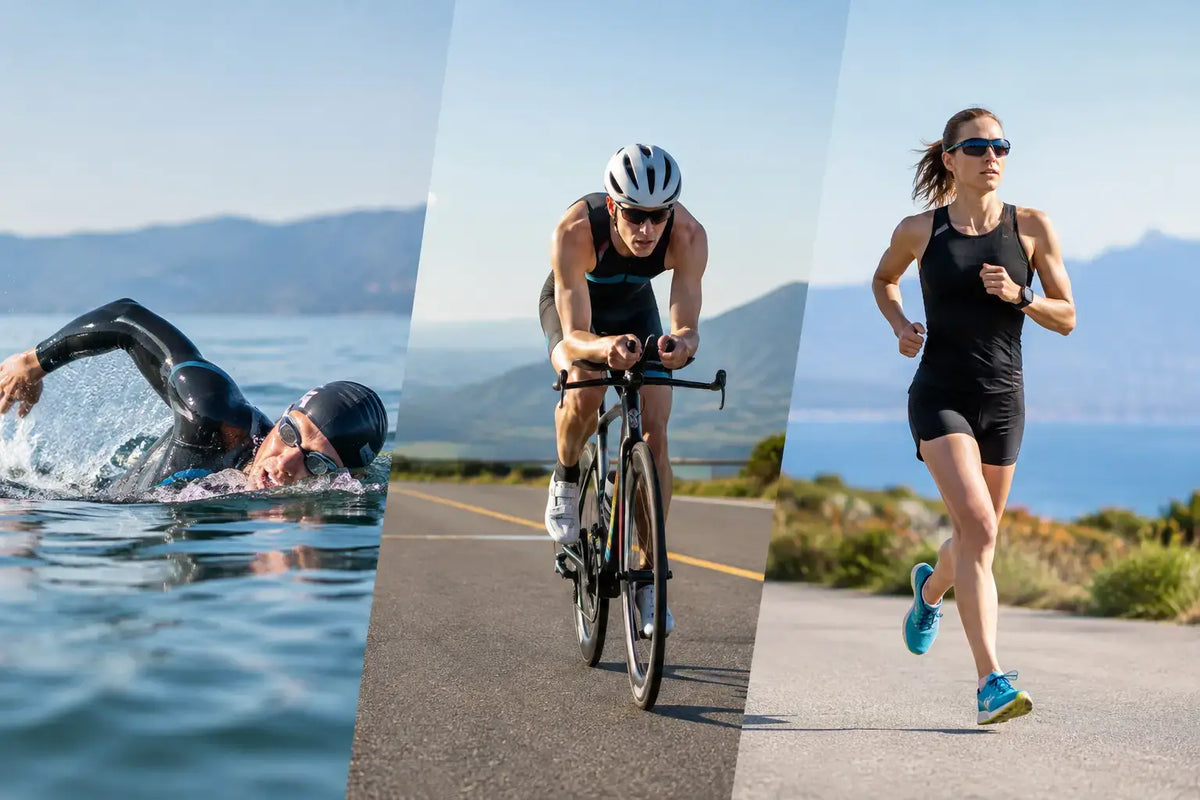
A triathlon combines swimming, cycling, and running, but the demands change sharply as distances increase. A sprint triathlon is usually a 750 m swim, 20 km bike, and 5 km run. An Olympic-distance race doubles that to 1.5 km, 40 km, and 10 km.
Long-course racing begins with the 70.3, also called a half-distance triathlon: 1.9 km swim, 90 km bike, and 21.1 km run. The full IRONMAN distance is 3.8 km swimming, 180 km cycling, and a 42.2 km marathon.
Race organizers can adjust courses for local conditions, so always check the event briefing before committing. In Mexico especially, heat, altitude, wind, road surface, and open-water conditions can make a course feel harder than its distance suggests.
Which triathlon distance fits your starting point?
Sprint: the smart first step for most beginners
For most new triathletes, sprint distance is the strongest entry point. It is long enough to teach you transitions, pacing, open-water skills, and fueling basics without requiring your life to revolve around training. Many beginners can prepare effectively in roughly 8 to 12 weeks if they already exercise regularly and can comfortably swim, bike, and run at an easy level.
A sprint is not an easy race. Racing hard for 60 to 120 minutes demands focus, fitness, and good pacing. But it is manageable. You can learn the sport without needing expensive race equipment, all-day weekend rides, or highly complex nutrition plans.
Choose a sprint if you are new to multisport, returning to exercise, unsure about open-water swimming, or balancing training with a demanding job and family schedule. It is also a strong choice for experienced runners or cyclists who need time to build confidence in their weakest discipline.
Olympic distance: for athletes ready to train with structure
Olympic distance is often the ideal next move after a sprint. The distances look like a simple doubling on paper, but the event feels substantially different. You need greater aerobic endurance, better bike pacing, and enough running durability to handle a 10 km after 40 km on the bike.
Plan for approximately 12 to 16 weeks of focused training, depending on your base. A typical consistent week may include two or three swims, two to three bike sessions, two to three runs, and basic strength work. The goal is not to do everything at maximum intensity. It is to develop repeatable training habits across all three sports.
Choose Olympic distance when you have completed a sprint comfortably, can train six to eight hours most weeks, and enjoy the process of building performance over several months. It offers a meaningful endurance challenge while still fitting into a full life better than long-course training.
70.3: for a serious endurance project
A 70.3 is where race execution becomes just as important as fitness. The half-distance swim may be manageable for many athletes, but the 90 km bike and half marathon expose pacing mistakes quickly. Start too hard on the bike, underfuel for an hour, or ignore rising heat, and the final run can become survival rather than performance.
Most first-time 70.3 athletes need 16 to 24 weeks of consistent preparation. Weekly training volume varies widely, but many athletes need eight to 12 hours during key blocks, with longer weekend rides and brick sessions. Nutrition is no longer optional to practice. You need to know what fluids, carbohydrates, and sodium your body tolerates while working hard.
Choose a 70.3 if you have a reliable endurance base, can swim continuously in open water, have completed shorter triathlons or comparable endurance events, and can protect training time for several months. A strong runner who has never cycled long should still respect the bike demands. Fitness in one sport does not automatically transfer to race-ready triathlon durability.
Full IRONMAN: a commitment, not a graduation requirement
The full distance has real appeal, but it is not the automatic next step after a 70.3. It requires sustained physical preparation, careful recovery, race-specific fueling, and the ability to keep training through the normal disruptions of work, travel, weather, and family life.
For many first-time full-distance athletes, six to 12 months is a realistic preparation window. Peak training weeks can be significant, and the mental load matters too. You will need to manage fatigue, make conservative decisions, and accept that some sessions will be moved or shortened rather than forced.
Choose the full distance because the process genuinely motivates you, not because you feel pressure to prove something. If long rides and patient, low-intensity training sound satisfying, it may be a good future goal. If they sound like a burden, a faster Olympic race or a well-executed 70.3 may deliver more enjoyment and better performance.
Use readiness, not ambition, to choose
Ambition is valuable in triathlon. It gets you to the pool on dark mornings and keeps you moving late in a long run. But readiness should decide your race calendar. Before registering, assess four areas honestly: your swim safety, your weekly time, your injury history, and your ability to train consistently.
Swim safety comes first. You do not need to be the fastest swimmer in your lane, but you should be able to cover the race distance calmly, preferably in open water or a supervised setting that resembles it. Panic in open water is not solved by wanting the finish line badly enough.
Training time is the next filter. Count the hours you can protect in an ordinary week, not an ideal week. A realistic six-hour schedule can support a sprint or some Olympic plans very well. It is unlikely to support a satisfying 70.3 build without compromises. Long-course preparation is less about heroic single weekends and more about stacking reliable weeks.
Your injury history also deserves respect. Triathlon spreads load across three disciplines, but running remains high impact. If you are rebuilding from shin pain, knee pain, or a stress injury, progressing to a longer run off the bike may be the wrong challenge for this season.
 Mar 28, 2027Cal Tri Austin
 Apr 3, 2027IRONMAN 70.3 Oceanside
 Apr 4, 2027IRONMAN 70.3 Texas
 Apr 10, 2027T100 Triathlon Singapore
 Apr 18, 2027IRONMAN 70.3 Valencia
 Apr 18, 2027Wallisellen Triathlon