
“The Best Long-Distance Race Ever”: Lessons from Sam Long’s 6th-Place Finish at Kona
How one competitor navigated a nutrition crisis, revived his passion for racing, and what every age-group athlete can learn from the experience.
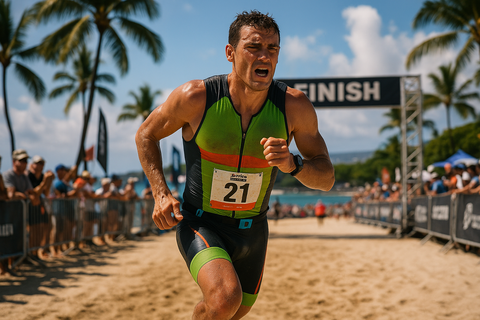
There’s a unique moment in every long-distance triathlon when the race transcends numbers and pace charts and becomes about something much deeper. For Sam Long at the 2026 Long-Distance Triathlon World Championship in Kona, this realization came during the run segment. After miscalculating his carbohydrate intake on the bike, he surged forward fueled only by sheer will, with his wife Lara and their two young boys cheering for him at the finish line.
He crossed that line in sixth place, calling it the best long-distance race of his life.
Long humorously noted that he “gets the award for the fewest interviews before the race and the most after.” This reflects a crucial takeaway: sometimes, flying under the radar can be the best strategy. Whether you’re finishing your first race or vying for a Kona slot, the lessons from Sam Long’s journey are relatable, practical, and deeply human.
The Power of Staying Under the Radar
Minimal Hype, Maximum Focus
Kona race week is quite the spectacle. Cameras, podcasts, sponsor commitments — the hype can be overwhelming for any athlete. Sam Long chose to stay low-key, avoiding the media frenzy while his competitors absorbed all the noise.
The result? He stepped into race day with minimal external pressure and a clear internal focus.
This isn’t just a fluke. When you focus on your own race rather than performing for an audience, you free yourself to prioritize your own goals. Age-group athletes can adopt this strategy: limit your social media posts leading up to the race, resist sharing every detail of your race plan, and create mental space for your performance.
“I Do My Own Race”
Long’s race philosophy is refreshingly straightforward. In the midst of Kona’s chaos — including staggered starts and fierce competitors like Cam Wurf (AUS) — he stuck to his own pace.
“My mantra was, I do my own race.”
During the swim, he feared he was moving too easily, worried that he’d become off-pace. But upon reaching T1, he found he was right where he needed to be, alongside his usual rivals and Wurf on the bike.
The takeaway? Anxiety often distorts reality. Your training is solid, so trust your instincts.
💡 Try this: Create a one-sentence race mantra for your next event. Keep it personal and focus on the process — something like “I race my own race” or “I trust my training.” Repeat this mantra whenever your mind wanders.
Confronting Challenging Conditions — When Nutrition Fails
Humidity Makes a Difference
The Kona race in 2026 dealt athletes a tough hand. The steep humidity made every movement feel heavier. Long, like many others, overcompensated with carbohydrates during the bike ride, which eventually backfired.
The outcome? By the time he started the marathon, his body was done with nutrition and he couldn’t take anything in. He still finished sixth, showcasing resilience.
Learning from Nutrition Mishaps
What stands out isn’t that Long encountered a nutrition crisis — that’s a common challenge in long-distance racing. Rather, it’s how he handled it. He embraced the situation, learned from it, and filed it away as data instead of a failure.
“He took it all in stride, saying he learned some valuable lessons.” — Triathlete Magazine
This mindset distinguishes athletes who progress from those who repeat errors. Competitors who thrive treat every setback as research. Each fueling issue, pacing misstep, or unexpected cramp offers insights — not failures.
Smart tips for racing in extreme conditions:
- Practice nutrition in similar heat. If your race occurs in a warm climate, mimic those conditions in training. Your body’s absorption rate changes with heat and sweat.
- Have a backup plan. Decide what to do if your nutrition fails during the race. Consider options like Coke at aid stations, broth, or plain water and geles ahead of time.
- Don’t overdo it. When sweat pours, people often eat more — but too many carbs can lead to GI distress. Sometimes, being less aggressive with nutrition helps.
- Monitor your sweat rate. Weigh yourself before and after long training sessions in the heat. Each kilogram lost is approximately one liter of fluid you need to replace.
Acknowledging Pre-Race Worries — Even for Top Finishers
The Swim Felt “Too Easy” — A Common Concern
Here’s the kicker: Sam Long, a sixth-place finisher at this prestigious race, was concerned that he was going too easy during the swim. Not too hard. Too easy.
Imposter syndrome doesn’t care about race rankings. Even experienced athletes can experience self-doubt. Long felt too comfortable, worrying he might be outpaced by the lead women. Ultimately, he was right where he should have been.
The Cam Wurf Factor — Focus Amid Distraction
Riding alongside Cam Wurf, an exceptional cyclist, could disrupt any race plan. Instead of letting Wurf’s presence sway him, Long remained grounded in his strategy.
The lesson for age-groupers: External distractions will always pop up on race day. The most successful athletes are not those who eliminate these variables, but those who learn to stay focused regardless.
From Fan to Inspiration in Kona
A 19-Year-Old Dreamer Becomes a Role Model
Perhaps the most poignant part of Long’s post-race musings wasn’t about his times or techniques — it was about perspective. He recalled his first Kona experience as a 19-year-old college student, living at home and admiring the professionals racing. He was a fan, inspired and looking up to the sport.
Fast forward to 2026, and he stood on the finish line in sixth place, realizing:
“And now all the age-groupers are looking up to me.”
This acknowledgment of growth is powerful. His achievements didn’t happen overnight. Years of dedication, incremental progress, and a commitment to showing up shaped his journey. That same path is open to everyone. Not every aspiring athlete will reach sixth place, but each can inspire their community through long-term dedication and hard work.
Family as the Ultimate Motivation
Racing for Something Greater
Long’s wife Lara and their two children made the trip to Kona. For him, this family presence meant everything.
“Family is everything.”
This isn’t merely a sentimental statement; it underlines a key performance principle. When you race for something beyond yourself, you tap into a reservoir of motivation that pure competitiveness may not reach. During those difficult miles, a familiar face or the image of loved ones waiting can propel you forward.
Long emphasized he’d remember the experience, not just the race result:
“I’m going to remember this week for the rest of my life.”
Not the sixth place or the nutrition blunders. It was about the whole week and those who mattered most.
Making Your Race a Shared Experience
For many age-group athletes balancing training with work and family life, this perspective shift can be transformative. Your race can be a shared experience rather than a solo endeavor.
- Engage your family in race week planning, not just on the day of the race.
- Share your honest training journey — the highs, lows, and breakthroughs.
- Include your loved ones in your motivation, making it about more than just personal goals.
- Visualize their faces waiting for you at the finish line when you face challenges during the race.
Redefining What “Best” Means
Long described the 2026 Kona race as “the best long-distance race” he has ever done, but he did not attribute this solely to his finishing position.
“I did my best long-distance race, obviously; I think that goes without saying. … This far exceeds anything I’ve done in a long-distance triathlon.”
Sixth place is impressive, but Long aimed for something deeper: execution, resilience, and alignment. Racing in a way that aligned with his preparation, values, and years of dedication is what truly mattered. He managed a nutrition crisis, overcame pre-race anxiety, tuned out distractions, and achieved a personal best.
That is the essence of a truly great race. It’s not always about perfection; sometimes, it’s about discovering who you are in the face of adversity.
Key Takeaways: Sam Long’s Kona Playbook for Age-Group Athletes
| Lesson | Application |
|---|---|
| Stay under the radar | Limit pre-race hype to safeguard your mental energy. |
| Run your own race | Create a race mantra to center your focus during distractions. |
| View adversity as insight | Turn nutrition errors and pacing missteps into lessons learned, not failures. |
| Trust your training | Recognize that swim anxiety doesn’t reflect your actual performance. |
| Identify your motivation | Anchor your drive in family, community, or legacy, not just placement. |
| Measure your best by execution, not just placement | Focus on your response and effort rather than the final results. |
Lessons for Your Next Race
Sam Long’s story from Kona isn’t only about a singular race; it embodies the consistent, values-driven work that seasons an athlete’s journey — leading to a moment when it all aligns at the center stage.
Whether you’re chasing a Kona slot, stepping up to your first half-distance race, or aiming to finish strong in your local triathlon, the principles remain relevant:
- Draft your race mantra. Keep it concise and focused on the process.
- Practice nutrition in similar conditions. Have a strategy that matches your racing environment.
- Clarify your motivation. Write it down and keep it visible during tough training weeks.
- Share your journey with someone. Racing becomes richer when you invite others along.
- Redefine “best.” Reflect on your growth over the long haul, not just individual results.
Long-distance triathlon reveals your true self — your preparation, resilience, and values. Sam Long’s 2026 Kona experience serves as a powerful reminder that when those elements align, you can surpass what you thought was possible.
Enjoyed this summary? Share your own racing breakthroughs in the comments — what shifts have you noticed in your performance? And if you’re preparing for your next race, check out our Race Season Essentials to ensure you’re equipped for success.
Related Reading
- First Triathlon Kit: Everything You Need
- Triathlon Training Gifts for the Athlete Who Has Everything
- Race Day Travel Gear: Getting to the Start Line Ready
Frequently Asked Questions
What was Sam Long’s finish in the 2026 Long-Distance Triathlon World Championship?
Sam Long finished in sixth place at the 2026 Long-Distance Triathlon World Championship, marking it as his best long-distance performance to date.
How did Sam Long feel about his performance during the race?
Sam Long expressed that he did his best long-distance race ever and learned valuable lessons during the race, despite facing challenges such as nutrition issues on the run.
What challenges did Sam face during the race?
Long faced challenges such as feeling that the swim was too easy, concerns about being passed by lead women, and nutrition issues during the run due to oppressive humidity, which caused him to sweat excessively.
Who supported Sam Long during the Long-Distance Triathlon World Championship?
Sam Long was supported by his wife Lara and their two young boys, which he stated gave him a significant motivation to race.
What did Sam Long reflect on regarding his first Kona experience?
Long reflected on his first Kona experience at age 19, noting that he used to look up to the professional athletes, and now felt that age-groupers were looking up to him.
Source: Triathlete Magazine — Sam Long reflects on 6th-place Kona finish