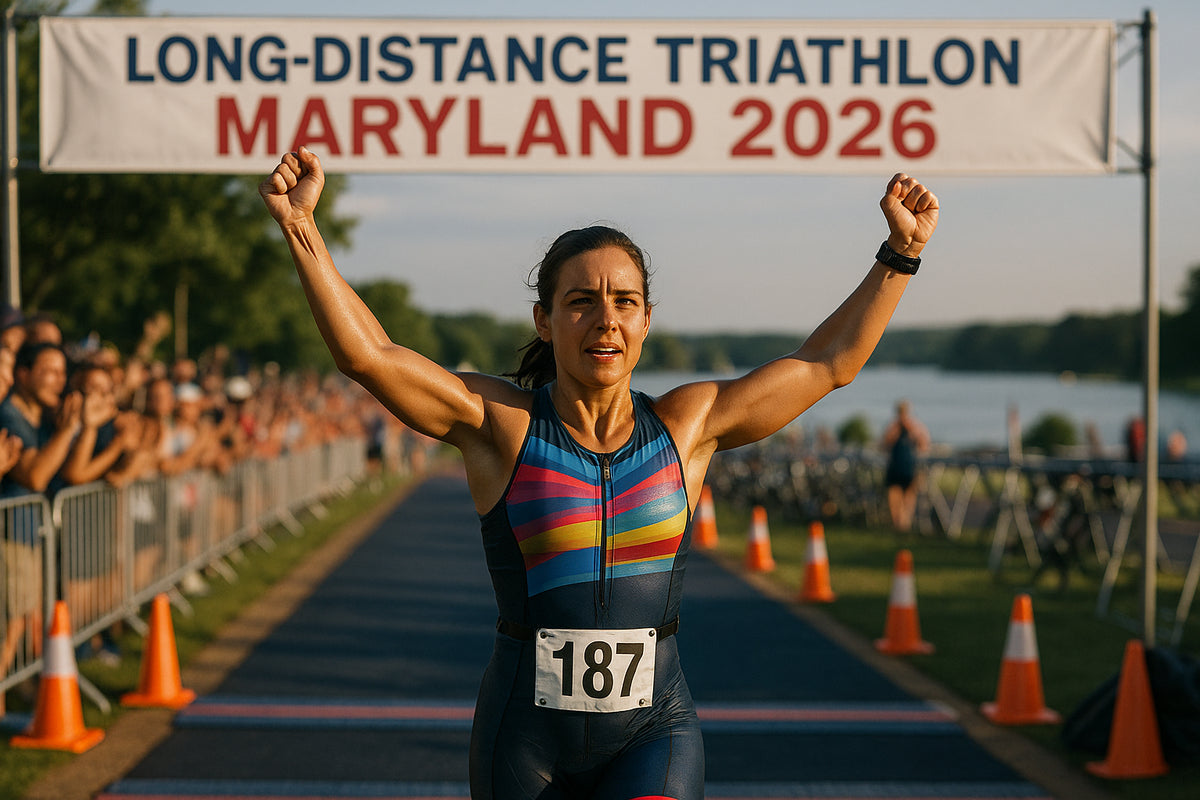
Everything you need to know about one of the most compelling long-distance triathlon races of the 2026 season — from a pre-dawn Chesapeake Bay start to two champion performances that redefined what elite execution looks like.
Imagine a serene, pre-dawn glow over the Chesapeake Bay, with athletes nervously treading water at the start line, hearts racing in their wetsuits. Hours later, two champions would sprint across the finish line in Cambridge, Maryland — one completing the race in an extraordinary 7:13:52 and the other in an equally impressive 8:49:15. This is the tale of the 2026 Maryland long-distance triathlon, showcasing elite performances, fierce competition, and valuable lessons every aspiring triathlete can learn.
In Maryland, the long-distance triathlon has become a respected event within the mid-Atlantic region. The challenging course — comprising a 2.4-mile swim, a 112-mile bike ride, and a 26.2-mile run — attracts both seasoned professionals and ambitious age-groupers pursuing their dreams of crossing the finish line. In 2026, the race lived up to its reputation with two standout champion performances that are worth dissecting, whether you're aiming for your first finish or striving for a podium spot.
Women's Champion: Mena Suter's 8:49:15 Victory
A Performance Built on Precision
Mena Suter's finishing time of 8 hours, 49 minutes, and 15 seconds isn't just a number; it reflects a carefully orchestrated performance that separates the champions from the rest. Long-distance triathlons are frequently described as races against oneself before competing with others. After nearly nine hours of intense effort spread across three disciplines, every decision around pacing, nutrition, and mental strategy is crucial.
Why is a sub-9-hour finish significant for women? Achieving this benchmark positions athletes firmly in elite discussions. It requires nearly flawless execution across all three segments — no weak discipline can be hidden over this duration.
Note: This article will be updated with detailed splits and quotes from Suter as they become available.
Suter's Racing Background
Mena Suter is a formidable force in professional long-distance triathlon. Hailing from Switzerland, she consistently earns podium finishes in prestigious events, particularly excelling in the bike-to-run transition that makes her a dangerous competitor late in the race. What sets Suter and athletes like her apart isn't just raw fitness — it's race intelligence. She exemplifies how long-distance racers must self-assess and adjust during the event.
The swim rarely wins you the race, but it can certainly lose it for you — and the same principle applies to every transition that follows.
Women's Podium
| Placement | Athlete | Time |
|---|---|---|
| 🥇 1st | Mena Suter | 8:49:15 |
| 🥈 2nd | Results pending confirmation | — |
| 🥉 3rd | Results pending confirmation | — |
Full podium details will be updated as official results are confirmed by race organizers.
Men's Champion: Cameron Wurf's Blazing 7:13:52 Performance
Elite-Level Execution from Start to Finish
7 hours, 13 minutes, and 52 seconds. Let that time settle for a moment. To understand Cameron Wurf's stunning finish: he averaged around 22 mph on the bike segment (over 112 miles) and maintained a sub-7-minute per mile pace during the run, while also exiting the water with the lead group. This performance challenges even seasoned triathletes to rethink human potential.
Wurf isn't just any triathlete — he's a former pro cyclist who raced at the highest levels, including multiple Tour de France participations. His transition into long-distance triathlon has been remarkable, and Maryland 2026 added another accolade to a career celebrated for exceptional power and strategic racing. Wurf often gains his edge during the bike leg. Former cyclists turned triathletes know how to navigate a course, manage varying terrains, and maintain high power output without jeopardizing their run.
Post-race quotes and detailed splits from Wurf will be added as they become available.
What Separates Wurf from the Field
Cameron Wurf's approach to racing is defined by three core qualities:
- Bike dominance: His cycling background gives him a significant advantage. Wurf doesn't just ride fast — he rides efficiently, leveraging superior aerodynamics and energy management.
- Run resilience: An essential skill for a cyclist-turned-triathlete is maintaining run speed after completing 112 miles on the bike. Wurf has consistently proven he can run strong under pressure.
- Experience management: Knowing when to push harder or ease off during a 7+ hour race is a critical skill. Veteran athletes like Wurf draw on a mental playbook of past experiences that younger competitors simply don't have.
Men's Podium
| Placement | Athlete | Time |
|---|---|---|
| 🥇 1st | Cameron Wurf | 7:13:52 |
| 🥈 2nd | Results pending confirmation | — |
| 🥉 3rd | Results pending confirmation | — |
Full podium details will be updated as official results are confirmed.
Course Analysis: What Maryland Demands From Its Athletes
The Chesapeake Bay Swim
The swim portion takes place in the Choptank River near Cambridge, which presents unique challenges. River swims require athletes to factor in current, water temperature fluctuations, and visibility — unlike ocean swims or reservoirs. Experienced long-distance competitors treat the swim as a controlled warm-up, arriving at T1 composed and ready to execute a disciplined bike plan.
The Bike Course: Flat but Far From Easy
Though the Maryland bike course is mainly flat, that doesn't equate to easy. The absence of climbs means athletes must maintain steady power output for hours, which is both mentally and physically taxing. Wind can significantly impact performance on flat courses — a moderate headwind spanning 30 to 40 miles can dramatically slow times and drain resources vital for the run.
Flat courses reward:
- Excellent aerodynamics in both position and equipment
- Consistent power output rather than fluctuating efforts
- Smart hydration and nutrition strategies with no natural breaks
- Mental strength to stay focused across 112 long miles
The Marathon Finale
After 2.4 miles of swimming and 112 miles of cycling, athletes must conquer a full 26.2-mile run. In Maryland, late-season heat and humidity can create challenging conditions that require athletes to adapt their pacing goals and prioritize endurance over speed. True champions shine during the final third, when energy is depleted and every step toward the finish feels monumental.
Completing a long-distance marathon is often described as a 20-mile warm-up followed by a 6-mile race — and the athletes who pace wisely early make that final stretch their moment of glory.
Winning Strategies & Lessons for Age-Group Athletes
The Power of Even Pacing
A consistent theme among elite long-distance performances is the importance of restraint during the first half. The athletes who finish strong at mile 20 are typically the ones who resisted the urge to push too hard early. Going just 10% too hard early can cost far more than that in the latter stages. A cautious T1-to-bike transition can yield huge benefits during the run, and negative splitting the run — finishing the second half faster than the first — is the hallmark of smart racing.
Nutrition: The Fourth Discipline
For elite athletes, treating nutrition as a separate discipline is not optional — it is essential. Running out of fuel halfway through the bike ride doesn't just slow you down; it can trigger a downward spiral that derails your run altogether. Practice your race-day nutrition during training, and never experiment on race day.
- Eat before hunger strikes and hydrate before thirst kicks in
- Liquid calories are typically easier to manage than solids in later stages
- Maintaining electrolyte balance is as critical as caloric intake, especially in heat
Mental Resilience: The Real Separator
In the sixth hour of a long-distance race, fitness levels often converge. What differentiates top finishers from mid-pack athletes isn't just conditioning — it's the ability to forge ahead with purpose, even when discomfort intensifies. Champions cultivate mental frameworks during training: mantras, focus cues, or race-within-a-race targets like reaching the next aid station or holding a specific pace. Long brick workouts are perfect for practicing how to manage discomfort before race day arrives.
What This Race Reveals About Long-Distance Triathlon in 2026
The Bar Keeps Rising
Cameron Wurf's sub-7:15 finish and Mena Suter's sub-8:50 performance signal that professional long-distance triathlon is advancing at a rapid pace. Enhanced training methods, refined nutrition strategies, and cutting-edge equipment — aero bikes, lightweight shoes, advanced wetsuits — are shrinking the gap between what was once deemed impossible and what is now anticipated at the elite level. For age-group athletes observing these achievements, the message is one of inspiration rather than discouragement.
Maryland as a Competitive Benchmark
The Maryland long-distance race holds a unique position in the triathlon calendar. Its flat bike course enables fast times, while the unpredictable late-season conditions test athletes' adaptability. This race rewards thorough preparation while punishing overconfidence, producing honest, compelling competition year after year.
Key Takeaways from Maryland 2026
- Discipline-specific strengths matter — Wurf's cycling expertise gave him an inherent advantage. Understand where your strengths lie and build your race strategy around them.
- Execution beats fitness — The most prepared athlete doesn't always win. Rehearse your race plan during training so it becomes instinct.
- Flat doesn't mean easy — The Maryland course demands heightened focus. Respect the distance regardless of elevation changes.
- The marathon is the deciding factor — Regardless of how well you tackle the bike, the marathon is where races are won. Prioritize training your run off the bike.
- Patience early pays off later — Every champion's story in long-distance racing includes a disciplined, conservative first half.
Your Turn
Were you part of the 2026 Maryland race? Share your experience in the comments below — what was your biggest challenge, and what will you do differently next time? If you're already planning for next year's race, start building your race-specific strategy now. Analyze the winning splits, train against the course's unique demands, and give yourself enough time to develop the fitness and mental resilience these distances require.
The finish line in a long-distance triathlon isn't just a destination — it symbolizes every hour of effort you invested to reach it. Go earn yours. 🏅
 Feb 6, 2027IRONMAN Lanzarote
 Apr 18, 2027IRONMAN 70.3 Valencia
 Apr 18, 2027Wallisellen Triathlon
 May 9, 2027Challenge Salou-Costa Daurada
 May 15, 2027MTRI Alicante 2027
 May 16, 2027IRONMAN Aix-en-Provence