
Stop Guessing on Race Day Shoes: Here's Exactly What the Fastest Long-Distance Triathlon Runners Chose at Kona 2026 (And Why)
The real game changer at the 2026 Kona World Championship didn't come until after mile 20 of the run, and the shoe selection was just as surprising. Many athletes think the world's fastest triathletes all wear the same "magic" shoe — but the top marathoners at Kona competed in seven different brands and nearly 20 models, with prices ranging from $150 to $500.
Some of these athletes receive free shoes, but surprisingly, many do not. At least one top-10 finisher deliberately chose an older shoe model, avoiding the risk of racing in something untested on the biggest day of the year.
If you feel uncertain about which shoe to choose for your next long-distance triathlon — or whether that $500 shoe is actually worth the investment — this guide is for you. We break down the shoe choices of the top 10 men's and women's marathon runners from Kona 2026, explore what those choices reveal about racing footwear, and help you make a smarter decision for your own race day.
The Big Picture: Seven Brands, No Consensus
Before diving into individual athletes, let's look at the overall landscape. ASICS led the field with five athletes among the top-10 fastest marathon runners across both races. On Running and HOKA made significant appearances. Nike, Adidas, New Balance, and Puma each earned a place on the podium too.
Brand representation among the top-10 fastest marathons at Kona 2026:
| Brand | Athletes |
|---|---|
| ASICS | 5 |
| On Running | 4 |
| HOKA | 3 |
| Nike | 2 |
| Adidas | 2 |
| New Balance | 1 |
| Puma | 1 |
Prices across the field ranged from $250 to $500, with an average near $285. The lightest shoe weighed under 100 grams (Adidas Adios Pro Evo 3), while the heaviest came in at 7.6 ounces (New Balance SuperComp Elite v5). Both delivered strong performances.
“There's no real consensus on models worn even within these brands, other than they're all part of the carbon racing line.” — Gear analyst Ryan Heisler
The first takeaway is clear: there is no single "Kona shoe." Different athletes bring different biomechanics, sponsorships, and preferences to the start line, producing genuinely diverse footwear choices.
The Men's Race: On Running's Unexpected Triple Threat
Gustav Iden — On LightSpray Cloudboom Strike 2 ($310) | 2:36:58
Gustav Iden was just 39 seconds from leading the race with 5 kilometers remaining — one of the most nail-biting finishes in recent Kona history. He chose the second-generation On carbon racer with a LightSpray upper, designed to enhance responsiveness by leaving deliberate gaps in the foam.
Weighing 5.6 ounces, this shoe ranks among the lightest in the entire Kona field. The LightSpray upgrade adds a $60 premium, bringing the price to $310. Iden paired his shoes with the On Elite Run High Sock — a compression sock designed to minimize blisters during long efforts. His training partner and fellow podium finisher, Pierre Le Corre, wore the same combination.
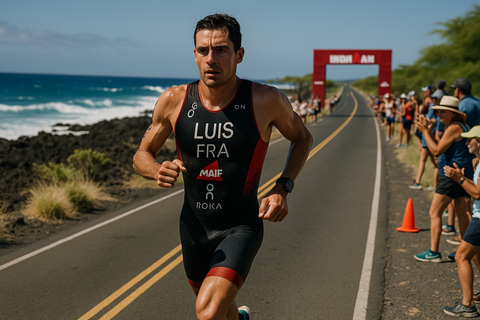
Vincent Luis — Nike Apex ($350) | 2:38:36 — Race Winner
Vincent Luis, winner of the men's race, wore the Nike Apex — a shoe that received World Athletics approval just before race day and won't reach the public until January 2027. The Apex breaks from previous Nike models with a zero-drop design, double-stacked Air Zoom units in the forefoot, a FlyKnit upper, and new ZoomX LT foam.
Luis's choice demonstrates both Nike's investment in his career and the calculated risk of racing in nearly untested footwear. For age-groupers, the zero-drop geometry deserves careful consideration — it suits runners who maintain strong form under fatigue, which becomes critical after mile 20.
Pierre Le Corre — On LightSpray Cloudboom Strike 2 ($310) | 2:38:50
Le Corre finished with the same shoe and sock combination as Iden, further cementing On Running as a leading performance brand at the elite level. Two podium-level men's marathon runners choosing the same setup is not a coincidence.
Matt Hanson — On LightSpray Cloudboom Strike 2 ($310) | 2:40:34
Hanson also ran in the On LightSpray Cloudboom Strike 2, opting for a different colorway from the typical yellow. Despite logging a solid top-5 marathon time, he missed overall payout by nine minutes — a reminder that each segment of a long-distance triathlon shapes the final result.
The ASICS MetaSpeed Architecture: Choosing Your Model Matters
This is where many age-groupers make a costly mistake. ASICS does not offer a single racing shoe — they build three distinct models, each engineered for a different running biomechanical profile. Three men's top-10 athletes wore ASICS, and each chose a different model. Understanding these distinctions helps you match footwear to your actual running style.
Jonas Schomburg — ASICS MetaSpeed Ray ($300) | 2:41:45
The Ray is the lightest and most minimal shoe in the MetaSpeed range. It features a thinner carbon plate and modified FF Leap foam, and gained attention in triathlon circles after Hayden Wilde's debut in the model. The Ray rewards runners focused on minimizing weight who maintain efficient, consistent strides throughout the race.
Youri Keulen — ASICS MetaSpeed Edge Tokyo ($270) | 2:42:05
Keulen chose the Edge, designed for runners who increase speed by ramping up their cadence and taking quicker, shorter steps. The updated colorway features a 5mm drop and a lightweight build. This model suits lighter athletes or those with naturally high stride rates.
Sam Long — ASICS MetaSpeed Sky Tokyo ($270) | 2:42:57
Long wore the Sky, which caters to runners who gain speed through longer strides rather than higher turnover. The geometry suits taller athletes who cover more ground efficiently per step. As Heisler observed: “Long's height and stride length explain his choice perfectly.”
If you're choosing ASICS, the model matters as much as the brand. Ask yourself honestly: do you accelerate by spinning faster (Edge), by driving longer strides (Sky), or by prioritizing pure weight savings (Ray)?
The Outliers: When Unsponsored Athletes Make the Boldest Statements
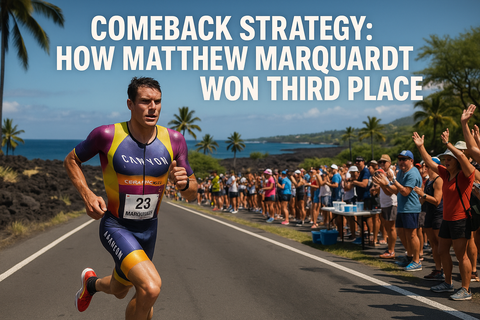
Matthew Marquardt — Adidas Adios Pro 4 (~$150) | 2:43:58
Marquardt stands out as an unsponsored athlete who deliberately chose the previous generation of Adidas' carbon-plated racer — not the newer Adios Pro 5, and certainly not the $500 Evo 3. He shared a detailed rationale on Instagram before the race: he was not willing to risk racing in something unfamiliar at the world championship.
The latest Adidas version retails for $275. Marquardt's clearance-rack shoe produced the 8th-fastest men's marathon in the field, outpacing athletes in footwear costing three times as much.
Gregory Barnaby — Adidas Adios Pro Evo 3 ($500) | 2:44:44
Barnaby wore the most expensive shoe in the entire Kona field. The Adios Pro Evo 3 weighs under 100 grams and features the most advanced foam and carbon plate technology Adidas currently produces. He finished just 44 seconds behind Marquardt — a gap that underlines an uncomfortable truth: spending $350 more on footwear did not translate into a meaningful time advantage on race day.
The Women's Race: Diversity, Familiarity, and the HOKA Pattern
Laura Philipp — New Balance SuperComp Elite v5 ($275) | 2:50:43 — Race Winner
The winning female athlete chose last year's model. Laura Philipp, a long-time New Balance supporter, wore the SuperComp Elite v5 rather than its newer, lighter successor. Her logic mirrors Marquardt's exactly: she was not about to experiment with a new fit at the world championship. Race winners consistently favor proven footwear over the latest innovations.
Kat Matthews — On Cloudboom Strike 2 Standard ($250) | 2:52:50
Matthews selected the standard version of the Cloudboom Strike 2 — not the LightSpray upgrade worn by the top men. Mechanically identical in every meaningful way, her shoe delivered the second-fastest women's marathon time while saving her $60.
Taylor Knibb — HOKA Rocket X 3 ($250) | 2:57:46
Knibb has years of experience with HOKA and consistently returns to the Rocket X series. The third generation brings updated foam and plate technology. Notably, HOKA also produces a shoe they market as their fastest option — the Cielo — yet none of the top female HOKA athletes wore it. The emphasis among elite women was on proven stability and comfort, especially during the demanding final miles of the run.
Julie Derron — On Cloudboom Strike 2 Standard ($250) | 2:58:54
Derron secured a top-five finish in the same shoe as Matthews. The standard Cloudboom Strike 2 emerged as the most popular single model among elite women at Kona 2026, valued for its performance without the LightSpray price premium.
Marta Lagownik — ASICS MetaSpeed Edge Tokyo ($270) | 3:01:22
Lagownik, also unsponsored, chose the MetaSpeed Edge and has consistently returned to this model across multiple seasons. Her loyalty to a proven shoe reflects the broader trend of elite unsponsored athletes prioritizing familiarity over novelty.
Elisabetta Curridori — Puma FAST-R NITRO Elite 3 Digitokyo ($300) | 3:02:03
Curridori represented Puma in a visually striking colorway. The FAST-R NITRO Elite 3 is lighter than its predecessors and sits firmly in the premium carbon racing category, making it a legitimate contender alongside more established brands.
Anne-Sophie Pierre — Nike Alphafly 4 ($280) | 3:02:25
Pierre secured one of the limited early pairs of the Alphafly 4 before its general release. Maintaining an 8mm drop, this model brings performance updates across cushioning and energy return while preserving the geometry that marathon runners already know.
Sara Svensk — ASICS MetaSpeed Ray ($300) | 3:05:21
Svensk chose the lightest ASICS option, consistent with the broader trend of prioritizing weight reduction across both the men's and women's fields. The Ray continues to attract athletes who want the minimum underfoot without sacrificing carbon plate propulsion.
Imogen Simmonds — HOKA Rocket X 3 ($250) | 3:07:45
Simmonds reinforced HOKA's Rocket X pattern among elite women. The preference for the Rocket X over HOKA's flashier options signals that comfort and reliability over 26.2 miles outweigh marginal speed gains from lighter, less-tested alternatives.
What the Data Actually Tells Us
The Price-Performance Reality
The numbers make a straightforward case. Here are the prices of shoes worn by top-10 marathon finishers at Kona 2026 alongside their outcomes:
- $150 (Adidas Adios Pro 4) — top-10 men's marathon ✅
- $250 (HOKA Rocket X 3, On Cloudboom Strike 2 Standard) — multiple top-10 finishes ✅
- $270 (ASICS MetaSpeed Edge / Sky) — multiple top-10 finishes ✅
- $275 (New Balance SuperComp Elite v5) — women's race winner ✅
- $300 (ASICS MetaSpeed Ray, Puma FAST-R NITRO Elite 3) — top-10 finishes ✅
- $310 (On LightSpray Cloudboom Strike 2) — top-4 men's marathon ✅
- $500 (Adidas Adios Pro Evo 3) — top-10 men's marathon, narrowly behind a $150 shoe ✅
The conclusion is not that cheaper shoes are better. It is that fit, familiarity, and biomechanical match matter far more than price tag or hype cycle. Every shoe in the top 10 features a carbon plate and high-rebound foam. Beyond that threshold, the differences are individual.
The athletes who raced in last year's model — and won — made the most deliberate choice of all. They chose certainty over novelty when it mattered most.
Frequently Asked Questions
What were the top shoes worn by male runners at the 2026 long-distance triathlon World Championship?
The top shoes worn by male runners included the On LightSpray Cloudboom Strike 2, Nike Apex, ASICS MetaSpeed Ray, and Adidas Adios Pro 4, among others. Gustav Iden won the top male marathon time using the On LightSpray Cloudboom Strike 2.
What were the top shoes worn by female runners at the 2026 long-distance triathlon World Championship?
Female runners' top shoes included the New Balance SuperComp Elite v5, On Cloudboom Strike 2, HOKA Rocket X 3, and ASICS MetaSpeed Edge Tokyo. Laura Philipp finished first among female runners with a time of 2:50:43 in the New Balance SuperComp Elite v5.
What is the price range for the shoes athletes wore at the 2026 long-distance triathlon World Championship?
The prices for shoes worn by athletes ranged from $150 to $500. For example, the On LightSpray Cloudboom Strike 2 retails for around $310, while the Adidas Adios Pro Evo 3, the most expensive, is priced at $500.
Why is there a variety of shoe models among top finishers?
There is no consensus on shoe models even among top finishers because each athlete has individual preferences for shoe geometry, weight, and support, often opting for shoes that align with their running style and training.
How do the shoes worn affect the athletes' performance?
The shoes worn can significantly affect performance through factors like weight, cushioning, and energy return. Shoes designed with carbon plates and responsive foams are popular due to their ability to improve speed and reduce fatigue over long distances.
Source: Slowtwitch — The Fastest Runners Wore These Shoes at the 2026 World Championship