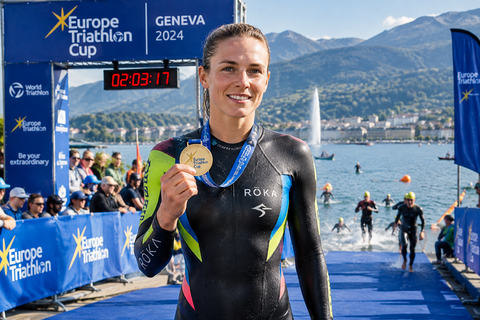
Por Margie Zable Fisher, publicado en PROVOKED Magazine. A los 49 años, Margie Zable Fisher no sentía ninguna presión externa para bajar el ritmo — pero poco a poco, su ambición se iba apagando, una invitación rechazada a la vez. Lo más inquietante no era el repliegue en sí, sino lo razonable que parecía mientras ocurría.
Envejecer con gracia es código para desaparecer: por qué las mujeres mayores de 50 rechazan el retiro silencioso
"Nadie me estaba obligando a desaparecer", comparte. "Yo estaba cooperando con ello."
Muchas mujeres en sus últimos cuarenta y cincuenta años conocen esta lucha: un repliegue silencioso, casi invisible, de la versión vibrante que alguna vez fueron. Esta es la historia de una mujer que recuperó su vida — y un triatlón tuvo un papel fundamental en eso.
"Envejece con gracia" no es la sabiduría que parece
Una frase muy común
"Envejece con gracia" suena a consejo sabio, algo que podrías escuchar de una tía perspicaz en una cena familiar. Sin embargo, cuando lo analizas, la frase tiene una función más peligrosa. "Envejece con gracia" es código cultural para ocupar menos espacio. Sugiere bajar las expectativas, conformarse con menos, reducir el deseo y la ambición.
Paradójicamente, mientras la sociedad le transmite este mensaje a las mujeres, toda una industria prospera vendiéndoles las claves del envejecimiento "correcto" — desde medicamentos GLP-1 hasta productos para el cuidado de la piel. El mercado antienvejecimiento para mujeres mayores de 45 años es hoy una industria multimillonaria impulsada por el miedo a perder relevancia. Entonces, ¿qué es? ¿Debemos aceptar el envejecimiento con gracia o invertir en formas de mantener nuestro lugar? Esta contradicción es deliberadamente confusa.
Un repliegue personal
Lo que duele de esta situación es que muchas veces no hay un antagonista evidente. Nadie le impidió a Margie Zable Fisher perseguir sus sueños ni le dijo que era "demasiado mayor" para un triatlón. Es un repliegue lento, marcado por innumerables decisiones pequeñas que parecen razonables.
- Rechazar una invitación porque parece demasiado lejos o incómoda.
- Elegir la opción segura en lugar de la desafiante.
- Aceptar las limitaciones físicas en vez de superarlas.
- Cambiar planes emocionantes por noches en el sofá.
"Este es exactamente el momento en que 'envejecer con gracia' parecería la opción sensata — quedarse en casa, evitar las molestias, seguir la rutina. A veces es lo que necesitas, pero también puede ser la manera en que dejas de exigirte más."
Reconocer la diferencia entre el verdadero autocuidado y el simple repliegue es una conversación esencial para las mujeres en la mediana edad.
El punto de inflexión: una regla que lo cambió todo
El reto del cumpleaños número 50
En lugar de esperar un momento de crisis, Zable Fisher tomó acción. Estableció una regla personal para su año número 50: vivir algo nuevo cada vez, y nunca hacerlo sola. No se trataba de necesitar a alguien que la cuidara — se trataba de crear momentos en los que otras personas pudieran ser testigos de su crecimiento. Compartir experiencias genera responsabilidad, y tener a alguien al lado que cree en ti y no te deja rendirte añade una fortaleza que ningún podcast motivacional puede replicar.
Su primer reto fue correr un 5K, algo que al principio pensó que su cuerpo no podría soportar. Con entrenamiento y determinación, lo completó — solo para encontrarse preguntándole a su amiga Nikki qué afrontar después.
Conoce a Nikki
Sin dudarlo, Nikki sugirió un triatlón: medio kilómetro de nado, 16 kilómetros en bicicleta y 5 kilómetros de carrera. Margie podía manejar la bici y acababa de demostrar que podía correr — ¿pero el nado? Gracias a cierta famosa película, tenía una relación complicada con las aguas abiertas, imaginándose como la nadadora más lenta y un blanco fácil. La respuesta de Nikki: "El nado en aguas abiertas es mi parte favorita de la carrera."
"A lo largo de los años, ella me ha ayudado a superar la duda, la ansiedad, los malos días, la resistencia y muchas excusas. De alguna manera, casi siempre termino haciendo lo que creía imposible."
Esa cualidad es el superpoder de Nikki — y la herramienta de entrenamiento más esencial que tuvo Margie.
Cómo es el entrenamiento de verdad
El primer triatlón: un enfoque estructurado
La preparación inicial fue metódica. Margie siguió un plan de entrenamiento estructurado que incluía entrenamientos brick para enseñarle a sus piernas a pasar de la bicicleta a la carrera. Las preguntas sobre el equipo, los geles energéticos y si entraría en pánico se volvieron parte del proceso. El día de carrera, su esposo y sus amigos la animaron desde las orillas. Margie completó la carrera — quizás no tan rápido como Nikki, pero llegó a la meta. Su cuerpo logró lo que su mente había dudado.
De vuelta a la tarea: el entrenamiento en la vida real
Luego llegó el COVID, que trajo una pausa llena de rutinas cómodas y mensajes de Nikki preguntando "¿cuándo haces otro triatlón?". El empujón llegó de nuevo: un triatlón para su cumpleaños número 60. Pero esta vez no había una preparación ideal — solo dos mujeres en sus últimos cincuenta años encajando entrenamientos entre pickleball, pilates, planes para cenar, todas las responsabilidades de adultas, y el agotamiento que viene con manejarlas todas.
Esta es la parte que los influencers de fitness rara vez muestran — no por falta de logros, sino porque es más desordenada y mucho más cercana a la realidad. Las metas ambiciosas no requieren condiciones perfectas; requieren compromiso a pesar de las imperfecciones. El entrenamiento ocurrió en momentos robados, no en bloques de tiempo perfectos. La ansiedad seguía presente en sus mensajes a Nikki la semana antes del evento: "¿Estás practicando las transiciones? Yo no he nadado en el océano en años." La respuesta de Nikki, después de practicar: "¡Lo hicimos!"
El día de carrera: el miedo se encuentra con el movimiento
Llega la mañana
Cuando llegó el día de carrera, la emoción se había convertido en ansiedad. El evento reunió a miles de participantes — muchos más jóvenes, evidentemente atléticos y aparentemente cómodos en sus cuerpos. Parada en la línea de salida, Margie notó lo poco común que seguía siendo ver a mujeres mayores participando en actividades tan físicamente exigentes. Esa observación no es vanidad; es un reflejo de la cultura.
Navegando el pánico y siguiendo adelante
Cuando comenzó el nado, el pánico se apoderó de ella. Margie incluso consideró regresar a la orilla. Aquí no hay una transformación mágica — no se convirtió en una campeona interior; simplemente se calmó lo suficiente para seguir avanzando. El segmento de bicicleta fue bien, pero la carrera fue calurosa, húmeda y agotadora. Aun así, perseveró. Al cruzar la línea de meta, su instinto no fue celebrar — estaba buscando a Nikki. Se abrazaron.
"¡Lo logramos!", exclamó Nikki.
Lo que representa el triatlón
El reto de la visibilidad
Al regresar a casa y compartir su experiencia, muchas personas quedaron sorprendidas. Esta reacción expone un problema crítico: todavía es notable — quizás sorprendente — que mujeres en sus 50 o 60 años completen un triatlón. Una parte de ella disfrutó los elogios; otra parte lo encontró deprimente, que las mujeres que persiguen metas ambiciosas a esta edad sigan pareciendo una rareza.
"Eso dice mucho de lo fácilmente que la 'madurez' femenina se traduce como encogerse."
Las mujeres en sus 50 y 60 años suelen estar en su pico de sabiduría, autoridad y autoconocimiento. Estos no son años de reducción — son años de profundidad. Sin embargo, la sociedad espera que bajen el ritmo en lugar de dar un paso al frente. Por suerte, los deportes de resistencia reciben cada vez más a mujeres mayores de 40 — las líneas de meta no tienen límite de edad. Pero la visibilidad cultural de estas mujeres sigue rezagada frente a la realidad de quiénes están participando.
La importancia de los testigos
Margie hace una observación conmovedora sobre por qué la presencia de Nikki importaba más allá de la logística. "Ella fue testigo de todo — desde la duda hasta el pánico y la llegada a la meta — y entendió el esfuerzo que implicó." Esta experiencia compartida es distinta a lograr algo sola y contarlo después. Nikki sostuvo todo el camino, incluyendo los mensajes llenos de pánico y los momentos en que estuvo a punto de rendirse. Ese testimonio enriquece el logro y hace más difícil minimizarlo.
En este contexto, la amistad va más allá del apoyo emocional. Es un andamiaje esencial.
La meta real no es la carrera
"Las carreras importan menos que lo que interrumpen — mi tendencia a replegar me hacia elecciones más pequeñas y fáciles. El triatlón es solo la parte visible."
El triatlón funciona como catalizador de algo mucho más significativo: resistir el impulso de desvanecerse. Esto puede ser una carrera, un cambio de carrera profesional, un proyecto artístico, un sabático o una conversación que da miedo. La forma específica importa menos que el patrón que interrumpe. Con su cumpleaños número 60 en el horizonte, Zable Fisher ya le escribió a Nikki — otro triatlón está en el calendario.
"Lo que más valoro es no desaparecer."
Cómo crear tu propia disrupción
No tienes que hacer un triatlón. Pero sí necesitas algo. Esto es lo que la historia de Zable Fisher ofrece entre líneas.
1. Identifica lo que te has convencido de que "no puedes" hacer. No se trata de lo que los médicos han declarado imposible — se trata de los acuerdos silenciosos que te hacen creer que ya superaste ciertas metas. Ese autoexamen es tu punto de partida.
2. Encuentra a tu Nikki. Necesitas a alguien que conozca tu historia y vea tu potencial incluso cuando tú no lo ves. Si todavía no has encontrado a tu Nikki, busca en grupos de running, grupos de triatlón y ligas deportivas comunitarias, o conéctate con personas que hayan decidido no desvanecerse en silencio.
3. Define tu regla de disrupción. El reto del cumpleaños número 50 de Zable Fisher funcionó porque impuso una estructura. No tienes que replicarlo exactamente — pero tu compromiso con la disrupción debe ser intencional y específico.
4. Enfócate en el patrón, no solo en las decisiones individuales. Hay una diferencia importante entre el descanso genuino y el repliegue. La pregunta no es si una sola decisión es correcta; es si tus elecciones cotidianas te están guiando hacia la vida que quieres — o alejándote de ella.
5. Comprométete con algo que requiera un testigo. La responsabilidad suele ser más poderosa que la motivación. La motivación es fugaz e interna; la responsabilidad es persistente y externa. Incorpórala a tus metas desde el principio.
El panorama más amplio: la madurez no significa disminuir
Las mujeres en la mediana edad representan uno de los grupos demográficos más capaces y con más recursos del planeta. Sin embargo, a menudo se les presiona para que se encojan, se callen y se conformen a medida que envejecen. Solo el mercado antienvejecimiento genera miles de millones cada año, impulsado en gran parte por la ansiedad de las mujeres ante la irrelevancia. La alternativa no es negar los desafíos físicos y emocionales reales del envejecimiento — es negarse a ver esos cambios como una disminución.
Esa elección sigue siendo una postura cultural poco común. Sigue sorprendiendo a la gente. Precisamente por eso debe ocurrir con más frecuencia — en voz alta, de manera visible y con testigos. Cada mujer que cruza una línea de meta, inicia un nuevo proyecto, escribe un libro, cambia de carrera o simplemente dice sí cuando todas las excusas gritan no — ella le facilita el camino a la mujer que viene después. Redefine lo posible y rechaza los susurros que le dicen que debería ser más callada.
La invitación
Piensa en algo que hayas decidido que ya no puedes perseguir — no porque se haya demostrado imposible, sino porque "envejecer con gracia" ha hecho que parezca razonable dejar de intentarlo. Ahora identifica a alguien que conozca tu historia. Luego cuéntale qué quieres hacer a continuación.
Preguntas frecuentes
¿Qué significa "envejecer con gracia"?
"Envejecer con gracia" suele sugerir la idea de aceptar el envejecimiento sin mejoras externas ni cambios significativos en el estilo de vida. Sin embargo, el artículo argumenta que este concepto a veces puede implicar una aceptación pasiva de una vida disminuida, y muchas mujeres están rechazando esa narrativa al buscar activamente experiencias nuevas y enriquecedoras.
¿Cómo puede vivir nuevas experiencias cambiar la perspectiva sobre el envejecimiento?
Involucrarse en nuevas experiencias puede combatir los sentimientos de estancamiento que algunas mujeres enfrentan al envejecer. Al desafiarse a sí mismas y superar sus propios límites, muchas mujeres reportan sentirse más vivas, relevantes y conectadas con la vida, en lugar de resignadas a una rutina.
¿Qué papel juega la comunidad en este camino de desafiar las normas sociales sobre el envejecimiento?
La comunidad juega un papel fundamental, ya que el apoyo de amigos y familiares puede animar a las personas a asumir riesgos y perseguir nuevos retos, como participar en triatlones. Tener un compañero de entrenamiento o alguien que te anime puede ayudar a mantener la motivación y la responsabilidad, fomentando un sentido de camaradería y experiencia compartida.
¿Cuáles son algunos de los desafíos físicos que enfrentan las mujeres que practican deportes exigentes al envejecer?
Las mujeres mayores suelen enfrentar desafíos físicos como el miedo a las lesiones, la ansiedad por la resistencia y las dudas sobre su capacidad para competir frente a personas más jóvenes y atléticas. Estos desafíos pueden ser intimidantes, pero también pueden mitigarse con entrenamiento, preparación y un entorno de apoyo.
¿Cómo ayuda participar en actividades físicamente exigentes a cambiar la percepción sobre el envejecimiento?
Participar en actividades exigentes como los triatlones puede transformar las percepciones al demostrar que las mujeres mayores son capaces de lograr hazañas físicas desafiantes. Pone de relieve el potencial de vitalidad y fortaleza a cualquier edad, y ayuda a cuestionar los estereotipos que equiparan el envejecimiento con el declive.