
“That Wasn’t Very Nice”: How Hamish Carter Won Olympic Gold with a Cheeky 800m Surge
Two Kiwis, one finish line, and the split-second conversation that decided everything. In the final 800 meters of the 2004 Athens Olympic triathlon, a single spoken sentence handed Hamish Carter the opening he needed to surge ahead of his teammate and claim gold.
Two Kiwis, One Race to Run
The Road to the Final 800m
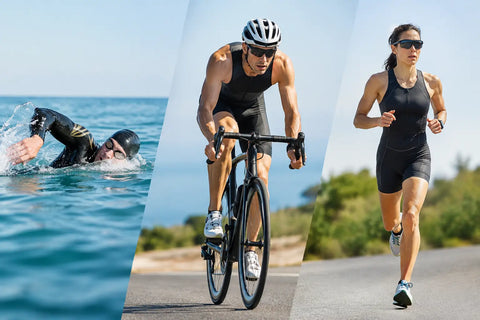
To truly grasp Carter’s brilliance, you must understand the sheer challenge of an Olympic triathlon. Athletes tackle a 1.5-kilometer open-water swim, a 40-kilometer bike course, and finish with a 10-kilometer run — all back-to-back, with barely a moment to recover. By the time competitors reach the last stretch of the run, they are running on pure adrenaline.
In Athens, Carter and Docherty accomplished something remarkable: they pulled ahead of a top-tier field, turning the race into a personal showdown. Docherty, the younger athlete, made a bold move first.
“You’re running nearly as fast as you can and you’re pretty tired. Bevan was younger than me, and he did the surge with about 800 to go. He sort of stretched away, and I went with him, and then it was just the two of us.” — Hamish Carter
At that moment, it seemed clear-cut: two New Zealanders racing each other for Olympic gold, with everything at stake. But neither expected that a simple conversation would change everything.
The Moment Everything Changed
When Talking Becomes a Tactical Opening
This is where sports psychology meets instinct. As they barreled through those crucial last 800 meters, Docherty — perhaps feeling a surge of confidence — turned to Carter and said, “Oh, hey, we’re going to get a medal here.”
Carter’s initial reaction was not relief or encouragement. It was sharper than that.
“I remember vividly thinking, ‘Oh shit, dude, I can’t believe you can talk right now.’” — Hamish Carter
In an instant, Carter’s racing mind made a vital connection: when you’re talking, you’re not breathing efficiently. At peak intensity, every breath matters. Speaking, even for a moment, could mean losing precious oxygen. With split-second precision, Carter assessed the situation and acted.
“When you’re talking, you’re not breathing, right? So then my next split-second thought was like, he’s talking; I attacked him pretty much straight away… I thought he might miss a breath and I’ve got him.” — Hamish Carter
This mental agility is what distinguishes great athletes. Carter wasn’t just running; he was analyzing his competitor in real time, recognizing a moment of weakness, and pouncing before it slipped away.
The Attack: Executing Under Maximum Pressure
The Surge That Won Gold
Carter’s response to Docherty’s comment was immediate. There was no hesitation, no second thoughts — he surged forward. Here is how that decisive moment unfolded:
| Moment | Detail |
|---|---|
| Docherty’s surge | ~800m from the finish |
| The conversation | Docherty speaks; Carter recognizes the breathing gap |
| Carter’s attack | Launched almost immediately after the comment |
| Gap established | Carter creates separation with ~300m remaining |
| Winning margin | Just under 8 seconds |
Timing was everything. With about 300 meters left, Carter had opened enough distance that Docherty couldn’t close the gap. The lead was established too late for recovery, but just enough to seal the race. Had Docherty reacted quickly to the surge, Carter could have found himself in serious trouble. The calculated move paid off, and Carter crossed the finish line as Olympic champion.
“That Wasn’t Very Nice”: Sportsmanship at Its Best
A Cheeky Victory Graciously Received
What elevates this story beyond tactics is what happened seconds after Docherty crossed the line. Four simple words — “That wasn’t very nice.” — playful rather than bitter, reflecting genuine appreciation for the cheeky move that had just unfolded. Carter recalls the moment with evident warmth.
“He was stoked as well, so it was a pretty surreal moment.” — Hamish Carter
This captures the human side of elite competition. Two athletes pushed each other to the absolute limit, delivered New Zealand a historic one-two finish, and shared a laugh before the adrenaline had even faded. Docherty’s silver medal was a formidable achievement in its own right, and their shared pride as teammates towered over any individual result. Those four words stand as one of the most gracious responses to being outmaneuvered in Olympic history.
Two Decades Later: A Legacy That Still Resonates
The Achievement That Keeps Giving
More than twenty years since Athens, Hamish Carter still meets people who stop him to share where they were when they watched the race, how it moved them, and what it meant. Such lasting emotional connections are rare in sport. Carter reflects on this with characteristic humility.
“It definitely does [bring emotions]. I think it’s an incredible sense of achievement and what’s really powerful about it is, it feels like it gives more out to the universe than you get for yourself.” — Hamish Carter
New Zealand’s one-two finish at Athens didn’t just add two names to the podium — it inspired countless triathletes, demonstrated what a small island nation could achieve on the global stage, and created a moment that still lingers in the hearts of many fans worldwide.
“So you get so much for yourself, but it feels it gives so much out to other people, which is quite incredible. And it inspires other people; that’s what’s really special about it.” — Hamish Carter
What Every Triathlete Can Learn From This Moment
Carter’s victory in Athens offers more than a captivating sports story — it is a lesson in race intelligence. Whether you are gearing up for your first sprint triathlon or chasing a podium at a 70.3 race, these principles apply directly to your training and competition.
- Observe your competitors, not just the course. The mental game is just as vital as the physical. Stay attentive to signs from rivals — their breathing, body language, and even their words.
- Seize opportunities without hesitation. Carter acted on an opening the instant it appeared. Deliberating could cost you the race.
- Tactical awareness is a skill you can build. Developing racing intelligence takes time and practice, earned through competition and a deep understanding of both body and mind.
- The mental game is always at play. Even when physically maxed out, Carter’s mind was processing information and making tactical choices. Training mental resilience under fatigue is just as crucial as physical conditioning.
For aspiring triathletes across Latin America — from Mexico City to Buenos Aires, from Guadalajara to Bogotá — this story is a reminder that the swim, bike, and run are just pieces of the puzzle. A sharp racing mind may be the most critical skill of all.
Key Takeaways
- Elite competition is a mental chess match. Physical endurance sets the stage; tactical intelligence determines the winner.
- Unexpected opportunities can arise in conversation. A simple comment — “Oh, hey, we’re going to get a medal here” — unlocked the path to Olympic gold.
- Shared achievement amplifies the legacy. New Zealand’s one-two finish made both Carter’s gold and Docherty’s silver more meaningful, not less.
- Historic moments leave lasting impressions. Two decades later, people still approach Hamish Carter to share what that race meant to them.
- The tactical surge is a skill anyone can develop. Recognizing the right moment to move — and daring to act — is something every triathlete can learn.
The next time you are deep in a race, legs heavy and lungs burning, and you overhear someone nearby say anything — remember how Hamish Carter’s sharp mind worked in the Athens heat, connecting a single spoken sentence to a split-second decision that earned him Olympic gold. Who knows? You might just find your own moment to attack.
Want to dive deeper into the mental and physical demands of triathlon? Check out our picks for gifts for triathletes to fuel your next training block. For the full Hamish Carter interview, don’t miss Sport Nation’s conversation with Millsy & Guy — it’s as entertaining as it is inspiring.
Quick Reference: The Athens 2004 Moment
| Fact | Detail |
|---|---|
| Event | Men’s Olympic Triathlon, Athens 2004 |
| Gold Medal | Hamish Carter (New Zealand) |
| Silver Medal | Bevan Docherty (New Zealand) |
| Winning Margin | Just under 8 seconds |
| Attack Launched | ~800m from finish |
| Gap Established | ~300m from finish |
| Docherty’s Response | “That wasn’t very nice” |
Frequently Asked Questions
What memorable event did Hamish Carter achieve at the 2004 Summer Olympics?
Hamish Carter won the gold medal in the triathlon at the 2004 Summer Olympics in Athens, finishing just under eight seconds ahead of fellow New Zealander Bevan Docherty.
How does Hamish Carter feel about his Olympic achievement?
Carter expresses a profound sense of achievement and believes his victory inspires others, stating it feels like he gives more to the universe than he gains for himself.
What interaction did Hamish have with Bevan Docherty during the race?
As they approached the finish, Bevan Docherty commented, “Oh, hey, we’re going to get a medal here,” which surprised Carter and prompted him to surge ahead, leading to his victory.
What does Hamish Carter recall about the final moments of the race?
Carter vividly remembers attacking Docherty when he was talking, realizing that if he could talk, he might be losing breath, giving Carter the opportunity to take the lead.
What was Bevan Docherty’s reaction after the race?
Bevan Docherty humorously remarked, “That wasn’t very nice,” acknowledging the competitive yet friendly nature of their race.