Designing for Athletes: How This Brazilian Apartment Balances Performance & Relaxation
Most homes are designed around aesthetics first and lifestyle second. But what happens when a designer flips that equation — when the starting point isn't a mood board, but a training schedule?
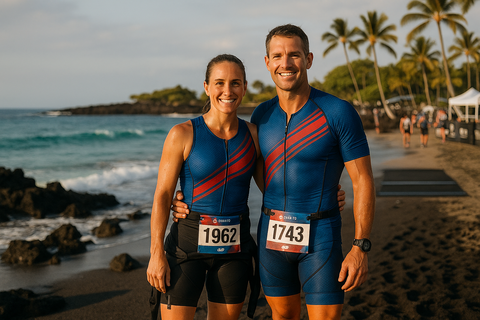
That's exactly the challenge architect Mariana Maisonnave took on in Florianópolis, southern Brazil, when she was commissioned to redesign a 140m² coastal apartment for a couple who live and breathe sport. One partner races triathlons. The other is equally committed to an active outdoor life. Together, they needed a home that could pull double duty: a serious, functional base for athletic training and a genuine retreat where they could decompress after punishing sessions in open water, on the saddle, or pounding the pavement.
The result is a case study in what designers are beginning to call lifestyle-driven design — a discipline that doesn't ask "what looks good?" but rather "how do you actually live?" For anyone who's ever tried to shove a road bike into a cramped hallway, draped a wetsuit over a dining chair to dry, or hunted desperately for a power socket to charge a GPS watch, this apartment offers something quietly radical: a home that gets it.
Understanding the Brief: Beyond Four Walls and a Sofa
When Your Client's Calendar Shapes the Floor Plan
Traditional residential design tends to work from the outside in — you pick the style, then you fill the space. Lifestyle-driven design works in reverse. Before Maisonnave touched a pencil, she needed to understand how her clients move through a day, a week, a race season.
For a triathlete, that means early mornings. It means wet kit coming home from a beach swim session. It means recovery routines — compression, stretching, nutrition — that need dedicated space and time. It means gear: bikes, helmets, running shoes, swim bags, nutrition belts, race kits. And it means, after all of that, a genuine need to rest — mentally and physically — in a space that doesn't feel like a sports locker room.
Florianópolis makes this brief uniquely achievable. Known throughout Brazil and increasingly across Latin America as a hub for water sports, surf culture, and outdoor living, "Floripa" sits on a subtropical island with more than 100 beaches. Open-water swimming is accessible year-round. Cycling routes cut through dramatic coastal terrain. The city has cultivated one of Brazil's most active outdoor communities, making it a natural home for athletes who want their environment to support their training — not just their weekends.
The apartment's coastal location wasn't a backdrop. It was an active ingredient in the design.
Spatial Planning: Fitting an Athletic Life into 140m²
Functional Zones Inside a Compact Footprint
One hundred and forty square meters sounds generous — until you start listing everything an athlete's home needs to contain. Maisonnave's central challenge was fitting multiple distinct functional zones into a space that, in most hands, would be planned for a sofa, a dining table, and not much else.
The solution came down to purposeful zoning — defining areas by activity rather than by room. Rather than asking "what goes in the living room?", the design asked "where does high energy happen, where does recovery happen, and how do those zones connect?"
In practice, this translated to:
- Active zones positioned near entrances and utility areas — easy to access, easy to clean, with surfaces that tolerate wet kit, muddy shoes, and the chaos of race-week prep.
- Transition spaces that act as buffers — a thoughtfully designed area near the entrance where gear can be stored, rinsed, or hung without bleeding into living spaces.
- Recovery and relaxation zones positioned to feel genuinely separate, with softer lighting, natural materials, and visual calm to signal that the training day is done.
Athletes who can't mentally leave "training mode" struggle to recover properly — and a home that blurs those lines makes the problem worse.
This isn't just practical. It's psychological. Maisonnave's zoning strategy gives the apartment's inhabitants permission to switch off — not just space to do so.
Storage: The Athlete's Invisible Problem
Sports equipment is bulky, oddly shaped, expensive, and needs to be accessible without dominating every visual field in the home. Any designer who has worked with serious athletes will confirm: storage is never solved; it's only managed.
For a triathlete household, this means solving for bikes (almost certainly more than one), helmets, shoes across three disciplines, wetsuits, swim bags, race wheels, trainers, nutrition, race kit, travel bags, and the accumulating small items — lights, pumps, tools, cables — that fill every drawer if given half a chance.
In this apartment, storage solutions are built into the architecture rather than bolted on afterward. Built-in cabinetry along transitional spaces keeps equipment accessible but contained. Bike storage is deliberately planned — not an afterthought corner — with wall clearance, floor protection, and easy in-and-out access. The result is a home that can absorb the full volume of an athlete's kit without looking like a sporting goods warehouse.
Contemporary Design Meets Coastal Living
Aesthetic Choices That Actually Support Function
Contemporary design gets mischaracterized as cold or purely visual — all clean lines and Instagram-ready minimalism. But at its best, contemporary design is deeply functional. The absence of clutter isn't just aesthetic; it supports mental recovery. Clean surfaces are easier to maintain in an active household. Neutral palettes make light-filled rooms feel larger, which matters enormously in 140m².
Maisonnave leaned into a material palette rooted in the coastal environment: natural woods, light stone, and textiles that reference the beach without resorting to kitsch. These aren't just pretty choices. Natural wood is warm underfoot after a cold-water swim. Stone surfaces in wet areas are durable and easy to clean. Light, breathable textiles dry quickly and hold up to the humidity of a subtropical coastal climate.
Flooring deserves particular attention in an athlete's home. Non-slip surfaces near wet entry points are non-negotiable for safety. Easy-clean finishes throughout reduce maintenance time — and athletes are already spending enough hours on training, recovery, and nutrition without adding excessive housework to the list. The transition from outdoor-grade flooring near entrances to softer, warmer materials in relaxation zones is one of those design details that you notice primarily by its absence when it's done wrong.
Natural Light and Ventilation: Performance Amenities
In Florianópolis, natural light isn't a luxury — it's a design resource. The subtropical climate means year-round sunshine, and Maisonnave used it strategically. Performance and functional spaces benefit from abundant natural light; human beings are simply more alert and energized in well-lit environments. Recovery spaces, conversely, need the ability to control light — to create a sense of shade and calm after bright training conditions.
Ventilation is equally critical in a subtropical coastal apartment. A household that regularly brings in wet kit, produces the body heat of training, and lives near the ocean needs airflow that's thoughtfully designed, not incidental. Cross-ventilation strategies — windows and openings positioned to catch prevailing coastal breezes — reduce reliance on air conditioning, keep the home feeling fresh, and matter enormously to athletic recovery. Sleeping in good-quality ventilated air is a genuine performance variable, and it starts with architecture.
The Indoor-Outdoor Connection
Extending the Living Space to Where Training Happens
One of the most powerful design moves in any coastal property is dissolving the boundary between interior and exterior. In a home designed for athletes in Florianópolis, this isn't decorative ambition — it's a reflection of how the inhabitants actually live. Training happens outside. Recovery often happens outside. Social time, especially in Brazilian culture, frequently happens outside.
Seamless transitions from interior to exterior spaces — through large sliding or folding doors, through consistent material language that flows from inside to out, through outdoor spaces that feel designed rather than leftover — extend the effective square footage of the apartment and reinforce the connection to the coastal environment that drew the clients here in the first place.
Covered outdoor space is particularly valuable in a subtropical climate, providing protection from sudden rain without sacrificing airflow or the sense of being outside. For an athlete who wants to stretch, use a foam roller, or simply sit with a coffee after a morning session, a well-designed terrace or balcony becomes one of the most-used rooms in the apartment.
The proximity to Florianópolis's beaches and open water means the outdoor design doesn't need to replicate what's available minutes away — it needs to connect to it. Storage for beach gear, easy rinse-down areas for returning from a swim, outdoor seating that handles the salt air: these are the practical touchpoints that make an outdoor space genuinely useful for an active couple rather than simply scenic.
The Balance: Where Performance Meets Leisure
Designing Two Modes Into One Home
The central tension in a project like this is real: athletes need functional, practical, hard-working spaces. They also need to rest, to enjoy their home, to feel that their retreat is genuinely retreating. These two needs can pull against each other if the design doesn't resolve them deliberately.
Maisonnave's approach was to design for modes rather than rooms. A single space can serve training prep and relaxed evening living if the design anticipates both. Lighting systems that shift from bright and energizing to warm and ambient. Storage that conceals equipment during downtime. Furniture that's comfortable without being precious — pieces that can handle an athlete's daily reality without showing it.
The best athlete homes don't just store your kit. They help your body and mind understand that the work is done.
Flexibility as a Design Value
In 140m², flexibility isn't optional — it's the primary design value. Spaces that serve one purpose only are a luxury that compact apartments cannot afford. Maisonnave's design builds in flexibility through:
- Multi-purpose furniture that adapts to different uses throughout the day
- Zoning defined by lighting and texture rather than walls — easy to reconfigure as needs evolve
- Storage infrastructure that can accommodate different kit configurations as the athletic season changes
- Material choices that are forgiving — surfaces that look good whether the apartment is race-week ready or company-is-coming presentable
This flexibility also future-proofs the design. Training priorities shift. Life circumstances change. A home that was built around one specific set of athletic activities but is fundamentally well-planned will adapt more gracefully than one that was over-specified for a single moment in time.
What Triathlon Living Actually Looks Like (At Home)
If you train in the three disciplines — swimming, cycling, running — your home absorbs the evidence of all of them. A well-designed triathlon household solves for:
- Swim: Wetsuit storage and drying, goggle storage, swim bag access, rinse facilities for salt or chlorine
- Cycling: Secure, accessible bike storage, workshop access for maintenance, charging for electronics, helmet and shoe storage
- Running: Shoe organization (multiple pairs for different conditions), GPS watch charging, race bib and number storage during race season
- Transition: The sport within the sport also happens at home — knowing where everything is, being able to move efficiently through pre-training prep, matters on race morning and on regular training days
Beyond the disciplines themselves, recovery infrastructure matters: space and surface for stretching, good shower facilities with adequate hot water and pressure, the ability to prepare proper nutrition (kitchen design matters for athletes), and places to genuinely rest that feel separate from the active parts of the home.
None of this requires a mansion. It requires a designer who asks the right questions before picking up a pen.
Key Lessons From This Project
Whether you're a triathlete in Florianópolis, a cyclist in Mexico City, or an open-water swimmer training along Brazil's coast, the design thinking behind this apartment translates:
- Start with your lifestyle, not your aesthetic. Know how you actually move through your days before deciding how your spaces should look.
- Zone by activity, not by room name. A "living room" that serves relaxation, stretching, and occasional trainer sessions needs to be designed for all three — not the average of none.
- Storage is architecture. Built-in storage solutions for sports equipment aren't a finishing touch; they need to be in the floor plan from day one.
- Material choices carry functional weight. In an active household, durability, cleanability, and safety underfoot are not secondary considerations.
- Design for psychological modes, not just physical activities. Your home should help you transition from training to recovery — that transition is part of the performance equation.
- Let your location work for you. Florianópolis offers open water, coastal breezes, and year-round outdoor conditions. Good design amplifies those advantages rather than ignoring them.
The Bigger Picture: A Growing Design Conversation
The Maisonnave project in Florianópolis sits at the intersection of two growing trends in residential design. The first is personalization — the shift away from one-size-fits-all home layouts toward spaces that are deliberately built around how specific people live. The second is the rise of active lifestyle communities across Latin America and beyond, where demand for homes that genuinely support training is growing alongside participation in endurance sport.
Brazil's triathlon and endurance community has expanded significantly over the past decade, with Florianópolis serving as one of its most active hubs. Similar stories are playing out in São Paulo, in coastal communities in Mexico, and in cities across the continent where a generation of athletes is investing seriously in their training — and beginning to ask that their homes keep up.
The question this project poses to that community is a good one: Your gear is dialed in. Your training plan is periodized. Is your home designed for the athlete you really are?
Frequently Asked Questions
What does a 403 ERROR mean?
A 403 ERROR indicates that the request could not be satisfied due to access restrictions. This could be due to configuration issues or if the server is unable to handle the request at the time.
Why does the request get blocked?
The request may be blocked due to high traffic on the website or app or due to a configuration error on the server. It indicates that the server can't connect to the destination.
What should I do if I encounter this error?
If you encounter a 403 ERROR, try refreshing the page or waiting for a few moments before trying again. If the issue persists, you may need to contact the owner of the app or website.
How can content providers troubleshoot this error?
Content providers can troubleshoot this error by reviewing the CloudFront documentation for steps on how to manage traffic and diagnose configuration issues.
What is CloudFront?
CloudFront is a content delivery network (CDN) service that helps deliver web content efficiently. It can also help manage traffic to applications and websites.
Source: Architect & Interiors India — Navigate Contemporary Living in This Brazilian Residence