What Triathlon Gear Do Real Athletes Actually Use? Data-Driven Insights from 1,800 Race-Day Athletes
Tired of gear recommendations based on hype and sponsored posts? A new study tracked exactly what 1,800 age-group triathletes actually raced with — and the results might surprise you.
If you've ever scrolled through a triathlon forum or Instagram feed, you know the flood of gear opinions can be overwhelming. Your training buddy swears by one brand, a YouTube review recommends another, and every pro athlete seems to race on equipment most of us will never afford. The result? Gear decisions made on incomplete, often biased information.
But what if you could skip all the noise and simply look at what 1,800 real triathletes actually chose to race with on the day it mattered most?
That's exactly what a new data-led study from the Outlaw Triathlon Series set out to do. Researchers, supported by Loughborough University Triathlon Club and Core Collagen, manually recorded equipment in transition areas before events and observed gear choices during live racing. The result is the most statistically meaningful snapshot of age-group triathlon equipment choices we've seen: real athletes, real race conditions, real decisions.
So whether you're building your first triathlon kit or upgrading ahead of your next race season, here's what the data actually says.
Quick note for new triathletes: "Age-group athletes" are non-professional triathletes who compete in categories based on their age. That's the vast majority of us — and these are our people.
Why This Data Matters More Than Another Gear Review
The Problem With How Most Athletes Choose Their Kit
Most triathlon gear decisions follow a familiar pattern: read a few reviews, ask a friend, watch what the pros are using, and hope for the best. There's nothing wrong with any of those approaches individually — but they all share a critical flaw. They're based on small samples, single perspectives, or marketing-driven narratives.
Professional triathletes race on prototype equipment, custom fits, and sponsor-mandated gear that simply isn't available — or practical — for age-groupers. When Sam Laidlow sets a record at Challenge Roth on a Canyon, that tells you something about what a world-class athlete can do on cutting-edge equipment. It tells you much less about what a 38-year-old finishing their second long-distance triathlon should put in their transition bag.
Why Transition-Area Data Hits Different
The Outlaw study sidesteps all of that. By recording gear directly in transition areas across 1,800 athletes, it captures actual purchasing decisions made under real race-day pressure. No lab conditions. No single-tester bias. No brand partnerships influencing the result.
With 1,800 athletes in the sample, validated by Loughborough University Triathlon Club, the patterns that emerge carry genuine statistical weight. This isn't one person's opinion — it's the collective wisdom of a field.
The Swim Leg: Huub Leads the Wetsuit Race
The Clear Winner in Neoprene
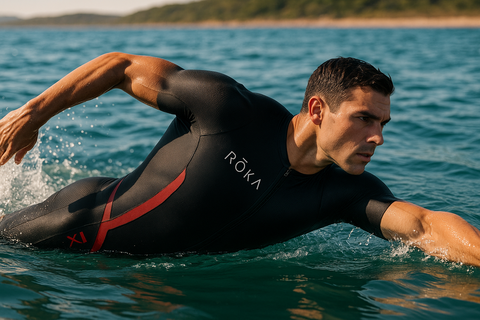
When researchers scanned the transition area before the swim start, one brand dominated the wetsuit count: Huub. The British manufacturer has built a strong reputation in triathlon over the years, and this study confirms that reputation has translated into real purchasing decisions at the grassroots level.
The Huub Aegis X 3:3 — previously highlighted by 220 Triathlon as one of the most recommended wetsuits on the market — is a good example of why the brand resonates with age-groupers. It balances genuine performance features with the kind of reliability that matters when you're standing on a cold start line.
Quick explainer: Wetsuit thickness ratings like "3:3" mean 3mm neoprene in the torso and 3mm in the limbs. A "4:3" suit has a thicker torso for extra warmth and buoyancy. For most open-water triathlon conditions, a 3:3 or 4:3 offers the right balance of flexibility and thermal protection.
The Chasing Pack
Behind Huub, Zone3, Raceskin, and Speedo were among the most commonly spotted brands, with DHB, Orca, and Blue70 also making appearances on the start line. This spread suggests that while Huub leads, the wetsuit market is more competitive than the bike segment — athletes are willing to explore options across a range of price points and performance levels.
What the Wetsuit Data Tells Us
The dominance of Huub points to something important: age-group athletes prioritize proven reliability over novelty. Huub's long-standing presence in the triathlon community means athletes can easily find reviews, try suits at local retailers, and get support if something goes wrong. That accessibility and brand trust matters enormously when a wetsuit represents a significant investment — and a potential race-day failure point.
For athletes in Latin America and other markets where some niche brands have limited distribution, this pattern is even more pronounced. Brands like Speedo and Orca that appear here have strong international retail networks — a real-world advantage over boutique alternatives.
The Bike Leg: Giant/Liv Commands the Field
19.4% — A Commanding Lead
No discipline produced a clearer winner than the bike leg. Giant/Liv captured a remarkable 19.4% share of the bikes recorded in transition — by a healthy margin, according to the study. In a market fragmented across dozens of brands at every price point, nearly one in five athletes choosing the same manufacturer is a striking result.
Why does Giant/Liv dominate so comprehensively?
- Accessible price points across a wide range — from entry-level road bikes to performance-focused triathlon-specific models
- A strong global dealer network — meaning athletes can actually test, service, and support their purchase
- The Liv brand — Giant's women-specific line, which ensures female athletes have purpose-built options within the same ecosystem
- Proven Taiwanese manufacturing efficiency — consistent quality at competitive price points
The Competitive Field
Behind Giant/Liv, the data showed Trek in second, followed by Canyon, Specialized, Planet X, and Cube. The presence of Planet X and Cube — both strong value propositions — suggests that price-conscious athletes are well represented in the age-group field.
Canyon's position is particularly interesting. The direct-to-consumer brand frequently dominates professional racing headlines — Sam Laidlow's Challenge Roth course record is just one example — yet it trails significantly in age-group market share. Professional success simply doesn't translate automatically into age-group adoption. Factors like dealer accessibility, the ability to test before buying, and post-purchase support all weigh heavily in real-world purchasing decisions that don't factor into sponsorship agreements.
Giant Dominates Wheels Too
In a finding that surprised no one, Giant/Liv's dominance on bikes extended to the wheel count as well. Athletes who buy a Giant tend to stick with the manufacturer-supplied wheelset — at least at the entry and mid-range levels. This "ecosystem loyalty" is a natural result of how most age-groupers purchase and use their bikes, and it gives Giant an outsized share of the components market as well.
The Pro-Age-Group Gap in Action
The Canyon story is worth sitting with for a moment, because it illustrates a broader truth about gear selection. What wins at the elite level reflects what's optimal for elite conditions — custom fits, professional mechanics, and unlimited budget. What wins in transition reflects something different: accessibility, value, reliability, and the confidence that comes from thousands of other athletes making the same choice.
If you're building your race-day kit, this distinction matters. You don't need to chase the same equipment as the pros to race well.
The Run Leg: Asics Crosses the Finish Line First
The Running Shoe Champion
After the bike, athletes rack up and lace up — and in transition areas across the Outlaw series, Asics was the most commonly spotted running shoe brand. In a market with enormous variety and strong personal preference factors, this is a meaningful finding.
The reasons aren't hard to identify. Flora Duffy, Sam Long, Hayden Wilde, and Lucy Charles-Barclay — four of the biggest names in professional triathlon — all race in Asics footwear. When age-group athletes see the sport's best athletes consistently crossing finish lines in the same brand, it creates genuine confidence in the product.
A Competitive and Diverse Market
Unlike the bike segment, running shoes showed more brand diversity across the field. Behind Asics, the top 10 looked like this:
- Asics (top position)
- Adidas
- Hoka
- Saucony
- Nike
- Brooks
- New Balance
- On
- Puma
- Mizuno and Topo
The breadth of this list reflects something fundamental about running shoes: fit is deeply personal. A shoe that feels perfect for one athlete's gait and foot shape may cause injury in another. This natural diversity in the running shoe market is healthy — and it's a reminder that following the crowd matters less here than in other disciplines.
The Elite Endorsement Effect
It's worth noting that Adidas has achieved remarkable recent success at the elite level, yet Asics leads among age-groupers. This gap mirrors the Canyon situation on bikes — professional success doesn't automatically transfer to age-group market share. Asics' multiple high-profile athlete partnerships across both men's and women's professional triathlon seem to have created a broader and more durable halo effect with recreational athletes.
The Bigger Picture: What 1,800 Triathletes Tell Us About Our Sport
Reliability Beats Innovation for Age-Groupers
Across all three disciplines, a clear pattern emerges: age-group athletes gravitate toward proven, accessible, well-supported brands rather than the most innovative or headline-grabbing options. This isn't a failure of imagination — it's rational decision-making under uncertainty.
When you've trained for months for a race, the last thing you want is a wetsuit that fails at the zip, a bike that needs a specialist mechanic, or a shoe that causes a blister at kilometer two. Established brands with strong dealer networks and real-world track records reduce that risk. The crowd, in this case, is onto something.
The Outliers Aren't Wrong Either
That said, brands like Planet X, Topo, and Blue70 appearing in the data is encouraging. These athletes made deliberate, informed choices to step outside the mainstream — and those choices can absolutely pay off. If a less common brand fits your body, budget, and racing style better than the market leaders, that's the right choice for you. Data like this should inform your decision, not dictate it.
The Regional Dimension
Huub's dominance in a UK-based study raises an interesting question about regional brand loyalty. Would the same study conducted at races in Mexico, Brazil, or Spain produce different results? Almost certainly. Brand availability, pricing in local markets, and cultural affinity with certain brands all shape purchasing decisions. If you're racing as a triatleta in Latin America, your local market context matters — international studies like this one offer useful signals, but they're not a direct prescription for your kit bag.
Your Race-Day Kit Checklist: Putting the Data to Work
- For wetsuits: Huub, Zone3, and Orca are well-regarded starting points backed by real-world volume. Try before you buy if at all possible — fit matters enormously in neoprene.
- For bikes: Giant/Liv's accessibility and dealer network make it a logical choice for many age-groupers, but Trek, Canyon, and Specialized all represent strong alternatives at various price points. Prioritize local dealer support.
- For running shoes: Asics leads the data, but this is the discipline where personal fit should trump brand loyalty. Visit a specialist running store, get a gait analysis, and test multiple options.
- Don't assume pro = best for you: Canyon and Adidas both dominate professional racing but trail in age-group adoption. Your needs and conditions differ from those of elite athletes.
- Consider your local market: Brands with strong distribution in your region will be easier to service, replace, and support throughout your racing career.
Final Thoughts: Are You Part of the Triathlon Crowd?
The question the Outlaw study poses is a good one: Is your kit part of the triathlon crowd, or are you racing against the trend?
But perhaps the better question is: Does your kit serve you well on race day? The data from 1,800 athletes gives you a meaningful benchmark — a picture of what the collective wisdom of a large, real-world field has converged on. Huub in the water. Giant/Liv on the road. Asics on the run. These brands have earned their place.
Frequently Asked Questions
What is the most popular wetsuit brand among triathletes?
The most popular wetsuit brand among triathletes, as revealed in a study, is Huub, followed by Zone3, Raceskin, and Speedo.
Which bike brand is most commonly used in triathlons?
Giant/Liv is the most popular bike brand among triathletes, with a significant share of usage in the Outlaw Triathlon Series.
What running shoe brand do most triathletes prefer?
Asics leads as the most popular running shoe brand among triathletes, followed by Adidas, Hoka, and Saucony.
How was the data about popular triathlon kit collected?
The data was collected through manual recording in transition areas before events, with assistance from the Loughborough University Triathlon Club for validation and analysis.
What factors influence triathletes' choice of equipment?
Triathletes often rely on reviews, recommendations, and anecdotal advice when choosing equipment for races.
Source: 220 Triathlon — Most Popular Triathlon Kit
Discover unique triathlon-themed merchandise, including stylish t-shirts, stickers, phone cases, and home decor — perfect for endurance sports enthusiasts and athletes. Shop now