When a champion becomes a parent, something remarkable often happens — not because of fate, but because of everything that follows.
What if the greatest gift a parent could give a child isn't a trust fund or a famous last name — but a front-row seat to what relentless dedication looks like in real life?
Research suggests that having an athlete parent dramatically increases a child's likelihood of pursuing competitive sport — not simply because of genetics, but because of environment, access, and the powerful psychological modeling that happens when you grow up watching someone you love chase excellence. Studies in sports science have long explored the "nature vs. nurture" debate, and the consensus is clear: it's never one or the other. It's almost always both.
In the Philippines — a nation that takes enormous pride in its sports dynasties, from basketball courts in Pangasinan to tennis academies in Manila — this phenomenon is becoming increasingly visible. A new generation of elite athletes is emerging, and many of them share something beyond raw talent: they share a bloodline with greatness.
Today, we spotlight five athletes who are redefining what athletic legacy means — not by copying their parents' playbooks, but by building on them, challenging them, and in some cases, surpassing them entirely.
Nature vs. Nurture: What Science Says About Inherited Athletic Excellence
Before we meet the athletes, let's clear up a popular misconception: athletic talent is not simply something you're born with.
Yes, genetics play a role. Research from the Human Kinetics Journal and various sports science institutions has identified that genetic factors influence muscle fiber composition, oxygen uptake capacity (VO2 max), and even psychological traits like competitiveness and stress resilience. In fact, studies estimate that genetic factors may account for 30–80% of the variation in athletic performance, depending on the sport.
But here's the critical piece that gets lost in the "they were just born gifted" narrative: access, mentorship, and early exposure may matter just as much — or more — than raw genetic potential.
When a child grows up in an athletic household, they benefit from:
- Early sport exposure before formal schooling even begins
- Built-in coaching from a parent who has navigated the same terrain
- Psychological modeling — watching a parent manage pressure, losses, and comebacks with resilience
- Network access to coaches, scouts, training facilities, and competitive opportunities
- A normalized culture of discipline, where 5 a.m. training sessions are simply part of family life
This is the real inheritance. Not just the genes — but the environment those genes get to grow in.
Meet the Champions: Five Athletes Redefining Family Legacy
1. Alex Eala — Tennis Prodigy Carrying a Family's Love for the Game
Few names in Philippine tennis generate as much excitement right now as Alexandra "Alex" Eala. Born in 2005, she burst onto the international scene with back-to-back ITF junior singles titles and became the first Filipino to win a Grand Slam junior title when she claimed the 2022 US Open Girls' Singles championship — a historic moment that sent shockwaves through Southeast Asian tennis.
But what many fans may not immediately connect is the family thread woven into her story. Alex's parents, Michael and Rizza Eala, were both competitive athletes. Her mother, Rizza, was a national-level tennis player, and her father Michael played collegiate basketball — meaning athletic discipline wasn't just encouraged in the Eala household. It was lived.
Alex has spoken about how growing up around parents who understood the demands of training gave her an unusual emotional foundation. She didn't need to explain to her family why she needed to travel internationally at 12, why she missed school events for tournaments, or why some losses felt devastating. They already knew.
The advantage isn't just the coaching or the access — it's that she never had to convince her family that the sacrifice was worth it. They believed in it because they'd lived it themselves.
What makes Alex's story especially compelling is how she's forging her own identity. She's not trying to replicate her mother's career in Philippine tennis. She's playing on the WTA circuit, competing against the world's best, and doing so at an age when most players are still developing. Alex Eala is not following in her mother's footsteps — she's running past them.
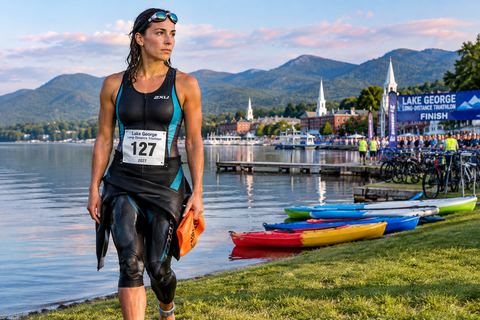
2. Kira Ellis — Triathlon's Emerging Force with Roots in Endurance
The world of triathlon is no stranger to family legacies. In fact, the sport has a long history of parent-child athletic tandems, partly because triathlon demands such a total lifestyle commitment that it tends to permeate entire households.
Kira Ellis represents the next chapter in a family triathlon story. With a mother who competed at a high level in endurance sports — logging miles in swim training, cycling, and distance running before Kira was old enough to tie her own shoes — Kira grew up understanding that triathlon isn't just a race. It's a way of organizing your entire life around consistent, purposeful effort.
What's particularly interesting about Kira's journey is the mentorship model at work. In many parent-child athletic relationships, there's a tension: the parent wants to guide, the child wants independence. Kira's story reflects a more balanced dynamic — her mother's experience serves as a resource, not a script. Kira draws on that knowledge without being constrained by it.
For aspiring triathletes watching Kira's development, there's an important lesson embedded in her story: the best mentors don't tell you exactly what to do. They help you understand why certain principles work — and then trust you to apply them your way.
If you're a triathlete-parent or a parent raising a young endurance athlete, the Kira Ellis model is worth studying. It's not about pushing your child into your sport — it's about opening a door and letting them decide whether to walk through it.
3. Kiefer & Thirdy Ravena — Basketball's First Family, Twice Over
Ask any Filipino basketball fan to name the sport's most celebrated family, and the Ravenas will come up immediately.
Bong Ravena built a legendary career in Philippine basketball, and his sons — Kiefer and Thirdy — have taken the family name to entirely new levels. But the story that often gets less attention is the role of their mother, Mozzy Ravena, who was herself a standout volleyball athlete. An accomplished player in her own right, Mozzy didn't just support her family's athletic ambitions from the sidelines — she embodied the athletic lifestyle that became her children's normal.
Growing up in a household where both parents were competitive athletes created something extraordinary for Kiefer and Thirdy: a complete picture of what sports commitment looks like across genders, across sports, and across life stages. They saw their father's basketball career. They also saw their mother's dedication to volleyball, to fitness, and to the discipline required to compete at a high level.
Kiefer became one of the most decorated players in UAAP history before making the leap to professional play, while Thirdy became the first Filipino to play in Japan's B.League — arguably one of the most significant milestones for Philippine basketball in the past decade.
The sibling dynamic adds another layer. Competing alongside a brother who shares your legacy creates both motivation and accountability. Neither can have a bad week without the other noticing. Neither can coast on the family name — because the other is right there, working just as hard.
What the Ravena brothers demonstrate is that family legacy, when properly channeled, doesn't divide effort — it multiplies it.
4. Stephanie Mercado — Volleyball's Standard-Bearer from a Legendary Lineage
Philippine volleyball has its own constellation of family legacies, and Stephanie Mercado shines brightly within it.
Stephanie comes from a family with deep volleyball roots — her mother was a decorated player whose career helped raise the standard of women's volleyball in the Philippines. Growing up, Stephanie had something most young volleyball players don't: a living, breathing blueprint for what elite-level commitment looked like.
But blueprints aren't meant to be followed exactly. They're meant to be built upon.
Stephanie's career reflects someone who absorbed the lessons of her family background while adding her own technical sophistication, strategic awareness, and personal drive. She's competed at levels that continue to honor the Mercado name — while making it something distinctly, powerfully hers.
One of the key insights in Stephanie's story is about breaking the comparison trap. Second-generation athletes often face an invisible opponent: their parent's legacy, constantly measured against their own achievements in real time. The ones who thrive — and Stephanie is among them — learn to use that legacy as motivation rather than measurement.
The goal isn't to be as good as your mother. The goal is to be the best version of yourself. Your mother's career is the foundation — not the ceiling.
5. Dani Ravena — Stepping Out of the Family Shadow into Her Own Spotlight
Where the Ravena family story in basketball gets all the headlines, Dani Ravena is writing her own chapter — in volleyball.
As a member of the Ravena family and sister to Kiefer and Thirdy, Dani carries one of the most recognizable surnames in Philippine sports. But rather than leaning into the basketball narrative that defines her brothers' public identity, Dani has chosen a different court entirely.
Her volleyball career represents something important: the family athletic legacy is broad enough to encompass multiple sports, multiple paths, and multiple individual identities. The Ravena household didn't produce basketball players. It produced athletes — people with the discipline, resilience, and competitive instinct to excel in whatever arena they choose.
For Dani, that means carving out a reputation in a sport where the Ravena name carries less automatic weight than it does in basketball. In some ways, that's harder. In other ways, it's liberating. She gets to be an athlete first, and a Ravena second — and that distinction matters enormously for long-term career satisfaction and identity.
Dani's story is also a powerful reminder for parents and coaches working with children from athletic families: don't assume the apple falls in the same orchard. Athletic inheritance is real — but it doesn't dictate what sport a child will love, or where they'll find their greatest expression of that inherited drive.
The Intangible Inheritance: What Money (and Genetics) Can't Buy
Here's what never shows up in a family athlete's statistics — but what might matter most:
Mental Toughness Modeled, Not Taught
You can't teach mental toughness in a classroom. But you can watch it. When a child sees their parent lose a critical match, absorb the disappointment, regroup, and come back stronger — that becomes their emotional template for how setbacks work.
Every athlete featured here has had a front-row seat to exactly that kind of modeling. They know what resilience looks like because they've watched someone they love practice it for years.
The Work Ethic That Feels Like Breathing
In most households, extraordinary discipline is extraordinary. In an athlete household, it's Tuesday.
When 6 a.m. training is simply what the family does, when nutrition and recovery are discussed at the dinner table, when weekend practices are built into the family calendar as naturally as church or school — work ethic stops being a choice and starts being a default. That's a profound head start.
Perspective on Winning and Losing
Athlete parents have usually experienced both the highest highs and the most humbling lows that competitive sport delivers. They know that a loss doesn't define a career. They know that one win doesn't guarantee the next.
That perspective is gold. Young athletes from athletic families often develop a healthier relationship with competition because they've absorbed a more realistic worldview about what sport actually demands — and what it actually gives back.
The Network That Opens Doors
Let's be honest: access matters. Having a parent who knows coaches, understands how trials and tryouts work, has relationships within the sport's professional community — these are real advantages that go beyond talent.
Acknowledging this isn't cynical. It's honest. The most effective thing sports organizations can do is acknowledge this advantage and work to create similar access points for athletes who don't have it by birthright. Scholarship programs, community training initiatives, and mentorship pipelines all help level this particular playing field.
Forging Their Own Paths: How These Athletes Step Out of the Shadow
Every second-generation athlete faces a version of the same fundamental challenge: how do you honor a legacy without being imprisoned by it?
The answer, based on the careers of the athletes we've explored here, seems to involve three key strategies:
- Reframe the comparison. Alex Eala isn't trying to be the best Filipino tennis player her mother was proud of. She's trying to be one of the best tennis players in the world. The ambition itself shifts the comparison point.
- Choose your own arena. Dani Ravena didn't play basketball because her brothers were great at it. She found her own sport and excels on those terms. When you pick a different court, you stop being measured against someone else's legacy and start building your own.
- Let the legacy inform — not define. Kiefer and Thirdy Ravena didn't try to replicate their father's career path. They absorbed the values (dedication, teamwork, competitive drive) while pursuing their own opportunities — including international competition that Bong Ravena's era didn't offer.
The legacy is the launching pad, not the destination.
What This Means for the Broader World of Sports
The stories of Alex Eala, Kira Ellis, Kiefer and Thirdy Ravena, Stephanie Mercado, and Dani Ravena aren't just feel-good family tales. They're signals about how sports — and specifically, the visibility of female athlete-mothers — is reshaping who gets access to elite pathways.
When we see Mozzy Ravena's athletic identity as central to her children's success, or when we recognize Rizza Eala's tennis background as foundational to Alex's development, we're acknowledging something important: the careers of female athletes have ripple effects that extend beyond their own records and rankings.
A mother who competed at the national level isn't just a footnote in her child's Wikipedia entry. She's often the reason that child believed athletic excellence was possible — and worth pursuing.
As sports organizations, coaches, and communities continue developing the next generation, the most urgent equity question is this: How do we ensure that the mentorship, access, and psychological modeling these legacy athletes receive is available to children who don't have champion parents at home?
The answer will define how broadly the next generation of champions is cast.
Key Takeaways
- Athletic excellence is a combination of genetics, environment, and access — and for these five athletes, all three came gift-wrapped in family.
- The intangible inheritance — mental toughness, work ethic, competitive perspective — may matter more than any gene or training program.
- Second-generation athletes don't succeed because of their names. They succeed because of what those names represent: years of demonstrated sacrifice and commitment that became their baseline.
- Female athlete-mothers are creating pathways that matter enormously for sports culture — both within their families and in the broader cultural conversation about who belongs in elite sport.
- Legacy is a launching pad, not a ceiling. The athletes who thrive are the ones who understand the difference.
Your Turn
Which of these athletes' stories resonates most with you? Is it Alex Eala's quiet confidence on a global stage? The Ravena family's remarkable breadth across sports? Kira Ellis's endurance legacy? Or the way Dani Ravena chose her own path within a high-profile family?
Share your thoughts in the comments below. And if you carry your own family athletic tradition — whether as a parent, an athlete, or both — we'd love to hear your story.
Because in sport, as in life, the most powerful thing you can pass on isn't a trophy. It's the belief that working for something extraordinary is always worth it.
What is the main purpose of the article?
The main purpose of the article is to provide insights and information on a specific topic, helping readers to understand its implications and relevance.
Who is the intended audience for the article?
The intended audience for the article includes individuals interested in the topic as well as professionals in the relevant field.
What are the key points discussed in the article?
The key points discussed in the article include the background of the topic, current trends, and future implications, along with expert opinions and case studies.
Are there any actionable recommendations provided?
Yes, the article provides several actionable recommendations for readers to apply the discussed concepts in practical scenarios.
Where can I find more information on this topic?
More information on this topic can be found in the references listed at the end of the article and through related publications in credible sources.