Open Water Swimming Guide for Triathletes
The first time you leave the pool wall behind, the sport feels different fast. No black line. No lane rope. No easy pause every 25 or 50 metres. A real open water swimming guide has to start there - not with fancy drills, but with the moment many beginners realise their pool fitness and their open-water confidence are not the same thing.
That gap is normal. For triathletes, open water swimming is not just pool swimming in a lake or the sea. It asks for a different kind of control: breathing when the water is choppy, holding form without visual markers, managing contact, and staying calm when your heart rate jumps before the race has really settled. The good news is that all of this is trainable.
Why open water feels harder than the pool
Most first-time triathletes assume their swim problem is fitness. Sometimes it is, but often the bigger issue is environment. In the pool, rhythm is built into the session. You push off, count strokes, see the bottom, and rest on the wall. In open water, you lose those anchors.
That changes your perception. Effort feels higher, even when pace is not faster. Small waves can interrupt your breathing pattern. Dark water can make you tense. If other swimmers are nearby, your stroke may shorten and your kick may become rushed. None of that means you are underprepared. It usually means you have not yet trained the specific skill of staying composed in changing conditions.
For triathlon, that matters because the swim sets up the rest of your race. A panicked 1500m can cost more than minutes. It can push your heart rate too high, burn energy you need on the bike, and make transition feel chaotic. A controlled swim, even if not aggressive, gives you options later.
Open water swimming guide: build confidence first
If you are new to open water, your first goal is not speed. It is control. That means choosing conditions that let you learn without fighting the environment.
Start in a supervised venue if possible. Calm water, clear entry and exit points, and short loops are better than dramatic conditions. Many beginners make the mistake of treating every open-water session like a test. It works better as progression. Your first few sessions can be short, with plenty of stopping, floating, and resetting.
Wear a bright swim cap so you stay visible. If the venue allows it, a tow float adds another layer of safety and gives peace of mind. A wetsuit can also help, especially if water temperature is cool. It improves buoyancy and often reduces anxiety because your body rides higher in the water. The trade-off is that some swimmers feel restricted through the shoulders at first, so it is worth practising before race day.
Never treat safety as optional. Swim with a partner, a group, or organised support whenever possible. Even experienced athletes respect conditions. Wind, current, temperature, and visibility can change quickly, and confidence is not the same as control. For more on open water swimming safety, understanding environmental risks is crucial.
The key skills that matter most on race day
A strong open-water swimmer is usually not the athlete with the prettiest stroke. It is the one who can make good decisions while moving efficiently.
Sighting is the first big skill. In the pool, the lane keeps you honest. In open water, poor sighting means extra distance. The goal is to look forward just enough to confirm direction without lifting your head so high that your hips drop. Think quick eyes, not a full head raise. Many triathletes sight every 6 to 10 strokes in calm water, then more often when the course is crowded or conditions get messy. It depends on how straight you naturally swim.
Breathing adaptability matters just as much. If you only breathe to one side in the pool, open water may expose that quickly. Waves, glare, or other swimmers can make your preferred side a bad option. You do not need perfect bilateral breathing all the time, but you do need flexibility. Practise being comfortable enough on both sides that you can adjust without stress.
Then there is pacing. Many triathletes start too hard because adrenaline makes every movement feel urgent. That usually leads to heavy breathing in the first few minutes, and once you feel behind your breath in open water, panic can build. A smarter approach is to start with intent but not with a sprint unless your race plan truly requires it. Settle early, lengthen your stroke, and let the field spread before you decide whether to press.
How to train for open water when you mostly have a pool
A lot of triathletes do not have regular access to lakes or the ocean. That is common, and it does not mean you are stuck. Pool sessions can still prepare you if you train with purpose.
First, reduce your dependence on the wall. Sets with fewer turns help. Longer continuous reps teach you to maintain focus and rhythm without frequent resets. If your usual workout is all short intervals, add blocks where you swim steadily for several minutes at a time.
Second, rehearse sighting in the pool. During easy or moderate repeats, lift your eyes forward every few strokes, then return to normal breathing. Done well, this teaches body control without destroying form. Done badly, it becomes a habit of swimming with your head too high. Keep it brief and efficient.
Third, practise starts. A crowded triathlon swim rarely feels calm at the horn. Simulate that stress with short hard efforts at the beginning of a set, then force yourself to settle into race pace. This teaches the shift from high heart rate to controlled rhythm, which is exactly what many beginners struggle with.
You can also include occasional contact if you train with others and everyone is comfortable. Nothing dangerous - just enough to remove the surprise of someone touching your feet or brushing your shoulder. The goal is not aggression. It is staying relaxed when the space gets tighter.
For swimmers looking to protect their hair from chlorine damage during intensive pool training, consider using quality swim goggles with UV protection that also provide excellent visibility for sighting practice.
Race-day decisions that change your swim
Your swim often improves before you even enter the water. Good decisions reduce bad surprises.
Arrive early enough to understand the course. Find the first buoy, then the next visual point after it. Many swimmers lock onto one marker and get lost once they turn. Breaking the course into smaller sighting targets makes navigation easier.
If warm-up is allowed, use it. Even a few minutes can lower stress. Feel the water temperature, test your goggles, and let your breathing settle. If you cannot warm up in the water, do a dryland warm-up to avoid starting cold and tense.
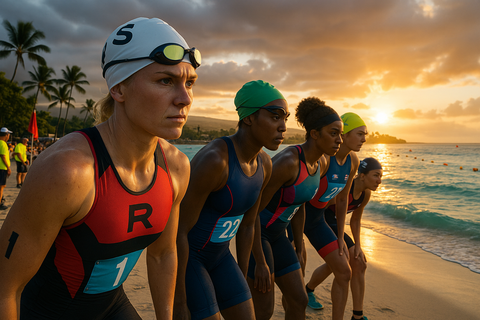
Position matters too. Beginners often place themselves according to ambition instead of actual swim level. If you are not a front-pack swimmer, lining up at the front-centre can create avoidable chaos. Starting slightly to the side or a little behind your ideal pace group may cost a few seconds, but it can save a lot of energy and keep your effort under control.
Drafting is useful, but only when it truly helps. Sitting behind or slightly to the side of a swimmer with a similar pace can reduce effort. The trade-off is that if you follow the wrong feet, you may end up off course or trapped at a pace that does not suit you. For newer triathletes, straight swimming is usually more valuable than aggressive drafting.
What to do when panic shows up
Even prepared athletes can have a rough moment in open water. That does not mean the day is over.
If your breathing spikes, your first job is to reduce urgency. Roll to your back if needed, or switch to breaststroke for a few strokes if the race rules and conditions allow it safely. Exhale fully. Look around. Reorient. Panic grows when you try to fight through it at full speed.
Then restart with a simple focus. One cue is enough: long exhale, soft kick, easy catch. Do not try to fix five things at once. If you need to move wide to find cleaner water, do it. The shortest line is not always the fastest if you are swimming in stress.
This is where experience helps, and why practice matters. Confidence in open water does not come from positive thinking alone. It comes from proving to yourself, session by session, that you can feel discomfort, make an adjustment, and keep moving. Understanding swim safety protocols can also help you feel more prepared for challenging conditions.
The best mindset for long-term progress
This open water swimming guide is not really about becoming fearless. Very few good triathletes are fearless in all conditions. The better goal is becoming predictable under pressure.
You want to know how your body responds to cold water, a crowded start, a missed breath, or a buoy turn with contact. You want routines that bring your effort back under control. That is what turns open water from a weakness into a manageable part of your race.
If you are training for your first sprint or building toward longer racing, keep the progression honest. Pool fitness gives you a base. Open-water practice gives you race readiness. You need both, and one does not replace the other.
To track your swimming progress and overall training load effectively, a GPS running watch with swim tracking can help you monitor heart rate patterns and recovery between sessions.
Give yourself enough reps to learn it properly. Calm is a performance tool, and in triathlon, it travels with you all the way to the finish line. For comprehensive guidance on all three disciplines, explore our game-changing triathlon drills to elevate your overall performance.