When Public Safety Fails Athletes: The Jacksonville Triathlon Incident
A suspected drunk driver's high-speed chase through an active race course raises urgent questions about event security, law enforcement protocols, and the safety of thousands of athletes and spectators.
The Moment Everything Changed
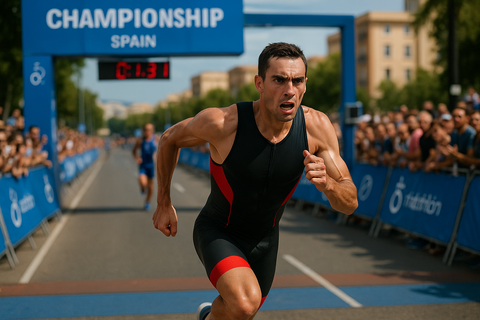
Imagine thousands of athletes pushing their limits across a grueling swim-bike-run course in Jacksonville, Florida. Spectators cheer from the sidelines, volunteers distribute hydration, and race officials orchestrate the complex logistics of a major triathlon. Suddenly, dashcam footage captures a scene no race organizer wants to witness — a vehicle speeding through the active course with deputies in pursuit.
This isn't fiction. It happened in Jacksonville, Florida, when a suspected drunk driver led deputies on a high-speed chase directly through a triathlon race course. The incident, captured on dashcam footage, sent shockwaves through the triathlon community and sparked a critical conversation about public safety at large outdoor sporting events.
For the athletes who dedicate months — sometimes years — of training to compete, this moment represents every competitor's nightmare: not a muscle cramp or mechanical failure, but a reckless driver threatening lives on a course that was supposed to be secure.
What the Dashcam Footage Reveals
The raw dashcam footage from the Jacksonville Sheriff's Office tells the story in stark terms. A suspected impaired driver, pursued by deputies, entered the active triathlon course, navigating through an environment crowded with competitors, spectators, and volunteers.
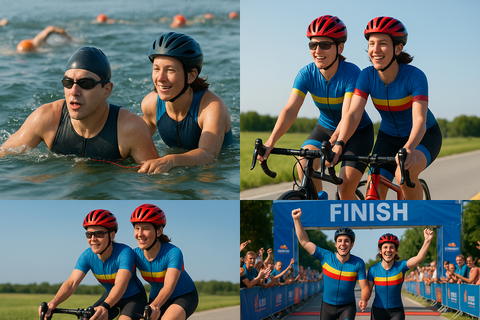
What makes this footage so alarming isn't just the speed of the vehicle — it's the setting. Triathlons are sprawling events. The race includes an open-water swim, followed by cycling, then a run — each leg requiring participants to be on public roads and pathways. At any moment, hundreds of athletes may be active on different portions of the course.
The dashcam shows deputies responding rapidly, but the fundamental problem had already materialized: an impaired driver was sharing space — however briefly — with unprotected athletes and bystanders. No amount of law enforcement speed can fully undo the danger created in those seconds.
No amount of law enforcement speed can fully undo the danger created in those seconds when an impaired driver shares space with unprotected athletes.
Understanding Why Triathletes Are Uniquely Vulnerable
To fully grasp why this incident is so alarming, it helps to understand the physical reality of competing in a triathlon.
Cyclists and runners share road space. Unlike enclosed stadiums, triathlon courses wind through public streets. Even with traffic control, the perimeter of a triathlon course can stretch for miles — creating a difficult security challenge.
Athletes are in a zone of focus. Competitors enter a state of intense concentration. A cyclist averaging 20+ miles per hour is not scanning for approaching vehicles from the wrong direction — they're managing cadence, hydration, pacing, and positioning among fellow competitors. Their reaction time to an unexpected vehicle threat is severely compromised.
Spectators cluster in predictable patterns. Friends and family gather at transition zones, water stations, key turns, and the finish line. These high-density gathering points become choke points in an emergency, with limited ability for crowds to disperse quickly if a threat materializes.
The combination of these factors — focused athletes, clustered spectators, miles of open course — creates a security challenge that demands meticulous pre-event planning. When that planning fails, the consequences can be catastrophic.
The Law Enforcement Dilemma: Pursue or Stand Down?
One of the most complex questions raised by this incident is the decision to pursue a fleeing suspect through an active race course. This is not a simple call.
Law enforcement officers face an impossible calculation in real time: continuing the pursuit risks endangering athletes and spectators; abandoning the chase risks allowing a suspected impaired driver to continue threatening the public elsewhere. There is no clean answer, and second-guessing officers in the field without full situational awareness is rarely productive.
However, this incident does surface important questions about pursuit protocols at large public events:
- Were deputies aware the chase had entered race territory before it was too late to redirect?
- What communication existed between the Jacksonville Sheriff's Office and race officials prior to the event?
- Were alternative apprehension methods available — spike strips at perimeter access points, aerial coordination, or staged interception outside the race zone?
Major law enforcement agencies increasingly recognize that high-speed pursuit policies must evolve to account for the growing prevalence of large outdoor events in urban areas. Pre-event coordination meetings, shared communication channels, and agreed-upon protocols for exactly this scenario are not luxuries — they're essential infrastructure.
Security Gaps This Incident Exposes
Triathlons typically deploy significant safety infrastructure. Medical personnel, course marshals, police presence, and volunteer networks work in concert to manage thousands of participants. But this incident highlights vulnerabilities that even well-organized events may overlook.
Vehicle Access Points
How did an active vehicle pursuit reach the race course in the first place? This question points directly to perimeter control. Effective race security requires not just cones and volunteer marshals at intersections, but physical barriers — jersey barriers, vehicle-rated bollards, or law enforcement vehicles positioned to block unauthorized vehicle entry at critical access points.
Many marathon and cycling events in major cities have upgraded to exactly this kind of infrastructure, particularly in the post-2016 era when vehicle attacks on public gatherings heightened global security awareness. The question is whether this level of investment has become standard practice for triathlon events specifically.
Real-Time Communication
When the pursuit began, how quickly were race officials notified? Could athletes or spectators have received any alert? Modern race management increasingly incorporates real-time communication technology — athlete tracking apps, volunteer radio networks, and emergency notification systems. An incident like this tests whether those systems can function under genuine crisis conditions.
The Open-Course Challenge
Here's the uncomfortable truth that every race organizer understands: outdoor endurance events are inherently harder to secure than enclosed venues. A stadium controls every entry point. A triathlon course spanning public roads cannot. This reality doesn't make the risk acceptable — it makes proactive security planning even more important.
What This Means for the Triathlon Community
For the hundreds of thousands of triathletes who compete annually — including the growing community of athletes across Latin America, Mexico, and the bilingual triathlete community in the United States — incidents like this one carry a specific emotional weight.
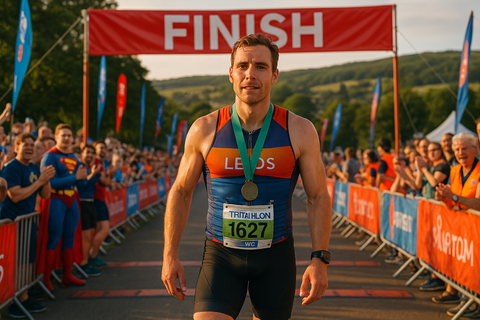
Triathlon training is a lifestyle, not just a sport. Athletes spend months logging swims, bike rides, and runs, often sacrificing weekends, social commitments, and physical comfort in pursuit of a finish line goal. Race day is supposed to be the culmination of that effort — a celebration of preparation and resilience.
No athlete should have to worry that a reckless driver might disrupt that moment. And the responsibility for ensuring that doesn't happen rests with event organizers, law enforcement agencies, local governments, and policymakers working together before race day — not reacting to dashcam footage after the fact.
Whether you're a first-timer preparing for your debut race or a seasoned competitor chasing a personal record, understanding the safety infrastructure (and its gaps) at your events is now part of race-day literacy.
Lessons and the Path Forward
This incident, while alarming, offers an opportunity — if stakeholders choose to treat it as one.
For Event Organizers
- Conduct a comprehensive security audit of all access points along the race course
- Install or require vehicle-rated barriers at critical entry points, not just cones and signage
- Establish pre-event coordination meetings with local law enforcement that specifically address pursuit protocols
- Test real-time emergency communication systems before race day, including athlete notification channels
For Law Enforcement
- Develop clear policies for high-speed pursuit situations that intersect with mass public events
- Participate actively in pre-event security planning — not just as passive supporters, but as co-architects of safety protocols
- Explore alternative apprehension technology — GPS tracking, aerial support, perimeter interception — that reduces the need for extended urban pursuits
For Athletes and Spectators
- Familiarize yourself with evacuation procedures before the race starts — most events include this in pre-race briefings, but few athletes actually read them
- Know the location of your nearest medical station and race marshal
- If you witness suspicious activity near the course — a vehicle behaving erratically, unauthorized access — report it to a race official immediately rather than assuming someone else will
For Policymakers
- Develop minimum security standards for mass outdoor sporting events, particularly those using public roads
- Fund infrastructure improvements for deployable vehicle barriers that cities can use across multiple events
- Strengthen DUI enforcement and penalties — drunk driving remains one of the most preventable public safety threats in the country
The Bigger Picture: Drunk Driving Doesn't Stop for Race Day
This incident is, at its core, a drunk driving story. The race was the setting; impaired driving was the cause.
Drunk driving kills approximately 13,500 people annually in the United States, according to the National Highway Traffic Safety Administration — roughly 37 deaths every single day. Florida consistently ranks among the states with the highest DUI-related fatalities. These are not abstract statistics. They represent neighbors, family members, and — as this Jacksonville incident nearly demonstrated — athletes competing in events they've trained months to enter.
Prevention remains the most powerful tool. Ignition interlock devices, sobriety checkpoints, ride-share availability, and cultural shifts around impaired driving all contribute to reducing the risk before a vehicle ever enters a public space. When prevention fails, the consequences can cascade into scenarios exactly like the one captured on Jacksonville's dashcam footage.
Prevention remains the most powerful tool. When it fails, the consequences cascade into exactly the kind of scenario captured on Jacksonville's dashcam footage.
Final Thoughts
The dashcam footage from Jacksonville's triathlon is disturbing precisely because it captures the intersection of two worlds that should never meet: the disciplined, carefully managed environment of a major sporting event, and the chaotic, unpredictable threat of an impaired driver fleeing law enforcement.
No athlete who crosses a starting line should have to share a race course with a suspected drunk driver. Making that guarantee requires investment, coordination, and accountability from every stakeholder involved — before the starting gun fires, not after the dashcam footage goes viral.
The triathlon community is resilient. Athletes who complete long-distance races are, by definition, people who understand that preparation prevents failure. It's time for the institutions that support those athletes — event organizers, law enforcement, and local governments — to apply that same principle to safety.
What safety measures would make you feel more secure at your next race? Share your perspective in the comments, and advocate for stronger event security standards in your community.
For enhanced race preparation, consider investing in quality gear like a protective cycling helmet with integrated safety features, quality swimming goggles for open water training, and a reliable triathlon suit that keeps you comfortable and visible during competition.
Train smart. Race safe. And if you see an impaired driver — report it.
Frequently Asked Questions
What happened during the long-distance triathlon in Jacksonville, Florida?
A suspected drunk driver led deputies on a car chase, which went through the course of a long-distance triathlon event taking place in Jacksonville, Florida.
Was anyone injured during the police chase at the triathlon race?
Details regarding injuries have not been specified, but the incident raised significant safety concerns for participants and spectators.
What actions did law enforcement take during the chase?
Law enforcement officials pursued the suspect during the chase, which occurred in the midst of an ongoing triathlon event.
Are there any videos available of the incident?
Yes, dashcam footage of the chase has been made available, showing the incident as it unfolded during the triathlon.
What should triathlon participants do in case of emergencies like this?
Participants should stay alert and follow instructions from race officials, and if necessary, seek immediate assistance from law enforcement or medical personnel.
Source: WRAL — Suspect leads car chase through triathlon race in Jacksonville, Florida