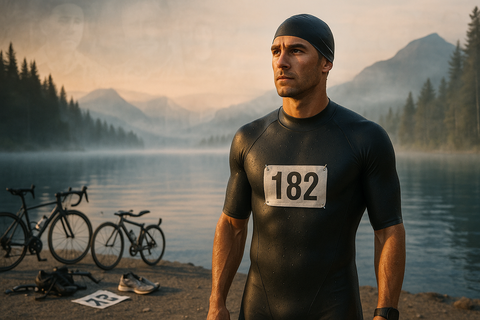
Imagine standing on the deck of a ferry at 5 AM, the Norwegian sky just beginning to lighten over the Hardangerfjord. Nearly 300 athletes are about to leap into water temperatures ranging from 13°C to 17°C (55–63°F). There is no warm-up pool, no gradual entry — just a cold plunge into one of the world's most dramatic landscapes. This is the start of the Norseman Xtreme Triathlon, a 226km journey that tests every limit of the human body and mind.
In 2026, two-time Olympic champion Alistair Brownlee is discovering firsthand why this event has earned its fearsome reputation. With nearly 8,000 applicants from over 100 countries, only about 300 athletes secure a spot each year. Those who do are greeted not with motivational slogans, but with a blunt message: "YOU ARE NOT READY."
The Norseman Philosophy: "This Is Not for You"
A Race That Challenges You Before It Even Starts
"This is not for you. Nothing personal. But it's not. This is for people with fight and resilience and minds tougher than their bodies. They're not interested in being the best. All they care about is besting themselves."
This is not just marketing — it is a philosophical statement. The Norseman is an expedition, not a competition. Athletes do not race the Norseman; they participate in it. That distinction is crucial to understanding what draws people to this event year after year.
Expedition Mentality vs. Race Mentality
Most triathlons are competitive endeavors where success is measured against a clock or a finish position. The Norseman dismantles that framework entirely. It requires a commitment that goes beyond typical race preparation, telling potential participants directly: "Don't register for our event if it is too much." The result is a community of athletes who are not chasing personal records — they are chasing something harder to define and infinitely more personal.
Why Getting In Is Already an Achievement
With a selection rate of roughly 3.75%, securing a spot in the Norseman is an achievement in itself. The lottery system ensures that entry is not influenced by wealth or status, preserving the event's unique ethos and keeping its field genuinely diverse.
The Course Breakdown: 226km of Scandinavian Brutality
The Swim: Icy Baptism at Dawn (3.8km)
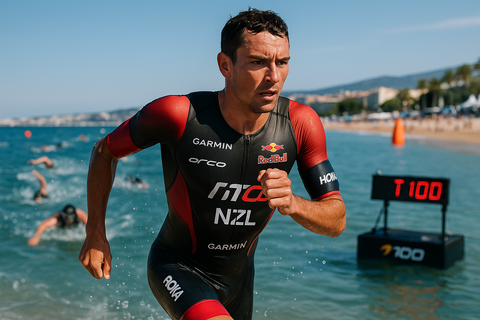
The race begins with a 3.8km swim in the Hardangerfjord. The cold-water shock and open-water navigation demands make this far more than a warm-up. Athletes who underestimate the swim risk starting the rest of the race already compromised. Start cold-water acclimatization training months in advance and invest in goggles designed specifically for open-water conditions to ensure visibility and comfort when it matters most.
The Bike: The Relentless Grind (180km)
From Eidfjord, athletes embark on a 180km bike leg with over 3,000 meters of elevation gain. The beauty of the Norwegian countryside is matched only by the brutality of its terrain. Riders must manage their effort carefully to avoid being overwhelmed by fatigue before the run even begins. Proper cycling footwear and equipment selection becomes critical on extended mountain segments like this one.
The Run: Where Mental Strength Takes Over (42.2km)
The run begins gently, but the real challenge is Zombie Hill — an 11km climb with a 10% average gradient. This is where fitness yields to willpower, and athletes confront the gap between who they thought they were and who they are proving to be. Trail shoes with excellent grip and cushioning are essential for navigating steep terrain safely at the tail end of a 226km day.
Why Elite Athletes Fear and Respect the Norseman
The Bucket List of Champions
When a race appears on the bucket list of athletes like Kristian Blummenfelt, it signals something significant. The Norseman is not a race you fit into a busy calendar — it consumes that calendar. Proper race-specific gear becomes part of the mental preparation for such an undertaking, and athletes leave nothing to chance.
Surrendering the Ego
The Norseman demands ego surrender. Even the most decorated athletes must recalibrate what success means in this context. Alistair Brownlee, a two-time Olympic champion, acknowledges that the Norseman operates on entirely different terms than anything he has done before in his long-distance triathlon career.
Alistair Brownlee's Norseman Journey: From Olympic Gold to Norwegian Mountains
A Career Defined by Reinvention
Alistair Brownlee has embraced a new chapter, tackling challenges like the Norseman to redefine what endurance sport can mean for him beyond the Olympic circuit. His willingness to enter an event where his titles carry no weight speaks volumes about his character as a competitor.
"I've been a triathlete for 30 years, and for 18 of those I was a professional. Now I've got the chance to explore new places, push my limits, and discover new sporting communities."
Brownlee's participation signals to a mainstream audience that this event commands genuine respect from the highest levels of the sport. It also invites a new generation of athletes to take the Norseman seriously as a long-term goal.
The 2026 Field: Champions, Contenders, and Rising Stars
Men's Race: A Defending Champion Returns
Norway's Kristian Grue arrives as the defending champion, aiming for back-to-back victories on home soil. The course record of 9:09:57, set by Jon Sæverås Breivold, looms over the men's field as the ultimate benchmark of what is possible on this course.
Women's Race: A Three-Time Podium Finisher vs. a Swiss Sensation
Kaja Bergwitz-Larsen of Norway aims for a personal best and another podium finish, while Swiss ultra-specialist Yael van der Geest emerges as a genuine contender capable of reshaping the women's leaderboard. The women's race promises to be one of the most competitive in recent Norseman history.
What Makes the Norseman Truly Unique: The Logistics of Extreme
An Event Designed Around the Terrain
The Norseman builds everything around Norway's natural landscape, demanding that athletes adapt to terrain that was never designed to be raced on. There are no flat sections engineered for speed and no courses softened for mass-market appeal — just raw geography and the athletes willing to meet it.
The Prestige of Scarcity
With a cap of approximately 300 athletes, the Norseman maintains a level of exclusivity that cannot be bought. This scarcity preserves what makes the event special and ensures that every finisher has earned their place in a very small and respected group.
Key Stats at a Glance
| Segment | Distance | Key Challenge |
|---|---|---|
| Swim | 3.8km | 13–17°C water, open fjord |
| Bike | 180km | 3,000m+ elevation gain |
| Run | 42.2km | Zombie Hill: 11km at 10% gradient |
| Total | 226km | 5,000m+ estimated total elevation |
The Bigger Picture: What the Norseman Tells Us About Endurance Sport
The Norseman represents an event that resists commercialization, offering proof that the most meaningful athletic achievements are not found on podiums. They are found where comfort ends and real discovery begins. In a world of sponsored finisher medals and curated race experiences, the Norseman stands apart as something genuinely uncompromising.
Your Norseman Journey Starts Now
Whether you are dreaming of entering the Norseman lottery or simply inspired by its philosophy, there are concrete steps you can take today. Begin cold-water swim training, incorporate serious climbing into your cycling and run blocks, and study the course in detail before committing. The toughest races are the ones that make you face yourself honestly — with nowhere to hide and nothing left to prove except everything.
Frequently Asked Questions
What is the Norseman Xtreme triathlon?
The Norseman Xtreme triathlon is widely regarded as one of the toughest triathlons in the world, challenging athletes with a 3.8km swim in icy waters, a 180km bike ride through rugged terrain with steep climbs, and a marathon that includes significant elevations, notably Zombie Hill.
Why is the Norseman considered so difficult?
The Norseman is difficult due to its combination of extreme weather conditions, challenging terrain including steep climbs, and a total distance of 226km that must be completed by athletes with exceptional endurance and mental resilience.
What is Zombie Hill?
Zombie Hill is a notorious section of the Norseman race, characterized by an 11km climb with a 10% gradient and sharp hairpin turns that are known to drain competitors' energy, pushing them into survival mode as they approach the finish line.
Who are some notable participants in the Norseman Xtreme?
Notable participants include double Olympic champion Alistair Brownlee, who recently expressed his long-time ambition to race in the Norseman, as well as several top athletes like Kristian Grue, last year's winner, and other accomplished triathletes from various countries.
What are the environmental conditions like during the Norseman triathlon?
The race takes place in Norway during the summer, typically featuring chilly water temperatures around 13C to 17C for the swim and unpredictable weather conditions that can affect the bike and run portions of the race.