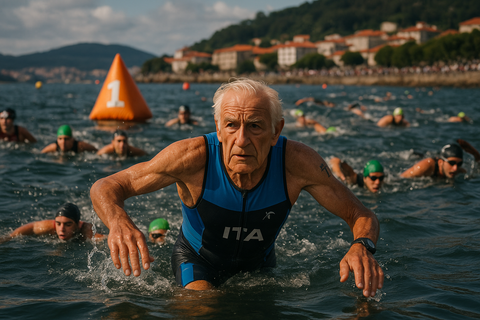
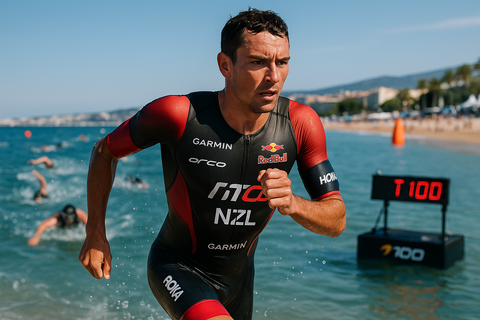
Racing Forward Responsibly: How Supertri Navigates Triathlon Events in Flood-Affected Communities
Imagine standing at the start line of a triathlon you helped create — not just as the CEO, but as a competitor. This was the reality for Michael D'Hulst, CEO of Supertri, on Memorial Day 2026. He raced alongside hundreds of athletes in Austin, Texas, while managing a complex decision: whether and how to host a Supertri event in Kerrville, a community still recovering from the catastrophic floods of July 2025.
This isn't just about race logistics. It's about responsible event leadership when athletic ambition meets human grief — and why the triathlon community, from elite competitors to weekend warriors, needs to pay attention.
What Is Supertri, and Why Does It Matter?
Supertri is a high-energy triathlon series that combines swimming, cycling, and running in a competitive, community-oriented format. The Austin event, held on Memorial Day weekend, attracts both elite athletes and passionate amateurs, making it a signature multisport gathering in Texas.
Triathlon has surged in popularity across the United States and Latin America, with cities like Mexico City, Guadalajara, and São Paulo seeing dramatic growth among the 25–45 age group. Events like Supertri aren't just races; they're economic engines, cultural touchstones, and community celebrations. Hotels fill up, local restaurants bustle, and the energy of race weekend ripples through host cities for days.
Leading from the Front Line
What sets D'Hulst apart is that he doesn't just plan the race — he races. Competing in Austin on Memorial Day 2026, he sent a clear signal: this is a leader with genuine skin in the game. It's the athletic equivalent of a restaurant owner eating their own cooking every night. When the CEO is sweating through the swim, grinding up the bike course, and chasing down the finish line, it builds a different kind of credibility than any press release ever could.
That personal investment sharpens his awareness of what athletes experience — and what communities hosting those athletes deserve.
The Kerrville Floods: Understanding What Happened
In July 2025, Kerrville, Texas, was devastated by catastrophic flooding. The disaster claimed lives, destroyed property, and left deep wounds in a tight-knit community. For residents, the floods weren't just a weather event — they were a trauma that reshaped daily life, tested local infrastructure, and created ongoing recovery needs.
Fast-forward ten months to May 2026, and Supertri is navigating the sensitive question of hosting a race in that same community. Ten months may sound like a long time, but in disaster recovery terms, it's still early days. Rebuilding infrastructure, restoring economic confidence, and processing collective grief don't happen on a calendar schedule.
Ten months may sound like a long time, but in disaster recovery terms, it's still early days. Rebuilding infrastructure, restoring economic confidence, and processing collective grief don't happen on a calendar schedule.
The Tension That Every Organizer Must Confront
Here's the uncomfortable truth: a triathlon is, by nature, a celebration. It's colorful, loud, and energetic. It brings crowds, noise, and festivity. All of that can feel deeply out of step with a community still mourning its losses and working to rebuild.
But there's another side to this coin. Post-disaster communities often desperately need the economic activity that events generate. Local businesses — restaurants, hotels, shops — that survived the floods need customers. The question isn't simply whether to hold an event, but how to hold it in a way that honors both the athletes' competitive ambitions and the community's healing process.
The Sensitivity Required in Post-Disaster Event Planning
Responsible post-disaster event planning isn't about canceling everything until life returns to "normal" (it never quite does). It's about asking harder, more specific questions — and being willing to act on the answers even when they're inconvenient.
Practical Considerations That Can't Be Ignored
Before a single athlete dips a toe in the water, organizers planning events in flood-affected areas must work through a detailed operational checklist:
- Route assessment: Are roads and pathways structurally sound? Are any areas still under restricted access or active repair?
- Emergency resource availability: Local fire, medical, and rescue services that normally support race-day safety may still be stretched thin by ongoing recovery operations.
- Infrastructure readiness: Parking areas, transition zones, and spectator spaces all need to be safe and functional — not just repaired on the surface.
- Supply chain and vendor capacity: Local vendors who typically support events may still be operating at reduced capacity or may have been displaced entirely.
Each of these considerations requires direct, ongoing dialogue with local authorities — not a single check-in call months before race day.
Reading the Room: Emotional and Cultural Sensitivity
Beyond logistics, there's the harder-to-quantify question of tone. How do you promote a race in a community where some families are still grieving? How do you write marketing copy that's energetic without feeling oblivious? How do you design an opening ceremony that acknowledges loss without turning a sporting event into a memorial service?
These aren't rhetorical questions — they're practical ones that require intentional answers. Smart organizers:
- Consult community voices early and often, not just local government officials but residents, business owners, and community advocates.
- Adjust promotional language to reflect awareness of the community's situation.
- Create space for acknowledgment without making grief the centerpiece of every athlete communication.
- Offer meaningful ways for athletes to contribute to recovery efforts rather than simply passing through.
The Economic-Ethical Balance
There's a misconception worth dismantling: that choosing economic benefit and choosing ethical sensitivity are opposing forces. They're not. A thoughtfully executed event that brings revenue to local businesses, employs local workers, and demonstrates genuine respect for community needs is an ethical act. The problem arises when organizers prioritize the optics of doing good over actually doing good — when charity gestures substitute for genuine community input.
Transparency matters enormously here. If a portion of race proceeds goes toward flood recovery efforts, say so clearly. If the race route was modified out of respect for affected neighborhoods, explain why. Athletes and spectators respond to honesty, and host communities remember which organizations treated them as partners rather than venues.
D'Hulst's Leadership Approach: Holding Multiple Priorities at Once
What KXAN's May 2026 interview with Michael D'Hulst reveals is a CEO who understands that his job — especially in a moment like this — is not to optimize for a single variable. It's to hold several important, sometimes competing priorities in tension simultaneously.
The Stakeholder Web Every Event Organizer Must Navigate
When planning an event in a post-disaster community, an organizer sits at the center of a complex web of stakeholders, each with legitimate and sometimes conflicting needs:
| Stakeholder | Primary Need | Key Concern |
|---|---|---|
| Athletes | Competitive experience, safety, clear communication | Understanding local context they may not be aware of |
| Host community | Economic benefit, respect for losses, being heard | Not being treated as a backdrop for someone else's celebration |
| Local officials | Infrastructure readiness, public safety, positive outcomes | Resource allocation, liability, community perception |
| Emergency services | Manageable event demands | Adequate staffing without depleting recovery operations |
| Sponsors | Positive brand association, event success | Reputational risk if execution goes wrong |
| Media | Story access, accurate framing | Balancing athletic achievement with community narrative |
None of these stakeholders can be ignored. And notably, the athlete — who is often the customer the event exists to serve — is not automatically the most important voice in this situation.
Leadership by Example
D'Hulst's decision to compete in his own event deserves more than a passing mention. In a sector where executives often operate from comfortable distances, there's something genuinely meaningful about a CEO who logs the miles, feels the pre-race nerves, and crosses the finish line with mud on his shoes. It builds organizational credibility internally — his team knows he understands what they're building — and externally, it signals authenticity to athletes and communities alike.
The best leadership in post-disaster event planning looks less like corporate maneuvering and more like genuine human accountability.
Broader Implications: A Framework for the Future
The Supertri-Kerrville situation isn't unique — and it's going to become less unique over time. As climate-related weather events grow more frequent and severe, triathlon and endurance event organizers across North America, Latin America, and beyond will face variations of this same challenge. Floods, wildfires, hurricanes, and severe winter storms are reshaping the event planning landscape.
What Responsible Post-Disaster Event Planning Looks Like
Based on the principles D'Hulst's approach illustrates, here's a practical framework for any event organization navigating similar terrain:
Before You Commit to the Event:
- Establish direct dialogue with local emergency management and municipal officials
- Conduct a transparent assessment of infrastructure readiness
- Consult community representatives — not just government liaisons — about readiness and openness to the event
- Assess the availability of emergency services without straining recovery operations
As You Plan:
- Modify routes, venues, and formats based on what you learn
- Develop a communication strategy that honestly addresses both the athletic and community dimensions
- Identify concrete ways the event can contribute to recovery (proceeds, volunteer opportunities, athlete awareness programs)
- Set clear internal standards for when you'd postpone or cancel if conditions change
During and After the Event:
- Brief athletes on the community's situation and how they can engage respectfully
- Maintain your community relationships beyond race day — one event doesn't constitute a long-term commitment
The Athlete's Role in All of This
Here's something that often gets lost in the logistics conversation: athletes carry responsibility too. When you register for a race in a community recovering from disaster, you're not just a consumer of an athletic experience. You're a guest in someone else's still-healing home.
That means showing up with awareness. It means understanding why a race route might look different than expected, or why the celebration atmosphere might be calibrated differently than usual. It means looking for ways to contribute — whether that's donating to a local recovery fund, patronizing affected local businesses, or simply approaching interactions with community members with extra patience and gratitude.
For the growing community of triathletes across Mexico, Central America, and the broader Spanish-speaking world — many of whom have experienced their own natural disasters — this kind of awareness is already deeply intuitive. Communities that have lived through floods, earthquakes, and hurricanes understand instinctively what it means to rebuild, and what it asks of those who come to visit during recovery.
Key Takeaways
The Supertri CEO's approach to planning races in the aftermath of the Kerrville floods offers a genuinely instructive model for the entire endurance sports industry.
- Sensitivity isn't weakness — it's strategy. Thoughtful post-disaster event planning builds trust, community relationships, and long-term organizational credibility.
- Leadership requires holding multiple priorities simultaneously. The CEO who competes in his own race while managing humanitarian complexity isn't distracted — he's demonstrating integrated values.
- Community dialogue must precede planning decisions, not follow them. This isn't a PR step; it's an ethical requirement.
- Economic benefit and ethical responsibility aren't opposites. Events can generate desperately needed revenue and demonstrate genuine respect for community healing — if planned with both goals in mind.
- Athletes are stakeholders too — and have responsibilities. Knowing the context of where you race makes you a more complete, more thoughtful athlete.
- This challenge is becoming more common. Climate reality means every endurance event organization needs a post-disaster planning framework before they need it.
What You Can Do Next
If you're an athlete: Before your next race, take five minutes to research the host community. Know its story. Find one local business to support during race weekend. Carry that awareness through the start line.
If you're an event organizer: Start building your community advisory relationships now, before a disaster requires it. The trust you build in ordinary times is the currency you spend in difficult ones.
If you're part of a host community: Your voice matters in the planning process — and responsible organizers are listening. Advocate clearly for what your community needs, whether that's more time, modified formats, or meaningful contributions to recovery.
For all of us in the triathlon world: The sport we love is at its best when it lifts communities alongside its athletes. The Supertri Austin and Kerrville story reminds us that how we race matters as much as how fast we race.
Planning your next triathlon season? Explore our triathlon suits and race gear to prepare thoughtfully — and check out our complete guide to triathlon gifts.
Frequently Asked Questions
What is KXAN Austin?
KXAN Austin is a local news station that provides news, weather, traffic updates, and live streaming services for the Austin area.
How can I watch KXAN live news?
You can watch KXAN live news through their live stream on their website or by downloading the KXAN+ streaming app available on platforms like Roku, Apple TV, and Amazon Fire TV.
What type of news does KXAN cover?
KXAN covers a wide variety of news topics including local news, state politics, crime, investigations, weather updates, and sports.
What resources are available for weather updates?
KXAN provides several weather resources including a 7-day forecast, weather alerts, rain totals, radar, and web cameras through their Weather section on the website.
How can I submit news tips or report issues?
You can submit news tips or report issues by using the "Report It" feature available on the KXAN website, where you can share your information with the news team.
Are there any community events highlighted by KXAN?
Yes, KXAN keeps a community calendar that showcases various local events happening in the Austin area.