The Hidden Race Calendar Strategy That Separates Champions from Competitors
Why the world's best triathletes sometimes skip world championships — and what it means for your own race planning.
When the 70.3 World Championship athletes gathered in Nice in September 2026, something unusual caught the eye — not on the course, but off it. Some of the sport's most recognized names were notably absent. There were no injury reports or drama about not starting. It was a simple, strategic choice: they chose not to compete.
Hayden Wilde pulled off a thrilling win against Kristian Blummenfelt, while Taylor Knibb celebrated her fourth world title in what Slowtwitch hailed as "a perfect day." The racing was impressive, but the bigger story? Those athletes who opted not to race may have made the smartest competitive choices of their season.
To understand this phenomenon, let's dive into the world of professional triathlon — where selecting races is as crucial as training.
The Race That Changes Everything
The Hierarchy Among World Championships
Not all world titles hold the same weight — and in long-distance triathlon, the top-tier athletes are aware of this fact.
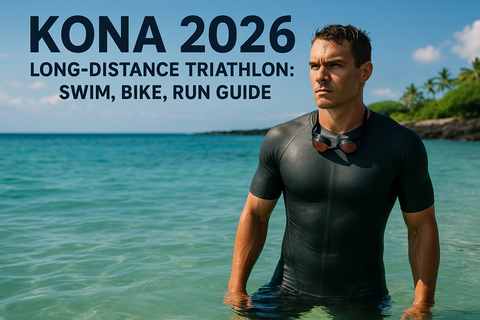
The long-distance triathlon World Championship in Kona, Hawaii, reigns as the ultimate goal. It offers the largest prize purses, the most visibility from sponsors, and a legacy that will follow an athlete throughout their career. The 70.3-distance World Championship, occurring just weeks earlier each fall, is certainly prestigious — but within the professional sphere, it plays a secondary role.
For age-group athletes, qualifying for either championship is the pinnacle of their season. For professionals, the decision shifts: which world title has the most relevance for my career, sponsorships, and legacy?
For many elite athletes, the choice is obvious.
The Finite Energy Budget
Elite athletes aren't superhuman. They experience the same physical limits as every other endurance athlete — just at a much higher intensity.
Proper recovery between major races typically requires three to four weeks, and often six to eight weeks when you consider the mental and physical demands of racing at the championship level. Competing in a 70.3 World Championship in September and then preparing for the Kona event just weeks later isn't just tough — it represents a performance challenge with significant consequences.
Racing twice at world-class levels means peaking twice. For most elite athletes, that simply isn't feasible.
The physiological effects like suppressed VO2 max, heightened cortisol levels, and accumulated micro-damage from intense racing don't just disappear in a week. Competing in Nice, then switching gears to train for Kona, results in either heading to Kona underprepared or arriving in Nice fatigued. Neither scenario is acceptable when vying for a world title.
How Professional Athletes Build Their Race Calendars
Training Periodization and Peak Performance
Professional triathletes rely on structured training cycles lasting 12 to 16 weeks. Each cycle is meticulously designed to achieve a peak performance — a crucial window of two to four weeks where everything aligns: fitness, recovery, and mental sharpness.
Disrupting this cycle with a world championship effort depletes that peak. While it's possible to create a second peak later in the season, careful planning is essential. The tight scheduling of the 70.3 Worlds and Kona complicates any attempt without a trade-off.
Think of it like how Tour de France cyclists manage their spring races. Events like Paris-Roubaix and Flanders hold prestige, but cyclists aiming for July don't exhaust themselves in April. They make strategic choices. Elite triathletes navigate similar decisions every fall.
Race Selection as a Business Decision
This aspect of professional triathlon surprises many age-group athletes: each race entry for pros is a business decision.
Sponsorship contracts might call for participation in specific events. The media coverage gained from a Kona podium is exponentially greater than that from a 70.3 World Championship. Long-distance triathlon events attract a wider global audience, and a top-three finish in Kona can significantly affect an athlete's market value in ways that a 70.3 title cannot.
Career longevity also comes into play. Athletes who race too frequently without enough recovery time jeopardize their chances for continued performance. Smart rest isn't a luxury — it's a critical investment.
Key insight: Choosing to skip a major race isn't a weakness; it's the pinnacle of resource management.
Why This Strategy Doesn't Apply to You (Yet)
Age-Group Athletes Have Different Considerations
If you're an age-group triathlete pondering whether to skip your next big race to save energy for a larger goal — hold on a moment.
The logic that applies to professionals doesn't fully extend to age-group athletes for several reasons:
- Age-group athletes usually compete three to five times in a season, enabling quicker recovery.
- Securing a spot at world championships is a primary aim; skipping essential qualification events isn't wise.
- Racing volume builds fitness and racing skills that many professionals already possess.
- Your peak performance period is generally more flexible; most age-group athletes don't have full teams of coaches optimizing every detail.
For athletes still honing their triathlon skills and fitness, racing more rather than less is usually the way to go.
When Strategic Rest Is Beneficial for Age-Groupers
Even so, the central idea — don't waste peak performance on secondary goals — does apply to age-group athletes in specific contexts.
Consider these scenarios where scaling back your race calendar might be wise:
- You're recovering from an injury and have an important qualifier coming up.
- You've already earned your world championship slot and have a primary race focus.
- You're competing three or more times within an eight-week timeframe and noticing a dip in performance.
- Your A race is just six weeks away, and you're tempted to add a tune-up race that could steal precious training time.
The takeaway isn't to simply "race less." Instead, it's about "racing with intention."
The Competitive Advantage of Not Competing
Freshness as a Gamechanger
When the long-distance World Championship unfolds in Kona, the athletes who opted out of Nice aren't absent due to lack of fitness — they're physically prepared because they conserved their energy.
Fresh athletes carry an intangible edge into competition: mental clarity and physical readiness that fatigued competitors can't replicate. An athlete who raced in Nice and then rushed back to gear up for Kona will show up with lingering fatigue, no matter how well managed. In contrast, an athlete who spent those same weeks training specifically for long-distance preparation arrives feeling sharper.
This focus is why, leading up to major long-distance events, coaches and analysts pay close attention to those who didn't compete. Their absence from Nice signals their intention to focus on Kona — a clear statement of purpose.
The Science Supports This Approach
The physiological impacts clarify this point: racing at a world-class intensity can lower your VO2 max for three to four weeks after competition; inflammatory markers could take two to three weeks to resolve entirely; glycogen depletion and neuromuscular fatigue — though often unnoticed in standard training metrics — become evident on race day.
Long-distance triathlon — with its 8 to 17-hour demands — punishes athletes who haven't fully recovered. Unlike shorter formats, long-distance events aren't forgiving of accumulated fatigue.
What This Shift Reveals About the Sport
The Maturity of Professional Triathlon
A decade ago, elite triathletes raced constantly. Prize money relied on regular participation in every possible event. Today, the sport has transformed. Prize purses for significant long-distance races have grown noticeably, sponsorship deals are more detailed, and athletes now use data and coaching strategies that allow them to enhance performance over a season rather than just maximizing race frequency.
This shift results in a more professional approach to racing: a clear hierarchy of A races, targeted B race selections, and the confidence to skip high-profile events when the conditions aren't favorable.
The strategic choice to skip a race signals that professional triathlon has evolved into a fully mature sport.
The Definition of a World Championship Is Becoming More Nuanced
The sport now offers multiple world championship events across various distances, formats, and categories. There are sprint championships, 70.3 championships, long-distance championships, age-group worlds, and off-road worlds — the calendar is now busy with genuine titles.
Athletes, along with their sponsors, must determine which world title bears the most significance. For long-distance specialists, the decision is evident. For those competing across formats, careful management of their calendar becomes critical.
This variety brings good news for age-group athletes. As professional athletes continue to be more selective, age-groupers may find it easier to compete at world championship events without facing a fully elite field. While the competition level in your category remains unchanged, the broader context of the event shifts as the sport continues to grow.
Crafting Your Own Strategic Race Calendar
The A/B/C Race System
A Races — Your main goal events. Race them all out. Peak performance is key, and these are the races that frame your season.
B Races — Important events where you can perform well without fully tapering. These serve as practice opportunities under competitive pressure that don't require the full cost of a peak.
C Races — Training races. Put in a competitive effort, but don't prioritize tapering and recovery here. Treat these as dress rehearsals.
Practical Steps for Your Next Season
- Identify your A race and structure your plan backwards. Build training blocks around that top priority.
- Be honest about your recovery periods. Wait four to six weeks between major races to recover effectively.
- Evaluate your motivations for entering races. Are you racing because it aligns with your goals, or just because it's on the calendar?
- Consult your coach before skipping qualifying races. Rest is beneficial; however, missing out on imperative events can set you back.
- Respect the taper process. The week before your A race isn't the time to add in another competition.
The Bigger Picture
It may seem odd to witness elite triathletes skip world championships — even counterproductive. Why would anyone pass up a chance to compete at such a prestigious level?
Because they've realized something that often takes athletes years to grasp: showing up isn't the ultimate goal. It's about performing.
Hayden Wilde's thrilling victory in Nice and Taylor Knibb's fourth world title stand out as incredible feats. However, the athletes who sat out Nice to focus on training for Kona made a strategic commitment — that the most significant prize is about showcasing your best performance when it matters most.
This type of decision-making, whether you're a professional athlete or an age-grouper working toward your first world championship slot, is crucial to understand. Race selection is part of training. Rest is a strategy. And sometimes, the smartest choice in any competition involves careful consideration of where — and when — you choose to show up.
Planning your next race calendar? Whether you're aiming for your first triathlon finish or pursuing a world championship qualifying slot, the right gear makes every race feel purposeful. Check out our premium triathlon suits and high-performance running shoes to be fully prepared — no matter where you decide to race.
Frequently Asked Questions
What types of articles can I find on Slowtwitch?
Slowtwitch features articles on triathlon, cycling, gravel, running, swimming, and the latest news in endurance sports.
How can I buy or sell items on Slowtwitch?
You can buy or sell items by visiting the Buy/Sell section of the Slowtwitch website, where you can create listings for items or browse available products.
Does Slowtwitch have a community forum?
Yes, Slowtwitch has an active community forum where users can discuss various topics related to endurance sports, ask questions, and share experiences.
What is the ST+ membership?
ST+ is a premium membership that offers access to exclusive articles, audio and video content, discounts on the Slowtwitch shop, and enhances your forum experience.
How can I listen to the Slowtwitch podcasts?
You can listen to Slowtwitch podcasts directly on the Slowtwitch website under the Podcasts section or through popular podcast platforms.
What resources does Slowtwitch offer for coaches?
Slowtwitch provides a directory of coaches, where you can find and connect with certified coaches for various endurance sports.