Falmouth Sprint Triathlon 2026: Youth Triumphs at Cape Cod's Premier Race
At Surf Drive Beach, a high school cross-country star stages a stunning comeback, while a Barnstable swimmer blazes through a 311-person field.
On a bright July morning, 311 athletes converged at Surf Drive Beach in Falmouth, Massachusetts, for the much-anticipated Falmouth Sprint Triathlon. This annual event, a staple of the Upper Cape's summer calendar, witnessed a remarkable display of youthful prowess on July 12, 2026. It was a day when the younger generation made their mark, leaving seasoned competitors in their wake.
Dimitri Profis, a rising senior at St. John's Prep in Danvers, executed one of the day's most thrilling comebacks to clinch the overall men's title. On the women's side, Barnstable's Ava Bullock showcased a masterclass in triathlon racing, posting the fastest swim split in the entire field — male or female — on her way to victory. Their performances sent a resounding message to New England's endurance sports community: the future is here, and it's bright.
Whether you're a triathlon veteran, a curious runner contemplating the leap to multisport, or someone who simply loves a great comeback story, the 2026 Falmouth Sprint Triathlon offers lessons worth noting.
Dimitri Profis's Remarkable Comeback
From Sixth Place to Champion
Dimitri Profis's race began with a challenge. Emerging from the one-third-mile ocean swim at Surf Drive in sixth place, he found himself not in the ideal position for an overall title contender. The bike leg didn't immediately improve his standing, as competitor John Cronin built a 70-second lead by the time they transitioned.
For many, a 70-second deficit heading into the final leg of a sprint triathlon might seem insurmountable. But Profis wasn't just any athlete.
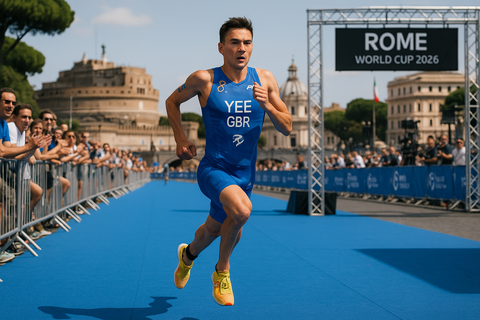
With lightning-fast transitions and an exceptional running performance, Profis overtook Cronin midway through the 3.1-mile run. He didn't just catch up; he surged ahead, crossing the finish line in 46 minutes and 44 seconds, winning the men's division by over two minutes. Cronin finished second in 48:53, with Max Christopher completing the podium at 49:05.
"It was clear that youth was served in this year's race." — Rich MacLone, Cape News/Enterprise
The Power of Running in Triathlon
Profis's victory highlights a crucial aspect of triathlon: the power of running. As a star cross-country runner for St. John's Prep Eagles, Profis's aerobic capacity and running mechanics are finely honed, giving him an edge in the final discipline. Running is the last leg of a triathlon, where fatigue from swimming and cycling can slow many athletes. For runners like Profis, however, this is precisely where they shine.
His cross-country training — designed for fast running at the end of hard efforts — allowed him to excel when others were fading. This is a vital training insight for those considering their first sprint triathlon: your strongest discipline becomes most valuable when it falls last. Runners transitioning to triathlon often find their legs come alive on the run, enabling them to make significant gains on competitors who expend too much energy early on.
The Importance of Transitions
Profis's success was also attributed to his very fast transitions, a detail that often goes unnoticed but is crucial in sprint triathlons. In races where elite athletes finish in under an hour, transitions are not trivial — they are a discipline in their own right. A slow transition can cost precious seconds, while a practiced, efficient transition can be completed in under a minute.
The good news: transitions are entirely trainable. Unlike raw swimming talent or years of cycling fitness, transition efficiency comes down to practice, organization, and mental rehearsal. Set up your gear consistently. Simulate the moment in your driveway. Know exactly what comes next before race day ever arrives.
Ava Bullock's Dominant Performance
Leading from the Start
While Profis's story was defined by his comeback, Ava Bullock's victory was built on dominance from start to finish. The Barnstable athlete didn't wait for others to falter; she led from the moment she hit the water. Bullock's 5:45 swim split for the one-third-mile ocean loop wasn't just the fastest female time — it was the fastest swim split in the entire field, men included.
In a race with 311 athletes, Bullock emerged from the water ahead of every competitor, regardless of gender. This swim dominance does more than just position you at the front; it provides a psychological edge. Leading out of the water, you're setting the pace, and everyone else is chasing you.
Balanced Racing
| Discipline | Split | Notes |
|---|---|---|
| Swim (1/3 mile) | 5:45 | Fastest in entire field |
| Bike | 24:25 | Competitive split |
| Run (3.1 miles) | 19:08 | Strong 5K performance |
| Total | 51:53 | 10th overall, 1st female |
A 19:08 run split on tired legs, after a fast swim, is an excellent performance. Finishing 10th overall out of 311 athletes — not just among women, but in the entire open division — speaks to how complete Bullock's race was. Second place among women went to Joana Coker of Providence, who finished in 53:45 (19th overall). Claire Wigglesworth rounded out the women's podium in 54:56.
Strategic Race Planning
Bullock's race exemplifies a key strategic principle: lead with your strength, then hang on with your fitness. Her swim advantage gave her clear water, clean lines on the bike course, and the mental confidence to run strong when it mattered most.
For aspiring triathletes, this is a reminder that you don't need to be elite in all three disciplines to perform well — but you do need to be honest about where your strengths lie and build your race strategy around them. Are you a strong swimmer? Get to the front and don't let up. Are you a cyclist? Ride smart and set up a solid run. Are you, like Profis, a runner at heart? Conserve energy early and unleash it when others are fading.
Understanding Sprint Triathlon
If you're new to the sport, the Falmouth race format is worth understanding — because sprint triathlon is one of the most accessible and rewarding formats in all of endurance sports. The 2026 Falmouth Sprint Triathlon consisted of:
- Swim: 1/3 mile (approximately 535 meters) in the ocean at Surf Drive Beach
- Bike: A cycling course through the Falmouth area
- Run: 3.1 miles (5K) on a road course
Elite athletes like Profis and Bullock finished in the 46–52 minute range. Competitive amateur athletes filled the 48–55 minute window. Recreational athletes completing their first or second triathlon often finish between 60 and 90 minutes — and every single one of them crosses the same finish line.
That's one of the beautiful things about sprint distance: it's genuinely accessible to athletes of varying fitness levels, while still offering enough competitive depth to challenge experienced racers. A field of 311 athletes in Falmouth — a summer beach town on Cape Cod — tells you all you need to know about the appeal of this format.
Quick Glossary:
- Brick workout: A training session where you combine two disciplines back-to-back (usually bike + run) to simulate race-day fatigue
- Transition zone: The area where athletes switch between disciplines and swap gear
- Open water swimming: Racing in natural water (ocean, lake) rather than a pool — requires practice and different sighting techniques
Training Insights for Every Triathlete
For Runners Considering Triathlon
Profis's performance is almost a roadmap. Cross-country and road running fitness translates remarkably well to triathlon — especially at sprint distance, where the run leg is only 5K. If you're a runner thinking about adding swim and bike training, here's a practical starting point:
- Keep your running base intact while adding swim and bike volume
- Swim 2–3 times per week, focusing on technique before fitness
- Add brick workouts (bike immediately followed by a run) to train your legs for the transition fatigue
- Don't destroy yourself on the bike — especially early in your triathlon career. Save enough energy to run like yourself.
The swim is typically the most challenging adjustment for runners. Open water swimming, in particular, requires specific practice: sighting (lifting your head to navigate), dealing with chop and current, and managing the psychological aspect of racing in the ocean. Get at least a few open water swims in before race day.
For Swimmers Looking to Race
Bullock's performance shows what's possible when you bring elite swim fitness to a triathlon. But even the fastest swim doesn't guarantee an overall win. Bullock's 10th overall finish — impressive as it is — also shows how much ground can be made up on the bike and run. Swimmers transitioning to triathlon should prioritize:
- Building cycling fitness — the bike leg is typically the longest portion of a sprint triathlon by time
- Running off the bike — practicing brick workouts to train that heavy-legs feeling
- Pacing the swim — it can be tempting to sprint in your strongest discipline, but smart pacing conserves energy for what comes next
The Universal Lesson: Practice Your Transitions
Both Profis and Bullock excelled in part because they raced efficiently. Transitions are sometimes called "the fourth discipline" of triathlon — and for good reason. Here's what efficient transition practice looks like:
- Set up your gear the same way every time so muscle memory takes over on race day
- Practice the specific movements: putting on a helmet, slipping out of a wetsuit, switching footwear
- Simulate race-day nerves by doing transition practice after a hard swim or bike effort
- Walk the transition zone before the race so you know exactly where your spot is
The Future of New England Triathlon
The 2026 Falmouth Sprint Triathlon wasn't just a great race — it was a signal. A high school rising senior beating a field of 311 athletes outright. A young woman from Barnstable posting the fastest swim split regardless of gender. These aren't flukes; they're indicators of a growing talent pipeline in New England endurance sports.
For the triathlon community, events like Falmouth serve a function beyond competition. They're community gathering points, entry-level experiences for first-timers, and proving grounds for emerging talent alike. A 311-person field at a summer sprint triathlon on Cape Cod suggests that interest in the sport — especially at accessible, beginner-friendly distances — is healthy and growing.
For young athletes like Profis and Bullock, this race is likely just the beginning. The skills developed in sprint triathlon — pacing, transitions, multisport fitness, racing under pressure — translate directly to longer distances and higher-level competition. Coaches and parents of young endurance athletes in New England would do well to take notice.
Ready to Race? Here's Your Next Step
The 2026 Falmouth Sprint Triathlon proved something that the triathlon community has always known: this sport rewards commitment, smart training, and the courage to put yourself on a start line alongside hundreds of other athletes who share your drive.
Whether you're inspired by Profis's comeback, Bullock's swim dominance, or simply the image of 311 athletes charging into the Atlantic on a July morning — the path forward is clear.
Start where you are. Assess your strongest discipline and build outward from there. Commit to 12–16 weeks of balanced training that covers all three disciplines. Find open water to practice in. Sign up for a local sprint triathlon.
And when race day comes, remember: transitions are trainable, the run is always there waiting for you, and sometimes the person who looks like they're out of contention heading into the final leg turns out to be exactly the kind of athlete the podium was made for.
Looking for gear to support your training journey? Check out our triathlon suits, swimming goggles, and running shoes — built with beginner and intermediate triathletes in mind.
Frequently Asked Questions
Who won the Falmouth Sprint Triathlon this year?
Dimitri Profis won the Falmouth Sprint Triathlon, finishing in 46 minutes and 44 seconds.
What was the standout performance in the triathlon?
Dimitri Profis, a rising senior at St. John's Prep, had a strong showing in the running portion, which helped him secure victory despite being sixth out of the water.
Who was the first female finisher in the Falmouth Sprint Triathlon?
The first female finisher was Ava Bullock, who completed the race in 51 minutes and 53 seconds.
What is the total number of participants in the open division?
There were a total of 311 runners in the open division of the race.
What were Ava Bullock's times in the swim, bike, and run segments?
Ava Bullock had the fastest overall swim time of 5:45, completed the bike segment in 24:25, and ran the 3.1-mile course in 19:08.
Source: Cape News/Enterprise — Profis, Bullock Win Triathlon — reporting by Rich MacLone, July 15, 2026