From Breakaway to Victory: How Stojanovic Outlasted a Six-Man Battle While Arnold Put on a Masterclass at the 70.3-Distance Rio de Janeiro
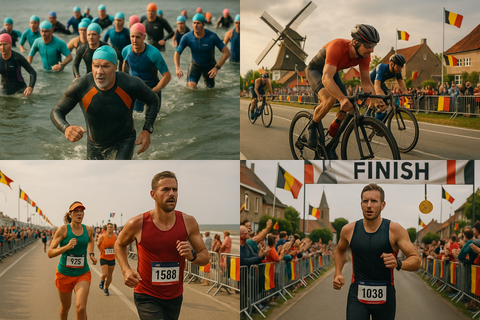
Three athletes running shoulder-to-shoulder through the streets of Rio de Janeiro. Eight kilometers of psychological warfare, nobody willing to flinch. Meanwhile, on the other side of the results board, a Brazilian athlete was already turning her race into a victory lap.
The 70.3-distance race in Rio de Janeiro on August 9, 2026, delivered two completely different stories in a single event. Ognjen Stojanovic (Serbia) survived a brutal mental chess match to claim the men's title in 3:50:52, while Djenyfer Arnold (Brazil) put on one of the most dominant performances of the 2026 half-distance season, crossing in 4:14:15 with a lead that had been insurmountable since the bike leg.
Whether you're a seasoned age-grouper or someone eyeing your first 70.3-distance race, these two performances are a masterclass in how the same 113 kilometers can be won two completely different ways. Let's break it all down.
Men's Race: A Tactical Chess Match on the Run
The Swim and Bike — Building (and Losing) the Lead
Stojanovic came out of the water swinging. He and Diogo Andrade Villarinho broke away from the field during the swim, building a one-minute gap heading into T1. For a brief moment, it looked like the Serbian athlete might run away with this race early.
Then the bike leg happened.
As is common in 70.3-distance racing, a chase group doesn't just sit back and accept defeat. Ten men formed a powerful pack on the bike segment, systematically hunting down Stojanovic and Villarinho and erasing that hard-earned one-minute advantage entirely. This is one of the most important lessons in half-distance triathlon: a swim lead is an advantage, not a guarantee. The bike leg is long enough — and group dynamics powerful enough — that it resets the race more often than not.
But the ten-man pack couldn't hold together either. One by one, athletes cracked under the sustained pace. By the time the field reached T2, only six men remained at the front:
- Gustavo Wiebbeling (GER)
- Martin Baeza (CHI)
- Enzo Krauss (BRA)
- Andre Lopes (BRA)
- Martin Ulloa (CHI)
- Ognjen Stojanovic (SRB)
Six men. Same bike split. Same legs. Completely equal on paper — and that's exactly what made the half marathon that followed so compelling.
The Run — Where Champions Are Made
Six athletes left T2 together. What happened over the next 21.1 kilometers was a slow-motion elimination race.
At this pace and intensity, the mental demands are just as real as the physical ones — every footfall is a negotiation.
The early kilometers were deceptively calm. Stojanovic, Krauss, and Lopes pulled away from the other three and ran side-by-side for the first eight kilometers. Three athletes, millimeters apart, each waiting for someone else to blink first.
Then the cracks appeared:
- Kilometer 8: Lopes was the first to drop off the lead trio. His early departure suggests he may have pushed too hard on the bike or opened the run slightly too fast — a classic 70.3 pacing trap.
- Kilometer 13: Krauss broke. Now Stojanovic ran alone.
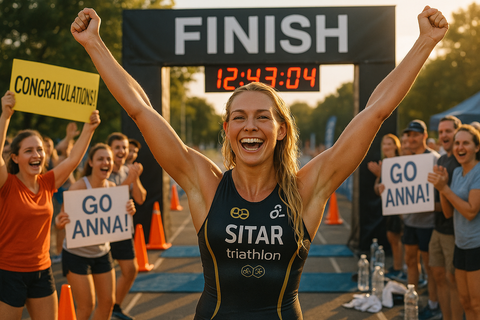
- Kilometer 21: Stojanovic crossed the finish line solo, arms raised, in 3:50:52.
The final podium told the full story:
| Position | Athlete | Country | Finish Time |
|---|---|---|---|
| 🥇 1st | Ognjen Stojanovic | SRB | 3:50:52 |
| 🥈 2nd | Enzo Krauss | BRA | 3:52:46 |
| 🥉 3rd | Martin Baeza | CHI | 3:55:53 |
Notably, Martin Baeza's third-place finish came via a strong closing surge — he overtook Lopes in the final stages despite not being part of the lead trio for most of the run. That kind of late-race strength is rare and worth noting: Baeza may have run a more conservative early half marathon that paid off when Lopes began to fade.
The gap between first and second was just 2 minutes and 54 seconds. In a race that lasted nearly four hours, the entire outcome was decided in the final eight kilometers of a 21.1km run.
Women's Race: Arnold's Total Domination
Swim to T1 — The First Blow
If the men's race was a chess match, the women's race was a knockout fight that ended in the first round.
Arnold led the women's field out of the water with a one-minute advantage — a meaningful gap in a race where the field consisted of six Brazilian competitors and two Chilean athletes. Racing in home waters in front of a home crowd, Arnold set the tone immediately.
But a one-minute lead after the swim? In 70.3 racing, that can still be closed. Plenty of races have been won by athletes who trailed out of T1. What happened next made that point irrelevant.
Bike Leg — The Decisive Segment
Arnold didn't just maintain her lead on the 90-kilometer bike. She expanded it from 1:00 to 7 minutes and 51 seconds by the time she reached T2.
That kind of gap accumulation tells you everything about how Arnold approached the bike: not recklessly, but with relentless, controlled aggression. She pushed the pace hard enough to demoralize her competition while staying smart enough to preserve energy for the run. By the time her competitors reached T2 trailing by nearly eight minutes, the race was already decided psychologically — even before the half marathon began.
Building an insurmountable lead without burning your matches is harder than it sounds. Arnold did neither.
Half Marathon — Victory Lap
As Triathlon Today's Tim Moria put it plainly in his race report, the half marathon was "essentially a formality." Arnold completed the 21.1km run in 1:23:27 — a strong time that averages out to approximately 3:57 per kilometer — and crossed the finish line in a total time of 4:14:15.
The final women's podium was an all-Brazilian celebration:
| Position | Athlete | Country | Finish Time |
|---|---|---|---|
| 🥇 1st | Djenyfer Arnold | BRA | 4:14:15 |
| 🥈 2nd | Pamella Nascimento de Oliveira | BRA | 4:24:44 |
| 🥉 3rd | Pietra Meneghini | BRA | 4:38:50 |
The 10-minute, 29-second gap between first and second place is extraordinary. It's not the kind of margin you build on one good day — it's the kind of margin that comes from comprehensive fitness across all three disciplines, combined with intelligent race execution.
Three Strategy Lessons Every 70.3 Athlete Should Steal
Both races offer a practical education in half-distance triathlon tactics. Here's what to take away, whether you're targeting your first 70.3-distance event or chasing a podium spot at your regional race.
1. Don't Panic When You Lose Your Early Advantage
Stojanovic built a one-minute swim lead and watched it disappear completely on the bike. A less experienced athlete might panic, go too hard trying to break away again, and blow up on the run. Instead, Stojanovic settled into the lead pack, conserved energy, and trusted his run fitness to do the work later.
The lesson: In 70.3-distance racing, the swim advantage is valuable but rarely decisive. If you exit the water ahead of your competitors and get caught on the bike, that's not a failure — it's just the race resetting. Stay composed and save your legs for the run.
2. The Run Is Where 70.3 Races Are Won and Lost
The entire men's race — after four hours of swimming and cycling — came down to who could hold pace after kilometer 13 of the run. Stojanovic's superior run fitness was the single differentiating factor between gold and silver. Krauss ran well enough for second but lacked the closing gear that Stojanovic deployed in the final third of the half marathon.
The lesson: If you're building a training plan for a 70.3-distance race, don't neglect run-specific fitness. Brick workouts, long runs with tired legs, and half-marathon pacing practice are what win races — not just strong swims or powerful bike splits.
3. Controlled Aggression on the Bike Beats All-Out Heroics
Arnold's bike leg is the textbook example of how to execute the middle segment of a triathlon. She pushed hard — hard enough to expand her lead by nearly seven minutes — but she didn't go all-out. The evidence is in her run: a 1:23:27 half marathon isn't the performance of someone who left everything on the bike. She arrived at T2 physically capable of running well, while her competitors arrived demoralized and physically spent.
The lesson: On the bike, your goal isn't to go as fast as possible — it's to go as fast as you can while still running well. Find that line in training, learn what effort level feels controlled versus reckless, and race to that number.
Stojanovic and Arnold: A Quick Look at the Bigger Picture
This wasn't Stojanovic's first statement performance of 2026. Just weeks earlier in June, the Serbian athlete dominated Challenge Gdansk, confirming that he's operating at a consistently high level across the half-distance circuit. Back-to-back wins at major races in Europe and South America suggest a sharp, well-managed season build — and a clear ability to adapt to different race environments.
For Arnold, a home victory in Rio carries obvious significance. Racing in familiar conditions, in front of a home crowd, against a field of familiar competitors, Arnold delivered a performance that left absolutely no room for doubt. The all-Brazilian podium also speaks to the strength of Brazilian women's triathlon — a healthy sign for the sport's regional development across Latin America.
The presence of Chilean athletes in both fields (Martin Baeza and Martin Ulloa in the men's race; two Chilean women in the women's field) further underlines how South American triathlon is developing competitive depth. Rio de Janeiro is increasingly attracting quality international talent, and results like these put the region firmly on the global 70.3 map.
Full Results at a Glance
Men's Final Podium
| Position | Athlete | Country | Time | Gap |
|---|---|---|---|---|
| 🥇 1st | Ognjen Stojanovic | SRB | 3:50:52 | — |
| 🥈 2nd | Enzo Krauss | BRA | 3:52:46 | +2:54 |
| 🥉 3rd | Martin Baeza | CHI | 3:55:53 | +5:01 |
Women's Final Podium
| Position | Athlete | Country | Time | Gap |
|---|---|---|---|---|
| 🥇 1st | Djenyfer Arnold | BRA | 4:14:15 | — |
| 🥈 2nd | Pamella Nascimento de Oliveira | BRA | 4:24:44 | +10:29 |
| 🥉 3rd | Pietra Meneghini | BRA | 4:38:50 | +24:35 |
What This Race Means for You
The 70.3-distance race format rewards a very specific combination of skills: swim efficiency, smart bike pacing, and superior run fitness. What's fascinating about Rio 2026 is that both winners demonstrated these qualities in completely different ways — Stojanovic through patience and a devastating final surge, Arnold through front-loaded dominance that made the finish line a formality.
If you're preparing for your first 70.3-distance race or looking to level up your performance, the race in Rio is a blueprint worth studying. For gear and essentials to help you train and race smarter, explore our triathlon race suits and premium running shoes designed for race-day performance.
Consider adding electrolyte supplements to your race nutrition strategy — proper hydration and electrolyte balance are critical during the 70.3 distance, especially in warm climates like Rio.
And if you're inspired by the South American triathlon scene — whether you're racing in Brazil, Chile, Argentina, or Mexico — the sport has never been more accessible or more exciting in the region.
Have you raced a 70.3-distance event in South America? What tactical lessons did you learn? Share your experience in the comments below.
Source: Triathlon Today, August 9, 2026. Race report by Tim Moria. Triathlon Today is an independent multisport news outlet covering triathlon and multisport events globally.
tri-today.com — Full race report
Frequently Asked Questions
Who won the 70.3-distance race in Rio de Janeiro?
Ognjen Stojanovic won the men's race and Djenyfer Arnold won the women's race at the 70.3-distance race in Rio de Janeiro.
What were the finishing times for the top athletes in the men's race?
Ognjen Stojanovic finished with a time of 3:50:52, followed by Enzo Krauss in second place at 3:52:46 and Martin Baeza in third at 3:55:53.
How did Djenyfer Arnold perform during the race?
Djenyfer Arnold dominated the women's race from start to finish, exiting the water with a lead and increasing it throughout the bike segment, ultimately finishing with a total time of 4:14:15.
What is Triathlon Today?
Triathlon Today is a news outlet focused on triathlon and multisport, providing race reports, industry news, and profiles on athletes and events.
Where can I find race reports and results?
Race reports and results can be found in the 'Race Report' section of the Triathlon Today website.