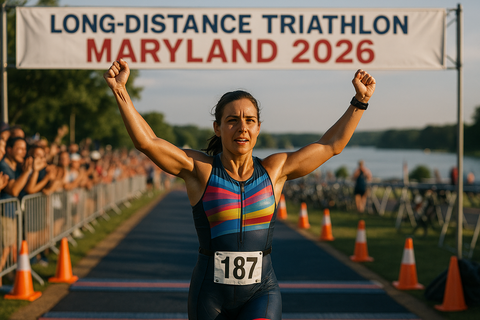
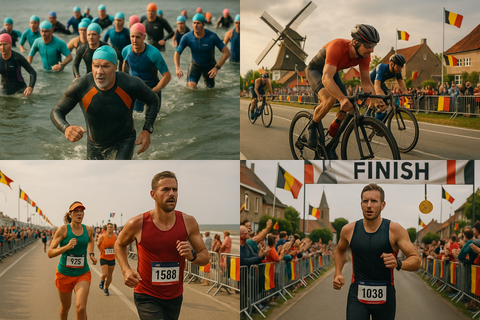
The Toughest Call: Why Canceling a Race Can Be the Right Decision
When safety demands the impossible choice, the best race directors don't hesitate—they act.
No race director wants to cancel an event—especially not within 30 days of race day. By that point, your registration dollars have already been spent on everything you'll experience on the course: the swag, the timing mats, the medical tents, the volunteer coordination, the permits. As experienced race director Ryan Heisler wrote, "there is no race producer worth their salt that wants to cancel a race. Us race directors will attempt to move heaven and earth itself to try and not cancel a race."
And yet, sometimes there is no other choice.
In late June 2026, the European triathlon community watched as organizers canceled a full-distance race in Nice, France, and modified the Frankfurt event to a shorter format—all in response to a catastrophic heat event known as the Omega Block. Temperatures exceeded 40°C (104°F) for more than seven consecutive days. Emergency services were overwhelmed. Medical infrastructure was literally overheating. And at least 40 people in France alone had already died from heat-related causes, many of them drowning while trying to cool off in rivers and lakes.
The outcry from some corners of the triathlon community was immediate: "They run races in hotter conditions in Arizona. This is soft. Athletes trained for months."
Those athletes aren't wrong to feel disappointed. But they're missing something crucial—something every race director understands the moment they sign their first permit.
Your job isn't just to put on the race. It's to put on the race safely.
This article breaks down why the Nice cancellation and Frankfurt modification represent exactly the kind of race leadership the sport needs more of—and what it reveals about the ethical responsibilities every event organizer carries.
The Hidden Reality of "30 Days Out"
To understand why cancellations are so rare—and why they should actually be celebrated when they happen for the right reasons—you first need to understand the financial architecture of a major endurance event.
By the time you're 30 days from race day, virtually every dollar of registration revenue has already been committed. Merchandise is ordered and in transit. Vendor contracts are signed. Aid station supplies are purchased. Medical staff are contracted. The course has been permitted through local governments. Volunteers have been briefed. There is almost nothing left to cancel cleanly.
This means that every cancellation represents genuine financial loss. Not a theoretical loss—an actual one. Sunk costs that no refund policy fully recovers.
That's why the pressure to proceed is enormous, even when conditions deteriorate. Race directors face a deeply uncomfortable tension: the financial and reputational cost of cancellation on one side, and the safety of hundreds or thousands of athletes on the other.
And here's the brutal truth about that tension: race directors get criticized either way.
If they proceed and something goes wrong, the internet erupts. They're called greedy, soulless, reckless. If they cancel, they're called cowardly, overly cautious, out of touch. There is no decision that earns universal applause—only decisions that are ethically defensible.
As Heisler puts it plainly: "you can never go wrong when erring on the side of keeping athletes safe from themselves."
Why European Heat Is a Different Problem Entirely
Here's where many of the loudest critics get it wrong. The comparison to Arizona, Southeast Asia, or Kona isn't just apples to oranges—it's apples to engine blocks.
Yes, races run in temperatures above 40°C in other parts of the world. But those locations have something Europe doesn't: infrastructure built for that reality.
Consider what was actually happening on the ground during the European Omega Block event:
- Only 20% of French residences have air conditioning. In Phoenix or Kuala Lumpur, that number is close to universal. In Nice, most residents had no place to cool down.
- Emergency services were already maxed out. This wasn't about race day conditions in isolation—it was about a healthcare system that had been absorbing heat casualties for days before the events were scheduled to start.
- Critical medical infrastructure had gone offline. MRI scanners at regional hospitals overheated and had to be shut down. The safety net that a race depends on—rapid medical response, hospital capacity—had holes in it before the starting gun ever fired.
- At least 40 people died from heat-related causes in France alone, many by drowning while seeking relief in rivers and lakes.
Heisler captured this perfectly during a chance encounter in Rome, where he met a woman visiting from Kuwait. She told him directly: "This weather is much worse than it is at home. At home, we at least are prepared for these kinds of conditions. Here, they just aren't."
That single observation contains the entire argument. The danger isn't just the temperature. It's the gap between the temperature and the community's capacity to manage it.
This is why Heisler's core framework is so important: "All races, even be a global giant, are local."
A race in Frankfurt is not a race in Tempe, Arizona. A race in Nice is not a race in Kona, Hawaii. The same thermometer reading carries fundamentally different risk profiles depending on the infrastructure surrounding it. Race directors aren't comparing degrees Celsius—they're assessing the entire system that keeps athletes alive when things go sideways.
What History Tells Us About Races That Proceed Anyway
The triathlon community has a short memory for its own tragedies, but race directors can't afford that luxury.
In 2023, two athletes died by drowning during a long-distance race in Ireland. The conditions were known to be challenging. The race proceeded. And when those deaths occurred, the community did exactly what you'd expect: they blamed the organizers.
That's not unfair. That accountability is appropriate. Race directors who proceed despite known life-threatening risks bear moral responsibility for what happens.
We've also seen athletes die from exertional heat stress in conditions far less extreme than what Europe experienced this summer. Heat illness doesn't announce itself in advance. It progresses quickly. And when it happens during a race, the outcome depends entirely on how fast medical support can reach the athlete and how much capacity the surrounding healthcare system has to absorb what comes next.
Now imagine the counterfactual: the organizers had chosen to run the full-distance Frankfurt race as planned. An athlete dies from heat-related illness. What happens?
"How quickly would we, collectively, have jumped to blame organizers for continuing in the face of the conditions?" Heisler writes. "They would be called out for greed, for being soulless, for not caring about its competitors, its volunteers, its spectators, its community."
The logic here is unavoidable. Race directors can either face criticism for canceling, or face something far worse for proceeding. One of those outcomes is recoverable. The other isn't.
A disappointed athlete goes home and trains again. A dead athlete doesn't.
The Gold Standard: Two Different Responses to the Same Crisis
What makes the European response genuinely praiseworthy isn't just that organizers made a safety call—it's how they made it.
Nice: Full Cancellation
The Nice event was canceled outright. Not shortened to a sprint. Not modified to a duathlon. Canceled. This decision acknowledged what the data was showing: that any version of a mass-participation endurance event in that environment, with those infrastructure constraints and that level of pre-existing strain on emergency services, was untenable.
This is the harder call. It's the one that draws the most criticism. It also requires the most courage.
Frankfurt: Adaptive Modification
Frankfurt presented a different calculus. Organizers reduced the cycling distance and converted the run to a half-distance format—preserving the event while meaningfully reducing total heat exposure time. Athletes still raced. The event still happened. But the duration of exposure, and therefore the cumulative physiological stress, was cut significantly.
This isn't compromise for the sake of optics. It's context-specific decision-making—exactly what good race management looks like. The course is different, the urban environment is different, the surrounding infrastructure had slightly more margin. A modified event was viable where a full-distance event was not.
Together, these two responses demonstrate something valuable: that there isn't one right answer in a crisis, but there is always a right process. Assess the environment. Consult local authorities. Make a proactive decision. Communicate clearly. Prioritize community welfare alongside athlete experience.
That process, executed decisively and early, is what separates race leadership from race gambling.
The Cautionary Contrast: When "Wait and See" Fails Athletes
Not every organizer handled their concurrent crisis the same way.
While European races were navigating the Omega Block, race organizers in Utah were watching the Cottonwood Fire burn through more than 71,000 acres across Beaver and Piute Counties. By midweek, the fire had engulfed the Eagle Point ski area—the literal venue of the Crusher in the Tushar event.
Life Time, the event organizer, issued a statement on Thursday: "With Crusher in the Tushar still a few weeks away, we know athletes are looking for answers. The situation is active and evolving, and we are working closely with local officials before making any event-related decisions."
It took another 24 hours of athlete and community pressure before a cancellation was announced.
Now, to be fair to Life Time: their event was still roughly two weeks out, giving athletes more time to adjust travel and logistics than those already on the ground in France or Germany. That's a meaningful difference. But the tone of the initial response—the language of waiting, of monitoring, of not quite committing—created anxiety for athletes who needed clarity. Proactive leadership isn't just about the final decision. It's about how you communicate throughout the process.
When race directors appear reluctant to accept the financial and reputational cost of cancellation, athletes notice. It erodes the trust that makes the race director-athlete relationship work. Even if the outcome is the same, the journey to that outcome matters.
The contrast with the European response is instructive: decisive action, coordinated with local authorities, communicated clearly. That's the model.
What Athletes, Race Directors, and Communities Should Take Away
For Athletes
If you've ever been disappointed by a race cancellation or modification, your frustration is valid. You trained for months. You paid for flights and hotels. You built your season around this event.
But the next time an organizer makes a difficult call in genuinely dangerous conditions, consider giving them the benefit of the doubt before reaching for social media. They have information you don't. They're weighing factors you may not have considered. And they're absorbing a significant financial and reputational hit to protect you.
A few practical steps for your race calendar:
- Look into event insurance when registering for races in high-risk seasons or locations.
- Understand the refund and deferral policies before you commit.
- Research the infrastructure of your race region, not just the weather forecast.
- Recognize that modified events are often a genuine compromise in your favor, not a failure.
For Race Directors
The European situation is a preview, not an anomaly. Extreme weather events are becoming more frequent, and the triathlon calendar will continue to collide with conditions that were once rare. The time to build your decision-making framework is before the crisis, not during it.
Key principles from this situation:
- Establish clear, documented safety thresholds for cancellation or modification—before registration even opens.
- Monitor not just weather forecasts but local infrastructure capacity (hospital beds, emergency services, cooling resources).
- Communicate proactively, even when your decision isn't final. Silence reads as negligence.
- Remember that your responsibility extends beyond registered athletes—to volunteers, spectators, and the surrounding community.
For the Triathlon Community at Large
There's a broader cultural shift worth naming here. Endurance sports have long celebrated the "tough it out" mentality. Suffering is part of the sport. Conditions are conditions. You train to handle what race day gives you.
That ethos has real value. But it can curdle into something dangerous when it's applied to systemic risks that individual toughness cannot solve. No amount of heat training protects you when the hospital that would treat your heat stroke has no available beds. No mental strength keeps you safe when the MRI scanner your emergency doctor needs has gone offline.
The conversation is shifting—from "how tough are you?" to "how smart is the system around you?" Race directors who lead that shift deserve the community's respect, not its scorn.
The Bigger Picture: A Sport Adapting to a Changing World
One forum commenter put the question plainly: "So tri generally isn't a winter sport, and now moving closer to having issues in summer as well. Means it only squeezes locals + RD's on race dates, yes?"
It's a fair concern, and an honest one. The window of "safe" race conditions in certain parts of the world is narrowing. That has real implications for race calendars, venue selection, and the long-term geography of the sport.
The triathlon industry will need to respond—through smarter scheduling, investment in heat-adapted venues, and perhaps a reconsideration of which regions host major events during peak summer months. This isn't a doomsday scenario; it's a design challenge. And the sport has solved design challenges before.
But none of that adaptation happens if the culture insists that cancellations are always a failure. Sometimes the best race leadership is knowing when not to race.
Final Thoughts
The next time a race director makes a difficult safety decision—canceling an event you've been training for, modifying a course you've been mapping for months—pause before you post.
Consider what they knew. Consider the community they were protecting. Consider the alternative scenario, and who would have been blamed if it played out badly.
The gold standard here isn't about one organization's specific decisions. It's about a principle that should guide every race director, every local authority, and every athlete community in the sport:
When athlete safety and community welfare are genuinely at stake, the race comes second.
That's not cowardice. That's exactly the kind of leadership the sport deserves.
Thinking about your next race season? Browse our triathlon suits for race-day essentials, or check out electrolyte supplements to make sure you're prepared for whatever race day brings.
Frequently Asked Questions
Why was the long-distance triathlon France race cancelled?
The long-distance triathlon France race was cancelled due to an extreme heat wave, which posed serious risks to athlete, volunteer, and spectator safety. The decision was made in light of high temperatures exceeding 40 degrees Celsius and related emergency resource constraints.
What modifications were made to the long-distance triathlon Frankfurt?
The long-distance triathlon Frankfurt was modified to include a shorter cycling loop of 125 kilometers and a half-distance run instead of the full race distance, to ensure participant safety in the extreme heat conditions.
What are the main factors considered when cancelling or altering a race?
Race organizers consider participant safety, local conditions, available emergency resources, and past incidents when making decisions about cancelling or altering a race.
How does the weather in Europe compare to other locations for racing?
Weather conditions in Europe can be unique, as some regions are not equipped to handle extreme temperatures, unlike Southeast Asia or specific locations known for high temperatures. This can impact the safety and feasibility of races.
What was the response to the cancellation of the long-distance triathlon France event?
The cancellation was generally considered necessary by many, emphasizing the importance of prioritizing safety over financial considerations or race integrity.
Source: Slowtwitch — Long-Distance Triathlon Should Be Commended for Nice & Hamburg Actions