From Boardroom to Finish Line: Eastern Pacific Shipping's Triumph in the Philippines Long-Distance Triathlon
Imagine persuading a group of shipping executives — individuals who already endure grueling hours managing global supply chains — to dedicate their weekends to swimming in open waters, cycling 112 miles, and running marathons under the tropical sun. Now envision them doing just that in Cebu, Philippines, cheered on by local seafarers who came out specifically to support them.
This was the reality for Team Eastern Pacific as they embarked on one of the most challenging tests in endurance sports: a full long-distance triathlon on Philippine soil. Their journey is not merely about athletic achievement; it's a testament to what happens when a company invests in the physical, mental, and emotional capacities of its people.
The Brutal Challenge of the Philippines Course
A full long-distance triathlon is already a formidable single-day endurance event: a 2.4-mile open-water swim, followed by a 112-mile bike ride, and concluding with a 26.2-mile marathon run. The total distance is approximately 140.6 miles, with age-group athletes spending anywhere from 10 to 17 hours on the course.
Now add the Philippines factor.
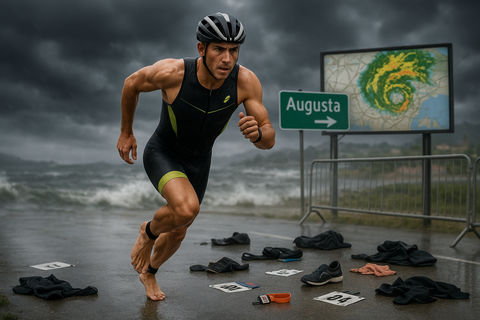
Racing in Cebu means facing tropical heat and humidity that can push apparent temperatures well above 90°F (32°C+), challenging open-ocean swim conditions, and cycling terrain that tests even seasoned riders. Unlike cooler race venues in Europe or North America, the Philippine sun offers no mercy — not at mile 10 of the run, and certainly not at mile 20.
The course demands respect. Tropical conditions accelerate dehydration, compress recovery windows, and amplify the psychological weight of every mile.
This is the environment Team Eastern Pacific chose — not despite its difficulty, but seemingly because of it.
Meet Team Eastern Pacific
Eastern Pacific Shipping, under the leadership of billionaire businessman Idan Ofer, is a major player in ship management, overseeing a vast fleet and thousands of maritime professionals worldwide. The team that lined up in Cebu represented more than just a polished corporate image: they were real people with demanding jobs, dedicating months to prepare for a challenge that pushed their physical and mental limits. The group included Eastern Pacific staff of varying experience levels — some seasoned triathletes, others tackling a full long-distance triathlon for the first time.
Their achievement is particularly notable given the complexity of their professional lives. Shipping is not a low-stress industry. Managing global fleets, navigating geopolitical disruptions, and overseeing complex logistics operations drain cognitive and emotional reserves. Fitting in 15 to 20 hours of weekly triathlon training on top of that schedule isn't just a fitness challenge — it's a test of prioritization, discipline, and willpower that begins long before race day.
The Road to Cebu: Months of Preparation
Training for a full long-distance triathlon typically requires 16 to 24 weeks of structured preparation, with weekly training volumes reaching 12–20 hours at peak. For working professionals, this means early-morning swims before the office, lunchtime runs, weekend rides that consume entire Saturdays, and careful management of sleep, nutrition, and recovery.
For Team Eastern Pacific, this wasn't recreational fitness — it was a serious athletic undertaking. Participants had to develop competence across three disciplines simultaneously, addressing individual weaknesses while building the aerobic base required to sustain effort across an entire day of racing.
The training itself is where teams are forged. Long group rides, open-water sessions, and back-to-back brick workouts (cycling immediately followed by running) create shared suffering that builds trust in ways that no team-building workshop can replicate. When you've seen a colleague dig deep at mile 80 of a training ride on a sweltering Sunday morning, you know something real about them.
The preparation phase also demands honest confrontation with personal limits. Every triathlete — regardless of experience — hits moments in training where the goal feels impossible. Learning to push through those moments, and doing so alongside teammates, is precisely what race day demands.
Race Day in Cebu: The Full Story
The Swim: 2.4 Miles in Open Ocean
The race begins in the dark or at dawn, with hundreds of athletes entering the open ocean simultaneously. For newcomers to long-distance racing, the swim start is one of the most disorienting experiences in sport: crowds, chop, the physical contact of other athletes, and the psychological weight of knowing that the swim is merely the opening act of a 12-to-17-hour day.
Open-ocean conditions in the Philippines add their own complexity. Unlike a controlled pool environment, ocean swimming requires navigating current, sighting buoys, and managing energy expenditure carefully — burning too hard in the swim leaves nothing for what comes next.
Team members who emerged from the water together carried something important: the knowledge that their teammates were still in it, still moving, still fighting.
The Bike: 112 Miles Under the Philippine Sun
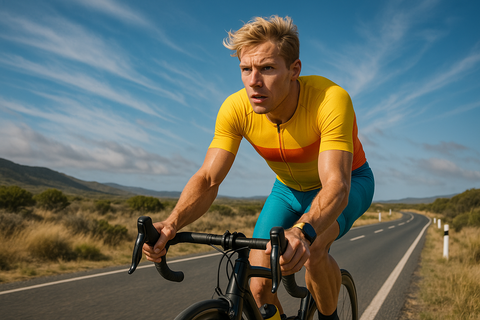
The cycling leg is where the race's tropical character becomes impossible to ignore. As the morning heat builds, heart rates climb higher than expected for the same perceived effort, nutrition strategies that work in temperate climates need aggressive adjustment, and the mind begins its long negotiation with the body.
One of the most remarkable elements of Team Eastern Pacific's day was the presence of local seafarers along the course — maritime workers from the Cebu community who came out specifically to cheer the team on. The Philippines is the world's largest supplier of seafarers, and Cebu is a hub of that workforce. Seeing Eastern Pacific — a company that employs seafarers globally — racing through their community created a moment of genuine connection between the corporate office and the workforce at sea.
That kind of support, unexpected and authentic, is the sort of thing that carries athletes through dark patches in a race.
The Run: 26.2 Miles to the Finish
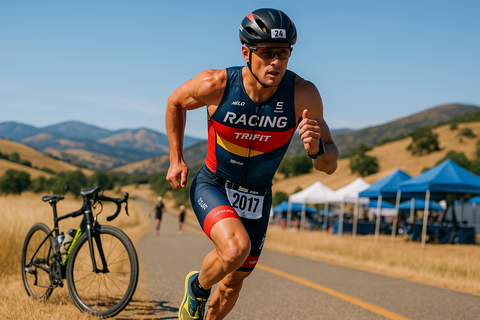
The marathon is where long-distance triathlon reveals its true nature. Your legs have already turned the pedals thousands of times. Your body is processing hours of accumulated effort. And now you're asked to run a full marathon.
Every experienced triathlete knows "the wall" — that moment, usually somewhere between miles 16 and 20 of the run, where the body's energy systems struggle to keep pace with demand, where every step requires a conscious decision. For first-timers, this territory is entirely uncharted.
Getting through it requires exactly what the training built: mental frameworks developed through months of practice, team accountability, and the simple but powerful knowledge that the finish line is real and reachable.
When Team Eastern Pacific's members crossed that finish line in Cebu — having swum, biked, and run through tropical conditions across an entire day — they earned something that can't be faked, bought, or shortcut. That moment belongs entirely to them.
What Long-Distance Racing Reveals About Company Culture
Shared Suffering as a Leadership Tool
There's a growing body of research and practitioner experience suggesting that shared physical challenge is one of the most effective culture-building tools available to organizations. It's not the medals that matter — it's the process of committing to something genuinely difficult alongside your colleagues, failing sometimes, adjusting, and ultimately delivering.
Eastern Pacific's decision to support a team at a full long-distance triathlon sends a clear signal about organizational values: we believe in developing the whole person, not just the professional. It communicates that the company trusts its people to pursue ambitious goals, and that it will stand behind them when the challenge is real.
This matters particularly in the shipping industry, where the professional culture has historically been defined by operational excellence and reliability rather than individual wellness or personal development.
A Unique Bond With the Seafarer Community
The Cebu dimension of this story deserves specific attention. The Philippines produces approximately one-third of the world's seafarers — the officers, engineers, and crew members who keep global shipping operating. Cebu is central to that community.
When Team Eastern Pacific raced through Cebu, supported by local seafarers cheering from the sidelines, it created a moment of human connection between the shore-based management team and the maritime workforce that sustains the company's operations. That's not something you can engineer through a press release or a corporate social responsibility report. It happened organically, on the course, in the heat, during one of the hardest days these athletes had ever experienced.
The Broader Shipping Industry Trend
Eastern Pacific's initiative reflects something larger happening across the maritime sector. Shipping companies are increasingly recognizing that employee wellness — particularly the kind built through serious physical challenge — is a strategic investment, not just a perk.
In an industry competing intensely for top talent, where high-stress operational environments demand mental resilience, and where retention is an ongoing challenge, programs that demonstrate genuine commitment to employee development carry real weight. The return on investment isn't always captured in a spreadsheet, but it shows up in engagement, loyalty, and the quiet confidence that comes from knowing your organization believes in you.
Lessons for Other Organizations
Extreme Challenges Work — With the Right Framework
Not every corporate wellness initiative needs to be a full long-distance triathlon. But the principles that made Eastern Pacific's initiative powerful are replicable:
- Set a genuinely difficult goal — something that requires months of preparation and carries real uncertainty
- Pursue it together — the team dynamic is non-negotiable; solo challenges don't build the same organizational bonds
- Connect it to the company's broader identity — racing in Cebu, among seafarers, made this meaningful beyond just sport
- Let leadership participate — when executives are on the course alongside their staff, hierarchies flatten in powerful ways
Balancing Ambition With Inclusivity
A full long-distance triathlon is not accessible to everyone, and responsible organizations recognize this. The model doesn't require everyone to race 140.6 miles. It requires identifying an appropriate level of challenge for your team — whether that's a sprint triathlon, a marathon relay, a cycling challenge, or a trekking expedition — and pursuing it with the same seriousness and shared commitment.
What matters is that the challenge is real, the preparation is genuine, and the experience is shared.
The ROI That Doesn't Fit in a Dashboard
The measurable outcomes of initiatives like this — engagement scores, retention rates, absenteeism — tell only part of the story. The harder-to-quantify outcomes are often the most valuable: the teammate you'll run through a wall for, the confidence that comes from knowing you can do something you thought was impossible, the pride that radiates outward into every piece of work you deliver.
Corporate wellness is evolving. Gym memberships and step-count competitions were the first generation. Extreme shared challenges are the next.
Key Takeaways
- Team Eastern Pacific completed a full long-distance triathlon in Cebu, Philippines — one of the most demanding race environments in the sport — representing a serious organizational commitment to employee development through physical challenge.
- The Philippines course is genuinely brutal, combining tropical heat, humidity, and open-ocean swim conditions that test even experienced athletes.
- The human connection matters: being cheered on by Cebu's seafarer community transformed a corporate athletic challenge into something with deeper meaning for everyone involved.
- Extreme wellness initiatives build what conventional team-building cannot: trust forged through shared suffering, resilience tested under real pressure, and pride that translates directly back to professional performance.
- The model is replicable — not necessarily at full long-distance distance, but through any genuinely challenging shared physical goal pursued with seriousness, structure, and leadership participation.
What Challenge Will Your Team Take On?
Eastern Pacific Shipping's team stood on a start line in Cebu, pushed through one of endurance sport's most demanding courses, and crossed a finish line together. They didn't do it because it was easy. They did it because difficulty, faced alongside the right people, is exactly how limits get redefined — in sport, and in business.
For corporate leaders: Is your wellness program ambitious enough to actually change people? If your team's biggest shared physical challenge is a 5K fun run, there may be more headroom than you think.
For shipping industry professionals: Eastern Pacific has raised a standard. What does your organization's commitment to employee development look like in practice?
For anyone who's ever stood at the start line of something that scared them: you already understand exactly what Team Eastern Pacific felt in Cebu — and exactly why it was worth it.
Have you or your team tackled an extreme endurance challenge for corporate culture-building? Share your experience in the comments below. And if you're exploring triathlon for the first time, check out our triathlon suits — because every finish line starts with the right gear.
Related Reading & Resources
- Explore swimming goggles for open water training
- Going long with a team? Check out quality running shoes for the marathon leg
- Planning your race travel? Explore electrolyte supplements for sustained performance
Frequently Asked Questions
What was the event reported in the article?
The article reports on the participation of Team Eastern Pacific in a long-distance triathlon event held in the Philippines.
Who is Idan Ofer?
Idan Ofer is associated with Eastern Pacific and was mentioned in the context of the long-distance triathlon event in the Philippines.
How did Team Eastern Pacific perform in the triathlon?
The article suggests that Team Eastern Pacific faced a challenging long-distance triathlon event, implying that the competition was intense.
What role did seafarers play during the event?
Seafarers in Cebu cheered on Team Eastern Pacific during their participation in the triathlon.
Where can I find more information about global shipping news?
More information about global shipping news can be found on the TradeWinds website, which provides news and commentary on the shipping industry.
Source: TradeWinds — Eastern Pacific conquer brutal Philippines triathlon
Discover unique triathlon-themed merchandise, including stylish t-shirts, stickers, phone cases, and home decor — perfect for endurance sports enthusiasts and athletes. Shop now