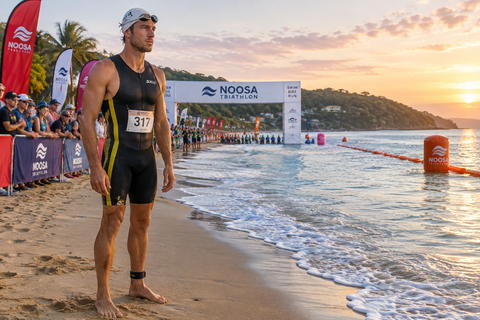

For ten years, one race kept finding Henri Schoeman—not on the course, but in his inbox.
Picture the finish line in Cozumel, Mexico, on 18 September 2016. Jonny Brownlee is dazed and staggering, close to collapsing. His brother Alistair helps him toward the line. Just behind them, South African triathlete Henri Schoeman spots an opening, takes the lead, and wins a World Championship race.
The finish-line clip went viral and kept resurfacing. Each time it did, a new wave of strangers attacked the man who won. Now, at 35, Olympic bronze medallist Schoeman is speaking publicly about how a decade of online abuse affected him and his family.
If you’re new to triathlon, this story might seem far from your first race kit or open-water nerves. But anyone who shares a race photo, a Strava activity, or a finish-line video can face online harassment. Schoeman’s experience is worth understanding.
Source note: This post draws on Yanga Sibembe’s interview with Schoeman in Daily Maverick (30 October 2026). All Schoeman quotes come from that piece.
The Race That Keeps Coming Back
What happened in Cozumel
Schoeman won at the 2016 World Triathlon Series Grand Final in Cozumel, a major event for triathlon fans in Mexico and across Latin America. According to Daily Maverick, Jonny Brownlee was struggling badly in the heat, less than a kilometre from the finish. Alistair, who had been in second place, helped his brother toward the line.
As the brothers moved forward, Schoeman took the lead and crossed the finish line first. The brothers followed moments later, with Jonny taking silver and Alistair bronze.
How a finish-line moment can mean years of comments
The scene is dramatic and shows sportsmanship, which helped make it widely shareable. But every share also brought the video to a new audience. Some viewers decided Schoeman was the villain of the story.
“Every time the video of the finish at the race comes around again, new people come out to attack me in waves.”
The takeaway: A viral clip can last much longer than the race result. It may follow an athlete for years, while people sharing it rarely consider who might be reading the comments.
Ten Years of Waves
Hoping each wave was the last
Schoeman says he spent years trying to stay out of the public eye and protect himself from the spotlight. It didn’t stop the online abuse.
“With every wave, I've always thought maybe that's the last of the hate and abuse. But it just never stopped.”
For a long time, he wasn’t sure how to respond: For the longest time I did not know what the right thing to do was.
What online abuse did to his confidence
The impact went beyond hurtful comments. Schoeman says the cyberbullying changed how he saw himself as an athlete:
“Abusive comments can affect an athlete's mindset. It took away my confidence and it belittled me for 10 years.”
That matters for athletes at every level. Confidence is part of training, just like sleep and fueling. Constant negativity can wear it down, whether you’re an Olympic triathlete or preparing for your first sprint triathlon.
Why staying quiet didn’t help
Schoeman says keeping himself out of view “never helped.” He also believes speaking up earlier could have changed how he understood the experience: If I had spoken up sooner, I would have looked at myself and the whole situation differently.
The takeaway: Staying silent can feel like the safest choice, but it can also leave you carrying the weight alone.
When Online Hate Reaches the Family
Criticism versus personal attacks
Schoeman draws a clear distinction—one that athletes and fans can both keep in mind:
“As a professional athlete I accept being criticised for my performances, to have those opinions thrown at me. But it's another thing when people personally pick you out and attack you.”
Critiquing a performance is part of sport. Targeting someone personally is different.
The turning point
For years, Schoeman says he could handle personal attacks. That changed when he became a father.
“Now I've got a daughter who is four and a half and a son who is two, and a wife. They now attack and threaten them. My children have nothing to do with a race that happened 10 years ago. They didn't choose to be part of that at all.”
His wife, Franzel, and their young children became targets too. Schoeman says that made the abuse overwhelming, even though he was still afraid to speak up.
The takeaway: Online harassment rarely affects only the athlete. Families can bear the impact too, even though they never chose to be in the spotlight.
Rivalry Without Hate: The Brownlee Relationship
Here’s one of the most striking parts of the story: the people closest to the race aren’t holding a grudge.
Schoeman says he has a very good relationship with the Brownlee brothers, especially Jonny. Their families are friendly as well. Jonny’s wife is good friends with Schoeman’s wife, and Jonny and his wife recently welcomed a newborn.
“We've raced each other over the last 10 years and we're both fierce competitors, but we get along very well off the course.”
Jonny also reached out after the 2016 race, while Schoeman was facing criticism:
“He sent me a message… and told me that I had done the right thing. He said that is racing. So, there are no hard feelings from any of us who were involved, we still get along to this day.”
The takeaway: Fierce competition and genuine respect can go together. That’s a culture worth building in triathlon: race hard, then treat each other with kindness off the course.
Why Schoeman Went Public
Schoeman says he was tired of being bullied. He hopes that speaking up will also help start honest conversations about the online abuse athletes face every day, often from faceless accounts.
“It's so important to bring awareness to this situation, even if it's just to make someone feel that they are not alone in this.”
Who sends abusive messages?
Daily Maverick notes that athletes across sports regularly face attacks on social media. The publication also reports that sports betting has increased the likelihood of personal attacks, and that some trolls do it for the “thrill of it.”
Schoeman puts it plainly:
“No one would say this stuff to your face. The tallest trees get the biggest wind. But it is part of sport and you are always going to get these people who feel that they need to attack you.”
The 10-second test
His suggestion is simple and easy to put into practice:
“Even if we can make someone think twice before they spend 10 seconds typing a hateful message whose impact can last almost forever, that is a win. It's too easy for people to just type something and send it out there.”
What You Can Do
You don’t need to be a professional athlete to put Schoeman’s lessons into practice.
- Pause before posting. Ask yourself whether you’d say the same thing face to face.
- Report instead of piling on. Use the platform’s reporting tools rather than engaging with abusive threads.
- Share encouragement. Cheer athletes on, whether they’re at the front of the pack or bringing up the rear.
- Separate critique from attack. Discussing a performance is fair. Targeting an athlete or their family is not.
- Reach out if you’re being targeted. Talk to someone you trust or a mental health professional. In South Africa, organisations such as SADAG offer support (verify current contact details before publishing).
If you’re building up to your first race, remember that triathlon is at its best when the community lifts people up. Our triathlon gear collection can help you get race-ready, and our race season essentials cover the rest of your list. The community you’re joining should feel welcoming, so help keep it that way.
Frequently Asked Questions
- What happened in the 2016 race?
According to Daily Maverick, Jonny Brownlee was struggling badly in the heat close to the finish, and his brother Alistair helped him toward the line. Schoeman took the lead and won, with Jonny second and Alistair third.
- Why does the video keep resurfacing?
It shows a dramatic, sportsmanlike moment, so people share it widely. Schoeman says each new wave of views brings a new wave of attacks.
- Is Schoeman still competing?
Yes. He’s aiming for a fourth Olympic Games at LA 2028 and recently took silver at the African Championships. He still needs to race frequently over the next two years to accumulate ranking points.
- What does he want as his “biggest win”?
-
“I've done it all in this sport. If I can get to LA28 and have my daughter watch me race, after seeing what I've been through to get there, that will be my biggest win.”
Conclusion: The Win That Matters Most
Ten years ago, Henri Schoeman crossed a finish line in Mexico as the winner of a world championship race. For the decade that followed, that finish kept finding him in ways he never expected.
His story offers a few important lessons:
- One viral moment can fuel years of harassment.
- Online abuse can spill over onto an athlete’s family.
- Rivalry and respect can coexist. The Brownlees’ friendship with Schoeman shows that.
- Speaking up can help you and others feel less alone.
Schoeman says the support he’s received since speaking out has been overwhelming, and he’s ready to reignite his spark. The rest of us can help by thinking before we type—and cheering a little louder.
Your turn: Has social media changed how you view athletes or share your own training? Tell us in the comments, and share this post with a training buddy who might need the reminder. If you’re getting ready for race day, explore our triathlon gifts and race-day travel gear for your next start line, whether it’s close to home or a destination race like Cozumel.
Why did Henri Schoeman face online abuse after the 2016 World Triathlon Series Grand Final?
Schoeman won the Cozumel race after Britain’s Jonny Brownlee began to collapse from heat exhaustion and was helped across the finish line by his brother Alistair. The widely circulated finish led some people to attack Schoeman online, even though he had simply continued racing and won.
How has cyberbullying affected Henri Schoeman?
Schoeman said years of abusive comments undermined his confidence and affected his mindset. He described feeling that he had lost himself and his inner light, while repeated waves of online abuse made it difficult to move on from the race.
Why did the online abuse become especially distressing for Schoeman?
Schoeman said he had found it easier to cope when attacks were directed at him. It became overwhelming when online users began targeting and threatening his wife and young children, who had no connection to the race.
How did the Brownlee brothers respond to the criticism of Schoeman?
Schoeman said he has a good relationship with both brothers. After the 2016 race, Jonny Brownlee messaged him to say he had done the right thing and that it was part of racing. Schoeman said there are no hard feelings between them.
Why did Henri Schoeman speak publicly about his experience?
Schoeman said he was tired of being bullied and wanted to raise awareness of the abuse athletes face online. He hopes speaking out will help others feel less alone and encourage people to think before posting hateful messages.
What are Henri Schoeman’s future plans in triathlon?
Schoeman is aiming to qualify for his fourth Olympic Games at Los Angeles 2028. He needs to compete in races over the next two years to earn ranking points. He said having his daughter watch him race in LA would be his biggest win.
What are Henri Schoeman’s notable triathlon achievements?
Schoeman won bronze in the triathlon at the 2016 Rio Olympics, becoming the first South African to win an Olympic triathlon medal. He also won Commonwealth Games gold in 2018 and recently earned silver at the African Championships.
#Cyberbullying #Triathlon
Source: https://www.dailymaverick.co.za/article/2026-10-30-sa-olympic-triathlete-henri-schoeman-opens-up-on-cyberbullying-dimming-his-light/
Discover unique triathlon-themed merchandise, including stylish t-shirts, stickers, phone cases, and home decor - perfect for endurance sports enthusiasts and athletes. Shop now