Never Say Never: How an Engineering Student Conquered a Long-Distance Triathlon While Working Full-Time
Mateja Rudmann's journey shows that the most significant barriers are often the ones we impose on ourselves — and that crossing a finish line after 15.5 hours is only the beginning of the story.
Less than 1% of the global population has ever completed a long-distance triathlon. This statistic seems daunting — until you hear the story of one of those finishers.
Mateja Rudmann, a construction management student at the University of Cincinnati's College of Engineering and Applied Science, completed a full long-distance triathlon — a 2.4-mile swim, 112-mile bike ride, and 26.2-mile run — while working full-time as a project engineer at Garney Construction through UC's cooperative education program. She trained every morning at 4:00 a.m., endured three asthma attacks during the race, and almost didn't make it to the start line due to unexpected car repairs that drained her budget.
Yet she crossed the finish line in just under 15.5 hours.
"It was rewarding, but I'll never do it again" — the kind of candid honesty that only someone who's been through it can express.
This isn't a tale of superhuman ability. It's a narrative of structured ambition, smart progression, and the resilience that real-world experience fosters when faced with challenges. Whether you're a student contemplating your major, a triathlete considering your first long-distance race, or a professional juggling big goals with a demanding schedule — Mateja's story offers valuable insights.
From Architecture to Construction Management: Navigating Your Path Through Change
Mateja's journey to construction management wasn't straightforward. She initially enrolled in the College of Design, Architecture, Art, and Planning at UC, but within four days she realized it wasn't the right fit. She was drawn to the structural principles of architecture — the math, the load calculations, the logic of how buildings stand. The studio design work didn't resonate with her, so she switched to architectural engineering, which offered more of the technical content she desired, though design elements still lingered.
"I didn't want to do design or spend my time in a studio. I like the math and structural portions of the program, and with construction management, I got to do that and would have similar job opportunities."
Her third major was where she found her true calling. This process of iterative self-discovery mirrors the engineering process itself: test, evaluate, adjust, optimize. Mateja didn't waste those early semesters — she gathered insights about what she truly wanted. Each pivot brought her closer to a program that aligned with her strengths and aspirations. For anyone second-guessing their major or career path, this is a valuable perspective: switching isn't failing. It's troubleshooting.
The Athlete's Mindset: Always Pursuing a Greater Goal
Mateja swam competitively in high school and joined UC's club swim team upon arriving on campus. She also engaged in student organizations — Engineers Without Borders, the Construction Student Association, and Phi Sigma Rho — building community alongside her technical skills.
Despite her involvement with the swim team and regular weightlifting, something felt incomplete. She describes the feeling clearly: she was always searching for a bigger goal, something to train toward rather than just maintaining fitness. The spark came from her boyfriend, who ran a marathon. That was enough to propel her toward her first Olympic-distance triathlon — a 0.93-mile swim, a 24.85-mile bike ride, and a 6.2-mile run. She completed it and immediately began contemplating what was next.
A friend started training for a half-distance triathlon (1.2-mile swim, 56-mile bike, 13.1-mile run). Mateja decided to join her.
"After I did the half, I said I was never doing a full long-distance triathlon — crazy people do that."
We'll revisit that statement.
The Co-Op Advantage: How Real-World Experience Creates the Space for Extraordinary Goals
Through UC's cooperative education program, Mateja spent four semesters working full-time at Garney Construction on a wastewater treatment plant project in North Carolina. As a project engineer, she worked on concrete and mechanical CAD drawings, managed construction site labor audits, and gained experience in both field and office environments. The co-op provided her with a ground-level view of what a construction career actually entails — not just what it looks like on paper.
It also offered her something she hadn't fully anticipated: time and flexibility. Living out-of-state, away from campus life and its social demands, she had more unstructured time than she'd ever had at school. Her training schedule became non-negotiable:
- 4:00 a.m. — Wake up, swim or bike
- 6:30 a.m. — Clock in at Garney Construction
- Full workday — Project engineering
- Evening — Second workout, prep for the next day
She's candid about underestimating how much time the training would actually consume. But the discipline she'd developed through co-op — meeting real deadlines, managing competing priorities, showing up when the work is unglamorous — translated directly to the track and the pool. Co-op doesn't just teach technical skills. It builds the mental architecture for handling hard things.
UC's cooperative education program is one of the oldest and largest in the country. Students alternate semesters of coursework with semesters of full-time professional work, often completing four or more co-op rotations before graduation.
When Everything Goes Wrong: The Financial Crisis Before Race Day
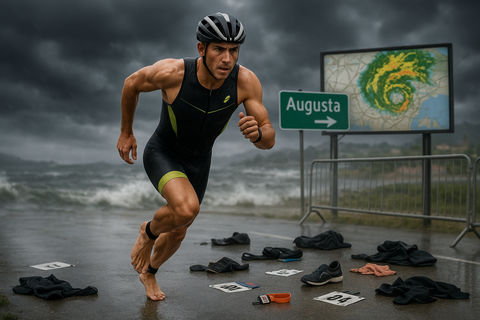
Training was one obstacle. The financial reality of race participation was another. In the weeks leading up to the race, Mateja's car broke down. Repairs cost thousands of dollars — money she hadn't budgeted for. On top of that, the registration fee for a long-distance triathlon runs around $1,000. Together, the costs felt like a sign to stay home.
"I almost didn't do the race. I had to pay thousands for my car, and the entrance fee for the race is another $1,000, so I didn't think I could do it. But I was almost done with my training and I knew I'd never be this close again, so I paid for it."
That calculus — I've come too far not to finish — is the kind of reasoning that separates people who complete hard things from those who nearly complete them. She weighed the sunk cost of six months of 4 a.m. mornings against one more financial hit and made the call. The cost of not finishing — carrying the weight of what if for years — often exceeds the cost of pushing through.
Race Day in Jacksonville: 2,000 Athletes, One Very Long Day
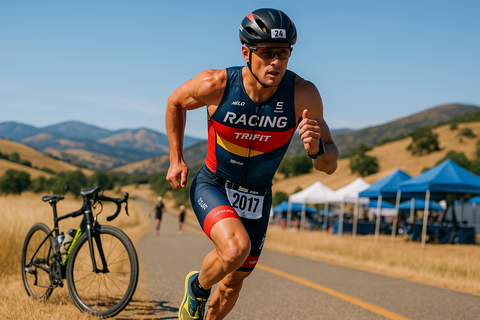
The race took place in Jacksonville, Florida, with nearly 2,000 competitors on the course. Start time: 7:30 a.m. The structure follows the classic triathlon progression — swim first, then bike, then run — each discipline adding cumulative fatigue onto the last.
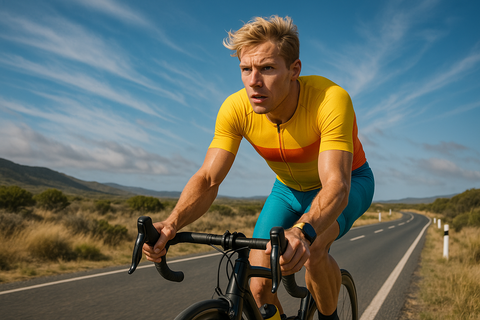
The swim and the run were hard. The bike was something else entirely. During the 112-mile ride, Mateja experienced three asthma attacks. She had to stop and take breaks, watching the clock and calculating her margin against the 17-hour cutoff. She asked the medical team for help managing her symptoms. Their answer was unambiguous: anything they gave her would require formally admitting her to medical care — which meant disqualification.
With 10 miles left on the bike, she made her decision.
"I had 10 miles left, and I was finishing this thing."
She did. Depleted and determined, she crossed the finish line in just under 15.5 hours and joined the less than 1% of the global population who can call themselves long-distance triathlon finishers.
The Ripple Effect: How One Person's Achievement Moves an Entire Community
Here's what Mateja didn't anticipate: the race wasn't just for her.
"After my race, three of my family members bought bikes and are biking now, my sister is doing an Olympic triathlon with me, and a bunch of my friends want to get into it."
This is one of the most underappreciated aspects of pursuing ambitious goals publicly. When people in your network see someone they know — not a professional athlete, not someone with unlimited resources — accomplish something extraordinary, it reshapes what they believe is possible for themselves. Achievement creates permission. Her sister is now training for an Olympic-distance triathlon. Multiple friends have expressed interest in getting into triathlon. Three family members bought bikes. None of that happens if Mateja doesn't show up in Jacksonville.
5 Lessons From Mateja's Story That Apply Far Beyond the Finish Line
1. Incremental Goals Build Real Confidence
Mateja didn't sign up for a long-distance triathlon out of nowhere. She progressed: Olympic triathlon → half-distance race → full long-distance race. Each step gave her data about her capacity and genuine confidence that the next level was achievable. Break massive goals into stages. The progression is the strategy.
2. Pivots Are Part of the Process
Architecture → Architectural Engineering → Construction Management. Three majors, one right fit. The willingness to adjust course based on real feedback — rather than stubbornly sticking to an original plan — is a strength, not a weakness. This applies to careers, training plans, and life decisions equally.
3. Structural Support Enables Extraordinary Achievement
The co-op program gave Mateja something rare: geographic flexibility, financial stability through her co-op salary, real-world problem-solving skills, and unstructured time she could redirect toward training. Success isn't just about individual willpower. It's about building the right conditions around your goals.
4. Obstacles Are Information, Not Stop Signs
Car breakdown. $1,000 registration fee. Three asthma attacks mid-race. Each of these was a genuine crisis that could have ended the story. Instead, each one became a decision point — and Mateja made the same call every time: keep going. Engineering thinking applied to life: identify the problem, assess your options, and adapt.
5. Visibility Inspires Others
Mateja's achievement didn't stay hers alone. It spread. That's what happens when you pursue hard things publicly and honestly — including the "I almost didn't show up" part. Authentic stories of struggle and completion move people more than polished highlight reels.
What's Next for Mateja Rudmann
After graduation, Mateja is returning to Garney Construction full-time. The co-op pipeline — one of the most tangible outcomes of UC's cooperative education model — converted a student placement into a long-term professional relationship. Her triathlon mindset goes with her: the ability to plan for complexity, push through unexpected obstacles, and finish what she starts.
And that Olympic triathlon she mentioned? The one her sister is now training for? Mateja will be on that start line too.
"I'll never do it again" has a quiet asterisk, it turns out.
Ready to Chase Your Own Big Goal?
Whether you're considering your first sprint triathlon or eyeing a full long-distance race, the equipment you choose matters as much as the training plan you follow. At Triathlon.mx, we've curated gear for every stage of the triathlon journey — from your first open-water swim to your first multi-sport transition.
Explore our swimming goggles — essential for building confidence in the water.
Gear up with a triathlon suit that performs across swim, bike, and run.
Invest in quality running shoes designed for the demands of triathlon racing.
Check out our complete guide to triathlon suits for detailed comparisons and recommendations.
What's your long-distance triathlon? The goal that seems just slightly out of reach right now? Share it in the comments. The first step is saying it out loud.
Frequently Asked Questions
What is a long-distance triathlon race?
A long-distance triathlon is an ultra-endurance race that includes a 2.4-mile swim, a 112-mile bike ride, and a 26.2-mile marathon run, which must be completed within 17 hours.
How did Mateja Rudmann prepare for a long-distance triathlon while studying at UC?
Mateja Rudmann trained for approximately six months for the long-distance triathlon while working full-time at Garney Construction through UC's cooperative education program. She balanced her training with her work schedule, often waking up early to train before her shifts.
What major did Mateja Rudmann switch to at UC?
Mateja Rudmann initially started in architecture but switched to construction management after realizing her preference for the mathematical and structural aspects of engineering over design.
What were the challenges Mateja faced leading up to the long-distance race?
One of the major challenges Mateja faced was the breakdown of her car, which required costly repairs, jeopardizing her ability to afford the race entrance fee. Despite this, she chose to proceed with the race as she had put significant effort into her training.
How did Mateja perform in her long-distance triathlon?
Mateja completed the long-distance triathlon in just under 15 and a half hours, despite suffering three asthma attacks during the biking portion of the race. She remained determined to finish, overcoming significant obstacles during her journey.
What impact did Mateja's accomplishment have on others?
Mateja's completion of the long-distance triathlon inspired her family and friends, leading her sister to train for an Olympic triathlon and encouraging three family members to take up biking.
Source: University of Cincinnati — UC Engineering Student Completes Long-Distance Triathlon
Discover unique triathlon-themed merchandise, including stylish t-shirts, stickers, phone cases, and home decor — perfect for endurance sports enthusiasts and athletes. Shop now