From the Footy Field to Kona: How an AFL Star Became a Competitive Age-Group Triathlete
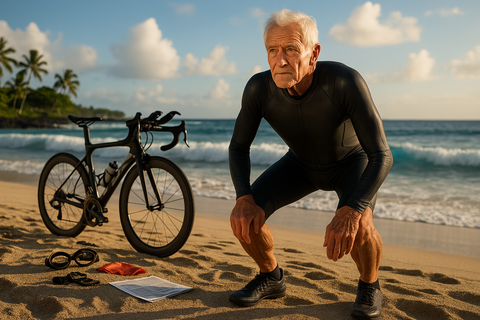
A man who sprinted across the MCG for over a decade in front of 80,000 fans now stands on a black volcanic shore in Hawaii — goggles on, heart racing, bracing for a 3.8-kilometer swim into the open Pacific. No teammates, no halftime, no buzzer. Just 226 kilometers of heat, wind, and lava between him and the finish line.
That man is David Zaharakis, and his story of transformation is one you won't want to miss. At 36 years old, this former Essendon midfielder hung up his boots after 226 AFL games. Now he's not watching triathlons from the sidelines — he earned his place in the long-distance triathlon World Championships in Kona, Hawaii, through hard work and qualified performance. For anyone eager to know if diving into a new sport or starting a new life chapter is worthwhile, Zaharakis delivers a clear, exhilarating answer.
The Path Forward: From AFL Veteran to Age-Group Triathlete
Five Years in the Making
Elite athletes don't simply find themselves at Kona. Competing at the Hawaiian long-distance triathlon World Championships is the ultimate test in age-group endurance racing, and earning a spot there requires serious dedication. Zaharakis' five-year transition from AFL to Hawaiian shores isn't an impulsive leap — it's a strategic and disciplined climb.
He didn't stop at entering a local sprint triathlon and calling it a day. He aimed for one of the sport's toughest qualifying events and finished 30th overall at Ironman New Zealand — a result good enough to secure his ticket to Kona, specifically in the fiercely competitive 35–39 age group. This isn't about taking part in a celebrity fun run or a novelty race; Zaharakis earned his position just like every other competitor on the Kona start line by racing hard, racing smart, and meeting stringent qualification standards.
Joining a Rare Club
Very few former AFL players have stood at the Kona start line. Notable examples include Port Adelaide's Michael Wilson and West Coast's Beau Waters, both of whom made the leap from the football pitch to Hawaii's volcanic soil. Zaharakis now joins this exclusive club, but what sets his journey apart is his honesty in tackling the sport head-on. He's not arriving with a hefty PR machine or an overblown ego — he approaches triathlon as a student, openly recognizing what he still needs to learn.
What the AFL Gave Him — and What It Didn't
Shifting from a team-oriented sport to individual endurance racing isn't as straightforward as it might seem. The mental toughness, discipline, and competitive fire built over 226 AFL games absolutely translate. However, the specific techniques required — swimming efficiently, mastering a 180-kilometer bike leg, managing nutrition across 14-plus hours of racing — demand starting from scratch. Zaharakis is well aware of this reality, and that self-awareness may be his most significant advantage.
Why Kona Is a Whole New Challenge
The Tough Reality of Race Day
For those unfamiliar with long-distance triathlons, the numbers alone are remarkable:
- 3.8 km swim in the ocean
- 180 km on the bike
- 42.2 km marathon run
Most age-group athletes finish anywhere between 12 and 17 hours after entering the water. That's not a typo — it's akin to a full day's work spent racing. Yet Kona isn't just about the distance; it demands endurance under some of the most challenging conditions in the world of sport.
What Makes Kona Specially Challenging
The Hawaiian course has built its legendary status for specific reasons:
- Lava fields generating intense heat from below, making the run feel like a slow-motion trip through an oven.
- Tropical humidity that heightens the risk of dehydration even for the best-prepared athletes.
- Pacific trade winds that relentlessly punish cyclists on the Queen Ka'ahumanu Highway, transforming what should be a strong bike segment into a struggle against nature.
"The whole day is basically preparing you for the last 12 km on the run." — David Zaharakis
This insight reflects his deep understanding of Kona's layout. The race doesn't genuinely start until you've exhausted most of your energy. It's more than a physical challenge; it's about how well you manage your resources throughout the entire day.
Embracing Humility
Every seasoned Kona athlete knows an unspoken truth: the course demands humility. Go out too aggressively in the swim, overexert on the bike, or let ambition overshadow strategy — and the lava fields will highlight every mistake in unforgiving detail. Zaharakis has already internalized this lesson before setting foot on the start line. He holds no time aspirations and no performance benchmarks, approaching his debut with an open mind and a cautious strategy.
"A few people I've spoken to said it took them maybe three or four times racing Kona to fully know the course. That's why I've come here with such an open mind, not set any expectations." — David Zaharakis
For someone accustomed to the high-pressure world of elite AFL football, this ability to embrace uncertainty is genuinely commendable.
The Power of Partnership: Training With an Olympic Triathlete
Meet Natalie Van Coevorden
If Zaharakis holds any advantage, it lives right at home. His partner, Natalie Van Coevorden, is one of Australia's elite triathletes. She represented Australia at the Paris Olympics and clinched five 70.3-distance wins in 2024. When asked who shines brighter as an athlete in their relationship, Zaharakis didn't hesitate:
"Considering she's the Olympic triathlete and she's won five (long-course) 70.3 races this year — and she's beaten me in every single one we've done together — she definitely takes the cake. I have no qualms about saying that." — David Zaharakis
Training Together
The practical benefits of this partnership are clear. They train as a duo, which means Zaharakis is constantly exposed to top-tier triathlon expertise, pacing skills, and technique refinement. The swimming discipline, in particular, has been a steep learning curve for him.
"Nat's come from a swim background since she was five, and I'm not a swimmer. I love getting in the pool with her, and she absolutely crushes it. The benefit is we train together, and it really works. It's awesome, we push each other. I have to try to keep up." — David Zaharakis
Chasing an Olympic athlete in every training session provides a crucial edge. The challenge of keeping pace with someone faster, paired with the motivation of a high-standard training partner, creates a learning environment that's priceless. Athletes unwilling to recognize the strengths of others often struggle to learn from them — Zaharakis has effectively turned his partner's elite status into a year-round masterclass.
Racing Into the Unknown: The Mindset of a Cautious Debut
"The Complete Unknown"
Zaharakis has never set foot on the Kona course — not as an athlete, not as a fan. He's arriving at one of the world's most renowned and demanding race venues with zero prior experience, and he views that lack of familiarity as a source of freedom rather than anxiety.
"For me now, it's just the complete unknown." — David Zaharakis
With no preconceived expectations, there's no performance gap to fall into. Without a time target, there's no ego to defend. This mindset — approaching a major challenge with curiosity instead of pressure — is increasingly recognized in sports psychology as a vital asset, especially for newcomers to an event.
Vision for the Future
This debut at Kona isn't the finishing line; it's just the first step in a larger journey. Zaharakis has three long-distance triathlons booked for 2025, signaling that his commitment to the sport goes far beyond a single bucket-list experience. He views Year One at Kona as an opportunity to gather knowledge that can only come from racing the course directly — what the heat truly feels like at kilometer 35 of the run, how the trade winds affect cycling output, and what fueling a body across 14-plus hours actually demands. By framing his debut as a learning opportunity rather than a performance goal, he grants himself the freedom to race smart rather than anxiously.
The Second-Chapter Athlete: What Reinvention Truly Looks Like
Perspective as a Superpower
Athletes who have already achieved greatness in one arena often handle pressure differently when starting fresh. They understand the highs of victory but also the lows of public failure, injuries, and the rebuild process. Having experienced the full emotional range of elite sport means embarking on a new journey feels less daunting and more investigative. Zaharakis isn't trying to prove he excels at triathlon — he's focused on becoming better at it. That shift in orientation changes everything about training, competition, and how he copes with challenges on race day.
What Elite Athletes Bring to New Arenas
What he brings along:
- Mental resilience built through 226 intense matches
- Discipline in training and adherence to rigorous preparation plans
- Competitive instincts and insight into performing under pressure
- Awareness of optimal physical preparation — nutrition, recovery, and body management
What requires starting from scratch:
- Swimming skills and efficiency (something that often takes years to master)
- Cycling power management and aerodynamics
- Pacing for long-course events (considerably different from the quick bursts of football)
- Nutrition strategies suited for races spanning over 12 hours
The mental skills transfer; the technical ones require cultivation. But if you possess the former, the latter becomes achievable.
A Bigger Lesson for Anyone Starting Fresh
Zaharakis' journey resonates far beyond the triathlon world. Starting anew at 36, in an arena where you have no established track record, demands a special kind of bravery. His approach — gradual development, sincere humility, long-term planning, and building the right training environment — illustrates a roadmap applicable to anyone entering a new chapter, whether transitioning careers at 40 or chasing a Kona finish line for the very first time.
Key Takeaways
- Earned respect matters. Qualifying 30th overall at long-distance triathlon New Zealand removes any "celebrity participant" narrative — he put in the work.
- Humility speeds up learning. His genuine admiration for Van Coevorden's talent and his commitment to follow her lead in training has made him a sharper athlete, faster.
- Strategic patience wins over aggressive pressure. No predefined time benchmarks, a cautious racing plan, and three more events in 2025 show he's in it for the long haul.
- Your surroundings shape your performance. Training alongside an Olympic athlete offers a form of mentorship that regular coaching can only partially replicate.
- The unknown can be liberating. Approaching Kona without preconceived notions removes the burden of performance expectations — granting clearer decision-making throughout race day.
Frequently Asked Questions
Who is David Zaharakis?
David Zaharakis is a former Australian Rules football player who played 226 games for Essendon before transitioning to triathlons. He is set to make his debut at the Hawaiian long-distance triathlon world championships.
What are the main challenges of the Hawaiian long-distance triathlon world championship?
The Hawaiian long-distance triathlon world championship features a 3.8km ocean swim, 180km cycle, and a 42.2km marathon run. Challenges include intense heat from lava fields, high humidity, and strong trade winds during the bike leg.
How did Zaharakis qualify for the long-distance triathlon World Championships?
Zaharakis qualified for the long-distance triathlon World Championships by finishing 30th overall at this year's long-distance triathlon New Zealand.
What is Zaharakis's approach to his debut in Hawaii?
David Zaharakis plans to race conservatively during his debut in Hawaii, without setting specific time or performance goals, as he recognizes the course's difficulty and aims to learn from the experience for future races.
What is the relationship between Zaharakis and Natalie Van Coeverden?
David Zaharakis is in a relationship with Natalie Van Coeverden, who is an Olympic triathlete. They train together and support each other's athletic pursuits.
Source: AAP News — AFL star turned triathlete prepares for Hawaii debut