First Triathlon Reality Check: 5 Ways Real Racing Differs From Social Media
You've been scrolling through triathlon content for months — the sleek kit, the chiseled athletes, the carbon fiber bikes that cost more than a used car. And somewhere between the highlight reels and the sponsored posts, you convinced yourself you weren't ready, or maybe that you didn't belong.
Sound familiar? That was me, standing poolside at my very first triathlon, tri-suit on, heart hammering.
Here's the thing about social media and triathlon: what you see online is a highly curated version of the sport. It shows you the top 5% of athletes, the premium gear, and the most photogenic race moments. What it rarely shows you is the full, beautiful, wonderfully messy reality of what race day actually looks like.
I work in the endurance sports industry. I thought I knew what triathlon was. Then I actually raced one — a local sprint triathlon organized by BurntHare in Hitchin, Hertfordshire — and I realized I had been spectacularly wrong about almost everything.
Here are five ways real triathlon differs from what social media led me to believe, and why every nervous beginner needs to hear this before their first race.
1. Specialist Gear Isn't a Prerequisite — It's a Preference
Before my race, I genuinely believed a tri-suit was close to mandatory. My feed was full of athletes in matching, form-fitting race kits, and the implication was clear: this is what triathletes wear.
Standing poolside waiting for my swim start, I spotted the truth immediately. Plenty of competitors were racing in regular swimsuits or jammers. Some wore swim caps, others didn't. Most had goggles, but a few went without. There was no "correct" way to dress for a triathlon — just people making practical choices that worked for them.
It makes perfect sense when you think about it. A quality tri-suit can cost well into three figures. For someone testing the sport for the first time, spending that kind of money before you even know if you enjoy racing is a significant barrier. Many athletes made the sensible call: wear swimwear, change in transition before the bike leg, and keep costs manageable.
I wore a Castelli tri-suit and appreciated not having to change mid-race. But watching the variety around me made one thing crystal clear: the suit doesn't make the triathlete.
"There was no 'correct' way to dress for a triathlon."
If you're eyeing up your first race and the kit cost is giving you pause, know this — your standard swimsuit, a pair of cycling shorts, and a running top will get you to the finish line just as surely as any specialist outfit. Gear upgrades can come later, once you know you love the sport.
What you actually need for your first sprint triathlon: swimsuit or jammers, a bike in working condition, a helmet, and running shoes. That's it.
2. Your Stroke, Your Pace: There's No "Wrong" Way to Swim
My pre-race anxiety had a very specific shape: What if I can't maintain front crawl for the entire swim?
Social media had done a number on me here. Every piece of race footage I'd consumed showed athletes surging through the water in textbook freestyle. The only time I'd seen breaststroke represented online was a single post from the T100 Community Instagram account showing Tana Ramsay competing at the 2025 London event. That post stuck with me precisely because it was so rare.
Then I watched the swim leg of my own race, and everything shifted.
Several competitors set off in breaststroke from the very start — and kept swimming breaststroke for the entire distance. Others mixed techniques, switching to breaststroke when they needed a breather before returning to front crawl. It was surprisingly reassuring to witness in real time.
"The goal isn't to look like everyone else. The goal is simply to get from one end of the swim to the other, however you feel most comfortable. No one was judging how anyone completed the swim."
Because the race took place in a pool rather than open water, the stroke variety was clearly visible — something you simply can't see in those dramatic mass-start ocean swim videos that dominate your algorithm. The reality is far more relaxed and far more forgiving than the highlight reel suggests.
Quick definitions for beginners:
- Front crawl (freestyle): The most efficient swimming stroke; what you typically see in race footage
- Breaststroke: Slower but more controlled; easier to breathe and maintain rhythm
- Mixed-stroke strategy: Switching between techniques during the race to manage energy
If breaststroke is your strongest or most comfortable stroke, use it. If you want to practice front crawl but need to switch occasionally, do that. You are racing your race, not anyone else's.
3. Triathlon Looks Like Everyone: The Diversity You Don't See on Instagram
Working in endurance sports, I already knew that participation was becoming more diverse. The data shows it, the conversations within the industry confirm it, and the brands are (slowly) beginning to reflect it in their marketing.
But knowing something intellectually is very different from seeing it gathered in one place on race morning.
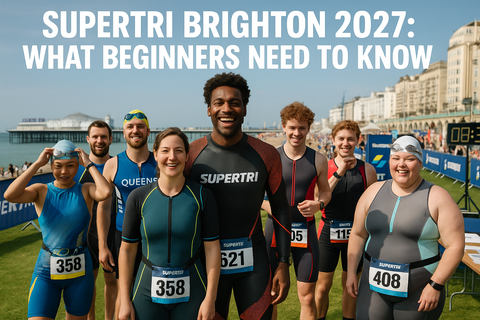
At my sprint triathlon, there were teenagers pinning on race numbers, children cheering at the finish line, and competitors in the 60–69 age category all racing on the same course. Some athletes had the look of seasoned veterans. Many, like me, were racing for the first time.
The gender representation genuinely surprised me. When I checked the results afterward, the sprint event had an exact 50:50 split — 72 men and 72 women competing. That's not the picture social media paints of the sport, but it's the reality at the grassroots level.
Body diversity was also present and visible. Not everyone had the slim, lean physique that triathlon's online presence tends to celebrate. There was a real mix of shapes, sizes, ages, and backgrounds. Seeing that variety reminded me of something important:
"For many people, triathlon isn't their entire identity — it's a hobby they squeeze in around careers, children, social lives and everything else."
This is triathlon as it actually exists. People showing up, giving their best effort, and going home to the rest of their full lives. The elite athlete content you see online is real — those athletes exist — but they represent a tiny fraction of the people who race every weekend across the country.
If you've hesitated to sign up because you worried you wouldn't fit in, or wouldn't look the part, this is your sign that the sport is far more welcoming than its Instagram presence suggests.
4. Your Road Bike Is Enough — You Don't Need a Time-Trial Setup
When I told people I was doing a triathlon, one of the first questions I heard was, "Do you have aerobars?"
My answer was no. I had a road bike. That was it. But the question planted a seed of doubt: would I stand out? Would I look like someone who hadn't done their homework?
A quick explainer: Triathlon is a non-drafting discipline, meaning riders can't sit behind other athletes to reduce wind resistance the way they can in road cycling. This makes aerodynamics more important, which is why time-trial (TT) bikes and clip-on aerobars — handlebar extensions that allow you to ride in a more streamlined, tucked position — are common at longer events. For a first-timer already juggling swim technique, brick sessions (back-to-back bike-run training), and the mental load of racing three disciplines, adding an unfamiliar riding position felt like one challenge too many.
When I rolled my aerobar-free road bike into transition, the range of equipment I saw was genuinely reassuring. Yes, there were beautiful, drool-worthy TT bikes. But there were also road bikes with and without aerobars, mountain bikes, and — my personal favorite discovery — a Brompton folding bike.
"As long as you have two wheels and the motivation to give it a go, there is a place for you in triathlon."
For sprint-distance racing, this is especially true. The bike leg is short enough that equipment differences matter far less than they would in a longer event. Save the TT bike research for when you've decided triathlon is truly your sport — and you want to start shaving minutes off your splits.
Want to understand the gear better first? It's worth reading up on what aerobars actually are and whether they'd suit your riding style down the line.
5. Forget Long-Distance Racing: Why Your First Triathlon Should Be a Sprint
Mention triathlon to anyone outside the sport, and watch what happens. Nine times out of ten, their eyes go wide and they ask some version of: Is that the one where you swim 4km and then run a marathon?
Full-distance long-distance triathlon has achieved a level of cultural penetration that no other race format in the sport can match. The YouTube documentaries, the emotional finish-line footage, the dawn-to-midnight racing — it's compelling content. And the social media algorithm serves it relentlessly to anyone who so much as glances at a pair of running shoes.
The result? Many potential first-time triathletes arrive at the sport believing that a full-distance event (3.8km swim, 180km bike, 42.2km run) is somehow the standard — and that anything less doesn't fully count.
This is one of the most discouraging myths in the sport.
Here's the actual landscape of triathlon distances:
| Distance | Swim | Bike | Run |
|---|---|---|---|
| Sprint | ~750m | ~20km | ~5km |
| Olympic | 1.5km | 40km | 10km |
| 70.3-distance | 1.9km | 90km | 21.1km |
| Full long-distance | 3.8km | 180km | 42.2km |
A sprint triathlon is a legitimate, challenging, genuinely rewarding race. It is where most beginners belong, and it is where I started. It was still hard. It required real training and real commitment. And it gave me everything I needed to discover whether I actually loved the sport before committing to anything bigger or more expensive.
On race day, I looked around and saw athletes with completely different motivations and goals. Some were chasing personal bests. Some were completing their first triathlon, just like me. Some were simply out to enjoy a Saturday morning with friends.
No one cared this was not a full long-distance event. It highlighted how many triathlon events there are out there.
Start where you are. The sport has a distance that fits your life right now, and it doesn't require a year of preparation, a specialist bike, or a four-figure entry fee to access it.
The Real Takeaway: You're Already More Ready Than You Think
Social media is excellent at showcasing the pinnacle of a sport. It's much less good at showing you the welcoming, accessible, community-driven reality that exists at the grassroots level.
Here's what I actually discovered on race day at my first sprint triathlon:
- Gear doesn't define you. Specialist equipment helps at the elite level; at the entry level, it's entirely optional.
- There's no wrong way to finish. Whether you swim breaststroke, ride a Brompton, or change in transition, you are racing.
- Triathlon is genuinely for everyone. The diversity of ages, body types, backgrounds, and goals at a local sprint event is real — the 50:50 gender split at my race proved it.
- Sprint distance is a real triathlon. You don't need to be working toward a full long-distance event to call yourself a triathlete.
"As long as you have the confidence to show up, cover the swim, bike and run in whatever way works for you, and cross that finish line, you're a triathlete."
Ready to Race? Here's How to Start
1. Find a local sprint triathlon. A beginner-friendly sprint event is the ideal first race — achievable, affordable, and a genuine taste of all three disciplines.
2. Gather the basics. Swimsuit or jammers, a road bike in working order, a helmet, and running shoes. You do not need specialist kit to start.
3. Build a plan. AI training apps for triathletes can help you get started on your journey.
Frequently Asked Questions
Do I need a tri-suit to participate in a triathlon?
No, you do not need a tri-suit to be a triathlete. Many participants wear regular swimsuits or jammers instead of tri-suits during races.
Can I swim using different strokes during the swim leg?
Absolutely! Competitors often use breaststroke or a combination of strokes based on their comfort level. The goal is to finish the swim, regardless of the technique used.
Is triathlon participation limited to elite athletes?
No, triathlon is for everyone. Participants of all ages, body types, and experience levels take part in races, reflecting the diversity of the sport.
Do I need a time trial bike or aerobars to compete?
No, you can participate using a standard road bike, mountain bike, or any bike you feel comfortable with. Aerobars are not necessary for everyone, especially beginners.
Is it necessary to compete in a long-distance triathlon to be considered a triathlete?
No, you can start with shorter events like sprint or supersprint triathlons. Long-distance races are only one part of the triathlon landscape, and many find success and joy in shorter distances first.
Discover unique triathlon-themed merchandise, including stylish t-shirts, stickers, phone cases, and home decor — perfect for endurance sports enthusiasts and athletes. Shop now