Before the sun had fully risen over Cape Cod, dozens of determined athletes were already arranging gear, steadying nerves, and making final adjustments at Surf Drive Beach. The 2026 Falmouth Triathlon kicked off at 6 a.m. on Sunday, July 12, transforming this beloved stretch of Massachusetts coastline into a stage for individual grit and community celebration. Photographer Paul Joyce of the Enterprise captured 45 remarkable images that tell the complete story — from the quiet intensity of the transition area to the jubilant rush across the finish line on Shore Street.
Whether you're a seasoned triathlete, someone who cheered from the sidelines, or a curious newcomer wondering what all the early-morning fuss is about, this photo essay walks you through every discipline, every pivotal moment, and every face that made this Upper Cape event unforgettable.
Section 1: The Preparation Phase — Where Champions Begin
Pre-Race Logistics and Mental Readiness
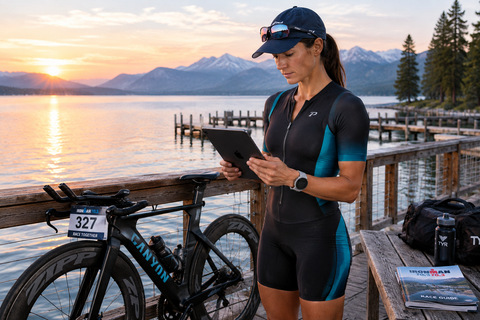
Long before the starting horn sounded, Surf Drive Beach was already buzzing with purposeful activity. The transition area — that designated command center where athletes organize their bikes, running shoes, helmets, and race bibs — filled up quickly as competitors claimed their spots and ran through mental checklists for the hundredth time.
One of the earliest images in Joyce's collection captures Falmouth Rotarians marking participant Samantha Peznola at 6 a.m. sharp. It's a small but meaningful detail: community volunteers from the Falmouth Rotary Club played a hands-on role in race logistics, marking athletes with their race numbers before they headed to the water. This kind of behind-the-scenes support is what transforms a standard athletic event into a true community gathering.
What is a transition area? In triathlon, the transition zone is where athletes switch from one discipline to the next — swapping swim gear for cycling equipment, then trading the bike for running shoes. Efficiency here can make or break a finishing time.
If you've never watched a triathlon up close, the transition area might surprise you. It looks chaotic at first glance, but each athlete has a precise system. Bikes hang from racks. Shoes are positioned for quick entry. Helmets sit ready to snap on. Every second counts.
The Psychology of Starting Line Moments
Multiple images show athletes making their way toward the swim start, some alone with their thoughts, others exchanging a few quiet words with fellow competitors. This pre-race window is often described by triathletes as one of the most mentally demanding parts of the entire event — the waiting, the anticipation, the awareness of everything ahead.
What's striking in Joyce's pre-race photography is the diversity of the field. Athletes of varying ages, body types, and experience levels all shared the same beach, the same butterflies, and the same goal: make it to the finish line on Shore Street. That inclusivity is one of triathlon's most compelling qualities — and one of the Falmouth event's greatest strengths.
Section 2: The Swim Leg — Testing Water and Will
The Challenging First Discipline
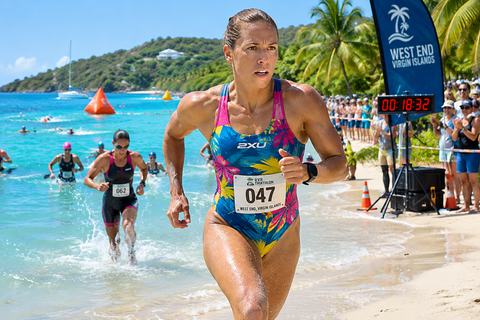
Then came the water. Multiple images capture the mass start — that rush of swimmers simultaneously entering the open water of Surf Drive Beach, creating a churning, splashing surge of effort. For newcomers to the sport, the mass start can be one of the most disorienting experiences in all of endurance racing: bodies everywhere, salt water in your goggles, the instinct to find your rhythm while surrounded by dozens of others doing the same.
Open water swimming differs significantly from pool racing. There are no lane lines, no walls to push off, and no black line to follow at the bottom. Athletes navigate by sighting landmarks or buoys, and conditions like waves and current add a layer of unpredictability that demands both physical and mental adaptability.
Joyce's swim photos capture multiple waves of athletes entering the water, the kind of organized chaos that defines a well-run triathlon start. The images show competitors in full stride — arms extended, bodies horizontal, committed to the first of three disciplines.
Safety and Support Systems
What's easy to miss when watching swim coverage is the safety infrastructure running in parallel. Joyce documented Falmouth lifeguards actively monitoring the swim leg, their presence providing both protection and peace of mind. For a community event like this one, that visible commitment to participant safety reflects the professionalism behind the organization.
After completing the swim, athletes are captured making a beeline for hydration stations — a critical refueling moment before clipping into their bikes. Proper hydration strategy in those first minutes out of the water can significantly impact performance across the remaining two disciplines.
Section 3: The Bike Leg — Speed, Strategy, and Aerodynamics
The Longest Discipline Takes Shape
With the swim complete, athletes flooded back into the transition area to mount their bikes, and the race dynamic shifted entirely. Joyce's cycling coverage is among the most technically revealing in the 45-image collection.
Riders Robert Carew, Sarah Kang, and Lily Krivopal are each captured leaving the transition zone at the start of the bike leg, each with their own approach and equipment. Then there's Thomas Duffy and the husband-and-wife duo Gary and Trish Cundiff of Sandwich, who appear multiple times in the cycling sequence — speeding toward the end of the bike leg with visible determination.
One of the most instructive images in the entire collection features overall winner Dimitri Profis, described in the photo caption as riding "fully tucked and turtled." This is the aerodynamic position that serious cyclists train specifically to achieve and hold: back flat, elbows in, chin low, the entire body streamlined to cut through wind resistance. It's a posture that immediately signals competitive experience, and it's a visual reminder of the difference that technique makes alongside raw fitness.
Clipping in — securing cycling shoes to clipless pedals — is another moment captured in Joyce's photos. It's a skill that can take new triathletes weeks to master, but it dramatically improves power transfer and pedaling efficiency.
Spectator Energy Along the Course
In the middle of the bike coverage, one image stands out for its simplicity and warmth: a spectator holding a handmade sign reading "You Got This." Three words on a piece of cardboard, but in the context of a race — legs burning, lungs working, still miles from the finish — that kind of visible encouragement carries real weight.
Luke Vipond is photographed finishing the bike leg and heading back into the transition zone to prepare for the run — a moment that captures the focused urgency of T2, the second transition. Every second spent changing shoes and reorienting mentally is time on the clock.
Section 4: The Run Leg — The Final Test of Endurance
When the Body Argues and the Mind Decides
The run leg of a triathlon occupies a unique psychological space. By the time athletes hit the pavement, they've already swum in open water and cycled several miles. Their legs have been in a cycling position, and the first few strides of the run can feel strangely unfamiliar — a phenomenon called "brick legs" that even experienced triathletes train to overcome.
Joyce captures Maiva King and Owen Emberg both picking up water before beginning the run leg — a smart move that illustrates race-day hydration strategy in action. Matt Abbott and Kyle Angel are also photographed beginning the run, their expressions carrying that particular mix of exhaustion and resolve that defines this discipline.
Duncan Maru leaves the transition area to start his run leg, while Michael Emmons is photographed nearing the finish — the final push that every triathlete pictures during the hardest training sessions.
Shore Street: The Final Push to Glory
The race course converged on Shore Street for the closing stretch, and this is where Joyce's finish-line photography becomes genuinely moving.
Overall winner Dimitri Profis is captured turning the corner on Shore Street, his form still clean and composed — a testament to the pacing discipline that separates elite performances from good ones. Not far behind, Jonathan Letai makes the same turn, while Trevor Stevens races past spectators lining the street, their energy feeding directly into his stride.
Then come the finishers: Emily Miller and Patrick Fogarty cross the line together; Asher Poynot captures his moment solo; Tyler Consolati and Spencer Brown finish as a pair; Mary Kudarauskas crosses with her own hard-earned triumph. Each of these images tells a complete story in a single frame — months of training, early mornings, and personal sacrifice compressed into the decisive moment of crossing the finish line.
Section 5: Community, Support, and What Makes Triathlons Matter
The Unseen Heroes Behind Every Finish
After the swim leg concluded, Joyce photographed Falmouth lifeguards after completing their patrol — a post-event moment that acknowledges the people who made the entire swim segment possible. Their vigilance throughout the open water course was not incidental; it was foundational.
The same recognition applies to the Falmouth Rotarians who showed up at 6 a.m. to mark athletes, the volunteers who staffed hydration stations, and the spectators who lined Shore Street with handwritten signs and genuine cheers. Triathlon is often framed as an individual sport, and it is — but the infrastructure of community support is what allows individuals to push themselves safely and joyfully.
Think of it like this: every athlete who crossed that finish line did so on a course built by volunteers, monitored by professionals, and energized by people who simply showed up to cheer.
What the Falmouth Triathlon Reveals About Local Endurance Sports
The 45 images in Joyce's collection paint a portrait of the Upper Cape community at its best. A few key observations stand out:
- Triathlon attracts a genuinely diverse field. The athletes documented range widely in age, background, and competitive experience. This is not an elite-only sport — it is a sport for anyone willing to put in the training.
- Local events create local heroes. Gary and Trish Cundiff of Sandwich didn't make headlines in the national press, but within their community, finishing this race together is its own form of victory.
- The finish line is never really the end. For most participants, crossing the finish line at the Falmouth Triathlon marks the beginning of planning for the next race, the next training cycle, the next goal.
If you've been thinking about entering your first triathlon — whether you're based in New England or tuning in from communities like Mexico City, São Paulo, or Madrid where endurance sports culture is rapidly growing — the Falmouth Triathlon is the kind of local event that proves you don't need a massive stage to have a meaningful experience. The best triathlons happen in places like this: a beach, a bike route, a stretch of street, and a community that shows up.
Ready to Start Your Own Triathlon Journey?
The athletes photographed at Surf Drive Beach on July 12 all started somewhere. They had a first swim workout that felt impossible, a first long bike ride that left them humbled, a first run off the bike that made their legs feel like concrete. The difference between someone who completes a triathlon and someone who watches from the sidelines is usually just a decision — and a plan.
Here's how to take your next step:
- Research local sprint triathlons — the shortest standard distance (typically a 750m swim, 20km bike, 5km run) — as your entry point into the sport.
- Connect with a triathlon club in your area for training partners, coaching, and race-day guidance.
- Gear up thoughtfully — you don't need the most expensive equipment to finish your first race, but a properly fitted bike, a comfortable wetsuit for open water, and good running shoes make a significant difference. Browse our triathlon training gifts and first triathlon kit guides for curated recommendations.
- Show up early on race day — the transition area experience alone will tell you everything you need to know about how organized athletes prepare.
Triathlon Glossary: Key Terms for Beginners
| Term | Definition |
|---|---|
| Triathlon | Multi-sport endurance event combining swimming, cycling, and running |
| Transition area (T1/T2) | Designated zone where athletes switch equipment between disciplines |
| Mass start | Simultaneous race beginning for all or multiple waves of competitors |
| Open water swimming | Racing in natural bodies of water rather than a controlled pool |
| Aerodynamic positioning | Body posture designed to minimize wind resistance on the bike |
| Brick legs | The heavy, unfamiliar feeling in the legs at the start of the run leg, caused by the transition from cycling |
| Clipping in | Securing cycling shoes to clipless pedals for efficient power transfer |
| Sprint triathlon | Entry-level distance: typically 750m swim, 20km bike, 5km run |
📸 View the complete 45-photo gallery from the 2026 Falmouth Triathlon at CapeNews.net
All photos by Paul Joyce/Enterprise. Original photo gallery published July 17, 2026 at CapeNews.net.
What is the date of the Falmouth Triathlon?
The Falmouth Triathlon took place on July 12, 2026.
Where does the Falmouth Triathlon take place?
The Falmouth Triathlon is held at Surf Drive Beach in Falmouth.
What events are included in the Falmouth Triathlon?
The Falmouth Triathlon typically includes a swim, bike, and run segment.
Who are some notable participants in the Falmouth Triathlon?
Notable participants include overall winner Dimitri Profis and other local athletes such as Robert Carew and Sarah Kang.
How do participants prepare for the Falmouth Triathlon?
Participants prepare by training in swimming, cycling, and running, as well as familiarizing themselves with the course layout and transition areas.
What amenities are available for spectators during the event?
Spectators can enjoy various viewing locations along the course, support participants, and experience the atmosphere surrounding the race.