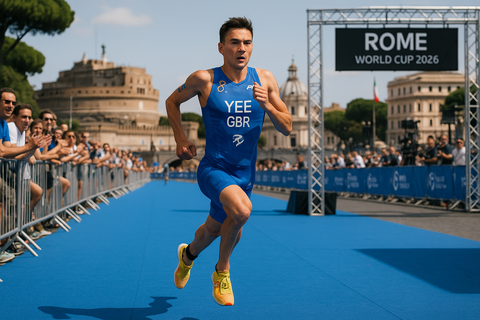
Alex Yee DNF at Supertri Jersey 2026: Olympic Champion's Snapped Chain and Comeback Promise
A mechanical failure stole the spotlight from one of the world's best triathletes at what was looking to be a stellar performance — but his response highlights why he's a champion.
Experiencing a mechanical DNF (Did Not Finish) is a tough pill to swallow, especially for an athlete like Alex Yee. At the Supertri Pro Series Final in Jersey in September 2026, he was on track for an inspiring race when a snapped chain abruptly ended his hopes. While the official result simply states "DNF" next to Yee's name — three mere letters devoid of context — the deeper story reveals an athlete's resilience.
The Race That Almost Was
Steady and Strategic
The Supertri Enduro format is a fierce test of endurance. With three back-to-back stages — swim, bike, run, swim, bike, run — this format condenses elite triathlon into less than an hour of high-stakes racing. Success here requires athletes to not only be fit but also tactical, managing energy wisely while remaining close to the frontrunners.
Though Yee's start wasn't ideal, he found himself in 12th place and 9.44 seconds behind the leader during the first bike leg. While this gap wasn't insurmountable, it called for a calculated approach. And that's exactly what Yee delivered.
Gradually, he navigated through the pack and, by the end of the first run, surged into 2nd place with Hayden Wilde 3rd and Matt Hauser just behind in 4th. Fans were thrilled; three of the sport's top names were in fierce competition.
The Narrow Margin
Next, things took a dramatic turn. After the second swim, just seven seconds separated a lead group of seven athletes — including Yee, Csongor Lehmann, and others — all remaining tightly bunched and ready to battle for glory. To put that into perspective, seven seconds is about how long it takes to lace up a pair of shoes. In elite racing, it's a razor-thin margin that can dictate victory or defeat.
The Sudden Disappearance
Then, out of nowhere, Yee's name vanished from the timing screens. No warning, no buildup, just a void. Upon arriving in transition, the reason became all too clear: a snapped chain derailed his race — something sudden and completely outside of his control.
An Olympic Champion's Response to Heartbreak
Facing Adversity Head-On
What distinguishes great athletes is not merely their talent, but their ability to handle adversity in real-time. Yee's reaction post-race showcased composure in the face of disappointment.
"Yeah, just a little bit of bad luck. Just didn't quite go to plan, obviously. But these things happen and I'll be back to race in the future. It was an amazing event, amazing atmosphere and just a shame I couldn't be part of that end bit of the race because I really felt quite good going into it."
No resentment, no blame — just clarity, gratitude, and a forward-looking mindset. This isn't just about cameras; it's about the inner resolve that champions maintain, understanding that one setback doesn't define a season.
Finding the Silver Lining
The beauty of this DNF is that it erases the result but cannot erase the performance. Yee recognized this truth too. In the same breath, he shared something significant:
"I felt like I was within the race, and it's probably been a long time since I felt like that."
This is a notable statement. For an Olympic champion, acknowledging the absence of competitive rhythm and then rediscovering it speaks volumes. While fitness can be quantified, that feeling of truly belonging in a high-stakes race is something special.
"So it's a massive honour to race with, in my opinion, the best guys in the world and hopefully put on the best show possible. But sadly I couldn't be there at the end. It's all good."
It's all good. A simple phrase that conveys a crucial understanding, especially considering what his performance before the DNF revealed.
What Happened After Yee Left the Race
Hauser's Comeback
While Yee's exit was the story of potential, Matt Hauser's performance was a powerful reminder of the lead group's strength. The Australian, still recovering from a bike crash the previous week, pulled away during the final 1.6 km run. Taking advantage of a Short Chute — a benefit earned early in the race — Hauser finished at 52:06, just seven seconds ahead of Wilde, with Mitch Kolkman taking third four seconds after Wilde. He walked away with the $100,000 grand prize.
"I was on from the start. I know with this Enduro Supertri format, it's really important to stay in the race. No matter how hard it gets in the early stages, you can always come back and pull it together."
"Weihai last week for me wasn't that good and wasn't a reflection of the work I put in, so it's good to get my swagger back this weekend."
Wilde's Rebounding Season
Hayden Wilde finished second, expressing genuine relief after what he deemed a tough short-course season. He acknowledged feeling "a bit rusty" after stepping back into the Supertri format but was pleased with how the race felt overall.
"Honestly, it's actually really nice to be back. I had a really disappointing season on the short-course side, so this gives me a bit of confidence. Matty was impressive out there today, but for myself, I was actually really comfortable on the swim. The bike was really easy. It's nice to be back and I'm actually really, really happy with this one."
The Final Podium
| Position | Athlete | Time |
|---|---|---|
| 🥇 1st | Matt Hauser (AUS) | 52:06 |
| 🥈 2nd | Hayden Wilde (NZL) | 52:13 |
| 🥉 3rd | Mitch Kolkman | 52:17 |
| DNF | Alex Yee (GBR) | — |
The entire podium finished within eleven seconds of one another. This underscores just how critical Yee's positioning was prior to the DNF.
What Jersey Revealed About Men's Short-Course Triathlon
Three Athletes to Watch
Yee, Hauser, and Wilde symbolize the current pinnacle of men's short-course triathlon. The unique aspect of Jersey was the rare opportunity to see all three compete closely during the same race. The Supertri Enduro format, with its segmented structure and rapid transitions, emphasizes both tactical intelligence and raw fitness. Hauser exemplified this, maintaining a measured pace early on while elevating his game later.
Lessons from the Format
For those unfamiliar with the Enduro format, it's a distinct racing style that differs from traditional Olympic distance competitions. Instead of one continuous effort, it features three mini-stages — swim-bike-run, swim-bike-run, swim-bike-run — with athletes accumulating times throughout. Dramatic positional changes can occur between stages.
This format teaches patience and discourages hasty decisions. As Hauser pointed out, "No matter how hard it gets in the early stages, you can always come back." Yee's journey from 12th to 2nd before his DNF is textbook Enduro racing — calm, methodical, and expertly executed. For aspiring triathletes anywhere in the world, this lesson resonates universally: don't race someone else's race early on.
Looking Ahead to Pontevedra
Although both Yee and Wilde have been mathematically ruled out of the world title chase, they remain motivated without championship pressure. They'll compete for performance and personal pride, seeking validation through high-level competition. On the other hand, Hauser enters with renewed confidence following his success in Jersey. Expect fireworks when these three meet again in Pontevedra.
The Bigger Picture: Focusing on the Process
Navigating Uncontrollable Setbacks
A snapped chain presents a unique obstacle in elite sports. Unlike tactical errors or off days where lessons can be gleaned, a mechanical failure leaves no insight for future improvement. It simply happens, and then you're done. However, it does test your perspective. This is where athletes like Yee — along with Hauser, who faced a similar setback in Weihai — demonstrate a vital truth: the ability to separate controllables from uncontrollables and respond with grace.
The Unexpected Benefit of a DNF
Contrary to intuition, this DNF might have provided Yee with exactly what he needed. The performance leading up to the mechanical issue reaffirmed what training metrics can suggest but never fully prove: that he's fit, sharp, and capable of vying with the best when it matters. For the first time in what felt like a long time, Yee felt he belonged in a world-class race. That feeling is significant. In a sport as much about mental confidence as physical capability, feeling within the race is the bedrock upon which everything else is built.
The DNF may not reveal much, but what came before it might just be the key.
Key Takeaways
- Mechanical failures happen to everyone — even Olympic champions with the best gear. It's a reminder that such events are part of the sport, not an indicator of preparedness.
- Performance trumps results on paper — Yee's remarkable climb from 12th to 2nd and his genuine sense of competitive rhythm is what stands out from Jersey.
- Resilience is a learned skill — Yee, Hauser (post-Weihai crash), and Wilde (after a challenging season) exemplified the proactive mindset that differentiates consistent champions from those defined by single races.
- The Enduro format rewards patience — if you ever race in a multi-stage format, remember: the real race doesn't begin until the final stage.
- Pontevedra just got more intriguing — keep an eye on Yee, Hauser, and Wilde when they converge at the WTCS Grand Final in Spain.
Final Thought
Alex Yee's departure from Supertri Jersey serves as a reminder that elite sport — like life — is shaped by what unfolds between the results, perhaps even more than the outcomes themselves. A fractured chain robbed him of the opportunity to showcase what he could achieve in that decisive moment, alongside elite competitors, in front of an eager crowd.
The performance preceding that failure tells a story that deserves attention. The champion is still very much in the game, rediscovering his rhythm. If Jersey is any indication, when he finally gets a clear shot at racing alongside Hauser and Wilde again, we can expect something extraordinary.
Stay tuned for our coverage of the WTCS Grand Final in Pontevedra — if Jersey was just a preview, Spain might deliver the full performance.
Frequently Asked Questions
What happened to Alex Yee during the Supertri Pro Series Final?
Alex Yee experienced a setback during the Supertri Pro Series Final when his chain snapped midway through the second stage, forcing him to withdraw from the race despite having a strong performance leading up to that point.
How did Alex Yee feel about his performance before the chain issue?
Yee felt quite good during the race and expressed that he was pleased with his position leading into the later stages. He acknowledged the unfortunate circumstances but remained optimistic about his future racing.
Who won the Supertri Pro Series Final?
Matt Hauser won the Supertri Pro Series Final, finishing the race in 52:06, followed closely by Hayden Wilde in second place.
What does a DNF mean for an athlete in a triathlon?
A DNF stands for "Did Not Finish," indicating that an athlete was unable to complete the race. This can occur due to various reasons, including mechanical issues, injury, or other unforeseen circumstances.
What upcoming event is Alex Yee preparing for after the Supertri?
Following the Supertri Pro Series Final, Alex Yee is preparing for the WTCS Grand Final in Pontevedra.
Source: tri247.com — Supertri Pro Series Final 2026: Alex Yee Reaction
Curious about the gear and mindset that propel elite triathletes? Check out our premium triathlon race suits or explore our competition triathlon suits collection — whether you're chasing your first finish line or aiming for the podium. Don't forget to invest in tire protection and maintenance gear to avoid mechanical failures like Yee's.