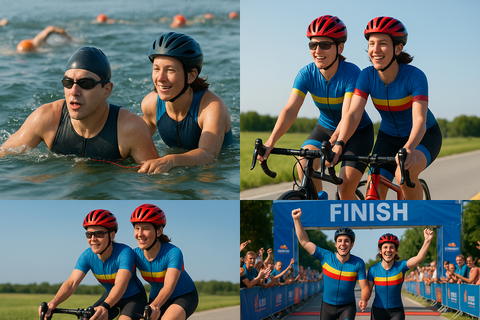
From the swim start to the finish line, here's your complete guide to one of New England's most exciting race-day events — and how you could be part of it.
70.3-Distance Triathlon in Western Massachusetts: Everything You Need to Know About the Region's Premier Endurance Event
On a June Sunday morning in western Massachusetts, hundreds of elite and amateur endurance athletes dove into the water for the fourth edition of one of the region's most demanding athletic events: a 70.3-mile triathlon that tests every ounce of human grit. Swim 1.2 miles. Bike 56 miles. Run 13.1 miles. Then do it all in one day.
As local news station WWLP reported, the 70.3-distance Western Massachusetts Triathlon returned to the Springfield area on June 8, 2026 — and with its fourth consecutive running, the event has cemented itself as a genuine fixture on the New England endurance sports calendar. What started as an exciting regional experiment has grown into a community celebration that brings together thousands of participants, spectators, and volunteers every summer.
Whether you're a curious spectator, a beginner dreaming about crossing your first finish line, or a seasoned triathlete scoping out your next race, this guide breaks down everything you need to know about the event — the format, the course, the training, and why western Massachusetts has become such a compelling destination for endurance athletes from across the Northeast and beyond.
What Is a 70.3-Distance Triathlon?
Before we dive into the Western Massachusetts event specifically, let's make sure we're all speaking the same language — because if you're new to the triathlon world, the numbers can feel a little cryptic.
A 70.3-distance triathlon (sometimes called a "half-distance" triathlon) covers exactly 70.3 total miles across three disciplines:
- 🏊 Swim: 1.2 miles in open water
- 🚴 Bike: 56 miles on road
- 🏃 Run: 13.1 miles (a half marathon)
Add those up and you get 70.3 miles — hence the name. It's half the distance of a full-distance triathlon (which covers 140.6 miles total), but don't let that fool you into thinking it's a casual morning workout. Most athletes take between 4 and 8 hours to complete the course, depending on experience level, fitness, and course conditions.
Why the 70.3 Distance Hits the Sweet Spot
The 70.3 format has exploded in popularity over the past two decades — and for good reason. It sits in a fascinating middle ground between accessibility and ambition.
Full-distance triathlons demand extraordinary sacrifices: months of 20-hour training weeks, extensive travel, and a level of commitment that realistically requires restructuring your entire life. The 70.3 distance, on the other hand, is genuinely achievable for serious amateur athletes who hold down full-time jobs and family responsibilities — while still representing a meaningful, life-changing challenge.
For many athletes, completing a 70.3-distance race is the goal in itself. For others, it serves as a natural stepping stone toward the full distance. Either way, crossing that finish line after swimming, biking, and running 70.3 miles is an experience that stays with you.
Quick Glossary:
Transition: The area where athletes switch equipment between disciplines (swim-to-bike and bike-to-run).
Brick workout: A training session that combines two disciplines back-to-back to teach your body to adapt between sports.
Age-group racing: Competitive categories organized by age brackets, so you're racing against peers in your demographic.
Aerobic base: The foundation fitness built through steady endurance training that makes everything else possible.
The Western Massachusetts Course and What Makes It Special
The 70.3-distance Western Massachusetts Triathlon takes place in the Springfield metropolitan area — a region that offers a compelling blend of natural scenery, manageable terrain, and genuine New England character.
June Timing: A Strategic Advantage
The early June date isn't accidental. Race organizers have chosen the timing deliberately to take advantage of optimal New England weather conditions — warm enough for comfortable open-water swimming, with long daylight hours that give athletes time to complete the course safely. The Connecticut River Valley region offers a classic early-summer landscape that provides both beauty and practical racing conditions.
Why Four Editions Matters
When an endurance event returns for a second or third year, it's a good sign. When it returns for a fourth consecutive year, it's proof of something deeper: genuine community buy-in, solid operational infrastructure, and a course that athletes actually want to come back to.
The fourth edition of the Western Massachusetts 70.3 signals that this isn't a fly-by-night production. Local roads have been surveyed and approved, volunteer networks have been built and refined, athlete services have been dialed in through real feedback, and the regional athletic community has embraced the event as its own.
For athletes choosing between races on a crowded calendar, event maturity matters enormously. A fourth-year race means fewer logistical surprises — and that's worth a lot when you've spent five months preparing your body for race day.
Regional Appeal and Accessibility
Western Massachusetts draws participants from throughout New England and the broader Northeast. The Springfield area is within a few hours' drive of Boston, Hartford, Providence, New York, and dozens of other population centers — making it a realistic race-day destination for athletes who don't want to build an entire week's vacation around a single event.
That accessibility extends to spectators, too. When families and friends can easily drive in for the day, the atmosphere at the finish line transforms entirely.
What Participants Actually Experience
There's a version of triathlon racing that exists in training plans and social media reels — and then there's the real thing. Here's what athletes at the Western Massachusetts event actually go through from start to finish.
The Night Before: More Important Than You Think
Experienced triathletes will tell you that race day actually begins the evening before. Gear needs to be laid out, bikes need to be checked into transition, race packets need to be picked up, and nutrition needs to be carefully planned. A seasoned athlete treats pre-race evening like a pre-flight checklist.
Sleep, predictably, is often elusive. The combination of excitement, anxiety, and an early alarm clock means most athletes are running on something closer to nervous energy than genuine rest by the time race morning arrives.
Dawn: Swim Start
Most 70.3-distance races begin at or just after dawn, and western Massachusetts is no exception. The open-water swim is where many athletes feel the most anxiety — open water is disorienting in ways that pool swimming never is. There's no lane line to follow, no wall to push off, and hundreds of other athletes churning the water around you at the start.
Experienced swimmers settle into their rhythm quickly. Newer swimmers learn to trust their training, focus on sighting (lifting your head to spot buoys and navigate), and simply keep moving forward. The 1.2-mile swim sets the tone for everything that follows.
Transition One: From Water to Wheels
After exiting the water, athletes run or jog to the transition area — a sprawling, organized chaos of bikes, helmets, shoes, and gear bags. Transition efficiency is a genuine skill that some athletes train specifically, and a smooth T1 (first transition) can save precious minutes that accumulate toward a final time.
Wetsuit off, helmet on, shoes clipped in — and then 56 miles of road ahead.
The Bike: Where Races Are Made or Lost
The 56-mile bike leg is the longest segment by time and distance, and it's where pacing discipline is most critical. Early-race adrenaline tempts athletes to push harder than planned on the bike — a mistake that almost always costs far more time during the run than it saves in the moment.
Smart athletes treat the bike as a controlled effort: hard enough to be competitive, conservative enough to preserve the legs they'll desperately need for the half marathon that follows.
Transition Two: Finding Your Running Legs
The shift from cycling to running is one of triathlon's most disorienting experiences. Your legs — accustomed to the rotational motion of pedaling — suddenly need to remember how to move linearly. The first mile or two of the run often feels genuinely terrible, even for experienced athletes.
This is the physiological reality that brick workouts are designed to prepare you for. Train it enough times, and your body learns to adapt faster.
The Run: Mental Toughness Made Physical
The 13.1-mile run is where triathlon becomes as much a mental sport as a physical one. By mile eight or nine, most athletes have been racing for hours. Their glycogen stores are depleted, their legs are tired, and the finish line still feels impossibly far away.
This is where training and mental preparation pay dividends. Athletes who've practiced positive self-talk, visualization, and pacing discipline in training are the ones who hold their form and their pace in the final miles. Those who haven't often find themselves walking — not because their bodies have given out, but because their minds have.
The Finish Line
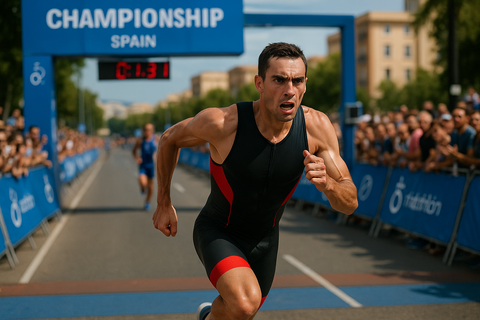
And then, finally: the finish line. Crossing it after 70.3 miles is an experience that veterans describe as genuinely difficult to convey to someone who hasn't done it. Pride, exhaustion, relief, and disbelief tend to arrive simultaneously. Many athletes cry. Many more immediately start thinking about doing it again.
That emotional payoff — earned through months of early mornings, long training sessions, and sacrifices both large and small — is what keeps athletes coming back.
The Community Behind the Race
A triathlon of this scale doesn't happen because a handful of race organizers decided to put it on. It happens because an entire community decides it's worth doing together.
Volunteers: The Invisible Engine
Hundreds of local volunteers make race-day operations possible. They staff aid stations on the run course, direct traffic on bike routes, guide athletes through transitions, and cheer at every key moment on the course.
Volunteering at a triathlon is genuinely one of the best free entertainment options available in western Massachusetts each June. You're watching human beings accomplish something extraordinary, you're directly contributing to their success, and you get an up-close view of elite athletic performance that most spectators never experience.
Economic Impact on the Region
Endurance events like this one generate meaningful economic activity for the local community. Participating athletes — who often travel with family, friends, and training partners — fill hotel rooms, book restaurant reservations, and patronize local businesses in the days surrounding race weekend.
Unlike a single-day festival that attracts local attendees, a destination endurance event brings visitors from outside the region who spend money across multiple categories over multiple days. This is the economic logic that has convinced communities across the country to invest in endurance sports infrastructure.
Positioning Western Massachusetts as an Athletic Destination
Four successful editions have done something valuable for the region's identity: they've established western Massachusetts as a legitimate destination on the New England endurance sports map. Athletes planning their race calendars now include this event among serious options alongside longer-established races in other parts of the region.
That positioning has ripple effects beyond the race itself — it attracts athletes who explore the region, become familiar with local businesses and communities, and may return in off-race years as general tourists.
Could You Do a 70.3-Distance Triathlon? A Beginner's Honest Assessment
This is the question that many readers are probably sitting with by this point in the article. And the honest answer — for most healthy adults between 25 and 55 — is: yes, with the right preparation and timeline.
The Fitness Starting Point That Matters
You don't need to be a competitive swimmer, cyclist, or runner to finish a 70.3-distance triathlon. You do need to develop genuine competence in all three disciplines over the course of a structured training program.
If you're already a solid runner who has completed a half marathon, you're starting from a meaningful base. If you're an experienced cyclist who regularly rides 30+ miles, you have a foundation to build on. If you're comfortable in open water — or willing to get comfortable through consistent pool training — the swim is learnable.
What makes triathlon uniquely challenging isn't the individual disciplines; it's the fact that you're combining all three in sequence. Your body needs time to adapt to that demand.
What the Training Actually Looks Like
Most coaches recommend 16 to 20 weeks of structured training for athletes targeting their first 70.3-distance race. Here's a realistic picture of what that involves:
Weekly time commitment: 10–15 hours of training across swim, bike, and run workouts — plus strength training and recovery.
Key training elements:
- Brick workouts (back-to-back disciplines that teach your body to transition)
- Long rides building toward 3–4 hours at race-day effort
- Long runs building toward 10–12 miles
- Open water swim practice (at least a few sessions before race day)
- Recovery weeks every third or fourth week to allow adaptation
The most common beginner mistake: building volume too quickly and getting injured before race day. Gradual progression is everything.
Nutrition: The Fourth Discipline
Athletes often joke that nutrition is "the fourth discipline" of triathlon — and they're not wrong. For an effort lasting 4–8 hours, fueling strategy is as important as fitness. The general framework: consume 30–60 grams of carbohydrates per hour during racing, drawn from gels, chews, and sports drinks timed across all three legs of the race.
Frequently Asked Questions
What is the current temperature in Chicopee?
The current temperature in Chicopee is 82°.
How can I watch 22News live?
You can watch 22News live by visiting the 'Watch Now' section on their website or by downloading the 22News Plus Streaming App.
Where can I find local news updates?
Local news updates can be found in the 'News' section of the WWLP website, particularly under 'Local News'.
Are there any weather alerts currently active?
Yes, weather alerts can be checked in the 'Weather Alerts' section on the WWLP weather page.
What kind of sports news does WWLP cover?
WWLP covers various sports news including local teams, major sports events like the FIFA World Cup, NASCAR, and updates on the New England Patriots.
How can I report an incident to WWLP?
You can report an incident by visiting the 'Report It!' section on the WWLP website.
What community events does WWLP promote?
WWLP promotes a variety of community events in their 'Connecting with Community' section, including local festivals and initiatives.
Source: WWLP — 70.3-Distance Western Massachusetts Triathlon