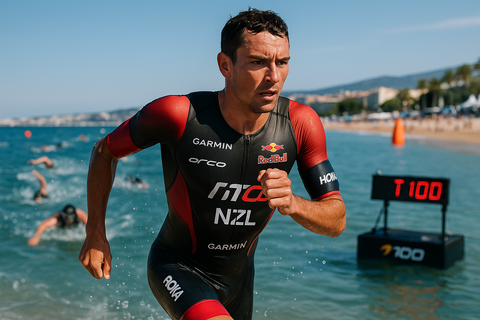
Passing the Torch: How a Historic Triathlon Is Evolving to Better Serve Adults with Special Needs
After 46 years, the Heart O' Dixie Triathlon passes leadership to Refuge of Mississippi — deepening its commitment to adults with special needs.
Forty-six years is a long time to do anything. It's longer than most careers, longer than many marriages, and far longer than the average nonprofit program manages to survive. So when the Philadelphia Sertoma Club recently announced it would be transitioning stewardship of the Heart O' Dixie Triathlon to Refuge of Mississippi, the story wasn't about an ending — it was about an organization mature enough to know when someone else could carry the mission further.
That distinction matters enormously, both for the future of the event and for the adults with special needs whose lives it exists to support.
This isn't a story about an institution fading away. It's a story about what organizational integrity actually looks like in practice — and why the special needs community in Mississippi stands to benefit from this change in ways that ripple far beyond race day.
The Legacy — 46 Years of the Heart O' Dixie Triathlon
A Race Built on Community Service
The Philadelphia Sertoma Club didn't build the Heart O' Dixie Triathlon to win awards. They built it because service organizations do what the name implies: they serve. Sertoma — derived from "Service To Mankind" — has been the animating philosophy behind hundreds of local clubs across the United States since the organization's founding in 1912. For the Philadelphia, Mississippi chapter, the triathlon became their signature expression of that mission.
Over 46 years, the Heart O' Dixie Triathlon grew from a local athletic event into a community institution. What began as a race became a rallying point — a place where competitors, volunteers, sponsors, and beneficiaries all converged around something larger than finish-line times.
The staying power of any 46-year-old community event is itself a form of impact. It means generations of families have participated. It means local businesses have sponsored. It means, year after year, adults with special needs have received support made possible because people chose to swim, bike, and run on their behalf.
Why Organizations Make Strategic Transitions — and Why It's a Sign of Health
There's a persistent misconception in the nonprofit world that transition equals failure. It doesn't. Strategic succession is one of the clearest indicators that an organization has prioritized mission over ego.
The Philadelphia Sertoma Club's decision to pass the Heart O' Dixie Triathlon to Refuge of Mississippi reflects exactly this kind of clear-eyed leadership. Running a multi-discipline endurance event is operationally complex. It requires logistics expertise, marketing reach, volunteer coordination, and deep community relationships. As organizations evolve — and as the needs of beneficiaries become more specialized — it can make more sense to transfer an asset to an organization better positioned to grow it, rather than maintain it at its current ceiling.
Closing doors is easy. Passing the torch thoughtfully is hard. The Sertoma Club chose the harder, better option.
Meet the New Stewards — Refuge of Mississippi
Who Is Refuge of Mississippi?
Refuge of Mississippi brings a focused, mission-driven perspective to the stewardship of the Heart O' Dixie Triathlon. As an organization with established roots in serving adults with special needs, Refuge doesn't come to this event as an outsider learning a new cause — they come as practitioners who understand, from daily experience, what the fundraising dollars actually make possible.
What distinguishes organizations like Refuge of Mississippi from general-purpose nonprofits is specificity. They've built their programs, their staff expertise, and their community relationships around a defined population. That specificity translates into more efficient program delivery, deeper community trust, and a clearer line between fundraising dollars and measurable outcomes — all things that matter to donors, sponsors, and participants deciding where to invest their time and money.
The Expanded Mission Focus
Under the Sertoma Club's stewardship, the Heart O' Dixie Triathlon served the community broadly, with proceeds supporting causes aligned with Sertoma's national mission. Under Refuge of Mississippi's leadership, the event sharpens its focus: adults with special needs become the explicit, central beneficiary of every dollar raised.
This kind of mission concentration is increasingly recognized as a best practice in nonprofit fundraising. Donors respond to clarity. When supporters can understand exactly who benefits and how, they give more generously and advocate more enthusiastically on behalf of the cause.
What Changes for Participants and Supporters
The Race Itself
For athletes who've made the Heart O' Dixie Triathlon part of their annual racing calendar, the most pressing question is practical: Is the race still happening, and what does it look like?
The good news is continuity. The transition in leadership does not signal the end of the event — it signals its next chapter. What competitors can expect is an event that retains the community character that made it worth showing up to for 46 years, now backed by an organization with direct investment in the mission the race supports. For many participants, that connection — knowing the miles they log translate directly into services for adults with special needs — will make crossing the finish line mean something more.
If you're new to triathlon and inspired by this story of community impact, understanding what a triathlon actually involves is a great first step toward participating in events like this one.
Where the Fundraising Goes
Accountability matters. One of the most important things Refuge of Mississippi can do as new event stewards is establish transparent, specific answers to the question every donor eventually asks: Where does my money actually go?
What we know is the directional answer: proceeds support programs serving adults with special needs in Mississippi — a population that is chronically underfunded nationally and faces significant gaps in vocational support, community integration, and life skills programming.
New Opportunities for Involvement
The transition to Refuge of Mississippi also opens new doors for supporters who want to engage beyond race day. Consider:
- Volunteering: Refuge of Mississippi programs need hands-on support year-round, not just at the triathlon
- Corporate sponsorship: Businesses can align their brand with a cause that has a 46-year track record and a sharpened mission focus
- Team fundraising: Triathlon participants can build fundraising pages and engage their personal networks
- Direct giving: For those who can't participate athletically, direct donations to Refuge of Mississippi's programs offer a straightforward path to impact
For those considering their first triathlon, reading about inspiring age-group triathlon stories can provide the motivation needed to take that first step.
Why This Transition Matters for the Special Needs Community
Specialized Expertise Changes Outcomes
There's a meaningful difference between an organization that supports adults with special needs and one that is built around them. Refuge of Mississippi belongs to the second category. That distinction shapes everything: how programs are designed, how staff are trained, how community relationships are cultivated, and how funding is deployed.
For adults with special needs and their families, this kind of specialized organizational focus provides something difficult to quantify but easy to feel: being seen as a priority, not an afterthought. When an event like the Heart O' Dixie Triathlon is stewarded by an organization whose entire identity centers on this community, it changes the relationship between the event and its beneficiaries.
The triathlon community has a long history of supporting meaningful charitable causes, and this transition continues that tradition in a powerful way.
Building for the Long Term
Perhaps the most important outcome of a well-executed transition is sustainability. The Philadelphia Sertoma Club stewarded this event for 46 years — a remarkable run by any measure. The question for Refuge of Mississippi isn't whether they can replicate that history, but whether they can build on it.
Sustainable growth for the Heart O' Dixie Triathlon likely means expanding participation, deepening sponsorship relationships, increasing fundraising per participant, and building a pipeline of community advocates who carry the mission forward in their own networks. Organizations that already have mission alignment — as Refuge of Mississippi does — start that work with a significant advantage.
Conclusion: The Race Continues — and It Matters More Than Ever
Forty-six years ago, the Philadelphia Sertoma Club started something worth keeping. The fact that they've chosen to pass it to Refuge of Mississippi — rather than let it quietly wind down — is a testament to the original purpose of the event: serving the community, even when serving means stepping back.
- The race continues. Heart O' Dixie Triathlon lives on with new energy and leadership.
- The mission deepens. Adults with special needs in Mississippi are now the explicit, central focus of every fundraising dollar.
- The community grows. Refuge of Mississippi brings new capacity, new networks, and specialized expertise to an event with an established foundation.
- Your involvement still matters. Whether you run, volunteer, sponsor, or donate, there's a role for you in this story's next chapter.
The torch has been passed. Now it needs people willing to run toward it.
If this story has inspired you to explore triathlon participation, you'll need the right gear to get started. A quality triathlon suit can make your first race more comfortable, while proper swim goggles are essential for the swim portion. For those looking to track their training progress, a GPS running watch can help you prepare effectively for race day.
What does "403 ERROR — Request blocked" mean?
A 403 error from CloudFront means the request was denied or blocked — the CDN or origin refused to serve the resource. Common reasons include permission or configuration issues, Web Application Firewall (WAF) rules, missing/expired signed URLs or cookies, or the origin server explicitly returning a 403.
Why am I seeing this error when I try to access a site or app?
You see the error because CloudFront or the origin blocked the request. Possible causes include incorrect permissions (for example an S3 bucket policy), WAF or IP block rules, expired signed credentials, or an origin configuration that denies the request.
What can I try immediately as a visitor?
Try refreshing the page, clearing browser cache/cookies, or using a private window. If the problem persists, wait and try again later. If the site provides contact info, report the error and include the Request ID and the time you saw the error.
What should the website or app owner check first to troubleshoot this error?
Check CloudFront distribution status and logs, then verify origin availability and response codes. Confirm origin permissions (S3 bucket policy or origin server access), review WAF and security group rules, validate signed URLs/cookies and their expiration, and ensure CloudFront behaviors and origin headers are configured correctly.
Could high traffic cause a 403 error from CloudFront?
High traffic alone typically causes 5xx errors when an origin is overwhelmed, but traffic spikes can trigger security rules (WAF, rate limits) or cause origin protections to respond with 403. Review rate-limiting and WAF logs and scale or cache more responses if needed.
What does the "Request ID" on the error page mean and what should I do with it?
The Request ID is a unique identifier generated by CloudFront for that blocked request. Provide it (and the timestamp) to the website owner or AWS support so they can locate the request in logs and diagnose the cause.
How can CloudFront customers prevent this error from happening?
Ensure correct origin permissions (use Origin Access Identity or Origin Access Control for S3), configure bucket/object ACLs and policies properly, validate CloudFront cache behaviors and headers, review and tune WAF and rate-limit rules, monitor logs and metrics, and implement origin failover and autoscaling where needed.
How long will this error persist?
Duration varies. If the error is transient (e.g., brief configuration propagation or temporary rule), it may resolve in minutes. If caused by a permission or configuration issue, it will persist until the owner fixes the configuration. Contact the site owner for confirmation and status updates.
When should I contact AWS Support versus the website owner?
As a visitor, contact the website owner first and share the Request ID and timestamp. If you are the CloudFront distribution owner or administrator and cannot resolve the issue using documentation and logs, open a case with AWS Support and include relevant logs, configuration details, and the Request ID.
#AccessDenied #CloudFront
Discover unique triathlon-themed merchandise, including stylish t-shirts, stickers, phone cases, and home decor - perfect for endurance sports enthusiasts and athletes. Shop now