
De Whiskeytown a Redding: Por dentro del primer triatlón de media distancia en el norte de California
Un debut histórico, más de 1,500 atletas y una mañana de agosto inolvidable a orillas del lago Whiskeytown — Redding, California acaba de presentarse ante el mundo del deporte de resistencia.
El 16 de agosto de 2026, Redding, California, se convirtió en el epicentro del deporte de resistencia cuando más de 1,500 atletas emprendieron un recorrido de 70.3 millas desde las cristalinas aguas del lago Whiskeytown hasta el corazón del centro de Redding. Este inaugural triatlón de media distancia en el norte de California fue mucho más que una carrera — fue una declaración de que Redding merece un lugar en el mapa del deporte de resistencia.
Este evento mostró todo el atractivo del triatlón de media distancia, un reto que convoca tanto a atletas experimentados como a quienes se inician. Ya seas un triatleta en ciernes, un local curioso o un entusiasta del turismo deportivo, aquí tienes una mirada desde adentro de lo que ocurrió en el día de carrera y lo que significa para el futuro del triatlón en el norte de California.
¿Qué es un triatlón de media distancia — y por qué importa?
Entendiendo el reto de la media distancia
Un triatlón de media distancia, conocido también como 70.3, comprende 1.2 millas de natación en aguas abiertas, 56 millas en bicicleta y 13.1 millas de carrera a pie, para un total de 70.3 millas. Cada segmento exige una resistencia física y mental única de cada competidor en el recorrido.
- La natación (1.2 millas): Para muchos, este es el segmento más intimidante. Nadar en aguas abiertas en un lago como Whiskeytown es muy diferente a entrenar en alberca — la ausencia de carriles y la visibilidad variable lo convierten en un verdadero desafío. La clave está en mantener la calma y encontrar tu ritmo en medio de la energía de una salida masiva.
- La bicicleta (56 millas): Aquí es donde muchas veces se ganan o se pierden las carreras. Exige capacidad aeróbica, resistencia en las piernas y un ritmo disciplinado. Los atletas buscan conservar suficiente energía para correr fuerte sin perder un paso competitivo durante todo el trayecto.
- La carrera (13.1 millas): Correr un medio maratón después de nadar y pedalear es una prueba de fortaleza mental. Esa transición incómoda de las piernas de ciclista al trote de corredor es algo para lo que los triatletas experimentados se preparan con entrenamientos brick (bici + carrera) integrados en cada semana de entrenamiento.
Por qué la media distancia es el punto ideal para los atletas de resistencia
La distancia 70.3 es lo suficientemente exigente como para requerir un compromiso real, pero alcanzable para atletas dedicados dispuestos a poner el trabajo. A diferencia del triatlón de distancia completa — que cubre 140.6 millas y demanda meses de volumen extremo — la media distancia puede abordarse con un plan de entrenamiento estructurado de 16 a 24 semanas. Esa accesibilidad es exactamente lo que la convierte en el formato de triatlón de más rápido crecimiento en el calendario.
La media distancia permite a los atletas descubrir su potencial extraordinario sin tener que poner su vida entera en pausa para entrenar.
El recorrido: del lago Whiskeytown al centro de Redding
Natación en el lago Whiskeytown
El lago Whiskeytown, una joya del norte de California, ofreció un escenario espectacular para el inicio de la natación. La carrera arrancó con el resonante ritmo de tambores nativos americanos — un reconocimiento cultural que añadió una profundidad genuina al evento y recordó a cada participante la rica historia de esa tierra bajo sus pies.
La natación en aguas abiertas genera ansiedad en quienes la enfrentan por primera vez, y con razón. El consejo de los atletas experimentados es claro: ubícate según tu ritmo real, controla tu frecuencia cardíaca en los primeros 200 metros y sal del agua listo para competir — no para recuperarte.
El recorrido en bicicleta por el paisaje del norte de California
Las 56 millas en bicicleta serpentearon por el diverso paisaje del norte de California, recompensando a los ciclistas con vistas que hacían que el esfuerzo valiera la pena. Un ritmo inteligente y una nutrición constante son innegociables en un recorrido de esta longitud, ya que el segmento de bicicleta sienta las bases de todo lo que viene después en la carrera. Las estaciones de avituallamiento distribuidas a lo largo del trayecto brindaron a los atletas el apoyo nutricional esencial.
La carrera por Redding hasta la meta
El segmento de carrera llevó a los atletas al corazón de Redding, donde los espectadores alineados en las calles crearon una atmósfera electrizante que impulsó las piernas cansadas sobre el pavimento. La meta en el centro de la ciudad se convirtió en una celebración de comunidad y resistencia, con atletas cruzando entre el clamor del público y las bien ganadas medallas colgando de sus cuellos.
El día de carrera: ambiente, atletas y la historia humana de 70.3 millas
Cómo se ve la salida de un triatlón a gran escala
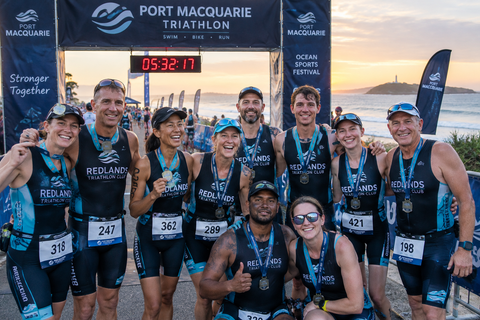
Imagina más de 1,500 atletas reunidos a la orilla del agua en la luz de la madrugada, el aire cargado de energía nerviosa y concentración silenciosa. Meses de madrugadas, fines de semana largos y planes sociales sacrificados, todo comprimido en un único instante antes de que suene la señal de salida. Es una experiencia que no tiene igual en el deporte de resistencia.
Los verdaderos héroes: los atletas de grupo de edad
Los triatletas profesionales compiten por premios y podios, pero el verdadero corazón de cualquier carrera de media distancia vive en el campo de atletas de grupo de edad. Estos atletas equilibran exigentes calendarios de entrenamiento con sus carreras, familias y las demandas cotidianas de la vida diaria — lo que convierte cada cruce de meta en una historia que vale la pena contar.
Los voluntarios: el motor invisible
Los voluntarios son la columna vertebral de cualquier triatlón importante, y la comunidad de Redding respondió con fuerza. Desde el registro previo a la carrera hasta el apoyo en la transición y la operación de las estaciones de avituallamiento, su contribución mantuvo a 1,500 atletas moviéndose de forma segura a lo largo de 70.3 millas de terreno californiano. Ninguna carrera de esta escala tiene éxito sin ellos.
Lo que realmente se necesita para prepararse para una carrera de media distancia
El compromiso de entrenamiento: en qué te estás metiendo
La preparación para una carrera de media distancia exige un plan de entrenamiento estructurado de varios meses. Una semana típica incluye sesiones de natación, rodadas largas, intervalos de carrera, entrenamientos brick (bici + carrera) en secuencia y tiempo de recuperación deliberado. La consistencia a lo largo de los meses importa mucho más que cualquier sesión de entrenamiento heroica aislada.
La nutrición: la cuarta disciplina
La nutrición funciona como la cuarta disciplina del triatlón, y los atletas que la descuidan rara vez terminan bien. En una carrera que dura entre cinco y siete horas, la ingesta estratégica de calorías — especialmente durante el segmento de bicicleta — marca la diferencia entre una carrera fuerte y un trote doloroso. El día de carrera nunca es el momento para experimentar con estrategias de alimentación desconocidas.
El equipo: lo que necesitas y lo que no
El equipo esencial incluye un traje de neopreno, casco, una bicicleta de ruta o de triatlón, tenis para correr y nutrición de carrera bien probada. Mejoras opcionales como un traje de triatlón específico para competencia y un reloj GPS pueden mejorar el rendimiento de forma significativa — pero ninguna cantidad de equipo reemplaza el entrenamiento constante.
Los errores más comunes que arruinan las carreras de media distancia
Los errores más frecuentes son predecibles y evitables. Los atletas suelen descuidar la práctica de natación en aguas abiertas, salir demasiado fuerte en la bicicleta, saltarse los entrenamientos brick (bici + carrera), reducir demasiado el volumen en la semana final y experimentar con nueva nutrición la mañana de la carrera. Evitar estos cinco errores le da a cualquier atleta una ventaja significativa antes de que suene el disparo de salida.
¿Por qué Redding? Cómo el norte de California obtuvo su primer gran triatlón
Una región hecha para el deporte de resistencia
La elección de Redding como ciudad sede no fue casualidad. La región ofrece condiciones ideales para una carrera de media distancia: el lago Whiskeytown brinda aguas abiertas limpias para la natación; el terreno circundante ofrece carreteras variadas y manejables para el ciclismo; y la ciudad en sí ofrece una meta de carrera compacta y amigable para el público que pocos lugares pueden igualar.
La comunidad como infraestructura
La comunidad de Redding jugó un papel estructural para hacer posible este evento. El reconocimiento cultural en el inicio de la natación y la energía de los espectadores a lo largo del recorrido de carrera demostraron que es una ciudad genuinamente comprometida con recibir al mundo del deporte de resistencia — no simplemente tolerándolo por un fin de semana.
Oportunidad económica y turismo deportivo
Más de 1,500 atletas que viajan a una región para un solo evento genera una actividad económica significativa en hoteles, restaurantes, comercio local y servicios. El exitoso debut de la carrera posiciona a Redding como un destino creíble para el deporte de resistencia, con un potencial real de crecimiento anual en el número de atletas y espectadores.
Construyendo una cultura de triatlón desde cero
El impacto a largo plazo de un evento como este va mucho más allá del fin de semana de carrera. Inspira a los atletas locales, despierta el interés de los jóvenes en el deporte multidisciplinario y acelera el crecimiento de una cultura de triatlón que alimenta la participación futura durante años. El norte de California ahora tiene una carrera por la que vale la pena entrenar.
Preguntas frecuentes sobre los triatlones de media distancia
- ¿Es un triatlón de media distancia más difícil que un maratón?
- Sí, debido a la combinación de disciplinas y las transiciones requeridas a lo largo del evento. Sin embargo, muchos maratonistas experimentados logran hacer la transición al triatlón de media distancia con una preparación multideportiva adecuada.
- ¿Cuánto tiempo toma terminar?
- La mayoría de los atletas completan la media distancia en 5 a 7 horas, con tiempos competitivos de atletas de grupo de edad que van aproximadamente de 4:30 a 5:30.
- ¿Necesitas experiencia previa en triatlón?
- No se requiere experiencia previa, pero ayuda significativamente. Completar primero un triatlón de distancia sprint le da a los atletas una comprensión valiosa de las transiciones y el ritmo antes de dar el salto a la media distancia.
- ¿Cuál es la diferencia entre un 70.3 y una carrera de distancia completa?
- Un triatlón de distancia completa cubre 140.6 millas — exactamente el doble de la distancia de un evento 70.3 — y exige un volumen de entrenamiento considerablemente mayor y una precisión nutricional mucho más estricta el día de carrera.
- ¿Pueden los espectadores ver la carrera?
- Sí. El recorrido en el norte de California ofrece múltiples puntos de observación accesibles para el público, siendo la carrera por el centro de Redding y la meta los lugares más accesibles y con mayor ambiente.
¿Qué es el triatlón 70.3 Northern California?
El 70.3 Northern California es un evento de triatlón de larga distancia celebrado el 16 de agosto de 2026, donde los atletas nadan, pedalean y corren a través de un pintoresco recorrido desde el lago Whiskeytown hasta el centro de Redding.
¿Cuándo tuvo lugar el triatlón 70.3 Northern California?
El evento tuvo lugar el 16 de agosto de 2026.
¿Qué actividades incluye un triatlón de media distancia?
El triatlón incluye segmentos de natación, ciclismo y carrera a pie, que ponen a prueba a los participantes en tres disciplinas distintas a lo largo de 70.3 millas en total.
¿Qué tuvo de especial la apertura del segmento de natación?
El segmento de natación contó con un toque cultural único, ya que los participantes entraron a las aguas del lago Whiskeytown acompañados por tambores y cantos nativos americanos.
¿Cómo puedo ver los momentos destacados del triatlón 70.3 Northern California?
Los momentos destacados del evento pueden verse en el sitio web del Redding Record Searchlight o en su plataforma de video.
Lo que viene para el triatlón en el norte de California
La primera carrera inaugural de media distancia en el norte de California marca el inicio de un nuevo capítulo para el deporte de resistencia en la región. Con una sólida infraestructura comunitaria, condiciones naturales ideales y una demanda atlética comprobada, Redding está genuinamente posicionada para convertirse en un evento fijo en el calendario del deporte de resistencia durante los años venideros.
Para los triatletas en ciernes, el camino comienza ahora. Construye tu base, conéctate con tu comunidad local de triatlón, afina tu equipo y marca tu calendario para el próximo fin de semana de carrera en el norte de California. La distancia entre el primer entrenamiento y la meta es más corta de lo que la mayoría imagina.
¿Tienes una historia del día de carrera del evento 2026 en Northern California? Comparte tu experiencia en los comentarios — ya seas atleta, voluntario o espectador que animó desde las calles de Redding.
Cobertura de Hung T. Vu y Jessica Skropanic, Redding Record Searchlight. Fuente: Redding Record Searchlight — Momentos destacados de la carrera.