Against All Odds: How 10 Filipinas Conquered the 70.3-Distance World Championship
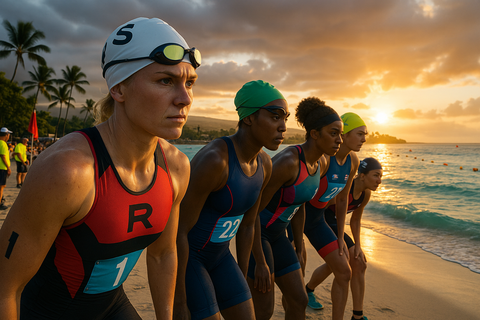
Ten incredible women from the Philippines stood at the water's edge in Nice, France. Behind them lay thousands of miles of training, early morning swims, and a kind of hard work that usually goes unnoticed. Ahead of them: one of the toughest courses in triathlon. This is their journey.
A Moment That Belongs to All of Them
When the starting horn echoed along the Mediterranean coast, Aira Lourdes Lopez and her nine fellow Filipina athletes dove into the water, joining competitors from over 150 countries. They weren't just racing — they were carrying immense pride and community spirit, a force stronger than any wetsuit or racing kit.
The 70.3-distance World Championship is just as mighty as it sounds: the top age-group triathlon event worldwide, held in cities that boast breathtaking views. The race covers a total of 70.3 miles, including a 1.2-mile swim, a 56-mile bike ride, and a 13.1-mile run. Qualifying for this event is a major accomplishment — you have to finish within strict time limits at qualifying races throughout the year. Fitness gets you there, but staying competitive requires much more.
For these ten Filipinas, that "much more" included facing limited infrastructure, significant financial costs, tropical heat, and the challenges of racing in Europe. The fact that all ten crossed the finish line isn't a footnote — it's the headline.
What Makes This Historic
The Numbers Tell Part of the Story
Over the past decade, the triathlon community in the Philippines has grown steadily, yet representation in global competitions has remained limited. This year, a delegation of ten Filipina athletes completing the 70.3-distance World Championship in Nice marks one of the largest teams the country has ever sent to this prestigious event.
The 70.3 World Championship attracts the fastest age-group triathletes from around the globe. Each athlete on that start line qualified through hard-earned performance at sanctioned races — no wildcards, no free entries. If you're there, you belong there.
For athletes training in a country where cycling lanes are few, Olympic-distance triathlons are still relatively rare, access to international coaching is limited, and entry costs can reach thousands of dollars, making it to that start line feels like a victory already. Reaching the finish line is a whole new level of achievement.
Making it to the start line of a world championship is already a victory. Crossing the finish line is something else entirely.
Why Nice Raises the Difficulty
Nice is not an easy course. While the Mediterranean swim is beautiful, the currents and open-water conditions demand experience. The bike course winds through the stunning French Riviera, featuring tough climbs and punishing elevations before descending back toward the coast. The run arrives when your legs have already given almost everything they have.
On top of that, the September climate in southern France challenges athletes accustomed to tropical conditions. Filipino triathletes train year-round in heat and humidity — which builds cardiovascular efficiency and heat tolerance — but racing in the fickle maritime climate of the Riviera requires careful adaptation.
The Real Cost of Getting There
Financial Barriers Are Not a Small Thing
The finances involved in a world championship are significant. A rough breakdown for a Filipino athlete racing in Nice looks like this:
- Race entry fee: approximately $700–$900 USD
- International airfare (Manila to Nice): $1,200–$2,000+ USD round trip
- Accommodation in Nice during race week: $800–$1,500 USD
- Bike transport or rental: $300–$600 USD
- Race gear, nutrition, and incidentals: $500–$1,000+ USD
The total estimated investment per athlete runs $3,500–$6,000 USD or more — and that excludes the months of prior race entry fees, coaching, and equipment costs required just to qualify. In a country where average monthly income is a fraction of that in North America or Europe, this commitment demands real sacrifice. Many of these athletes fund their journeys through personal savings, family support, employer flexibility, and community sponsorship.
The fact that ten women made this work reflects not only their determination but also the powerful support networks behind them.
Training in the Tropics: Adapting Without Excuses
Building World-Championship Fitness Without World-Championship Resources
One of the most inspiring aspects of this journey is how these athletes prepared. The Philippines may not have the triathlon infrastructure found in the U.S., Australia, or Europe. Dedicated cycling tracks are rare. Open-water swimming happens in ocean coves and lakes that may not always be race-ready. Training rides navigate actual traffic, not closed roads.
Yet adaptation breeds resilience. Filipino triathletes have built innovative training environments out of necessity:
- Swimming in ocean coves, resort pools, and public facilities rather than dedicated competition pools
- Cycling on highways during early mornings to avoid traffic, usually in groups for safety
- Running through 30°C+ heat, knowing that if they can handle it at home, they can run anywhere
- Strength training in basic gyms and community centers that may lack top-tier equipment but never lack intensity
This approach builds mental strength alongside physical endurance. When training isn't convenient, every session becomes a deliberate choice. By the time you step onto a world championship start line, you've already made thousands of those choices.
The Community Behind the Athletes
No Filipino triathlete reaches a world championship alone. The local triathlon scene across Metro Manila, Cebu, and Davao has grown into a vibrant support network — training partners who push each other, coaches volunteering their time, and a culture that celebrates participation as much as the podium. For these ten women, that community spanned borders. When Aira Lourdes Lopez entered the water in Nice, she carried the encouragement of her training partners and the entire triathlon community back home.
What Representation Actually Means
Seeing Is Believing — and Believing Changes Everything
Sports psychology describes a concept known as the visibility effect: when young athletes observe someone who looks like them, shares their background, and competes at the highest level, the psychological barriers around what is possible begin to collapse.
For a teenage girl in Manila watching a video of a 70.3-distance World Championship finisher, the message lands clearly: this is achievable, and someone from here made it happen. That means more than any individual finishing time.
Philippine triathlon stands at a tipping point. The sport has expanded across Southeast Asia, with the rise of 70.3-distance races creating more opportunities for Filipino athletes to qualify. As infrastructure improves and visibility grows, the trajectory looks promising. The ten Filipinas who finished in Nice are not just athletes — they are inspiration for a generation not yet in the sport.
Women Leading the Way
The specific significance of female representation here deserves emphasis. Endurance sports have historically skewed toward male participants, especially in regions where triathlon is still emerging. The visibility of Filipina women competing and completing a world championship sends a message that extends far beyond the sport itself — it says this is for you, too.
Globally, women's participation in triathlon has risen steadily, with female registrations at entry-level events now matching or exceeding men's in some regions. In the Philippines, female athletes are key drivers of triathlon's growth. Their presence at the sport's highest level confirms that women are not just participants — they are leading the way.
When Filipina women finish a world championship, they don't just cross a line — they open a door for every girl watching from home.
Lessons for Every Aspiring Triathlete
What Their Journey Can Teach You
Whether you're preparing for your first sprint triathlon or eyeing a future 70.3-distance qualifier, the experiences of these ten Filipinas offer lessons for every level of athlete:
- Start where you are, not where you wish you were. These athletes didn't wait for ideal conditions. Your local park, community pool, and neighborhood streets are the perfect starting points.
- Community is infrastructure. Training partners and local clubs matter more than perfect gear. Find your people first.
- The goal creates the path. Committing to a world championship — even years away — transforms how you approach every session. Focus on the destination, and the route unfolds.
- Representation is motivation, not pressure. Carrying the spirit of your community to a race is a privilege. Let it empower you, not weigh you down.
- Finishing is winning. Most age-group athletes who complete a world championship never step onto the podium. Just finishing is a victory in itself — and each of those ten Filipinas achieved exactly that in Nice.
The Start of Something Bigger
The 70.3-distance World Championship in Nice was a significant milestone, but it is also just the beginning. The experiences of those who finished that race will feed back into the Philippine triathlon scene in ways that can't be measured in finishing times alone. This knowledge will be shared, it will nurture the next wave of triathletes, and it will shape coaching and mentorship with the kind of authentic insight that only someone who has faced these challenges can offer.
The future of Philippine triathlon looks bright. More races, improved infrastructure, increased investment, and a new generation of girls watching finish-line videos and thinking: that could be me. If you're in Southeast Asia right now, wondering whether someone from your area could compete at that level, you have your answer.
Start Your Own Journey
The best time to begin your triathlon journey is right now, even before you feel ready. Get involved with a local club, register for a sprint-distance race, and invest in the basics that will carry you across your first finish line — and, one day, perhaps toward one of the sport's biggest stages.
Ready to get started? Explore our triathlon suit collection and premium running shoes — everything you need to prepare, from that first open-water swim to a world championship qualifier. Don't forget essential swimming goggles for your training sessions.
What's your triathlon goal? Share it in the comments — and let's celebrate Filipino excellence, one finish line at a time.
Frequently Asked Questions
What is the main topic of the article?
The main topic of the article is [insert the main topic of the article].
What are the key points discussed in the article?
The key points discussed in the article include [insert key points or themes].
Who is the intended audience for the article?
The intended audience for the article is [describe the target audience].
Are there any recommendations provided in the article?
Yes, the article provides recommendations such as [list any recommendations].
When was the article published?
The article was published on [insert publication date].
Source: Sun Star Davao — 10 Filipina athletes finish 70.3-distance World Championship in Nice