893,000 Strong: How Seoul's Han River Festival Is Redefining Inclusive Sports
What happens when a city stops asking "How fast can you finish?" and starts asking "How many can we welcome?" Seoul's 2026 Han River Triathlon Festival answered that question with nearly 900,000 visitors, three landmark inclusive firsts, and an 84% repeat-participation rate that should make every event organizer in the world take notes.
Imagine nearly 900,000 people gathering at a riverfront park—not to cheer a winner crossing a finish line, but to be part of something together. Swimmers with disabilities sharing the same course as seasoned athletes. Children tackling their first-ever triathlon. Foreigners finding a welcoming lane in a country's first inclusive aquatic event. And thousands of people slurping ramen by the river just because it sounded fun.
That's exactly what Seoul achieved from June 5–7, 2026, along the Han River—and it might just be the most forward-thinking sports event happening anywhere in the world right now.
The Numbers That Tell a Different Story
Let's start with scale, because the scale here is genuinely stunning.
According to the Seoul Metropolitan Government, the three-day festival attracted:
- Total Visitors: 893,272
- Active Racers (triathlon course): 25,000
- Side-Event Participants: 683,000+
- Repeat Participation Intent: 84%
- Peak Day (June 6): 442,115 visitors
That 27:1 ratio—total visitors to active racers—is the number that should make every event organizer sit up straight. Seoul didn't just host a triathlon. It built an ecosystem around one.
Traditional triathlon events are designed primarily for the 25,000 people who show up to race. Seoul designed for the other 868,000 as well. The result was a festival that sustained engagement across three full days, peaking at over 442,000 visitors on Saturday, June 6, before closing out with 251,000 on Sunday.
And 84% said they'd come back. For context, that level of repeat intent would be remarkable for a theme park, let alone a public sports event.
Rethinking the Starting Line
Here's the question at the heart of Seoul's experiment: What if the goal wasn't to find out who's fastest, but to make sure as many people as possible get to experience finishing? That philosophy reshaped every design decision in this festival.
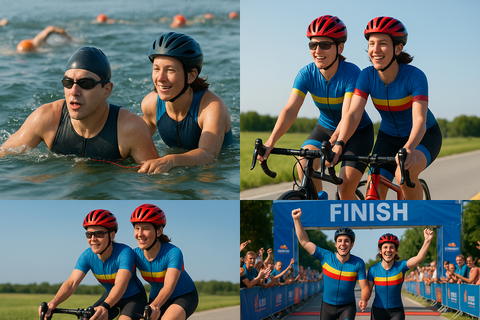
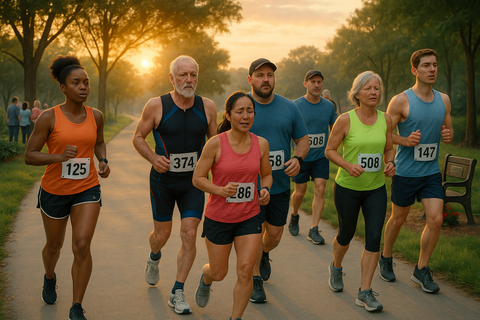
No qualifying times. No performance thresholds. No age restrictions. The triathlon-style course—swim, bike, run—was built to accommodate everyone from first-timers to fitness veterans, with the explicit emphasis on completing the course rather than racing it. Think of it less like a traditional race and more like a community challenge: the course is the same, but the finish line belongs to everyone who crosses it.
This framing matters enormously, especially for audiences who've been conditioned to see multisport events as the exclusive domain of elite athletes in matching kits. The triathlon world has long been working to broaden its appeal, but Seoul took that goal and turned it into policy at a city-government level—backed by parks, budget, and a three-year track record.
Three Inclusive Firsts Worth Celebrating
- Foreigner-only swimming events—Korea's first offering of this kind, creating a culturally welcoming entry point for international residents and visitors. One participant described the experience as "more difficult than expected but extremely enjoyable," adding that the novelty of being part of a Korean-first event was itself a draw.
- "Iron Rookie" children's triathlon—A low-pressure introduction to multisport for younger participants, exposing a new generation to swimming, cycling, and running in a celebratory rather than competitive environment. If you want to build a lifelong triathlete, this is probably where it starts.
- Disability swimming competition—A dedicated 1-kilometer course along the Han River with tailored support and encouragement systems. One participant said the event became "a meaningful memory that will not be forgotten"—a phrase that cuts to the emotional core of what inclusive design can achieve when done right.
These aren't tokenistic add-ons. They're structural commitments to the idea that sport belongs to everyone.
The Festival Layer: Why 683,000 People Came Without Racing
Here's something traditional triathlon events rarely achieve: more than two-thirds of total attendees had no intention of swimming, cycling, or running. They came anyway—and they stayed.
Seoul engineered this by wrapping the athletic core of the event in a full cultural festival. Side programming included:
- Han River ramen tastings—regional food culture baked directly into the event experience
- Fitness challenges—lower-barrier athletic activities for those not ready for a full triathlon course
- Cultural zones including "Haechi Island" and "Haechimeok," themed around Seoul's iconic mythological mascot
The result was an event with multiple entry points. You could come as a serious multisport athlete, as a family looking for a fun Saturday, as a food lover, as a tourist, or as someone who just wanted to watch. Each of those groups found something designed for them.
Sport as the anchor, culture as the invitation — that's what transforms a niche athletic event into something that can legitimately claim 900,000 visitors and a prime spot on a city's summer calendar.
For triathlon enthusiasts in Latin America—cities like Mexico City, Bogotá, and São Paulo have begun exploring similar waterfront activation models. Seoul's Han River template is worth watching closely as urban multisport culture continues to grow across the region.
What "Inclusive Sports" Actually Looks Like in Practice
The word "inclusive" gets used a lot in fitness and event marketing—often without meaningful substance behind it. Seoul's festival offers a concrete definition worth examining.
Inclusive, in this context, means:
- Removing gatekeeping mechanisms (qualification standards, entry prerequisites)
- Designing parallel experiences for different ability levels rather than forcing everyone onto the same track
- Building support infrastructure specifically for underrepresented participants (disability swimmers, children, international attendees)
- Measuring success through satisfaction and diversity of participation, not just finishing times
That last point is critical. Seoul surveyed participants and found 84% would return—a metric that reveals something profound: accessibility creates loyalty. When people feel genuinely welcomed rather than merely accommodated, they come back. They bring friends. They become advocates.
The participant experience contest announced after the event—collecting written and video submissions celebrating festival memories—reinforces this. Seoul isn't just measuring attendance; it's actively documenting the emotional impact of inclusive design.
The Bigger Lesson for Sports and Fitness Events
Seoul's Han River festival isn't just a great local event. It's a proof of concept for a different model of public sports programming—one with implications far beyond Korea.
- Participation-first design scales better than competition-first design. When your event is built around beating others, your audience is limited to people who want to compete. When it's built around participation, your audience is essentially everyone.
- Cultural integration extends dwell time and demographic reach. The 683,000 side-event participants weren't just passive spectators—they were active festival-goers who ate, explored, and engaged. That's economic activity, community building, and tourism development happening simultaneously.
- Inclusive programming creates deeper emotional resonance. The most quoted moments from this event aren't a podium finish or a course record. They're a disability swimmer's 1-kilometer journey and a foreign participant's first-ever Korean athletic experience. Those are the stories people share and the memories that generate 84% repeat intent.
- Public infrastructure can do more than we typically ask of it. Han River parks are public spaces. Seoul turned them, for three days, into one of the most attended sports and cultural events in the country. That's a replicable model for any city with waterfront, park, or public greenspace assets.
What This Means If You're a Triathlete, an Organizer, or Just Someone Who Loves This Sport
If you've ever talked someone out of doing their first triathlon because "you're not ready yet"—Seoul's model is a direct challenge to that framing. Readiness shouldn't be the barrier to entry. The course should meet the athlete, not the other way around.
For triathletes looking to introduce friends or family to the sport, events designed around the relaxed model—no time pressure, no qualifying standards, cultural programming for non-athletes—are the gateway experiences that grow the community.
For event organizers, the Seoul data makes a compelling case: diversify your programming, and your numbers will follow. The 25,000 who raced didn't come at the expense of the 868,000 who didn't. They came together.
And for anyone—in Seoul, in Mexico City, in São Paulo, in Madrid—who's ever looked at a triathlon event and thought, that's not for someone like me: Seoul just ran nearly 900,000 counterexamples to that idea.
Key Takeaways
- 893,272 visitors attended Seoul's 2026 Han River triathlon festival—a 27:1 ratio of total visitors to active racers
- Inclusive design worked: disability swimming, children's triathlon, and foreigner-specific events were among the festival's most celebrated additions
- 84% of respondents said they'd participate again—proof that accessibility drives loyalty, not just attendance
- Cultural programming drove mass participation: 683,000+ people engaged with side events, positioning the festival as a multidimensional city experience
- Seoul's model offers a replicable template: participation-first design + cultural integration + public infrastructure = citywide celebration
If you're training for your first multisport event—or looking for the right gear to take on swim, bike, and run—explore our triathlon suit collection to get started on the right foot. For swimmers preparing for their first open water experience, quality swimming goggles with anti-fog technology make all the difference. And if you're shopping for the triathlete in your life, our gifts for triathletes guide has you covered.
The starting line has always been there. Seoul just made sure more people could reach it.
Frequently Asked Questions
What is the Relaxed Han River Triathlon Festival?
The Relaxed Han River Triathlon Festival is an annual event in Seoul that blends swimming, cycling, and running with a variety of cultural programs. It aims to promote inclusive sports and attract participants of all fitness levels.
When was the latest edition of the festival held?
The latest edition of the Relaxed Han River Triathlon Festival took place from June 5 to June 7, 2026.
How many participants attended the festival?
The festival attracted a total of 893,272 visitors over the three days, with 25,000 participants completing the triathlon-style course.
What unique events were included this year?
This year's festival included foreigner-only swimming events, a children's triathlon segment called "Iron Rookie," and a disability swimming competition.
What other activities were available besides the triathlon?
In addition to the triathlon, attendees enjoyed side events such as Han River ramen tastings, fitness challenges, and cultural zones like "Haechi Island" and "Haechimeok."
What was the participant satisfaction rate for the festival?
A survey conducted by the city showed that 84 percent of respondents indicated they would participate in the festival again, demonstrating strong public satisfaction.
Source: Korea Times — Han River Triathlon Draws 893,000 as Seoul Pushes Inclusive Sports Model