Open Water Swimming Practice for Triathlon
The first time you leave the pool lane and swim without a black line under you, everything feels louder. Your breathing spikes, your stroke shortens, and even strong pool swimmers can suddenly feel lost. That is why learning how to practice open water matters so much for triathlon. It is not just swim fitness. It is the skill of staying calm, moving efficiently, and making good decisions when the water is unpredictable.
For beginners, the biggest mistake is treating open water like a pool session with a different view. It is not. Visibility changes, direction matters, contact happens, and pacing errors show up fast. The good news is that confidence in open water is trainable. If you approach it in stages, you can build control without forcing it.
How to practice open water without getting overwhelmed
Start smaller than your ego wants. Many new triathletes think they need a long lake swim to prove they are ready. In reality, the best first sessions are short, close to shore, and focused on one or two skills. Ten to twenty minutes of quality work in open water can do more for race readiness than a panicked hour.
Choose a location with simple logistics. Calm water, clear entry and exit points, low boat traffic, and a defined shoreline make a big difference. If you can stand up in part of the area, even better. Your first goal is not speed. It is to teach your nervous system that open water is manageable.
Never practice alone. This is non-negotiable. Swim with a partner, group, coach, kayak support, or lifeguard presence. Wear a bright swim buoy if conditions allow. Safety is part of performance because it lets you relax enough to actually practice the right things.
Build open water skill in the right order
The fastest path to progress is not doing everything at once. Most athletes improve more quickly when they stack skills in a practical sequence.
1. Start with entries, exits, and settling your breathing
Your first few sessions should begin with repeated short swims from shore. Wade in, start swimming smoothly, and come back before anxiety builds. That sounds basic, but it teaches one of the most important race skills: settling down after the chaos of the start.
If your breathing jumps right away, stop trying to power through it. Roll onto your back, float, or switch to easy breaststroke for a few seconds. Then restart. There is no benefit in turning the session into a survival test. Open water confidence grows when you learn that you can reset at any point.
2. Practice sighting before you need it
In the pool, swimming straight is automatic. In open water, it is a skill. Pick a fixed target on shore and sight every 6 to 10 strokes. Lift your eyes just enough to spot the landmark, then turn to breathe. If you lift your whole head, your hips drop and you lose momentum.
A lot of beginners sight too often because they are nervous. That can break rhythm and waste energy. Too little sighting creates a zigzag line that costs even more. The right frequency depends on water conditions, but the goal is always the same: hold direction without disrupting your stroke.
3. Learn effort control, not just speed
Open water punishes bad pacing. If you sprint the first 200 meters because everyone around you is charging, your breathing can spiral before you find rhythm. Practice starting controlled, then settling into sustainable effort after 30 to 60 seconds.
This is one reason shorter repeats work well. Swim a moderate effort to a buoy or landmark, recover briefly, and repeat. You are teaching your body how to handle changes in intensity while keeping form. That is much closer to race reality than one steady pool-style cruise.
A simple session structure that works
If you are wondering how to practice open water in a way that actually improves race readiness, keep your sessions structured. Random swimming builds familiarity, but structure builds performance.
A strong beginner session might look like this: five minutes getting in and out comfortably, three to five short efforts of two to four minutes with sighting practice, then one slightly longer continuous swim where the goal is calm breathing and even pacing. Finish with a few minutes working on your exit and transition from horizontal swimming to standing and jogging.
As your confidence grows, increase complexity before you increase distance. For example, add turn buoys, swim in light chop, or practice around other athletes. A 20-minute session with race-specific skills is often more valuable than a 40-minute swim with no focus.
Pool work that makes open water easier
You do not need daily lake access to improve. Some of the best open water preparation happens in the pool if you use the right drills.
Practice sighting every few lengths. Swim without pushing hard off the wall so you spend more time in steady freestyle. Try sets where you start hard for 25 to 50 meters and then settle, which mimics race-start intensity. Swimming next to lane partners with reduced space can also help you get used to contact and disrupted rhythm.
You can even practice swimming with your eyes closed for a few strokes to feel how your body tracks through the water. Do not overdo it, but it teaches body alignment and exposes how much you rely on visual control. That becomes useful when visibility is poor outdoors.
Managing fear is part of the training
Open water anxiety is common, and it is not a sign that you are weak or unprepared. It usually comes from three things: unfamiliar sensations, reduced visibility, and the feeling that you cannot stop as easily as in a pool. The answer is not pretending fear is irrational. The answer is reducing uncertainty through repetition.
Give yourself clear rules before each session. Know where you are swimming, how far you are going, what signals you will use with your partner, and what conditions would make you stop. Structure reduces stress.
It also helps to separate discomfort from danger. Cold water, murky water, and race contact can all feel intense without being unsafe if you are prepared for them. But current, storms, poor visibility from weather, and solo swimming are real risks. Good open water athletes do not act fearless. They learn to assess conditions honestly.
Gear helps, but it does not replace skill
A wetsuit can improve buoyancy and confidence, especially for newer triathletes. But it also changes body position and shoulder feel, so do not save it only for race day. Practice in the kit you plan to use. That includes goggles, trisuit, cap, and if relevant, anti-chafing setup.
Goggles are one of the most overlooked details. Tinted lenses may work better in bright conditions, while clear or lightly tinted lenses can help in low light. Fogging can turn a manageable swim into a frustrating one, so test your setup in advance.
There is also a trade-off with comfort and realism. Some athletes rely on too much gear to feel safe, then struggle when race conditions differ. Use gear to support confidence, not to avoid skill development.
Train for contact and imperfect conditions
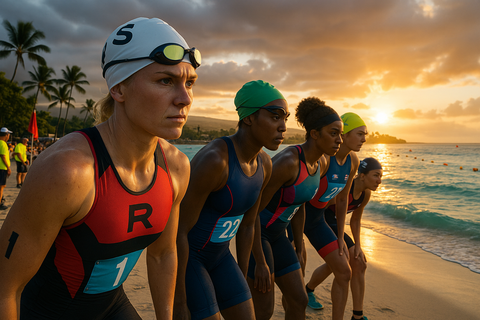
Many first-timers are shocked by how physical triathlon swims can feel. Even well-organized races involve bumped elbows, feet in your face, and broken rhythm around buoys. If all your open water practice is solo in calm conditions, race day can feel like a different sport.
That does not mean you should seek chaos. It means you should prepare progressively. Swim with one or two partners nearby. Practice starting together. Rehearse swimming slightly wide of the direct line if you prefer cleaner water over aggressive positioning. For some athletes, that wider line saves energy and lowers panic, even if it adds a few meters.
This is where confidence becomes tactical. The fastest path is not always the smartest path for your current level. If you are preparing for your first race, calm execution usually beats forcing an elite-style start.
When to progress your open water sessions
You are ready to progress when you can enter the water calmly, hold direction without constant correction, and recover from a spike in breathing within seconds rather than minutes. At that point, extend your continuous swims, practice race-start simulations, and expose yourself to slightly more challenging conditions.
If you still feel stressed every session, do not just add distance and hope it fixes things. Go back to shorter repeats and clearer goals. Progress in open water is rarely linear. Some days feel great, and some do not. Conditions change, energy changes, and confidence can fluctuate. That is normal.
A useful benchmark for race readiness is not whether open water feels easy. It is whether you can handle small problems without losing control. Miss a sighting, get splashed, swallow a little water, then reset and keep moving. That is the real skill.
If you are building toward your first triathlon, practice open water like a performance skill, not a box to tick. Keep sessions safe, specific, and repeatable. Over time, the water stops feeling like something you have to survive and starts feeling like a part of the race you can manage with confidence. That shift changes everything.