Riding the New Canyon Speedmax in the Austrian Alps: A First-Hand Experience
Canyon's new Speedmax set a bike course record at Challenge Roth days after its launch — then helped deliver a world record finish. We rode it in the Austrian Alps to find out whether the AeroID system lives up to the hype, and what it means for every triathlete from the pro peloton to the age-group starting corral.
"Passion. Pure passion." — Tim Moria, Editor in Chief of Triathlon Today
That's how Tim Moria described the moment Canyon's engineering team unveiled their latest creation to a small group of pro athletes and media insiders in the Austrian mountains. It's a phrase that doesn't usually survive contact with reality — but after 160+ kilometers on the new Canyon Speedmax, it turns out the bike earns every word of it.
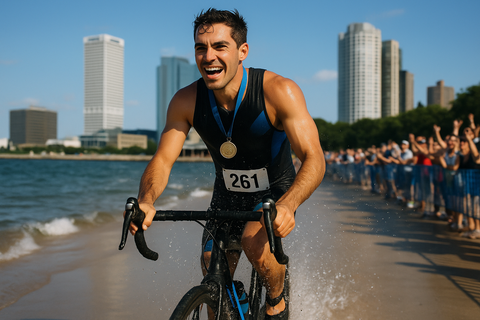
The timing of the launch couldn't have been more dramatic. Just days after the unveiling, Rico Bogen set a new bike course record at Challenge Roth (3:54:45), with Sam Laidlow crossing the line one second later. Laidlow then went on to win the entire race in a new world record — completing the run in just over 2:30 hours. Two riders, one brand-new bike, one historic day at one of long-distance triathlon's most storied events. The new Speedmax had announced itself before most people even knew it existed.
So what exactly did Canyon change — and does it live up to the hype? We break it all down.
The Central Challenge: Improving on Perfection
The previous Canyon Speedmax wasn't just a good triathlon bike. It was the benchmark. Eight long-distance world titles. Countless T100 and Challenge Family victories. By every measurable standard, it was the fastest and most successful triathlon bike on the market.
That's a brutal starting point for a development team.
Canyon's engineers — including Product Manager Moritz Hief, Lead Design Engineer Caspar Rueter, and Design Engineer Felix Grubert — spent more than three years wrestling with a deceptively simple question: how do you make the best bike even better?
Their answer? "The devil is in the details." Rather than a ground-up redesign, Canyon pursued systematic, data-driven refinement across every aspect of the bike. The raw material was years of real-world performance data from athletes like Jan Frodeno, Laura Philipp, Lionel Sanders, Kat Matthews, Patrick Lange, Marjolaine Pierré, and Hayden Wilde. Every victory was also an engineering lesson. Every race provided feedback that fed back into the development cycle.
The result is a bike that doesn't just carry a legacy — it actively builds on it.
From the Pro Peloton to Your Starting Corral
Here's where the new Speedmax story gets genuinely exciting for age-group athletes, including the many triathletes across Latin America and beyond who are eyeing their first serious long-distance race build.
For years, professional athletes received highly customized bike setups optimized for their individual bodies, positions, and race demands. Age-group athletes, by contrast, mostly got a standard configuration and were left to figure out the rest. The new Speedmax changes that dynamic entirely.
Canyon's mission with this generation was explicit: bring a pro-worthy setup to athletes of every level. The fastest frame is still the foundation, but it's now paired with the AeroID system — a four-pillar framework designed to let any athlete, regardless of budget or experience level, unlock their full aerodynamic potential.
The previous Speedmax was a world-class racing engine. The new Speedmax is that same engine, now with a cockpit that actually fits the driver.
The AeroID System: Four Pillars of Speed
AeroShield — The Most Adjustable Cockpit on the Market
If there's one feature that will matter most to the widest range of athletes, it's AeroShield. Triathlon cockpit fit has historically been a compromise: you buy a bike, you get a cockpit, and you adapt your body to it as best you can. AeroShield flips that equation completely.
Want your arm pads wider or closer together? Done. Need to tilt the entire cockpit up or down to match your position? That's "settled within seconds with a few simple adjustments," according to the hands-on review. Multiple cockpit choices add even more configuration options. The result is what Canyon calls the most adjustable cockpit on the triathlon market — and based on the testing in Austria, that claim holds up.
For athletes in the 25–45 age bracket who are investing seriously in their race performance, this matters enormously. A properly fitted cockpit can mean the difference between a sustainable aero position for eight-plus hours and a painful, power-draining struggle on the second half of the bike leg.
AeroFuel — Never Run Dry Again
Long-distance triathlon is an eating and drinking problem as much as it's a fitness problem. Ride 180 kilometers, and nutrition management can make or break your race — especially in the heat and altitude conditions common in events across Mexico, Brazil, and the rest of Latin America.
AeroFuel addresses this with integrated nutrition storage distributed across the entire bike:
- Cockpit bottle holder concealed between the arms
- Gel/nutrition storage between the arms
- Frame-integrated storage for water or sports drinks
- One to two additional bottle holders behind the saddle
The total capacity: up to 3,500 milliliters of fluids. For context, that's enough to sustain most athletes through a significant portion of a long-distance bike leg without relying on aid stations — a game-changer for training rides and a meaningful tactical advantage in racing. Crucially, all of this storage integrates into the bike's aerodynamic profile. The fluids are part of the design.
AeroFit — Geometry That Grows With You
AeroFit covers two related areas: frame geometry and sizing. On geometry, Canyon opted for a slightly more progressive design that improves stability at high speeds — a subtle but meaningful upgrade, particularly during the fatigue-heavy final kilometers of a long-distance bike leg when maintaining a clean, efficient position becomes harder.
On sizing, Canyon made a bold call: the XS model with 650b wheels has been discontinued. In its place, the new S size uses 700c wheels but features a lower standover height. This addresses direct feedback from pro athletes — and from a broader market reality — that smaller riders deserve a proper 700c setup rather than a compromise configuration. It's a more inclusive approach that doesn't sacrifice performance to accommodate different body types.
The icing on the cake: the new Speedmax, fully equipped, is 0.5 kilograms lighter than its predecessor. At the speeds serious triathletes ride, every gram matters.
AeroBase — The Foundation That Wins Races
AeroBase is the frameset itself: the fastest triathlon frame on the market, carried forward from the previous generation and refined rather than reinvented. It's the platform everything else is built on. Without it, the other three pillars don't matter. With it, they compound into something exceptional.
What It's Actually Like to Ride: Two Days in the Austrian Mountains
All the engineering language in the world means nothing if the bike doesn't deliver on the road. So here's what actually happened when Moria threw a leg over the new Speedmax in Austria.
Day 1: 60km at 30+ km/h with Lionel Sanders
The first ride was deliberately relaxed — about 60 kilometers through mountain routes around Fuschl am See, averaging just over 30 km/h alongside Lionel Sanders and Marjolaine Pierré. The immediate impression: "incredibly reliable and comfortable." Comfort at moderate speed isn't necessarily surprising for a high-end bike. What mattered was how that comfort was delivered — not as a softness that blunts responsiveness, but as a planted, confidence-inspiring stability that made the bike feel like an extension of the rider.
Day 2: 100km at 34+ km/h with Kat Matthews
Day two was a different story. Kat Matthews set the pace, and the pace was demanding: over 34 km/h average across 100-plus kilometers with significant elevation gain. This is the kind of ride that exposes a bike's weaknesses — where geometry flaws create instability on descents, where a poor fit punishes the body over time, where a heavier bike costs real energy on the climbs.
The Speedmax passed every test. "High speeds came so effortlessly" — and that's not marketing language, that's the direct observation of an experienced journalist who knows what a demanding bike feels like.
The Comfort-Speed Paradox
In triathlon bike design, comfort and speed typically pull in opposite directions. A race-optimized position is aggressive, stiff, and aerodynamic — but often brutal over long distances. A comfortable position is sustainable but slower. The new Speedmax refuses to accept this trade-off.
"Comfortable and fast. This reviewer has never ridden a bike where high speeds came so effortlessly... This is a high-end bike in every single facet." — Tim Moria
That's the magic combination that long-distance athletes spend years — and significant money — chasing. The engineers, it seems, found it.
Specifications, Pricing & What's Available
Canyon built the new Speedmax lineup to offer genuine options across a range of budgets and ambitions.
The Full Model Range
| Category | Models | Builds |
|---|---|---|
| Elite CFR | 2 versions | 6 builds |
| SLX | 3 versions | 5 builds |
| Entry Level | CF 7 Di2 | 1 build |
Standard equipment across all models includes:
- Choice of Shimano Di2 or SRAM AXS electronic shifting
- Power meter (included on every model)
- DT Swiss Arc wheels
- Continental Aero 111 tires
- Fizik Transiro saddle
Pricing
Entry level: Speedmax CF 7 Di2 — €4,999 (electronic shifting, carbon wheels, power meter included)
SLX and CFR range: €6,499 – €11,000
The entry-level option deserves a moment of attention. €4,999 with electronic shifting and a power meter included is a genuinely competitive price point — especially when you factor in that the AeroID system and full AeroShield cockpit adjustability come standard. All models are available through Canyon's website and can be personalized through the MyCanyon program, which allows for custom configurations before purchase.
Who Should Pay Attention?
Age-Group Athletes Targeting Long-Distance Racing
If you're preparing for your first or fifth long-distance triathlon — whether that's a 70.3-distance race or the full distance — the new Speedmax's combination of adjustable fit, integrated nutrition storage, and proven aerodynamics makes it one of the most complete packages on the market. The AeroShield cockpit means you're not compromising your fit to accommodate the bike. The AeroFuel system means nutrition stops become strategic choices, not desperate necessities.
If you're building out your race season essentials or looking for a centerpiece for your first triathlon kit, this is the bike that anchors everything else.
Smaller Riders Who've Been Left Behind
The elimination of the XS 650b configuration and the introduction of the S 700c with a lower standover height is a meaningful step toward inclusivity. If you've previously been pushed toward 650b options you didn't want, this is worth a serious look.
Current Speedmax Owners
The upgrade case is real but not universal. If you're competitive and racing frequently, the 0.5kg weight reduction, improved high-speed stability, and AeroID customization represent genuine performance gains. If you're racing occasionally and your current setup is dialed in, the decision is less clear-cut — wait for the comprehensive review later this month before committing.
Pro Athletes and Coaches
The immediate validation at Challenge Roth — world record finish, bike course record — confirms that the development approach worked. The unlimited AeroShield adjustment options mean there's no ceiling on optimization for individual athletes.
The Bigger Picture: What This Launch Means for Triathlon
Canyon has always occupied a particular position in the triathlon market: technically dominant, analytically rigorous, and deeply connected to the pro peloton. What's different about this generation of Speedmax is the democratization of that technical dominance.
The performance gap between what a pro athlete rides and what an age-group athlete can access has historically been significant — not just in terms of price, but in terms of fit, customization, and optimization. AeroID systematically closes that gap. The same data that helped Jan Frodeno and Hayden Wilde win races now shapes how a 38-year-old age-grouper from Mexico City or São Paulo can set up their bike.
That's not a small thing. It represents a genuine shift in what's possible for the growing community of serious amateur long-distance triathletes who are willing to invest in their performance.
What's Next
A comprehensive review from Triathlon Today is coming later in July 2026, after significantly more kilometers and testing conditions. That piece will dig deeper into long-term comfort, component performance, and detailed comparisons with competing bikes.
In the meantime, the immediate competitive record speaks for itself: bike course record at Challenge Roth. World record finish. Day one of the launch.
If you're in the market for a triathlon bike — or simply want to understand where the technology is heading — the new Canyon Speedmax demands your attention. Visit the Canyon website to explore the new Speedmax range and build your custom setup through the MyCanyon program.
Also Worth Reading
Building out your race setup? Browse our curated race-day travel gear and race season essentials for everything you need from transition to finish line.
Quick Reference: Canyon Speedmax AeroID System
| Pillar | What It Does | Key Benefit |
|---|---|---|
| AeroShield | Fully adjustable cockpit (width, tilt, multiple choices) | Perfect fit for any body type |
| AeroFuel | Integrated nutrition storage (3,500ml total) | Carry more fuel, stay aero |
| AeroFit | Progressive geometry + new sizing (S 700c) | Stability + smaller rider access |
| AeroBase | Fastest frameset on market, 0.5kg lighter | The foundation for everything |
Frequently Asked Questions
What is the new Canyon Speedmax bike?
The Canyon Speedmax is a newly launched triathlon bike designed for both professional and age-group athletes. It features advancements aimed at enhancing speed, comfort, and aerodynamic efficiency.
What are the key features of the new Speedmax?
The Speedmax includes features such as the AeroID aerodynamic enhancements, customizable cockpit options, and increased nutrition storage capacity. It has a lighter frame and improved geometry to enhance stability and comfort at high speeds.
How much does the Canyon Speedmax cost?
Prices for the Canyon Speedmax range from €4,999 for the entry-level model to €11,000 for the elite offerings, with various configurations available to customize according to individual preferences.
Who was involved in the development of the Speedmax?
The development of the Speedmax involved extensive collaboration with pro athletes such as Lionel Sanders, Kat Matthews, and others, along with input from Canyon's engineering team focusing on advanced aerodynamics and performance.
Where can I purchase the new Canyon Speedmax?
The Canyon Speedmax can be purchased directly through the Canyon website, where buyers can also customize their bike through the MyCanyon program.