From Silk Road to Finish Line: Inside Samarkand's Historic World Triathlon Championship
Imagine over 150 elite triathletes racing through the ancient streets of one of the world's most storied cities—swimming, cycling, and sprinting past UNESCO World Heritage sites that have stood for centuries along the Silk Road. This isn't just a marketing concept or an athlete's dream. This is precisely what unfolded in Samarkand on April 25–26, 2026, when Uzbekistan hosted the World Triathlon Championship Series (WTCS) and delivered one of the most visually and athletically spectacular events in the competition's history.
The WTCS represents the pinnacle of Olympic-distance triathlon competition. Featuring a 1.5km swim, 40km cycle, and 10km run, it serves as the proving ground where the world's finest triathletes battle for ranking points that shape Olympic selection. Bringing this event to Central Asia—and specifically to the ancient city of Samarkand—was not merely a logistical achievement. It was a statement of ambition, capability, and vision.
Elite Competition Among Ancient Monuments
The Races That Captivated a Global Audience
As the starting gun fired in Samarkand, the world's top triathletes were competing for more than medals. WTCS ranking points directly influence Olympic selection, meaning every second on the course carries consequences that extend years into the future.
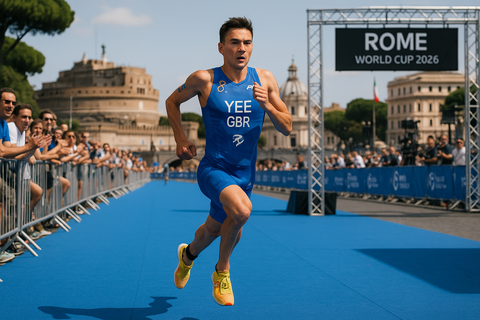
In the men's elite race, Portugal's Vasco Vilaça crossed the finish line in 1:43:33, claiming gold in a performance that reinforced his standing among the world's elite. Vilaça, a European powerhouse in the discipline, demonstrated the consistency and tactical intelligence that define WTCS-level competition.
The women's elite race produced the weekend's most dramatic moment. Great Britain's Beth Potter secured first place after a commanding final run segment through the historic city centre—a sprint finish set against Samarkand's ancient architecture that will be long remembered by those who witnessed it. Potter's ability to close races with devastating speed made her the perfect protagonist for a venue of such theatrical grandeur.
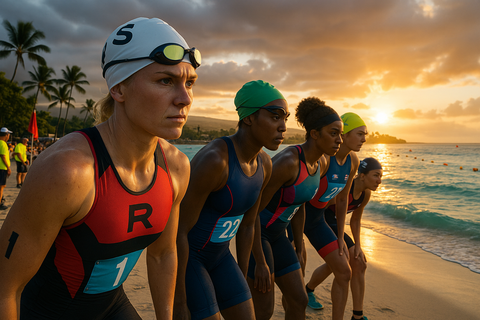
The broader competitive field was equally impressive. More than 150 athletes from 40 countries descended on Uzbekistan, representing the full breadth of the global triathlon community. Each competitor was chasing ranking points in a sport where the margins between Olympic selection and heartbreak are measured in fractions.
What the Course Demanded
The Samarkand course wove through UNESCO World Heritage sites and historic Silk Road landmarks, with the breathtaking Eternal City complex serving as the iconic centrepiece. This was not a neutral urban circuit. Racing through ancient monuments introduces unpredictable variables—narrow passages, crowd-lined historic streets, and the psychological weight of competing in a place that carries millennia of human history.
For spectators, the setting transformed a sporting event into a spectacle. Few cities on Earth can offer the combination of athletic excellence and cultural grandeur that Samarkand provided. The historic city centre became a natural amphitheatre, drawing crowds to vantage points that have overlooked human endeavour for centuries.
Uzbekistan's Deliberate Strategy: Building a Sports Portfolio
An Extraordinary Month for International Sport
The WTCS in Samarkand did not arrive in isolation. April 2026 alone saw Uzbekistan host a remarkable concentration of world-class sporting events:
- World Taekwondo Junior Championships (record-breaking attendance)
- Fencing World Cup
- Judo Grand Slam
- The largest-ever OCA General Assembly
- World Triathlon Championship Series (April 25–26, Samarkand)
This is not coincidence. It is the result of deliberate, sustained effort to build institutional credibility within the global Olympic Movement. Each successfully delivered event strengthens Uzbekistan's reputation as a reliable, hospitable, and capable host—qualities that international sporting bodies weigh heavily when selecting venues.
The Voice of Leadership
Otabek Umarov, Vice President of the Olympic Council of Asia (OCA) and Deputy Chairman of the National Olympic Committee of Uzbekistan, articulated the significance of the moment with clarity:
"This weekend marked another landmark sporting occasion for Uzbekistan. By bringing the World Triathlon Championship Series to Samarkand, we have once again shown that Uzbekistan can successfully deliver some of the world's biggest sporting events, blending our warm hospitality with world-class sport."
Three words in Umarov's statement deserve particular attention: warm hospitality. In international sports diplomacy, the ability to make athletes, officials, and visiting delegations feel genuinely welcomed is a competitive advantage that cannot be manufactured overnight. Uzbekistan has cultivated this reputation through consistent performance across multiple events and disciplines.
The Presidential Vision Behind the Strategy
The momentum behind Uzbekistan's sporting ambitions flows from the highest levels of government. President Shavkat Mirziyoyev has made the promotion of healthy and active lifestyles a cornerstone of national development policy—and with good reason. With 60% of Uzbekistan's population under the age of 30, the demographic case for sport-led national development is compelling.
Mirziyoyev's initiatives are designed to leverage world-class events as inspiration multipliers. When a young Uzbek child watches elite triathletes race past Samarkand's ancient monuments on a live broadcast, the message is direct and powerful: excellence is achievable, and your country is a stage for it. This is soft power and youth policy operating in elegant tandem.
Why Samarkand? The Case for Heritage-Integrated Competition
A Venue Unlike Any Other
Samarkand is not simply a city. It is one of humanity's oldest continuously inhabited settlements, a crossroads of civilisations, and a UNESCO World Heritage treasure of extraordinary significance. The Registan, Shah-i-Zinda, and the monuments of the Eternal City complex are not backdrops—they are protagonists in the story of human civilisation.
Choosing Samarkand as a WTCS venue was therefore both a practical and symbolic decision. Practically, the city's infrastructure, accommodation capacity, and organisational networks have been refined through years of hosting major international delegations and tourists. Symbolically, placing elite athletic competition within a UNESCO heritage landscape sends a message about Uzbekistan's confidence in its own cultural identity—and its ability to present that identity to the world.
Very few cities globally can offer what Samarkand provides: the rare convergence of ancient cultural significance and modern event management capability. This combination creates a uniquely powerful brand proposition for international sporting bodies seeking venues that generate global media interest beyond the competition itself.
Heritage Preservation and Sporting Ambition
Hosting a major international competition within a UNESCO World Heritage site carries responsibilities that extend beyond logistics. Course design must respect heritage structures, crowd management must protect ancient surfaces, and the overall event footprint must leave the site as it was found.
That Uzbekistan successfully navigated these requirements—while simultaneously delivering a world-class athletic competition—reflects an organisational sophistication that should not be understated. It demonstrates that sporting ambition and cultural stewardship can coexist, and that heritage sites need not be passive museums but can serve as living stages for human achievement in all its forms.
Central Asia's Emerging Place in Global Sport
A Region Rewriting Its Sporting Narrative
For decades, Central Asia existed at the periphery of global sport's awareness. The 2026 calendar is quietly dismantling that perception. Uzbekistan's event portfolio sits alongside exciting regional developments: neighbouring Kyrgyzstan is preparing for the 2026 World Nomad Games, celebrating the athletic traditions of steppe cultures that predate modern sport by centuries. Kazakhstan continues to develop its sports infrastructure, recently launching its first public-private partnership sports facility project.
Across the region, there is a palpable sense that Central Asia is asserting itself as a credible, distinct, and increasingly sophisticated player in global sports governance and event hosting. The WTCS in Samarkand is one chapter in a larger story being written across five nations with deep cultural roots, young populations, and growing ambitions.
Integration with the Olympic Movement
Each major event Uzbekistan hosts deepens its integration with the structures of the global Olympic Movement. The OCA General Assembly—the largest in the organisation's history—demonstrated that Uzbekistan can manage not just athletic competition but the diplomatic and organisational complexity of high-level institutional gatherings. The WTCS added a further dimension: world-ranking Olympic-discipline competition at the elite level.
This accumulation of experience and credibility is the foundation upon which larger ambitions are built. While no Olympic bid has been formally announced, Uzbekistan's trajectory within the Olympic ecosystem is one of consistent, purposeful advancement.
What Comes Next
The momentum generated by Samarkand's WTCS success does not exist in isolation. For athletes, the ranking points earned in Uzbekistan will shape competitive calendars and, ultimately, Olympic selection processes. For Uzbekistan, the event adds another reference point to a hosting portfolio that grows more impressive with each passing season.
For the broader region, the significance extends further. Central Asia is developing a sports economy—one that generates tourism revenue, creates employment, develops infrastructure with lasting community utility, and elevates international profile. The model Uzbekistan is executing with discipline and consistency will be studied by regional neighbours and by international sporting bodies seeking new frontiers for their events.
For athletes preparing for their own triathlon journeys, whether at the elite or age-group level, investing in quality race gear and optimizing transition equipment can make the difference between a good performance and a great one. The professionals racing in Samarkand rely on high-performance tri suits and premium swim goggles to maximize their competitive edge.
Further reading: photo gallery from the WTCS in Samarkand, training tips for heritage-course racing, and recommended transition kits and gear.
Key Takeaways
- Samarkand delivered: More than 150 elite athletes from 40+ countries competed at world championship level in one of history's most remarkable sporting venues
- Vilaça and Potter triumphed: Portugal's Vasco Vilaça (1:43:33) and Great Britain's Beth Potter claimed WTCS gold in performances of the highest calibre
- Strategy, not accident: Uzbekistan's 2026 event calendar reflects deliberate, sustained investment in international sports hosting credibility
- Youth is the driver: With 60% of its population under 30, Uzbekistan's sports-for-development strategy has a clear and urgent demographic logic
- Heritage and sport coexist: Samarkand proved that UNESCO World Heritage sites can be dynamic, respectful stages for elite international competition
- A region is rising: The WTCS in Samarkand is one signal among many that Central Asia is redefining its place in global sport
What event took place in Samarkand on 25–26 April 2026?
Samarkand hosted a World Triathlon Championship Series (WTCS) event on 25–26 April 2026, featuring an Olympic-distance course through the historic city.
Who won the men's race at the Samarkand WTCS event?
Vasco Vilaça of Portugal won the men's race, taking gold with a time of 1:43:33.
Who won the women's race at the Samarkand WTCS event?
Beth Potter of the United Kingdom secured the top spot in the women's race after a dramatic final run through the city centre.
How many athletes and countries participated in the event?
The event attracted more than 150 athletes representing over 40 countries.
What was notable about the Samarkand course?
The Olympic-distance course wound through UNESCO World Heritage sites and Silk Road landmarks, including the Eternal City complex, offering a historic and scenic race route.
Why is hosting the WTCS important for Uzbekistan?
Hosting the WTCS helps cement Uzbekistan's reputation within the Olympic Movement, demonstrates its ability to stage major international sporting events, and supports national efforts to promote healthy, active lifestyles.
Which Uzbek official commented on the event and what did they say?
Otabek Umarov, Vice President of the Olympic Council of Asia and Deputy Chairman of the National Olympic Committee of Uzbekistan, called the weekend a landmark sporting occasion that showcased Uzbekistan's hospitality and event delivery.
How does the WTCS fit into Uzbekistan's wider sports strategy?
The event is part of a national strategy led by President Shavkat Mirziyoyev to promote healthy lifestyles and inspire youth—important in a country where about 60% of the population is under 30—by leveraging world-class sporting events.
What other major international sporting events has Uzbekistan recently hosted?
Recent events include the record-breaking World Taekwondo Junior Championships (April), the Fencing World Cup, the Judo Grand Slam, and the largest-ever OCA General Assembly.
Who wrote the article and what is their background?
The article was written by Jonathan Campion, a journalist who has worked in the Eurasia region since 2007, with a degree in Russian from Exeter University and bylines in publications such as Lonely Planet and National Geographic Traveler.
Source: https://timesca.com/european-athletes-dominate-world-triathlon-championships-in-samarkand/
Discover unique triathlon-themed merchandise, including stylish t-shirts, stickers, phone cases, and home decor - perfect for endurance sports enthusiasts and athletes. Shop now