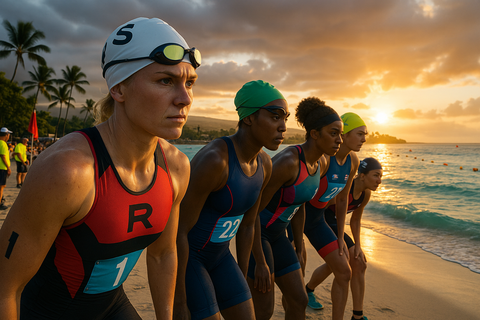

Home Advantage or Home Pressure? The Journey of Team USA's 2028 Olympic Dreams
As the clock ticks down to the LA 2028 Olympic Games, Team USA finds itself at a crossroads, balancing the promise of a strong women's team with the challenges facing the men's program. With the Olympic qualification window set to open in just three months, the United States is gearing up to make the most of its home advantage while navigating a revamped qualification system.
Navigating the New Olympic Qualification System
The path to the 2028 Olympics introduces significant changes from past cycles. While the core structure remains—World Triathlon Championship Series (WTCS) and World Cup events serving as the primary sources of qualification points—the host nation status offers unique opportunities for Team USA.
As hosts, the United States is assured of Mixed Relay spots, provided they have eligible athletes. However, the ultimate goal is to maximize their athlete quota: up to three athletes per gender can qualify if they rank within the top 30. This dual opportunity and pressure point require strategic depth management to ensure optimal selection.
The qualification period kicks off with WTCS Abu Dhabi on March 28, followed by World Cup events starting with Lanzarote on March 14. Early-season performances will be pivotal in establishing the rankings necessary for race entry eligibility.
Women's Division: A Wealth of Talent
The women's program is a testament to Team USA's consistent Olympic medal threat. The depth of talent presents a unique challenge: selecting just three athletes from a pool of qualified contenders.
Taylor Spivey stands as a pillar of American women's triathlon. Ranked 4th in the World Triathlon Rankings with 3125.85 points, her consistent performance over the past decade underscores her importance. Her controversial exclusion from the Tokyo team and subsequent silver medal in Paris 2024 highlight the complexities of selection.
Taylor Knibb is another key player, transitioning back to short-course racing after dominating long-distance events, including her IRONMAN World Championship win in Kona. Her commitment to participating in "four to six" WTCS events signals a serious bid for Olympic qualification.
The return of Gwen Jorgensen, the 2016 Olympic champion, adds depth and experience. At 40, she ranks 35th with 910.99 points, and her ambition for "another three good years" aligns perfectly with the LA 2028 timeline.
Emerging talents like Gina Sereno and Erika Ackerlund continue to rise, while Dani Orie represents the next generation. The anticipated return of Katie Zaferes, a former World Champion, post-childbirth, adds another layer of intrigue.
Men's Division: Challenges and Opportunities
The men's program faces a different narrative, marked by a lack of depth. Morgan Pearson leads the charge, ranked 20th globally with 1643.67 points. His success in T100 racing presents a strategic dilemma, balancing middle-distance rewards with Olympic preparation.
Seth Rider and John Reed are key contenders, with Reed, at 23, representing the future of American men's triathlon. His 17th global ranking with 1741.27 points suggests potential peak performance for LA 2028.
Chase McQueen adds an interesting dynamic, with his 2024 Supertri E World Championship win demonstrating his short-course capabilities. Ranked 28th with 1237.62 points, he remains within reach of automatic qualification.
The retirement of Matthew McElroy, the highest-ranked American male from the previous cycle, represents a significant loss, removing experience and depth from the field.
The Supertri Setback: A Developmental Challenge
A major concern for American men's triathlon is the transformation of Supertri, a crucial development platform for emerging talent. The series' changes—eliminating the team format, reducing events, and shifting toward mass participation—remove a vital pathway just three years before LA 2028.
This loss of race experience and preparation opportunities could have lasting implications, necessitating alternative development strategies from USA Triathlon. Athletes looking to maintain their competitive edge will need to invest in quality triathlon race suits and GPS training watches to optimize their performance tracking.
Strategic Challenges and Opportunities
The selection process will evolve from lessons learned in Paris 2024, where Mixed Relay potential influenced decisions. Upcoming events like WTCS Abu Dhabi and World Cup races will be critical for establishing ranking positions.
The home advantage offers benefits and challenges. Familiar conditions and support systems provide clear advantages, but the pressure of hosting can be overwhelming—a dynamic USA Triathlon must manage carefully. Athletes preparing for these high-stakes competitions should consider advanced training technology to maximize their preparation.
Looking Ahead: The Road to LA 2028
The women's strength offers multiple pathways to success, with proven medalists and rising talent. Achieving the maximum athlete allocation is within reach.
The men's development concerns require immediate attention, with the loss of Supertri as a development platform creating a gap that needs addressing. For athletes at all levels looking to improve their performance, understanding triathlon time standards and investing in proper equipment like quality training bikes can make a significant difference.
The next two years will be pivotal in determining whether Team USA can capitalize on their home advantage or if familiar challenges will limit their potential. As the qualification window opens, keep an eye on athlete selections, early 2026 performances, and USA Triathlon's response to development gaps.
Team USA's journey to LA 2028 is a story of promise and challenges, with unprecedented women's depth and men's development gaps shaping their Olympic dreams.
Find the perfect race day essentials at TriLaunchpad — your triathlon journey starts here. Shop all collections →