Annual Tritonman Triathlon: A Legacy of Endurance at Mission Bay
How UCSD Students Uphold San Diego's Triathlon Heritage with a Two-Day Race for Collegiate Athletes and Aspiring Pros
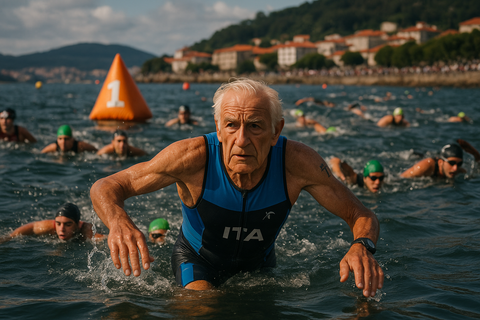
Nearly fifty years after the world's first triathlon was held at Mission Bay, the sport's roots remain firmly planted in San Diego. Each year, a dedicated group of college students—many of whom are just beginning their adult lives—take on the monumental task of preserving this legacy.
The Tritonman Triathlon, orchestrated entirely by the UC San Diego Triathlon Team, is more than a weekend race. It serves as a bridge between the sport's historic beginnings and its contemporary competitive scene, offering amateur athletes a chance to earn professional credentials. It's also a testament to what student-led initiatives can achieve with a year of planning and a $50,000 budget. This year's event spanned two days along the Mission Bay shoreline, attracting collegiate athletes from across California and beyond, alongside local novices eager to experience the sport for the first time.
The Birthplace of Triathlon: Where It Continues to Thrive
San Diego holds a special place in the world of endurance sports. The triathlon—a multisport race combining swimming, cycling, and running—originated here and has since evolved into a global phenomenon, even securing a spot in the Summer Olympics since 2000. UCSD Triathlon began hosting Tritonman in 2009, and while the event doesn't overtly focus on the sport's history, its Mission Bay setting is a subtle homage to those origins.
"It's more of a fun fact—something to tie in how much the San Diego community has done for triathlon and a way that we can keep honoring that and keeping triathlon active and positive for the current age," said Shaina King, a third-year student and co-race director of UCSD Triathlon, in an interview with The UCSD Guardian.
This sense of stewardship permeates every aspect of Tritonman. The race isn't just held at Mission Bay for convenience—it's held there because the location is meaningful. For a sport that has grown from a niche San Diego experiment to an Olympic discipline, having a student-organized event on these same waters feels like a fitting continuation of the story.
Running a $50,000 Race at Age 20
The scale of Tritonman is staggering when you consider who's behind it. There are no professional event planners, no corporate race management firms. Instead, there's a 13-person race board and about 70 UCSD Triathlon team members who volunteer to staff the weekend—all of them students balancing coursework, training, and the logistical complexity of a nationally sanctioned sporting event.
Planning begins a full year before race day. There are permits to secure, sponsorships to negotiate, safety protocols to establish, and coordination with USA Triathlon officials who attend the event to enforce rules and certify results. The budget reaches approximately $50,000—a figure that would give most student organizations pause.
Nicolas Song, a third-year student and co-social chair of UCSD Triathlon, put it plainly: "You know, we're all 20 years old, and we're figuring out how to run this $50,000 race, so it's a pretty unique experience, especially as an undergrad."
That understatement captures something important about Tritonman. The event demands the kind of organizational rigor typically associated with professional race operations—financial management, risk assessment, volunteer coordination, regulatory compliance—and it delivers all of it through the effort of students learning as they go. It's a crash course in event management with real stakes and real athletes depending on everything going right.
Two Days, Two Very Different Races
One of Tritonman's defining features is its two-tiered competition structure, which allows the event to serve both elite competitors and complete newcomers within a single weekend.
Saturday: The Elite, Draft-Legal Race
Saturday's race is a USA Triathlon-sanctioned competition open exclusively to elite and collegiate athletes. It follows a draft-legal format, meaning cyclists are permitted to ride closely behind one another to reduce wind resistance and conserve energy—a technique known as drafting. This adds a significant strategic dimension to the cycling leg, transforming it from a pure test of fitness into a tactical contest.
What makes Saturday's race truly exceptional is its status in the collegiate triathlon world. According to Song, it is "the only collegiate race where you can get your pro card." To earn one, athletes must hit a specific time benchmark in a standardized, certified race—and Tritonman qualifies.
For context, an elite license (or "pro card") grants triathletes professional status, allowing them to compete in elite-level races for prize money. It's the gateway between amateur and professional competition, and the fact that a student-organized event can serve as that gateway speaks volumes about the caliber of the race.
USAT officials attended the event to enforce rules, ensure athlete safety, and certify the course. For the athletes on the start line Saturday morning, Tritonman wasn't just a college race—it was a potential career milestone.
Sunday: A Race for Everyone
Sunday's competition opened the course to all age groups and skill levels. The community race is designed to be an accessible, welcoming introduction to triathlon—a chance for people who have never competed in a multisport event to experience what it's like.
Song's ambition for Sunday's participants was clear: "I want [beginner athletes] leaving Sunday wanting to continue to do that for the rest of their life, you know, like wanting to continue to train, wanting to continue to push themselves and go on to race crazy and really cool races. I want people to kind of get that bug, or like that itch, for triathlon that we all have."
This dual structure—elite competition on day one, community participation on day two—is central to Tritonman's identity. It reflects a belief that the same event can serve both the top of the sport and the very bottom of the entry ramp, and that both groups benefit from sharing the same course and the same weekend.
The Course: Swim, Bike, Run Through Mission Bay
Tritonman's course has remained largely consistent over the event's 15-year history and is widely considered an accessible introduction to the sport. The layout was intentionally designed with spectators in mind, ensuring that friends, family, and fellow athletes can cheer competitors through key moments of the race.
Here's how it breaks down:
- Swim (750 meters): Athletes begin with an open-water swim, completing one clockwise loop in Mission Bay before running up to a grassy transition area.
- Bike (13 miles): From the transition area, competitors mount their bikes and ride three laps around Fiesta Island—a segment known for being flat and fast.
- Run (3 miles): The final leg consists of three laps around Tecolote Shores, bringing athletes past spectators before they cross the finish line.
The multi-lap format for both the bike and run segments is a smart design choice. It keeps athletes visible throughout the race, creates natural opportunities for crowd engagement, and makes the event feel alive in a way that point-to-point courses often can't replicate. For athletes looking to prepare for similar sprint-distance events, investing in proper gear like quality tri suits can make transitions smoother and performance more efficient.
Results: UCSD Athletes on the Course
The weekend produced strong performances across both days of competition.
In Saturday's draft-legal race, two UCSD athletes competed on the men's side: Noah Snider finished 29th and Wesley Bantugan finished 41st. On the women's side, Siwen Cui—one of only two female UCSD athletes in the draft-legal field—finished 39th. The first day concluded with an award ceremony recognizing the top three finishers in the men's and women's collegiate races.
Sunday's classic race drew a broader field. Among the UCSD athletes:
Men's Division:
- Noah Snider — 33rd
- Kalani Daniel — 43rd
- Eric Pedley — 57th
- Jingheng Qian — 111th
- Daniel Ascenio — 143rd
Women's Division:
- Siwen Cui — 2nd place (podium finish)
- Melanie Roberts — 13th
Cui's second-place finish on Sunday was a standout result, and her reflection on the weekend captured something that the race results alone can't convey.
"I'd say the most memorable part, it's actually not the race itself," Cui said. "I think it's more the days leading up to the race because I've been witnessing my teammates working really hard to put this thing together."
That sentiment—that the community effort matters as much as the competition—runs through every aspect of Tritonman.
More Than a Race
Tritonman exists at a remarkable intersection. It's a student-run event that meets professional standards. It's a local tradition that draws athletes from across the state. It's a competitive proving ground where amateurs can earn their way into professional ranks, and it's a welcoming entry point for people who have never clipped into a bike or swum in open water.
"It's just a cool thing that San Diego gets to have, and the fact that students get to put it on and the community benefits from it too, with people coming in from elsewhere and community members being able to participate," Song said.
For a sport that began nearly 50 years ago on these same waters, that continuity matters. The triathlon has gone from a quirky San Diego experiment to an Olympic discipline—and at Mission Bay every year, a group of college students makes sure the tradition keeps going. For those inspired to start their own triathlon journey, understanding what it costs to get started and exploring beginner-friendly races can help turn that inspiration into reality.
Whether you're training for your first sprint triathlon or looking to improve your performance, having the right equipment matters. Essential items like anti-fog swim goggles and proper electrolyte supplements can make a significant difference in your race day experience.
Find the perfect race day essentials at TriLaunchpad — your triathlon journey starts here. Shop all collections →