The Ultimate Guide to the T100 Triathlon World Tour Vancouver: What You Need to Know
Last Updated: Based on inaugural event details and evolving race information.
Let me tell you something that might surprise you: when most people think about triathlon in Vancouver, they picture a leisurely swim in English Bay followed by a scenic bike ride through Stanley Park. That's not what the T100 Triathlon World Tour Vancouver is about.
This isn't your typical age-group triathlon where you're racing against the clock and your personal demons. This is where the world's elite triathletes come to battle it out on one of the most technically demanding urban courses in North America—and yes, there's a spot for ambitious age-groupers who want to test themselves on the same course as the pros.
Event Overview: What Makes Vancouver's T100 Different
- Official Event Name: T100 Triathlon World Tour Vancouver
- Date: Inaugural event held in 2024, with the 2025 iteration taking place June 13-15 at Jericho Beach Park, and the next edition scheduled for August 15-16, 2026
- Location: Vancouver, British Columbia, Canada—a stunning backdrop that combines downtown urban racing with mountainous terrain
- Organizing Body: The Professional Triathletes Organisation (PTO) through their T100 Triathlon World Tour
Here's what sets this race apart: it's designed to challenge the best in the world. The race distances tell the story:
- Swim: 2 km (1.24 miles)
- Bike: 80 km (49.7 miles)
- Run: 18 km (11.2 miles)
You might be thinking, "Those distances don't look that intimidating." And you'd be right—until you experience the technical descents, the significant elevation shifts, and the draft-legal format that turns this into a tactical chess match at 40+ km/h.
Why This Event Matters
The Vancouver stop isn't just another race on the calendar. As part of the global T100 circuit (the successor to the PTO Tour), it carries massive significance for the series standings and comes with a substantial prize purse. When you toe the line here, you're not just racing—you're writing a chapter in professional triathlon history.
For age-group athletes, the 100km distance serves as a qualifier for the T100 World Championships in Qatar. Think about that: you could race the same course as Olympic champions and world record holders, and if you perform well enough, earn your ticket to compete on the world championship stage. If you're new to this distance, check out our comprehensive guide on what is T100 triathlon to understand what makes this format unique.
Registration Details
- Process: Through the official T100 online portal
- Professional Division: Requires a valid professional triathlon license
- Age-Group Categories: Available for amateur athletes who want to test themselves against a world-class course
- 2026 Event Benefits: Industry-leading refund policy (50% refund 90 days out, 25% refund until 30 days before race day)
Technical Specifications: What You're Really Getting Into
The Swim—Cold Water Meets Coastal Currents
Let me be honest with you: Vancouver's coastal waters aren't the Caribbean. You're looking at cold to cool water temperatures (typically 12-16°C / 54-60°F), potential currents, and variable visibility.
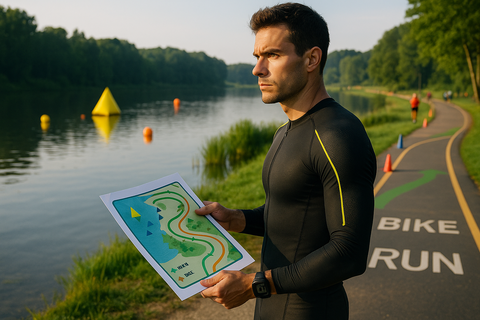
The 2025 race utilized Jericho Beach Park as the venue, featuring a pontoon start. You'll likely encounter a rectangular or point-to-point course designed to showcase the stunning coastal setting while testing your open water skills.
What this means for you: Wetsuit usage is highly likely to be permitted (and strongly recommended for age-groupers). If you're not comfortable swimming in colder water with variable conditions, you need to address that in training—now. For cold water preparation tips, read our article on conquering freezing triathlons.
The Bike—Where Races Are Won and Lost
Here's where the Vancouver T100 separates itself from almost every other triathlon you've done. The course is described as "technical" with "significant elevation shifts."
Think about what "technical" really means:
- Challenging climbs that test your power-to-weight ratio
- Fast, potentially dangerous descents requiring advanced bike handling
- Variable road surfaces from smooth city asphalt to rougher mountain roads
- Exposed sections where coastal winds can wreak havoc on your race plan
The detailed elevation profile remains unavailable publicly, but reports from the inaugural race make one thing clear: this bike course demands respect.
But here's the game-changer: drafting is LEGAL on the bike. This is draft-legal racing, governed by T100/World Triathlon rules.
What does this mean? Everything you know about traditional Ironman-style time trialing goes out the window. This becomes a tactical race where:
- Forming the right group can save you massive amounts of energy
- Positioning before key climbs and descents is critical
- One wrong move or missed bridge can cost you the race
- Penalty enforcement is strict—time penalties were reported to have altered podium outcomes in the inaugural race
Equipment requirements:
- Standard draft-legal triathlon bike or lightweight road bike
- No disc wheels allowed (this is draft-legal racing)
- Aero helmets are standard
- Your bike handling skills matter more than your equipment's aerodynamic properties
If you're looking to upgrade your bike setup for this race, consider investing in a quality road bike with Shimano components that can handle both technical descents and sustained climbs.
The Run—The Final Battle
After 80km of technical, tactical bike racing, you'll face an 18km run that culminates in a downtown finish. The course is expected to be rolling (less severe than the bike leg) and predominantly on paved roads and paths.
Don't underestimate this run. At 18km (just over 11 miles), it's long enough to punish anyone who went too hard on the bike, but short enough that you can't just settle into a comfortable pace. This is where races become wars of attrition. For insights on how elite athletes approach the run leg after a hard bike, check out our analysis of how triathlon cross-training makes you a faster runner.
The Logistics You Need to Know
Race Day Operations
While specific check-in times and transition details vary year to year, professional/elite check-in typically occurs 1-2 days prior to race day. Transition efficiency is paramount—at this level, 5 seconds lost in T1 or T2 can be the difference between podium and mid-pack.
Spectator Access
One of Vancouver's advantages is excellent viewing opportunities around the downtown finish area and key points on the run course. If you're bringing family or friends, they'll have multiple opportunities to cheer you on—and trust me, you'll need that encouragement.
Course Support
Aid stations are strategically placed on both bike and run courses. Full professional-level mechanical and medical support will be present throughout. Chip timing with live athlete tracking means everyone following at home can watch your race unfold in real-time.
Environmental Factors: Mother Nature's Wild Card
Weather Reality Check
Vancouver in late spring through summer (the typical race window) is mild but unpredictable. You're looking at temperatures ranging from 15-22°C (59-72°F), but don't be surprised by rain or morning fog.
I've trained in Vancouver, and I can tell you: the weather can change in minutes. That beautiful sunny morning can turn into a drizzly descent that makes those technical bike sections even more challenging.
Water Temperature
Those 12-16°C (54-60°F) coastal waters aren't just cold—they're performance-affecting if you're not prepared. Wetsuit regulations follow World Triathlon rules based on race morning measurements (typically mandatory below 16°C, prohibited above 24°C for age-group).
Wind Factor
Coastal winds can be a significant factor, especially on exposed sections of the bike course—bridges, waterfront stretches, anywhere you're not sheltered by buildings or terrain. This is where race tactics become crucial. Being in the right group, in the right position, can save you watts that you'll desperately need later.
Athlete Preparation: How to Actually Get Ready
Training Timeline and Approach
A standard 12-16 week specialized build is recommended, but here's what most athletes get wrong: they train for this like it's a standard triathlon. It's not.
Essential Focus Areas
- Technical, draft-legal bike handling in a pack—this is non-negotiable. If you've never raced draft-legal before, you need to learn how to ride inches from another wheel at 40+ km/h.
- Variable pacing on hills—the constant power fluctuations on this course are different from steady-state efforts. Your training needs to reflect this.
- Cold/open water swimming—if you're not used to swimming in cooler water, start acclimating now. Your breathing pattern will change. Your body will react differently. Deal with this in training, not on race day. Quality anti-fog swim goggles are essential for variable water conditions.
Local Training Advantages
If you're in the Vancouver area, you've hit the jackpot:
- Stanley Park Seawall for flat bike/run work
- North Shore Mountains for climbing specific to the race demands
- Numerous open water swim venues to acclimate to race conditions
Course Familiarization
If at all possible, recce the bike course's key climbs and descents and the run course's finish circuit. Knowing what's coming
What makes the T100 Triathlon World Tour Vancouver different from other triathlons?
The T100 Triathlon World Tour Vancouver is distinctive due to its technically demanding urban course that combines downtown racing with challenging mountainous terrain. It features draft-legal racing, significant elevation changes, and a tactical aspect with an elite-level competition standard.
What are the race distances for the Vancouver T100 event?
The race consists of a 2 km swim, an 80 km bike ride, and an 18 km run. Despite not appearing long, these distances are challenging due to the technical nature of the course including tough descents and elevation shifts.
What should athletes expect from the swimming portion of the race?
Athletes can expect cold to cool water temperatures ranging from 12-16°C, potential coastal currents, and variable visibility. Wetsuit usage is likely to be permitted and strongly recommended.
How is the cycling segment unique in the Vancouver T100 triathlon?
The cycling segment is unique due to its technical course with significant elevation shifts and draft-legal racing. Athletes face challenging climbs, dangerous descents, and variable road surfaces, requiring advanced bike-handling skills and tactical group formation.
What are the weather conditions typically like during the race?
Vancouver in late spring through summer offers mild but unpredictable weather, with temperatures between 15-22°C. Athletes should be prepared for possible rain, morning fog, and coastal winds that can impact race conditions.
How should athletes prepare for the Vancouver T100 Triathlon?
Athletes should focus on technical, draft-legal bike handling, variable pacing on hills, and acclimating to cold/open water swimming. A 12-16 week specialized build focusing on these aspects is recommended, with local training offering an advantage for those near Vancouver.
Where can participants find detailed logistical information and updates?
Participants should refer to the T100 Triathlon Official Website for confirmed race dates, detailed course maps, registration details, specific logistical instructions, and official rulebook updates.
Discover unique triathlon-themed merchandise, including stylish t-shirts, stickers, phone cases, and home decor - perfect for endurance sports enthusiasts and athletes. Shop now
Find the perfect race day essentials at TriLaunchpad — your triathlon journey starts here. Shop all collections →