Against the Odds: How Athletes Conquered Smoke and Heat at the 2026 Cereal City Triathlon
When Canadian wildfire smoke drifted south toward Battle Creek, Michigan, in the days leading up to the 2026 Cereal City Triathlon, a cloud of uncertainty loomed over the event. Would the haze force a cancellation? Would athletes stay home? As it turned out, the answer to both questions was a resounding no. When Saturday morning arrived, a favorable wind swept across Goguac Lake, the sky brightened, and hundreds of competitors dove into the water ready to race. For the triathlon community, this was never really a surprise. Endurance athletes don't quit when conditions get tough — they adapt, show up, and compete.
The 2026 Cereal City Triathlon delivered everything a summer race should: dramatic weather intrigue, dominant back-to-back performances, a family storyline that felt made for a sports documentary, and a community of athletes who reminded everyone why local events like this one matter. Whether you're a seasoned multisport competitor or someone curious about what it takes to cross your first finish line, this race has something to teach you.
Smoke and Determination: When Mother Nature Tests the Field
The Challenge Nobody Could Control
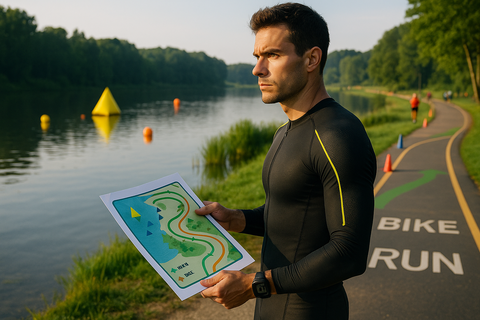
In the week leading up to July 18, smoky haze from Canadian wildfires blanketed much of the Midwest, including Battle Creek. For a race built around an outdoor swim in Goguac Lake, followed by a 12-mile bike leg and a 3.1-mile run, air quality is not a minor concern — it's a safety issue that event organizers take seriously.
Event director Emily Bandeen and her team kept a close eye on conditions throughout the week. Cancellation was on the table. For athletes who had spent months training for race day, that uncertainty was its own kind of mental test.
Sprint triathlon champion Sean Siems, who made the trip from Kalamazoo, summed up the competitive mindset perfectly: "None of that weather stuff bothers me. I was going to be fine either way. But it was good that the smoke cleared a bit."
That matter-of-fact attitude — acknowledging the challenge while refusing to be defined by it — is textbook endurance sports psychology. Triathletes train their bodies to push through discomfort. They train their minds the same way.
The Perfect Window Opens
By Saturday morning, race organizers got exactly what they needed. A breeze moved the haze out, temperatures stayed comfortable, and Goguac Lake looked every bit like the summer race venue it's meant to be.
"Not too many people were concerned this morning about the weather," said Bandeen. "We were really happy with the turnout. The wind blew some of the haze out. We were really pleased. The weather worked out in our favor. I feel like we really lucked out. I feel like this was the best window we could have hoped for."
Strong turnout despite a difficult forecast week is a testament to both the event's reputation and the character of its athlete community. When you've built a race that people genuinely love, they'll show up even when the skies aren't cooperating.
For beginners: Environmental challenges are an increasingly common part of endurance sports. Learning to monitor air quality indices (AQI) and understanding race-day weather patterns is a skill every triathlete should develop — almost as important as your brick workouts.
Sean Siems Makes It Back-to-Back: A Champion's Blueprint
Defending the Title
Winning a competitive sprint triathlon once takes talent, fitness, and sound race-day execution. Winning it twice in a row requires something more: the discipline to return to training after the victory, the hunger to defend what you've earned, and the tactical awareness to improve on your weaknesses.
Sean Siems of Kalamazoo checked all three boxes at the 2026 Cereal City Triathlon, crossing the finish line in 57:26 to claim his second consecutive overall title.
His motivation was clear from the start. "I wanted to come back and defend my title," Siems said. "This is a fun race, a great course with some nice people."
That last sentence matters more than it might seem. The best athletes don't just return to races for glory — they return because the event itself is worth something. The Cereal City Triathlon has built exactly that kind of reputation.
How He Got Faster: The Training Adjustment That Made the Difference
What separates good athletes from champions is the willingness to honestly assess where they're losing time and then do something about it. After his 2025 victory, Siems identified the bike segment as his opportunity for improvement — and he went to work.
"I liked how I came out of the water, but I was really happy with my bike," he said. "I have been working on that, training more on the bike and I was happy with that."
This is the kind of deliberate, weakness-targeted training that coaches preach but few athletes consistently apply. The 12-mile bike loop through the Lakeview area of Battle Creek is technical enough that time can be made or lost there, and Siems clearly found time to gain.
The Competition Behind Him
The podium tells a compelling story on its own:
| Place | Athlete | Hometown | Time |
|---|---|---|---|
| 1st | Sean Siems | Kalamazoo | 57:26 |
| 2nd | Jeremy Sikkema | — | 1:01.07 |
| 3rd | Rob Wieland | Battle Creek | 1:02.06 |
Jeremy Sikkema is no slouch — he's a three-time former Cereal City champion who finished as runner-up for the second consecutive year. The fact that Siems is beating a three-time champion — not once but twice — underscores just how strong his performances have been. The top three finishers were separated by under five minutes across a 14.8-mile combined race distance, which speaks to the quality and competitiveness of the field.
The Siems Family Dynasty: A Storyline Worth Watching
Brie Siems Completes a Three-Peat
If Sean Siems' back-to-back title is impressive, his younger sister Brie Siems is writing an even more remarkable chapter. At just 17 years old, Brie claimed the overall female division title for the third consecutive year, finishing in a time of 1:15.22.
Three consecutive victories — at an age when many athletes are still figuring out their sport — signals something exceptional. Brie isn't just talented; she's consistently dominant, which is a different thing entirely.
The female podium for 2026:
| Place | Athlete | Hometown | Time |
|---|---|---|---|
| 1st | Brie Siems | Kalamazoo | 1:15.22 |
| 2nd | Sadie Ebel | St. Joseph | 1:16.37 |
| 3rd | Cara VanderJagt | — | 1:18.41 |
The margin between first and second — just over a minute — shows this is a genuinely competitive female field. Brie is winning it outright, not coasting.
Siblings Who Race Together, Win Together
There's something uniquely compelling about a brother and sister both standing at the top of the same race podium. The Siems family turned the 2026 Cereal City Triathlon into what reporter Bill Broderick aptly called "a family atmosphere" — and for the second straight year, no less.
Training alongside a competitor who pushes you from the first workout of the season to the taper week before race day is one of the most underrated performance advantages in sport. The Siems siblings appear to have exactly that dynamic.
For parents of young athletes: Brie Siems' trajectory is a powerful example of what youth participation in multisport can look like. Starting young, training consistently, and competing in accessible formats like sprint triathlon builds a foundation that pays dividends for decades.
Race Format 101: What the Cereal City Triathlon Looks Like on the Ground
The Sprint Triathlon Distance
If you've never watched or competed in a triathlon before, the sprint distance is the ideal starting point — both for spectators and first-time racers.
The Cereal City Sprint Triathlon covers:
- 🏊 500-meter swim in Goguac Lake
- 🚴 12-mile bike through the Lakeview area
- 🏃 3.1-mile run to the finish
Total combined distance: approximately 14.8 miles. Elite athletes can finish in under an hour. Most recreational competitors complete it in 1:15 to 1:45. The finish line welcomes all of them with equal enthusiasm.
What is a sprint triathlon? It's the entry-level distance in competitive triathlon — shorter than Olympic, half-distance, and full long-distance triathlon formats. It's the perfect starting point for multisport athletes who want to test themselves across all three disciplines without committing to extreme mileage.
The Super Sprint: Where New Athletes Begin
For athletes who aren't quite ready for the full sprint distance — or who are competing for the first time — the Super Sprint Triathlon offers a shorter alternative. It's also a popular format for youth competitors.
In 2026, Roan VanSumeren of Jackson took the Super Sprint crown in 46:35, with Bellevue's Gavin Potter close behind at 49:25.
The Super Sprint's inclusion in the Cereal City Triathlon program is more than a logistical detail — it's a philosophical statement. This event is for everyone, not just elite competitors.
Duathlon Option: No Swimming Required
The event also offers a duathlon format — a run-bike-run course that removes the swim entirely. This makes the event accessible to athletes who haven't mastered open-water swimming or who are building toward their first full triathlon. It's a smart on-ramp into the multisport world.
What This Race Tells Us About the Triathlon Community
Local Events Are the Heartbeat of the Sport
National-level races and long-distance triathlons get the headlines, but community events like the Cereal City Triathlon are where most athletes actually live their sport. They're where beginners take their first strokes in open water, where local rivalries are born, where families cheer from the lakeside, and where champions like Sean and Brie Siems build their competitive identities.
Battle Creek has a rich identity rooted in its history as "Cereal City" — the birthplace of American breakfast cereals, home to Kellogg's and Post. Attaching a triathlon to that civic brand is a smart move, creating a race that locals take pride in and athletes return to year after year.
Climate Adaptation Is Now Part of the Sport
The 2026 Cereal City Triathlon will be remembered, in part, for navigating Canadian wildfire smoke. But this wasn't an anomaly — it's a preview of what endurance sports communities will increasingly face. Air quality, heat management, and environmental monitoring are becoming standard components of race-day planning for organizers and athletes alike.
The Battle Creek organizing team's proactive approach — monitoring conditions, communicating with athletes, and being prepared to make decisions — is a model for how local events can handle these challenges responsibly.
Accessibility Drives Growth
One of the clearest signals that an endurance sports event is healthy is whether it attracts new participants alongside veterans. The Cereal City Triathlon's multi-format structure — sprint, super sprint, duathlon — creates genuine entry points for athletes at every level. That's how you build a pipeline of competitors who come back year after year, eventually aging into more competitive categories and bringing friends with them.
If you're a fitness-curious reader wondering whether triathlon is "for you" — events like this one exist precisely to answer that question with a yes.
Full 2026 Cereal City Results at a Glance
Sprint Triathlon — Top Finishers
Overall Men's Podium:
- 🥇 Sean Siems, Kalamazoo — 57:26
- 🥈 Jeremy Sikkema — 1:01.07
- 🥉 Rob Wieland, Battle Creek — 1:02.06
Overall Women's Podium:
- 🥇 Brie Siems, Kalamazoo — 1:15.22
- 🥈 Sadie Ebel, St. Joseph — 1:16.37
- 🥉 Cara VanderJagt — 1:18.41
Frequently Asked Questions
What were the weather conditions like during the 2026 Cereal City Triathlon?
The weather conditions improved during the event, with a nice breeze and good temperatures after a period of smoky haze due to wildfires in Canada.
Who won the 2026 Cereal City Triathlon?
Sean Siems from Kalamazoo won the triathlon, finishing with a time of 57:26, marking his second consecutive victory in this event.
What were the results for the female competitors?
The top female finisher was Brie Siems from Kalamazoo with a time of 1:15.22. She has won the female division for three consecutive years.
What is the course layout of the Cereal City Triathlon?
The event consists of a 500-meter swim at Goguac Lake, followed by a 12-mile bike ride through the Lakeview area, and concluding with a 3.1-mile run.
What were the event organizers' thoughts on the turnout and conditions?
Event organizer Emily Bandeen expressed satisfaction with the turnout, noting that the weather conditions improved and that they felt fortunate for the favorable conditions on race day.
Source: Battle Creek Enquirer — 2026 Cereal City Triathlon Results