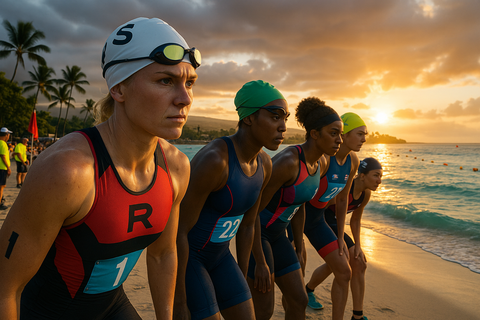
What does a mother do with grief that seems endless? Rebecca Kowalski found her answer in the words of her seven-year-old son and in the finish lines of thousands of children he never got to meet.
On December 14, 2012, Chase Kowalski was one of 20 children and six educators tragically killed in the Sandy Hook Elementary School shooting in Newtown, Connecticut. At just seven years old, Chase had a passion for triathlon — the swim-bike-run endurance sport that captivates athletes of all ages. Although Chase never got to compete in a full race, his legacy lives on as more than 5,000 children have crossed a finish line in his name.
This remarkable number didn't happen by chance. It happened because his mother made a promise. This is the story of Race4Chase — a program that transformed personal devastation into a nationwide youth triathlon movement, proving that legacy doesn't have to be passive. It can swim, bike, and run.
The Vision That Started Everything
In the aftermath of the shooting, Rebecca Kowalski was navigating a grief that defies description. Then came a moment that redirected everything.
“After we lost Chase, he came to me in a vision and said, mama, we’re going to change the world. And I said, Chase, I don’t understand. And he put the people in front of me.” — Rebecca Kowalski, Founder, Race4Chase
That vision became her guiding light. Rather than letting Chase's love of triathlon die with him, Kowalski decided to share it with other children — children who had never heard of the sport, children who didn't know how to swim or ride a bike, children who simply needed someone to believe they could do hard things.
She founded Race4Chase and the CMAK Foundation, channeling her grief into an organizational structure that could outlast any single moment of inspiration. What began at a handful of Connecticut YMCAs has since expanded to dozens of locations across the country.
How Race4Chase Works
A Camp-Based Introduction to Triathlon
At its core, Race4Chase is a youth triathlon training program. Camps teach children the three disciplines of the sport — swimming, cycling, and running — through structured instruction designed for beginners. No prior experience is required, and that accessibility is intentional.
Participant Lucas Palomeque speaks to what many kids experience when they first arrive:
“In the beginning, I didn’t really know how to bike, run and swim. I was actually forced to learn biking prior to starting the camps. I didn’t know at all what the camp really is for and what it means.”
Palomeque has now completed the program three times. “I just think it’s a great program,” he said simply — the kind of understatement that says everything.
Built for the Beginner, Sustained by Meaning
What separates Race4Chase from a standard athletic camp is the story woven into every session. Participants learn not just how to swim a lap or shift gears on a bike, but why they’re doing it — and whose memory they’re honoring. That meaning has staying power.
“I’ve been doing this program for three years, and I think it really stuck to my heart.” — Lucas Palomeque
The finish line isn’t just athletic — it’s emotional. Each child who completes a triathlon through Race4Chase fulfills something Chase never got to experience himself.
From Connecticut to Coast-to-Coast
The growth of Race4Chase mirrors the growth of its founder. Board member Jim O’Rourke, who has been with the CMAK Foundation since its early days, recalls a very different Rebecca Kowalski from the one who now commands rooms of hundreds:
“I’ve seen her grow up through the program. But I remember the first year, her hesitation to go in front of a bunch of kids, and now she stood in front of 700 kids and — I’m going to say a thousand parents and family members here today — and just gave a heartwarming speech.” — Jim O’Rourke, Board Member, CMAK Foundation
That single event — 700 children and more than 1,000 family members gathered in Chase’s name — illustrates how far Race4Chase has traveled from its modest beginnings.
The Ripple Effect: Impact Beyond Athletics
Every Finish Line Carries a Name
For Kowalski, the growth of Race4Chase is bittersweet in the most profound way. She watches other children grow up — through the sport, through the program, through years of participation — while holding the reality that her own son cannot.
“As hard as it is to not see my own son grow up… to be welcomed into these families, that just warms my heart. Every time.” — Rebecca Kowalski
This is the emotional core of Race4Chase. It isn’t a charity that operates at arm’s length from its cause. Kowalski shows up, season after season, to welcome families she’s never met — and in doing so, keeps Chase present in the world.
Families as the Unit of Change
The program’s impact extends well beyond the individual child who learns to swim or pedal. Parents, siblings, and extended families gather at finish lines and become invested in a community built around purpose. Youth athletic programming, at its best, reshapes how families relate to effort, resilience, and shared meaning — and Race4Chase does exactly that.
Building Confidence, One Discipline at a Time
Triathlon is a demanding sport even for adults. For a child who showed up not knowing how to ride a bike, completing a race — however short the distances — represents a genuine achievement. That experience of overcoming, of finishing something hard, builds the kind of confidence that transfers to every other area of a young person’s life.
Chase’s 21st Birthday and the Ongoing Mission
2026 marks the year Chase Kowalski would have turned 21. The foundation created in his name chose not to let that milestone be defined only by loss. Instead, it serves as a marker of how far the mission has traveled — and how much further it intends to go.
The CMAK Foundation continues to expand Race4Chase to new YMCA locations, reaching children in communities that might otherwise have no pathway into endurance sports. The model is straightforward: partner with established community institutions, train coaches, welcome beginners, and let children discover what they’re capable of.
What started as one mother’s vision has become a blueprint for how grief can be transformed into something generative — something that keeps moving forward, like a race that never quite ends.
Why This Story Matters for the Triathlon Community
If you’ve been in the triathlon world for any length of time, you know the sport has a reputation for being expensive, gear-intensive, and intimidating to newcomers. Race4Chase challenges all of that. It places a seven-year-old’s love of triathlon at the center of a program explicitly designed for children with zero experience and zero equipment knowledge.
That’s a powerful reframe — and one that resonates particularly in communities where youth sports access is uneven. Every child who completes a Race4Chase triathlon represents a small act of democratization: proof that this sport isn’t just for adults with disposable income and years of training. It belongs to anyone willing to learn.
For parents and coaches exploring triathlon training gear or looking to introduce young athletes to the sport, programs like Race4Chase are a reminder that the right entry point can change a child’s relationship with athletic challenge forever.
How You Can Be Part of Chase’s Legacy
Race4Chase needs more than goodwill — it needs people willing to act. Here are concrete ways to engage:
- Enroll your child: Visit race4chase.org to find a program location near you. The program is designed for beginners; no prior athletic experience is required.
- Volunteer: Coaches, logistics support, and event-day volunteers help Race4Chase deliver its program at scale. Check the foundation’s website for current opportunities.
- Donate: The CMAK Foundation accepts contributions that directly support program expansion, scholarships, and equipment for children who need it.
- Share the story: Awareness is infrastructure. Every time someone discovers Race4Chase, there’s a chance another child finds their way to a finish line.
- If you’ve experienced loss: Kowalski’s model offers a quiet invitation to other bereaved families. The specificity of Chase’s passion — triathlon — is precisely what makes the program authentic. Consider how the particular loves of your own lost loved ones might become the foundation of something lasting.
Key Takeaways
| 5,000+ | Children trained to complete a triathlon through Race4Chase |
| 20 children, 6 educators | Lives lost at Sandy Hook on December 14, 2012 |
| 7 years old | Chase Kowalski’s age at the time of his death |
| 2026 | The year Chase would have turned 21 |
| 700+ children | Attended a single recent Race4Chase program event |
| Dozens of locations | Race4Chase’s current national footprint, grown from a handful of Connecticut YMCAs |
Chase Kowalski came to his mother in a vision and said they were going to change the world. He showed her the people. She spent more than a decade making sure those people — thousands of them, each one a child learning to swim, to ride, to run — knew his name.
Every finish line is a promise kept.
Interested in introducing young athletes in your family to triathlon? Explore our swimming goggles and cycling helmets to help kids gear up for their first event.
Frequently Asked Questions
What is Race4Chase?
Race4Chase is a youth program founded in memory of Chase Kowalski, who was a victim in the Sandy Hook Elementary School shooting. It introduces children to triathlons and encourages them to develop athletic skills.
How did Race4Chase start?
Race4Chase was founded by Rebecca Kowalski, Chase’s mother, as a promise to honor her son’s legacy after his tragic death. The program has expanded from a few YMCA locations in Connecticut to dozens across the country.
How many children have participated in Race4Chase?
Since its inception, Race4Chase has helped train over 5,000 children to compete in and complete triathlons, allowing them to experience the joy of the sport that Chase loved.
What are some outcomes of the program for participants?
Participants, like Lucas Palomeque, have reported personal growth through the program, gaining skills in biking, running, and swimming, as well as a sense of community and achievement.
What is the significance of Chase Kowalski’s legacy?
Chase’s legacy is honored through the Race4Chase program by welcoming families into a supportive community and helping children achieve their dreams, with each finish line crossed symbolizing a continuation of his spirit and love for triathlon.
Source: NBC Connecticut — Race4Chase helps thousands of children carry on Sandy Hook victim’s dream