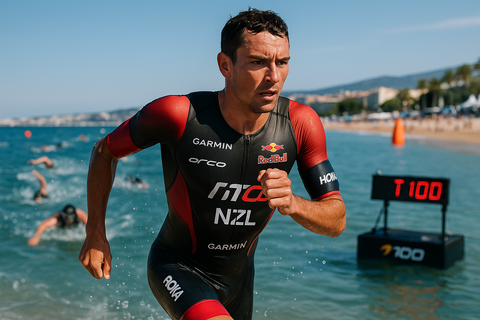
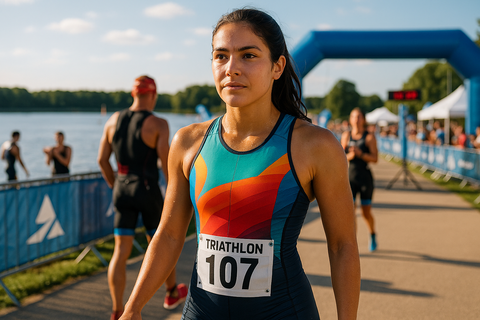
London is preparing for a monumental sporting weekend, the likes of which it hasn't seen in over a decade. On 25–26 July 2026, ExCeL London at Royal Victoria Dock will host the London T100 Triathlon alongside the World Triathlon Championship Series (WTCS), creating a weekend of unparalleled endurance sports.
What makes this event truly remarkable is the return of the WTCS to British soil after an 11-year hiatus, marking the 2026 edition as both a homecoming and a fierce competition. This weekend blends elite international racing with mass participation, welcoming everyone from seasoned age-groupers to first-timers eager to experience the thrill of race day.
Whether you're a triathlete seeking a bucket-list race, a tourism professional interested in London's sports event strategy, or simply a fan of endurance sports eager to witness the world's best compete on iconic urban terrain, this guide covers everything you need to know.
The Race Weekend at a Glance
- Dates: 25–26 July 2026
- Venue: ExCeL London, Royal Victoria Dock, East London
- Key Events: T100 (100km challenge), Olympic-distance, Sprint, Super Sprint, Relay
- Governing Partners: Professional Triathletes Organisation (PTO), World Triathlon, London Marathon Events
- Significance: First WTCS return to London since 2015
Elite Competition Meets Mass Participation
WTCS Returns to London After an 11-Year Absence
The World Triathlon Championship Series represents the pinnacle of Olympic-distance triathlon racing — 1.5km swim, 40km bike, 10km run — contested by the world's top professional triathletes. London last hosted this prestigious series in 2015, making the 2026 return a significant moment for British sport.
In partnership with the Professional Triathletes Organisation (PTO), World Triathlon, and London Marathon Events, this competition brings the world's elite back to British soil, accompanied by media attention, international prestige, and economic vitality. For triathlon fans across Europe — and beyond, including growing communities in Latin America and Mexico — this is a race weekend that deserves a spot on the travel calendar.
A Race Programme Built for Every Level
What transforms this from a professional spectacle into a true community event is the diverse race programme alongside the elite competition. Participants can choose from:
- T100 – the flagship 100km challenge combining swim, bike, and run
- Olympic-Distance – the classic format mirroring elite competition
- Sprint – a shorter, high-intensity option
- Super Sprint – ideal for newcomers stepping into racing for the first time
- Relay Teams – perfect for groups who want to share the experience
This multi-distance structure is deliberately inclusive. Experienced competitors, first-time triathletes, and relay teams are all welcome, turning the weekend into a celebration of endurance sport rather than merely a professional championship. It's an event where a seasoned competitor can line up knowing that somewhere earlier in the day, a nervous beginner finished their very first triathlon on the same course.
If you're preparing your first triathlon kit and dreaming of a destination race, the London T100 format is exactly the kind of event worth building toward.
Racing Through London's Most Iconic Landscapes
The course itself is a major attraction. Athletes begin with a swim in the Royal Victoria Dock, one of London's most striking urban water features. They then head out onto traffic-free roads through the capital — an experience few cities can replicate at this scale. The weekend concludes on a fast, spectator-friendly running course designed to keep fans close to the action throughout.
This isn't racing in a remote venue or an industrial complex — it's racing through vibrant London. The combination of iconic scenery and accessible viewing areas creates an atmosphere that's as compelling for spectators as it is for competitors.
Why ExCeL London Is the Ideal Venue
From Exhibition Hall to World-Class Events Destination
ExCeL London has long been recognized as one of Europe's premier exhibition and conference venues, hosting major trade fairs, international summits, and industry events throughout the year. The 2026 T100 weekend showcases something more: ExCeL's evolution into a year-round destination capable of hosting world-class sporting events at the highest level.
This diversification — from exhibitions and conferences into large-scale sport, entertainment, and public festivals — is increasingly how premium event venues justify their infrastructure investment and maintain relevance across the calendar. The T100 and WTCS partnership with ExCeL sends a clear signal to the global events industry: this venue can do it all.
Transport Connectivity That Actually Works
One of the most practical reasons ExCeL London works so well for an international sporting event is its exceptional transport access. Participants and spectators arriving from across Europe — Germany, France, Spain, Italy, Switzerland, and beyond — face none of the logistical friction that can undermine a race experience:
- Elizabeth line – direct rail connection to Custom House station
- Docklands Light Railway (DLR) – additional public transport routes throughout the area
- London City Airport – international connections just minutes from the venue
This matters enormously for an event drawing athletes from dozens of countries. Efficient transport connections reduce friction — for the competitor managing bike boxes and kit bags, for the family traveling together, and for the business traveler extending a trip around the race weekend. The comprehensive public transport options also reduce reliance on private vehicles, directly supporting London's broader sustainability ambitions.
Strategic Location Within Greater London
Beyond the transport links, ExCeL's position in East London places it within easy reach of some of the city's most compelling attractions. Visitors extending their stay have convenient access to:
- Tower Bridge and the Tower of London
- Greenwich and its maritime heritage
- The O2 arena
- Canary Wharf's dining and retail district
- London's West End for theatre, shopping, and culture
This geographic positioning is a genuine asset for destination marketing. The racecourse ends; the London experience continues.
Tourism & Visitor Economy Impact
The Hospitality Multiplier Effect
Consider what happens when thousands of athletes, team members, coaches, families, and supporters descend on a single city for a weekend of elite and mass-participation racing. Every one of those visitors needs a place to sleep, somewhere to eat, ways to get around, and — often — things to do beyond race registration and transition prep.
Hotels across East London, Canary Wharf, and the Docklands are expected to see increased occupancy throughout the race weekend. Restaurants, cafés, retailers, and transport operators across the surrounding area benefit from heightened demand that a typical summer weekend simply wouldn't generate.
The multiplier effect is real: one athlete traveling from Spain or Mexico might bring a partner, a training partner, or a parent along. Those additional guests generate hotel nights, restaurant covers, museum tickets, and transport revenue that collectively represent significant economic impact — even before you factor in the media crews, event staff, and support teams.
Extended Stays: When Sport Becomes a Gateway to Destination Travel
International visitors drawn specifically by a sporting event frequently discover that they want more than the event itself. The T100 weekend has strong potential to convert sports tourism into extended leisure travel — and London's depth as a destination makes that conversion unusually easy to achieve.
A triathlete flying in from São Paulo, Mexico City, or Madrid for the race might spend the days before or after exploring Greenwich, taking a Thames river cruise, or catching a West End show. This secondary spending — generated beyond the event's footprint — is precisely what destination marketers mean when they talk about the long-term value of hosting world-class sporting events.
Global Media Exposure: Free Destination Marketing at Scale
WTCS events attract international broadcast coverage, digital media attention, and social media engagement that would cost millions to replicate through conventional advertising. When the world's top professional triathletes race through traffic-free London streets with the capital's skyline as backdrop, those images travel globally.
For London's tourism positioning, this is essentially free destination marketing at international scale — reaching audiences in markets where London's appeal as a sports tourism destination might not yet be fully established. Cities increasingly compete to host globally recognized sporting events for exactly this reason: the return on investment in media value alone can justify the logistical and financial complexity of staging world-class competition.
Accessibility & Sustainability
Public Transport as Core Event Strategy
The transport strategy for the T100 weekend isn't an afterthought — it's a core part of what makes the event work. The Elizabeth line's direct connection to Custom House station, combined with DLR access and the proximity of London City Airport, creates a genuinely multi-modal transport ecosystem around ExCeL.
For an event of this scale, prioritizing public transport isn't just environmental policy — it's practical event management. Reducing the number of private vehicles converging on a single venue reduces congestion, improves arrival reliability for athletes, and creates a better overall experience for everyone involved. It also aligns with London's documented environmental commitments around major events, which increasingly include carbon reduction targets and sustainability reporting.
Spectator Design: Getting Fans Close to the Action
Great sporting events are designed with spectators in mind, not just competitors. The T100 course through London is specifically designed to place fans close to the action throughout the weekend, leveraging the urban setting to create viewing opportunities that an out-of-town venue simply cannot replicate.
This matters for participation numbers, for atmosphere, and for the event's broader appeal as a tourism product. When spectating a triathlon means standing on an iconic London street watching elite athletes race past with the city skyline behind them, the event becomes something worth traveling to even if you're not competing.
Setting a Standard for Future Events
The sustainability and accessibility approach embedded in the T100 weekend has implications beyond July 2026. Events that demonstrate how to run large-scale urban sporting competitions with minimal environmental impact and maximum public transport integration provide a template for future events — both in London and in other cities watching how it's done.
Sports Tourism as Strategic Urban Development
Why Cities Compete for Events Like This
The London T100 and WTCS weekend isn't just a race — it's an economic development tool. Cities across Europe and beyond compete intensively for internationally recognized sporting events because they understand the multi-dimensional return: media exposure, visitor spending, destination brand reinforcement, and the conversion of one-time visitors into repeat travelers.
London's strategy here is sophisticated. By combining an elite international championship (WTCS) with a mass participation event (T100), organizers maximize the demographic reach of the weekend. Professional athletes draw media and global attention. Amateur competitors and relay teams draw participants from dozens of countries, each arriving with families, supporters, and leisure travel intentions. The result is a visitor economy impact that scales far beyond what a professional-only event could generate.
The Dual-Audience Advantage
The combination of elite competition and community participation creates something genuinely unusual in the events calendar: an event where a spectator can watch the world's best professionals race in the morning and then cheer a nervous first-timer across the finish line in the afternoon. That emotional range — world-class performance alongside personal achievement — is what transforms a sporting event into a community experience.
For destination marketers and hospitality professionals, this dual-audience model means broader geographic reach for participant recruitment and a more diverse economic impact spread across accommodation categories, dining options, and retail segments.
Long-Term Destination Branding
The most sustainable benefit of hosting events like the London T100 isn't the immediate visitor spending — it's the long-term brand reinforcement. International athletes who race London in 2026 and have a positive experience become genuine brand ambassadors for the city. They return for leisure travel, they recommend London to training partners, and they share race-day content across social platforms to audiences who may never have considered London as a sports tourism destination.
This word-of-mouth effect is essentially impossible to buy through conventional marketing. It's earned through delivering an exceptional event experience in an exceptional city — and it compounds over time as the T100 establishes itself as a fixture in London's annual events calendar.
Frequently Asked Questions
What is the London T100 Triathlon?
The London T100 Triathlon is a major endurance sports event taking place at ExCeL London, featuring both elite international competition and mass participation races. It combines various triathlon distances including an Olympic-distance race and a flagship 100km challenge.
When is the 2026 London T100 Triathlon scheduled?
The 2026 London T100 Triathlon is scheduled to take place on July 25-26, 2026.
What venues are associated with the London T100 Triathlon?
The London T100 Triathlon will be hosted at ExCeL London, located in the Royal Victoria Dock, which is well-connected by public transport including the Elizabeth line and Docklands Light Railway.
How does the event contribute to London's economy?
The event significantly contributes to London's economy by attracting thousands of athletes, spectators, and support staff, boosting hotel occupancy, dining, retail, and transportation business during the race weekend.
What are the different participation levels in the triathlon?
Participants can compete at various levels, from elite professional triathletes to amateur competitors racing across multiple distances, including the 100km challenge, Olympic-distance races, and relay teams.
Source: Travel and Tour World