Kentucky State University Becomes Third HBCU to Add NCAA Women's Triathlon Program
A groundbreaking move that expands athletic opportunity, advances diversity in endurance sports, and builds a bridge from college competition to the Olympic stage.
Kentucky State University just made history. The Frankfort, Kentucky-based institution has become the third Historically Black College or University to add NCAA women's triathlon as a varsity sport, joining Delaware State University and Hampton University in a growing movement that is reshaping both the collegiate athletics landscape and the future of triathlon in America.
Announced jointly by USA Triathlon and Kentucky State on March 9, 2026, the new program represents far more than an addition to the university's athletic roster. It signals a deepening commitment by HBCUs to lead in emerging NCAA sports, creates new scholarship and recruitment pathways for student-athletes, and strengthens the pipeline between college competition and the Olympic Games.
For prospective student-athletes, athletic administrators, and the broader triathlon community, this development carries significant implications. Here's what you need to know — and why it matters.
The HBCU Triathlon Movement Gains Momentum
When Delaware State University first launched its women's triathlon program, it marked uncharted territory for HBCUs. Hampton University followed, and now Kentucky State's addition creates a meaningful cluster of HBCU programs that collectively amplify the sport's reach into communities historically underrepresented in endurance athletics.
HBCUs have a storied legacy of developing elite athletes — from track and field legends to Olympic medalists — and their entry into triathlon carries that tradition into a new arena. By offering women's triathlon at the varsity level, these institutions open doors for student-athletes who may have competed in swimming, running, or cycling individually but never considered combining all three in a competitive collegiate setting.
Grant Stepp, Kentucky State University's Director of Athletics, framed the decision as both forward-looking and rooted in institutional identity:
"As we aim to create new opportunities for student-athletes, expand enrollment opportunities for our institution and build off the legacy created by our past student-athletes in the sports of cross country and track and field, Kentucky State is showing it can be a leader in college athletics opportunities for students. As a proud HBCU institution, creating new opportunities for our young people adds a new point of pride for our school."
Stepp's emphasis on building from existing strengths in cross country and track and field is particularly noteworthy. Many successful collegiate triathletes come from single-sport backgrounds — runners, swimmers, and cyclists who discover that their skills translate powerfully to the multisport format. Kentucky State's established programs in endurance sports give it a natural recruiting advantage and a built-in culture of athletic excellence.
Tim Yount, USA Triathlon's Chief of Sport Development, echoed the significance:
"USA Triathlon is proud to welcome Kentucky State University as the third HBCU to offer varsity women's triathlon. Kentucky State continues to impact the movement of women's collegiate athletics, and we're excited about the opportunities their new women's triathlon program will create for our student-athletes both on and off the field of play."
The phrase "on and off the field of play" is worth pausing on. Varsity triathlon programs don't just produce athletes — they create scholarship opportunities, foster leadership skills, and provide a structured pathway for personal development that extends well beyond race day.
Breaking Down the NCAA Emerging Sports Process
To fully appreciate what Kentucky State's announcement means, it helps to understand where women's triathlon stands within the NCAA's institutional framework.
Women's triathlon is currently classified as an NCAA Emerging Sport for Women — a designation that provides a structured pathway for sports seeking full championship status. The emerging sports process is designed to help new disciplines build the institutional support, participation numbers, and competitive infrastructure needed to eventually earn their own NCAA championship.
Here's where things stand:
- Current status: Women's triathlon has been gaining steady traction across NCAA divisions, with programs at schools of varying sizes and athletic conference affiliations.
- Remaining steps: The sport must clear committee, council, divisional, and budget approvals before it can be elevated to full NCAA championship sport status.
- What that means: Each new program — like Kentucky State's — strengthens the case for advancement by demonstrating broad institutional adoption and competitive viability.
The process is deliberately rigorous. The NCAA wants to ensure that any sport granted championship status has enough participating programs, sufficient geographic diversity, and a sustainable competitive model. Every school that adds women's triathlon brings the sport one step closer to that threshold.
For context, sports like women's wrestling and women's flag football have also been navigating the emerging sports pipeline in recent years, reflecting a broader movement within the NCAA to expand competitive opportunities for female student-athletes. Women's triathlon, with its Olympic pedigree and growing grassroots participation, is well-positioned in this landscape.
The Dave Alexander Grant: Funding Innovation in College Athletics
One of the most important — and sometimes overlooked — aspects of Kentucky State's new program is how it came to be. The launch was made possible through the USA Triathlon Foundation and the Dave Alexander Grant, a funding mechanism specifically designed to help institutions develop, implement, and sustain women's triathlon programs at the NCAA varsity level.
Starting a varsity sport from scratch is no small undertaking. Universities must account for coaching hires, equipment procurement, facility access, travel budgets, scholarship allocation, and ongoing operational costs. For smaller institutions or those with tighter athletic budgets — a reality for many HBCUs — these startup costs can be prohibitive without external support.
The Dave Alexander Grant addresses this barrier directly. By providing financial resources during the critical early stages of program development, the grant enables schools to:
- Hire qualified coaching staff to recruit and train athletes
- Invest in essential equipment including bikes, wetsuits, and high-performance tri suits
- Cover initial competition expenses such as travel, entry fees, and event logistics
- Build sustainable program infrastructure that can endure beyond the grant period
This model of supported growth is crucial for the long-term health of women's collegiate triathlon. Rather than relying solely on institutional budgets — which can fluctuate with enrollment, conference revenues, and administrative priorities — the grant creates a financial bridge that gives new programs time to establish themselves and demonstrate value.
The USA Triathlon Foundation's investment in HBCU programs, in particular, reflects a strategic commitment to ensuring that the growth of collegiate triathlon is inclusive and representative of the broader student-athlete population.
Draft-Legal Format: Bridging College and Olympic Competition
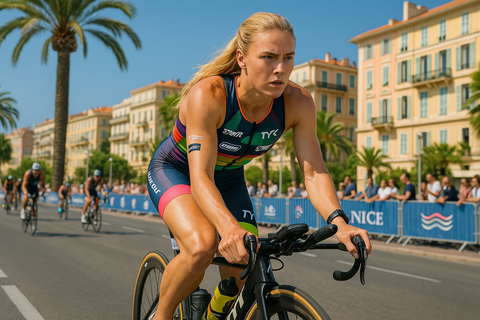
One of the most compelling aspects of NCAA women's triathlon is its competitive format. Collegiate races use a draft-legal structure that directly mirrors the style of competition seen at the Olympic Games and on the World Triathlon Championship Series circuit.
What Does Draft-Legal Mean?
In traditional triathlon — the kind most recreational athletes are familiar with — drafting on the bike is prohibited. Competitors must maintain a specified distance from the rider in front of them, making the bike leg essentially a solo time trial.
Draft-legal racing flips this dynamic. Athletes are permitted to ride in packs, working together to share the aerobic load on the bike — much like professional road cycling. This creates a fundamentally different race dynamic:
- Tactical depth: Athletes must make strategic decisions about when to surge, when to sit in the pack, and when to break away.
- Pack dynamics: Strong swimmers who exit the water together can form bike packs that gain significant time advantages over isolated riders.
- Run decisiveness: Because the bike leg often keeps large groups together, races frequently come down to the final 5-kilometer run — creating dramatic, spectator-friendly finishes.
The Sprint-Distance Format
NCAA triathlon races at the sprint distance consist of:
| Discipline | Distance |
|---|---|
| Swim | 750 meters (open water) |
| Bike | 20 kilometers (draft-legal, closed course) |
| Run | 5 kilometers |
The bike portion takes place on a closed course with multiple laps, enhancing both safety and spectator engagement. Fans can watch athletes pass multiple times, track pack formations, and witness tactical moves in real time — a far cry from the point-to-point courses that can make traditional triathlon difficult to follow in person.
The Olympic Connection
This format matters because it creates a direct competitive pathway from college to the international stage. A student-athlete competing in NCAA triathlon is training and racing in the same style used at the Olympics, World Championships, and Continental Cup events. The skills developed — open-water swim starts, pack riding, tactical racing IQ — translate directly to elite competition.
For athletes with Olympic aspirations, NCAA triathlon offers something rare in American collegiate sports: a varsity program that uses the exact competitive format of the Games themselves. Additional distances and disciplines are also supported within the NCAA framework, allowing the sport to broaden its competitive footprint and accommodate athletes from diverse backgrounds.
Creating Pathways for Student-Athletes
Kentucky State's new program doesn't just benefit the university — it expands opportunity across the entire student-athlete ecosystem.
Multi-Sport Athletes Welcome
One of women's collegiate triathlon's greatest strengths is its accessibility to athletes from a variety of sporting backgrounds. You don't need to have competed in triathlon before college to be a successful collegiate triathlete. Programs actively recruit:
- Swimmers who want to add cycling and running to their competitive repertoire
- Runners from cross country and track who have the aerobic engine for multisport
- Cyclists looking for a varsity sport that values their bike-handling skills
- Multi-sport athletes from high school who thrive on variety and cross-training
Grant Stepp specifically cited Kentucky State's existing strength in cross country and track and field as a foundation for the triathlon program — a signal that the university sees its current student-athletes as potential crossover recruits.
Competition Structure
Women's collegiate triathlon operates as a fall sport, with a season that includes:
- Regular-season races featuring various distances and race formats
- Regional Championships that determine advancement
- National Championships — the pinnacle of the collegiate season
The 2026 USA Triathlon Women's Collegiate Triathlon National Championships will be held in November in Tempe, Arizona, giving Kentucky State's inaugural roster a target to work toward from day one.
Beyond the Finish Line
The benefits of a varsity triathlon program extend well beyond race results. Student-athletes gain:
- Scholarship opportunities that can make college more affordable
- Time management and discipline skills inherent to training for three sports simultaneously
- Leadership development through team dynamics and competitive experience
- Post-collegiate pathways including elite racing, coaching, and careers in the sport industry
For an HBCU like Kentucky State, these benefits are amplified by the institution's mission to serve and uplift its student community. Every new varsity sport is an additional avenue for recruitment, retention, and student success.
What This Means for the Future
Kentucky State's decision to add women's triathlon sends a clear signal: HBCUs are not just participating in the growth of emerging NCAA sports — they are helping to lead it.
The Road Ahead for NCAA Triathlon
With each new program, women's collegiate triathlon moves closer to the participation thresholds and institutional support needed to earn full NCAA championship status. The remaining steps — committee, council, divisional, and budget approvals — are significant, but the trajectory is unmistakable. Schools across all three NCAA divisions continue to add programs, and the HBCU contingent now includes three institutions with growing competitive ambitions.
Expanding Diversity in Triathlon
Triathlon has historically struggled with diversity at both the recreational and elite levels. The addition of HBCU programs directly addresses this challenge by introducing the sport to student-athletes and communities who may have had limited exposure to or access to triathlon. Over time, these programs can serve as talent pipelines, community ambassadors, and models for inclusive sport development.
Potential for Additional HBCU Programs
The success of programs at Delaware State, Hampton, and now Kentucky State could inspire other HBCUs to explore women's triathlon — particularly as the Dave Alexander Grant continues to lower the financial barriers to entry. As awareness grows and competitive results accumulate, the case for expansion only gets stronger.
How to Get Involved
Whether you're a prospective student-athlete, a coach, or an athletic administrator, there are clear next steps:
- Student-athletes currently competing in triathlon — or in swimming, running, cycling, or other endurance sports — are invited to explore NCAA triathlon opportunities. Both experienced triathletes and single-sport athletes are welcome.
- Inquiries about NCAA women's triathlon programs can be directed to Tim Yount, USA Triathlon Chief of Sport Development, at tim.yount@usatriathlon.org.
- Learn more about triathlon as an NCAA Emerging Sport for Women at usatriathlon.org/multisport/ncaa-triathlon.
- Support the mission by donating to the USA Triathlon Foundation, which funds grants like the Dave Alexander Grant that make programs like Kentucky State's possible.
For aspiring collegiate triathletes looking to prepare for the demands of NCAA competition, investing in quality training gear is essential. Consider exploring high-performance swim goggles and GPS training watches to track your progress across all three disciplines.
The Bottom Line
Kentucky State University's addition of NCAA women's triathlon is more than a roster update. It's a statement about what HBCUs can achieve in emerging sports, a testament to the power of strategic grant funding, and a meaningful step toward making triathlon more accessible and representative at every level.
As Grant Stepp put it: "I am excited to get into competition next year and provide this new avenue for our young people to compete and represent Kentucky State University."
The starting gun is about to go off in Frankfort. And the ripple effects will be felt far beyond campus.
For more insights on the growing world of collegiate and professional triathlon, explore our guides on inspiring triathlon journeys and essential race-day gear.
Find the perfect race day essentials at TriLaunchpad — your triathlon journey starts here. Shop all collections →