What Jonny Brownlee's Retirement Teaches Us About Peak Performance, Longevity, and Knowing When to Quit
The story of a 10-year-old boy who woke in the middle of the night to watch the Sydney Olympics — and ended up becoming one of triathlon's greatest champions.
There's something poignant about Jonny Brownlee's recent retirement announcement — not because of the challenges he faced, but because of how he gracefully accepted his journey. On September 4, 2026, during the Supertri Pro Series final in Jersey — the race he envisioned as his swan song — Brownlee found himself on the sidelines, nursing an injury. He knew it was time to step back, affirming that his chapter in triathlon had come to a close.
No grand finish line victory. No last lap to a standing ovation. Instead, a 36-year-old champion bravely listened to his body, understanding that every story has its ending.
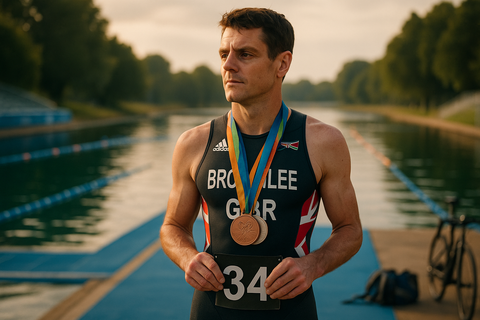
Despite this lack of a cinematic farewell, Jonny's career is nothing short of remarkable. With three Olympic medals, six world championships, and forty-two consecutive podium finishes over almost four years, his journey began when a young boy from Yorkshire stayed up late to watch the Sydney 2000 Olympics. He ends his career as one of the most celebrated triathletes in history.
This article dives into Jonny's impressive journey, the significance of his retirement, and the valuable lessons every endurance athlete — from beginners to experienced competitors — can take from his experience in both competition and letting go.
The Career by the Numbers: A Record That Speaks for Itself
Olympic Triumph Across Three Games
Brownlee's Olympic journey is all about growth. In the 2012 London Olympics, he earned a bronze medal in the men's triathlon — a moment that marked the beginning of something extraordinary. Fast forward to Rio 2016, and he upped his game with a silver medal, narrowly missing out on gold in a thrilling finish that is still talked about today.
Then came the Tokyo Olympics. In 2020, the Games introduced the mixed relay triathlon, a team event where two men and two women race alternating legs. With Brownlee as a key player, Great Britain clinched gold in this debut race. It was the perfect metaphor for his journey: an individual triumph that transitioned into teamwork, amplifying the success of all.
Three Games. Three medals. Bronze, silver, gold. It's a narrative that feels like a blockbuster movie plot.
World Championship Dominance
While his Olympic accolades would suffice for a Hall of Fame induction, Brownlee's World Championship achievements are equally impressive:
- Six-time World Champion across varied race formats
- 2012 World Triathlon Champion, where he podiumed in every single race that season
- Two-time World Sprint Champion in 2010 and 2011
- 42 consecutive podium finishes from July 2010 to May 2014 — nearly four years of unmatched performance
Let's pause to appreciate that last number. Forty-two races. Sixteen months of unwavering excellence. In any sport, that kind of consistency is extraordinary. It shows not just winning but also the resilience to avoid bad races, time and again.
By the Numbers: Jonny Brownlee's Career at a Glance
🥉 Bronze — 2012 London Olympics
🥈 Silver — 2016 Rio Olympics
🥇 Gold — 2020 Tokyo Olympics (Mixed Relay)
🏆 6 World Championships
📊 42 consecutive podium finishes (2010–2014)
🏃 16+ years as a professional athlete
The Brownlee Dynasty: More Than a Family Name
Brothers in Arms
You can't tell Jonny Brownlee's story without mentioning Alistair. Alistair, the older brother, is a double Olympic gold medallist and two-time world champion, who retired in 2024. Together, the Brownlee brothers didn't just rack up wins — they redefined endurance sport in the UK. They brought triathlon into the spotlight, turning it into a phenomenon that captivated casual sports fans and established Yorkshire as a powerhouse of elite athletic talent.
With Jonny's retirement, an era comes to a close.
The Mexico Moment: Sport's Most Human Scene
To encapsulate the Brownlee brotherhood, consider the unforgettable image from the 2016 World Series race in Cozumel, Mexico. Jonny was in the lead when fatigue hit hard. The intense heat caused him to stumble, barely able to move with the finish line in sight. Alistair, running just behind, made an incredible choice: he stopped racing to assist his brother.
He physically supported Jonny, even carrying him over the last stretch to the finish line, sacrificing his own victory. Jonny finished second, with Alistair right behind in third. This moment became one of the sport's most iconic scenes — not for the medals but for the heart it displayed. It showcased that, in sport, family often trumps competition.
The Injury and the Bittersweet Ending
When the Body Speaks
"I'm not sure you are ever truly ready to retire from professional racing, but after an incredible journey, that's where I find myself today." Brownlee's words reflect a tough truth. For elite athletes, retirement isn't a straightforward decision — it's a balancing act between mental ambition and physical reality.
In Jonny's case, injury forced this transition. He could not race at the Supertri Pro Series, and so he shared his retirement announcement from the sidelines. No victory lap. No final finish. Yet his response reveals the integrity of the athlete he became:
"My body is telling me I cannot have the fairytale ending, but it's been pretty close to a dream career, one I never thought was possible when I woke up in the middle of the night to watch the Sydney Olympics aged 10."
This narrative — of that wide-eyed 10-year-old boy in Yorkshire dreaming big — is the proper closing sentiment his career deserves. Though the conclusion may be bittersweet, the overall story shines brilliantly.
Why "Imperfect" Retirements Are Valuable Lessons
Let's consider what Brownlee didn't do. He didn't chase a comeback or pursue one last race for a picture-perfect ending. Instead, he embraced what his body communicated and chose to retire gracefully rather than stubbornly cling to competition. Many athletes push on despite physical limitations, often leading to further injuries and a tarnished legacy.
Brownlee's path illustrates a different wisdom: the ability to discern when your journey reaches a natural end, even if it doesn't unfold as envisioned. For beginner triathletes watching from the sidelines, this lesson is invaluable. Hearing your body isn't a sign of weakness — it's crucial for longevity in the sport. Understanding recovery and injury management is essential to building a sustainable athletic career.
What Comes Next: Brownlee the Innovator
Introducing Enduro: A New Challenge for Age-Group Athletes
Post-retirement, Brownlee is launching Enduro — a unique race format focused on age-group athletes. The concept is straightforward yet endurance-challenging: participants complete three sprint-distance triathlons throughout a single day, with minimal recovery time between each one. A sprint triathlon already involves a demanding ordeal: a 750m swim, a 20km bike ride, and a 5km run. Now imagine repeating that three times, back-to-back.
Enduro is not just a new race format — it's a reflection of where Brownlee envisions evolving triathlon culture. Instead of funneling ambitious age-group athletes into longer races with higher costs, Enduro offers a fresh challenge emphasizing pacing, resilience, and mental strength over raw speed.
Retired from Racing, Not from Sport
"I'm retiring from professional racing, but I'm not stopping altogether. I'll keep training and competing. There are races I've always wanted to do, and now I finally can, including more Enduro challenges with Supertri."
This distinction is significant. For athletes contemplating life beyond elite competition — or recreational triathletes who fear aging means slowing down — Brownlee's post-retirement path is truly motivational. He's not leaving behind the sport that shaped him; he's building a new relationship with it. Stepping back from professional racing doesn't mean exiting the athletic world.
Legacy and Lessons: What Brownlee's Career Teaches All of Us
On Longevity: Adaptation Over Intensity
Having spent over sixteen years as a professional triathlete and traversing four Olympic cycles, Brownlee witnessed changes in the sport and advancements in training science. His ability to remain competitive from his early 20s into his mid-30s speaks volumes beyond sheer talent. Elite longevity in endurance sports often stems from one crucial trait: the willingness to adapt.
This means training smarter as age progresses, prioritizing recovery, and transitioning from high-intensity, high-volume training to more strategic approaches. The athletes who remain competitive longest aren't necessarily those who train the hardest — they're those who evolve their training smartly over time. For new triathletes, this idea should feel liberating. Explore modern training approaches that can help you optimize your performance sustainably.
On Knowing When to Stop
Professional athletes experience considerable pressure to keep going — whether from sponsorships, community expectations, or the innate drive to excel. What Brownlee demonstrated is the courage to listen alongside the wisdom to act on what he heard. When his body said it was time to stop, he accepted that reality and chose to focus on new challenges rather than force one last comeback.
This lesson extends beyond sports. In any high-performance environment — be it triathlon, business, or creative fields — recognizing when a chapter is finished is a vital skill.
On Redefining Success
Brownlee's most underrated accomplishment may be that his career wasn't solely about winning. Yes, six world titles and three Olympic medals are remarkable. But there's also the 42-race podium streak built on consistency, not just victories; the mixed relay gold that showcased teamwork over individual success; the Mexico moment that emphasized character over trophies; and the innovation of the Enduro format, which may inspire countless age-group athletes who never aimed for the elite level.
His legacy surpasses mere medals. It embodies a rich body of work that continues to evolve. Discover quality gear that supports your own athletic journey.
The Brownlee Effect on the Sport
The Brownlee brothers didn't just claim victories — they made triathlon visible. In a nation where football rules the sporting landscape, they turned triathlon into a viewing sensation. Their achievements inspired a new generation of athletes in the UK to don wetsuits, hop on bikes, and lace up running shoes.
The impact stretches far beyond the UK. Across Europe, Latin America, and beyond, the Brownlee name became synonymous with elite triathlon. For emerging triathletes in Mexico, Brazil, and Spain discovering the sport, many of their role models were the Brownlees — directly helping shape their love for triathlon.
Five Takeaways From Jonny Brownlee's Career
Whether you're a seasoned pro or just signed up for your first sprint triathlon, Brownlee's journey offers clear lessons:
- Consistency beats brilliance. Those 42 podiums were a product of relentless preparation and the mental grit to perform at your best repeatedly.
- Adapt or stagnate. Staying at the elite level for sixteen years meant constant evolution. The training that worked at 22 won't cut it at 34. Adapt your strategy to fit your body's changes.
- Team success enhances individual greatness. The mixed relay gold added another layer to Brownlee's career. Collaborate with others — triathlon has more team spirit than it often gets credit for.
- Retirement is a transition, not an end. Brownlee isn't disappearing from the sport; he's channeling his passion into new ventures like Enduro. Your relationship with sport can grow beyond a single role.
- Listen to your body — and trust its signals. Athletes who stay healthy, competitive, and happy are those who interpret their bodies' messages wisely, treating them as information rather than weakness.
A Full-Circle Farewell
Picture a 10-year-old boy in Yorkshire, wide awake in the dark, captivated by athletes competing across the globe at the Sydney Olympics. He has no idea what lies ahead — world titles, Olympic glory, the Mexico moment, the Enduro format, or even a retirement announced from the sidelines in Jersey. What he knows is this: this is what he wants to do.
Fast forward twenty-six years, and Jonny Brownlee has more than fulfilled that childhood dream. His retirement may not have had the fairytale culmination he envisioned. But the journey itself? It's more enchanting than any story could convey.
To the triathlon community — whether elite athletes or weekend warriors lacing up for their inaugural race — the Brownlee era leaves behind not just records, but a high standard: of competition, camaraderie, and of leaving the sport better than you found it.
The next wave of champions is already out there, likely gathering inspiration from highlights on their phones or crossing finish lines on a Sunday morning. And among them is the next Brownlee — driven, in part, by the legacy of this extraordinary athlete.
Are you training for your first triathlon or aiming to enhance your race-day performance? Check out our triathlon suit for essential gear recommendations, or explore professional running shoes to prepare for the coming season. Looking to optimize your recovery and performance? Consider magnesium supplementation to support muscle recovery and endurance training.
Frequently Asked Questions
Who is Jonny Brownlee?
Jonny Brownlee is a three-time Olympic medallist and six-time world champion in triathlon, known for his decorated career in the sport.
When did Jonny Brownlee announce his retirement?
Jonny Brownlee announced his retirement from professional triathlon on September 4, 2026.
What were Jonny Brownlee's notable achievements in triathlon?
He won a bronze medal in the 2012 Olympics, a silver in 2016, and a gold in 2020 in the mixed relay. He was also the World Triathlon Champion in 2012 and a two-time World Sprint Champion in 2010 and 2011.
Why did Jonny Brownlee retire?
He retired due to injuries that prevented him from competing in his final race at the Supertri Pro Series final in Jersey.
What will Jonny Brownlee do after retiring from professional racing?
Jonny Brownlee plans to continue training and competing in races he has always wanted to participate in, including launching a new race format called 'Enduro'.
Source: Arab News — Jonny Brownlee retires aged 36
Discover unique triathlon-themed merchandise, including stylish t-shirts, stickers, phone cases, and home decor — perfect for endurance sports enthusiasts and athletes. Shop now